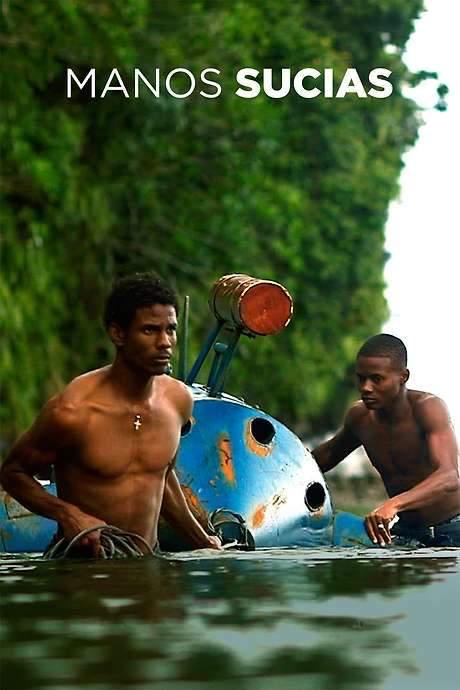
A desperate fisherman and a young man find themselves involved in trafficking a large quantity of cocaine, towing a hidden torpedo in their fishing boat. The film was shot entirely on location along Colombia’s Pacific coast, in regions deeply affected by the drug trade. It offers a stark portrayal of the devastating consequences of the drug trade, avoiding any romanticized depiction of the criminal activity and providing a glimpse into the harsh realities faced by those involved.
Does Dirty Hands have end credit scenes?
No!
Dirty Hands does not have end credit scenes. You can leave when the credits roll.
Explore the complete cast of Dirty Hands, including both lead and supporting actors. Learn who plays each character, discover their past roles and achievements, and find out what makes this ensemble cast stand out in the world of film and television.
Discover where to watch Dirty Hands online, including streaming platforms, rental options, and official sources. Compare reviews, ratings, and in-depth movie information across sites like IMDb, TMDb, Wikipedia or Rotten Tomatoes.
Challenge your knowledge of Dirty Hands with this fun and interactive movie quiz. Test yourself on key plot points, iconic characters, hidden details, and memorable moments to see how well you really know the film.
In which fictional country does the story take place?
Illyria
Balkaria
Tarragonia
Mordovia
Show hint
Read the complete plot summary of Dirty Hands, including all major events, twists, and the full ending explained in detail. Explore key characters, themes, hidden meanings, and everything you need to understand the story from beginning to end.
The play unfolds in Illyria, a fictional Eastern European country during the late stages of World War II, where the nation, aligned with Nazi Germany, stands on the edge of being pulled into the Eastern Bloc. The central tension centers on Hugo Barine, a young Communist who is drawn into a high-stakes debate within the party about strategy and ideology. Hoederer, a seasoned party leader, contemplates reaching out to non-socialist groups, including the fascist government and resistance factions led by liberals and nationalists. His plan is to form a united front against the Germans and to lay the groundwork for a coalition government after the war. Hugo, though fiercely idealistic, suspects that Hoederer’s pragmatism betrays core revolutionary principles, and another leader, Louis, resolves that Hoederer must be eliminated.
Hugo and his wife Jessica move into Hoederer’s orbit, with Hugo taking a position as Hoederer’s secretary. At first, Jessica treats the precarious mission as a game, not fully grasping the danger or the moral weight of what is at stake. She even reduces the gun to a mere symbol, a phallic metaphor that hints at Hugo’s insecurities rather than the seriousness of an assassination. As negotiations with the other political forces begin, suspense tightens: Hoederer seems poised to broker a fragile alliance that could outlive the war, but Hugo’s resolve to kill him only grows stronger as the plan moves forward.
A warning thread enters when Olga Lorame, one of those who sent Hugo to carry out the murder, visits Hugo and Jessica. The bomb that was meant as a warning explodes during a crucial moment when Hoederer nearly secures a deal with the very coalition Hugo believes to be dangerous for the party’s integrity. Although no one is killed, the blast shatters Hugo’s confidence in the mission and in the trust the party places in him. Jessica covers for him by claiming she is pregnant, a ruse that mirrors historical acts of resistance in which sacrifice and secrecy become tools of survival. Olga’s quiet warning—pace the assassination or risk being replaced—hits Hugo with the realization that trust within the party has become a fragile currency.
Hoederer’s overarching strategy remains steady: enter government with the other parties but carve out key ministerial posts, and then, after the war’s end, implement policies that will rebalance the economy and strengthen the left—policies designed to pave the way for power to shift in their favor. He openly addresses the uneasy truth that occupying armies, even liberating ones, leave a political residue that the new government must navigate. Hugo clings to a vision of pure, uncompromising purity, insisting that the party must seize power without compromise, while Hoederer argues for speed, nuance, and the necessity of negotiating with enemies in order to survive and shape a future.
As time passes, both Hugo and Jessica become entangled in Hoederer’s charisma. Hugo, who initially seems driven by a desire to protect the party from moral compromise, begins to see in Hoederer a mentor who could coax him from adolescence into a more mature, decisive man. Jessica’s attraction to Hoederer remains more personal, and when he responds with a kiss to ease her desire, Hugo witnesses the moment as a test of loyalty and intent. The realization that Hoederer’s influence extends beyond ideology unsettles Hugo, and when the moment comes, he kills Hoederer.
Prison follows, and Hugo receives gifts that he hopes signify support from those who sent him to murder Hoederer. Some of the gifts are poisoned chocolates, a grim reminder that the party’s enemies are always watching. On parole, Hugo finds himself pursued by those who would silence him and seeks refuge with Olga. In a candid conversation, Hugo explains that the murder was not jealousy over Jessica but a fear that Hoederer’s sincerity was a ruse—that the mentor’s promise to stay with him was a political maneuver rather than a real bind.
Olga offers a chilling interpretation: Hugo will be more useful alive than dead, yet she reveals that Hoederer’s policy has, in fact, been adopted by Moscow through a political realignment. The party has formed alliances with the other groups, and Hoederer’s initiative has been co-opted, with his reputation rehabilitated posthumously as a hero. For Hugo, this revelation confirms a painful truth: the ends, shaped by those in power, can hollow out the moral core of a movement. The assassination, once framed as a struggle for purity, now appears as a casualty of a larger political calculus.
Where Olga’s analysis underscores the inevitability of strategic compromise, Hugo refuses to see the outcome as justifiable. He recognizes that if he continues to live as a party member, his act will be absorbed into the tapestry of political expediency, rendering it meaningless. Olga urges him to live, but Hugo, seething with disillusionment, resolves that his death would be the final, meaningful act. When the hitmen arrive, he declares that he has not yet killed Hoederer, but intends to do so—and then to take his own life. The stage ends with Hugo’s defiant, resolve-filled cry and a door kicked open, leaving the audience to ponder the price of revolutionary ideals, the fragility of trust, and the moral cost of compromise in a world where victory is rarely clean or absolute.
Uncover the Details: Timeline, Characters, Themes, and Beyond!

Coming soon on iOS and Android
From blockbusters to hidden gems — dive into movie stories anytime, anywhere. Save your favorites, discover plots faster, and never miss a twist again.
Sign up to be the first to know when we launch. Your email stays private — always.
Immerse yourself in the magic of cinema with live orchestral performances of your favorite film scores. From sweeping Hollywood blockbusters and animated classics to epic fantasy soundtracks, our curated listings connect you to upcoming film music events worldwide.
Explore concert film screenings paired with full orchestra concerts, read detailed event information, and secure your tickets for unforgettable evenings celebrating legendary composers like John Williams, Hans Zimmer, and more.
Explore the various alternative titles, translations, and other names used for Dirty Hands across different regions and languages. Understand how the film is marketed and recognized worldwide.
What's After the Movie?
Not sure whether to stay after the credits? Find out!
Explore Our Movie Platform
New Movie Releases (2026)
Famous Movie Actors
Top Film Production Studios
Movie Plot Summaries & Endings
Major Movie Awards & Winners
Best Concert Films & Music Documentaries
Movie Collections and Curated Lists
© 2026 What's After the Movie. All rights reserved.