Cigarette Burns 2005


Haunted by a turbulent past, a struggling cinema owner is hired to track down the sole surviving copy of a cursed film—one whose lone screening drove audiences into murderous madness. As he follows a trail of rumors and dead ends, he confronts the film’s terrifying legend and the darkness it may unleash.

Does Cigarette Burns have end credit scenes?
No!
Cigarette Burns does not have end credit scenes. You can leave when the credits roll.
Meet the Full Cast and Actors of Cigarette Burns
Explore the complete cast of Cigarette Burns, including both lead and supporting actors. Learn who plays each character, discover their past roles and achievements, and find out what makes this ensemble cast stand out in the world of film and television.
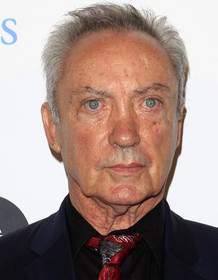
Udo Kier
Bellinger

Norman Reedus
Kirby

Gwynyth Walsh
Katja
Christopher Redman
Willowy Being
Brahm Taylor
Protagonist
Chris Britton
Meyers
Chris Gauthier
Timpson
Rikki Gagne
Woman #1
Taras Kostyuk
Kaspar
Brad Kelly
Horst
Colin Foo
Fung
Crystal Mudry
Woman #2
Gary Hetherington
Walter
Christian Bocher
Hans Backovic
Zara Taylor
Annie
Julius Chapple
Henri Cotillard
Lynn Wahl
Cap Driver
Douglas Arthurs
Dalibor
External Links and Streaming Options
Discover where to watch Cigarette Burns online, including streaming platforms, rental options, and official sources. Compare reviews, ratings, and in-depth movie information across sites like IMDb, TMDb, Wikipedia or JustWatch.





Take the Ultimate Cigarette Burns Movie Quiz
Challenge your knowledge of Cigarette Burns with this fun and interactive movie quiz. Test yourself on key plot points, iconic characters, hidden details, and memorable moments to see how well you really know the film.
Cigarette Burns Quiz: Test your knowledge of the 2005 horror film "Cigarette Burns" with these ten questions ranging from easy to difficult.
What is Kirby Sweetman's profession?
Full Plot Summary and Ending Explained for Cigarette Burns
Read the complete plot summary of Cigarette Burns, including all major events, twists, and the full ending explained in detail. Explore key characters, themes, hidden meanings, and everything you need to understand the story from beginning to end.
Kirby Sweetman, a rare-films dealer Norman Reedus, is in deep debt to the father of his late fiancée and has less than a month to raise $200,000 to save his struggling theater. The pressure mounts as his deadline closes in, and a fateful phone call leads him to a shadowy figure: Mr. Bellinger Udo Kier, a legendary cinephile and film collector who wields stories and secrets like currency. Bellinger hires Kirby to secure the sole surviving print of a legendary and infamous 30-year-old film, La Fin Absolue du Monde (French: The Absolute End of the World), a project that, unless unearthed, could rescue Kirby’s theater—and perhaps ruin him in the same breath.
Beyond the motive of money, the assignment carries a sinister weight. Bellinger guides Kirby to a hidden room in his sprawling mansion, where an emaciated, pale man—The Willowy Being Christopher Redman—is chained and presented as “one of the stars” of La Fin Absolue. The man’s wounds along his shoulders look like wings, a cruel image that seems mounted on the wall and also etched into the body of the film itself. The exchange underscores a chilling truth: the film is more than a cultural relic; it is a conduit of something malignant and binding.
To set the deal, Bellinger offers a first sum of $100,000, stirring Kirby to push for the full $200,000 he needs. With the price set, Kirby embarks on his search, and his first lead takes him to New York, where the reclusive critic A.K. Meyers Chris Britton has spent decades in a mania built around La Fin Absolue. Meyers has never let go of his review, still drafting and revising the piece thirty years later, and he provides Kirby with an audiotape of an interview with the director Hans Backovic Christian Bocher. The tape pulls Kirby into a nightmare: listening triggers a vision of his late fiancée Annie’s suicide, a brutal memory that gnaws at him as he pursues the film.
A stop in Paris follows, where archivist Henri Cotillard Julius Chapple reveals a terrifying connection: he was the projectionist at a secret private screening and narrowly escaped with his sanity intact when he turned away as the screen flashed. He tells Kirby that he can’t stay involved and directs him toward a contact, the filmmaker Dalibor Douglas Arthurs. Before long, Kirby is seized and injected with an anesthetic, waking to find himself bound in a chair, the woman who drove him there tied opposite him. Dalibor explains the film’s demon-haunted logic: an angel sacrificed in the movie curses all who witness it. In a brutal display, the filmmaker slashes the other bound woman’s throat, leaving Kirby with a terrifying glimpse of what the film’s power can do. Before dying, Dalibor instructs Kirby to seek Katja Backovic, the director’s widow, who might hold the key to completing the task.
In Vancouver, Kirby finally encounters Katja Backovic Gwynyth Walsh. She possesses the only remaining copy of La Fin Absolue and, in stark, quiet terms, reveals how the director died—an attempted murder-suicide that Katja survived. She confirms that the film’s malevolence is not merely a subject of debate but a force that has already claimed lives. Katja’s conservatism about the film is tempered by a practical resolve: she will hand over the copy if it means stopping the spread of the horror, but she also implies that the truth behind the film’s creation is darker than anyone suspects.
With Katja’s copy in hand, Kirby returns to deliver the film to Bellinger and claim his payday. The celebration in Bellinger’s private theater is cut short by the brutal reality that Kirby’s debt is only a catalyst for something larger and more terrifying. Annie’s father, Mr. Matthews, tracks Kirby to the mansion, a man unhinged and desperate, who has chained Kirby’s fate to a shared doom. The mansion’s walls echo with a creeping sense that time is collapsing into the screen. In a devastating turn, Bellinger’s butler Fung [Colin Foo] gouges his own eyes out after watching the film, a visceral symbol of the price paid for gazing too long into the abyss.
Back in the projection room, Bellinger hides behind the equipment, his face contorted by pain and revelation. He speaks in a fevered, delirious aside: the film is not merely a movie but a trailer for what is to come, and he has been inspired to craft his own film from the reels. The macabre progression intensifies as Matthews, now in the theater with Kirby, is drawn into the same warped perception—their shared hallucination culminates in a burning-cigarette cue-mark that blooms across the screen. The two men, bloodied and exhausted, witness a spectral moment where the Willowy Being releases the cinematic trap into the room; the illusion of Annie’s ghost materializes briefly and then dissolves into a more terrifying reality.
In the end, Kirby decides that neither he nor Mr. Matthews can truly escape if Annie can never rest. Their struggle ends with a brutal confrontation: Kirby kills Matthews and, in a final act of destruction and sacrifice, takes his own life. The Willowy Being, stepping back into the gloom, gathers the two reels and walks into the theater. He looks down at Kirby’s corpse and, with a somber, almost grateful tone, says, “Thank you for this,” before departing to whatever fate the film has foreseen for those who dare to watch.
The film’s conclusion lingers with a chilling final image: the reels are the seeds of something beyond cinema, a force that can reach into real life and ignite catastrophe for those who seek to own or decode it. La Fin Absolue du Monde remains a siren call to temptation and danger, a relic that binds its viewers to a fate that transcends the screen, and Kirby’s desperate bid to save a theater becomes a cautionary tale about what it costs to chase a legend—even when the legend promises salvation. > Thank you for this

Coming soon on iOS and Android
The Plot Explained Mobile App
From blockbusters to hidden gems — dive into movie stories anytime, anywhere. Save your favorites, discover plots faster, and never miss a twist again.
Sign up to be the first to know when we launch. Your email stays private — always.
Explore the mobile appWatch Trailers, Clips & Behind-the-Scenes for Cigarette Burns
Watch official trailers, exclusive clips, cast interviews, and behind-the-scenes footage from Cigarette Burns. Dive deeper into the making of the film, its standout moments, and key production insights.
Cigarette Burns Themes and Keywords
Discover the central themes, ideas, and keywords that define the movie’s story, tone, and message. Analyze the film’s deeper meanings, genre influences, and recurring concepts.
Cigarette Burns Other Names and Titles
Explore the various alternative titles, translations, and other names used for Cigarette Burns across different regions and languages. Understand how the film is marketed and recognized worldwide.
Similar Movies To Cigarette Burns You Should Know About
Browse a curated list of movies similar in genre, tone, characters, or story structure. Discover new titles like the one you're watching, perfect for fans of related plots, vibes, or cinematic styles.






Quick Links: Summary, Cast, Ratings, More

What's After the Movie?
Not sure whether to stay after the credits? Find out!
Check out our other apps:

SAT Sphere
Build confidence for the Digital SAT.

Mori Atlas
Discover wild places worth protecting.

Luntero
Search smarter for a home in Amsterdam.

Plot Explained
Unravel movie endings and hidden clues.

Pokechamp
Dive into Pokémon data and battle logic.

Driving Theory
Get ready for your European theory test.

Movie Dust
Plan your next cinema trip with ease.

Musemap
Find art and culture as you travel.

Selkobase
Compare credentials before committing.

Local Manual
Turn an unfamiliar country into practical next steps.

Lernavi
Compare school systems before your next move.

GymRoam
Find a workout stop wherever your plans take you.
Explore Our Movie Platform
New Movie Releases (2026)
Famous Movie Actors
Top Film Production Studios
Movie Plot Summaries & Endings
Major Movie Awards & Winners
Best Concert Films & Music Documentaries
Movie Collections and Curated Lists
© 2026 What's After the Movie. All rights reserved.
Privacy Policy