Bhog 2025
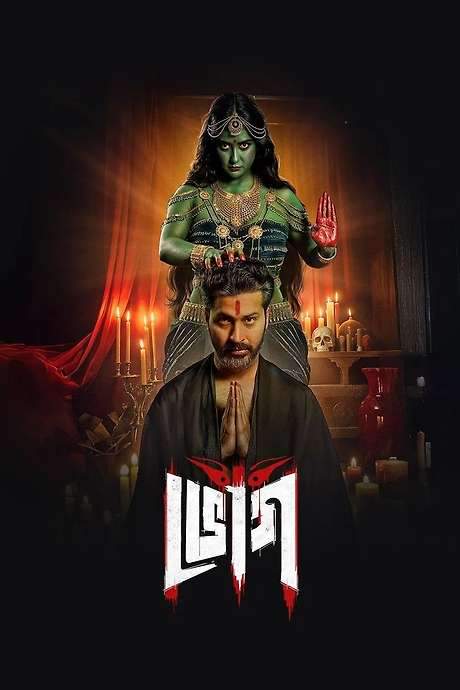
Atin brings home an enigmatic brass statue of a deity, unaware of its sinister past and the darkness it harbors. As his fascination turns into obsession, only Damri, a mysterious outcast, appears capable of soothing the restless Goddess. Yet each offering made to the idol only fuels the awakening of an ever more malevolent force.

Does Bhog have end credit scenes?
No!
Bhog does not have end credit scenes. You can leave when the credits roll.
Meet the Full Cast and Actors of Bhog
Explore the complete cast of Bhog, including both lead and supporting actors. Learn who plays each character, discover their past roles and achievements, and find out what makes this ensemble cast stand out in the world of film and television.

Parambrata Chatterjee
Rajatabha Dutta
Bhavesh Bhattacharjee
Parno Mittra
Damri
Subhasish Mukherjee
Krishnananda Agamavagisha
Sudipa Basu
Pushparani Das
Anirban Bhattacharya
Atin Mukherjee
Chhandak Chowdhury
Subesh Agarwal
Suraiya Parvin
Devi Matangi
Ranjini Chattopadhyay
Debabrata Dutta
Rituparna Basak
External Links and Streaming Options
Discover where to watch Bhog online, including streaming platforms, rental options, and official sources. Compare reviews, ratings, and in-depth movie information across sites like IMDb, TMDb, Wikipedia or JustWatch.





Full Plot Summary and Ending Explained for Bhog
Read the complete plot summary of Bhog, including all major events, twists, and the full ending explained in detail. Explore key characters, themes, hidden meanings, and everything you need to understand the story from beginning to end.
Atin Anirban Bhattacharya is a bachelor who lives with his elderly aunt Pushparani Das Sudipa Basu after his mother’s death. A private employee, he is an extrovert who loves clubbing after office hours, until a mysterious brass idol from his friend Subesh Chhandak Chowdhury’s antique shop starts to alter the rhythm of his days. The statue’s goddess is unlike any he has seen before, holding a veena in her upper left hand, a kharga in the upper right, a human skull in the lower left, and a calm, inviting lower right hand in aashirvad mudra. When Atin asks Subesh about the idol’s name, the shopkeeper admits he doesn’t know either, having acquired it from an old house without a clear origin.
From the moment the idol enters his home, Atin begins to have haunted, sleepless nights. In his dreams, a greenish goddess appears, demanding offerings and claiming she is hungry. He responds by bringing her flowers and fruits as bhog, certain that he is simply appeasing a supernatural presence. Bhavesh Rajatabha Dutta kaku casts a wary eye on the statue, concluding that it depicts a tantric goddess. Alongside Pushparani Das, he warns Atin not to worship her without proper rituals, stressing that any misstep could invite a dangerous wrath. Yet Atin becomes more absorbed, his social life fading as his fixation grows into an all-consuming devotion.
Concerned, Bhavesh kaku arranges a priest to identify the idol, but the shock runs both ways: Atin performs a demented devotional dance for the goddess, and the priest cannot recognize the rite or its dangers. The priest advises against continuing the worship until the rituals are understood. But Atin is steadfast, insisting that the goddess speaks to him in his dreams and that their bond—his “ Maa - chele” relationship—must not be interfered with.
One day Atin encounters a mysterious homeless widow, Damri [Parno Mittra], who stops his car asking for food and shelter. Despite Pushparani Das’s objections, Atin welcomes her into their home, and Damri begins cooking bhog for the goddess. The next day, for the first time, the goddess eats Atin’s offerings, and he senses something magical in Damri’s cooking. Damri’s presence seems to unlock the ritual’s potential, but it also deepens the danger. When Pushparani Das vanishes, a police inquiry is opened and later closed after a tip is given to the police to stop the case.
As time passes, Atin grows increasingly isolated and despondent, struggling with a queasy, almost-life-suppressing malaise. He continues to eat Damri’s food despite his revulsion, leaving Bhavesh kaku to urge Subesh to trace the idol’s origins. They trace the idol to a local priest who confirms that the statue embodies the ninth of the ten Mahavidyas, the goddess Matangi. The aging kulguru, tied to the local zamindar lineage for generations, explains the ancient rule: Sahashraksh Chakraborty, the idol’s earliest worshipper, decreed that the idol must be handed over to someone if the family moves away from its ancestral home, or the holder will face deadly consequences when amavasya arrives. He hands over crucial context but insists that harm will come if the rituals are not properly followed, and the danger is very real.
On a bustling evening, Atin is approached by Krishnananda Maitra Subhasish Mukherjee at a dhaba. After sharing some food with Maitra, a kind gesture is rewarded with a sapphire pendant locket and a warning to never take it off, with Maitra promising that Maa Mahamaya will protect him. Wearing the pendant, Atin’s grip on reality begins to return, and he discovers that Pushparani Das is missing. Damri promises to prepare Mohabhog for that day’s offering, heightening the sense that something menacing lurks behind the goddess’s hunger.
On the roof, Atin finds ominous tantric yantras and the corpses of birds and cats—an evening of ritual danger that foreshadows a confrontation to come. Bhavesh kaku informs the others that Damri is a petni, a shape-shifting spirit associated with Matangi, and that the only way to stop her is a direct confrontation. If she defeats you, the consequences become fatal on amavasya night.
Returning home, the trio discovers Damri in the act of a horrific feat: she is cooking a hand in a pot, and the severed limb is clearly Pushparani Das’s. In the ensuing struggle, Bhavesh kaku is knocked unconscious by Damri’s maya, giving Atin little time to act. In a tense duel, Atin must remove the protective locket to survive, but he manages to seize the pendant and press it to Damri’s forehead, destroying the petni’s hold and killing her. A week later, Bhavesh kaku, now lucid again, advises Atin to immerse the idol in the Hooghly river to end its danger for good.
The film closes with a post-credits image: two friends by a river ghat, sharing a drink when one notices the goddess again, pleading for sustenance. The shot suggests that Matangi’s maya will continue to lure the unwary unless someone responsible can properly honor and manage the goddess’s hunger.

Coming soon on iOS and Android
The Plot Explained Mobile App
From blockbusters to hidden gems — dive into movie stories anytime, anywhere. Save your favorites, discover plots faster, and never miss a twist again.
Sign up to be the first to know when we launch. Your email stays private — always.
Explore the mobile appWatch Trailers, Clips & Behind-the-Scenes for Bhog
Watch official trailers, exclusive clips, cast interviews, and behind-the-scenes footage from Bhog. Dive deeper into the making of the film, its standout moments, and key production insights.

Unlock the World of Movies with Our Comprehensive Wiki
Dive into our Movie Wiki for in-depth film encyclopedia entries, including cast biographies, production trivia, plot synopses, behind-the-scenes facts, and thematic analyses. Whether you’re researching iconic directors, exploring genre histories, or discovering hidden easter eggs, our expertly curated movie database has everything you need to fuel your cinematic passion.

Quick Links: Summary, Cast, Ratings, More

What's After the Movie?
Not sure whether to stay after the credits? Find out!
Check out our other apps:

SAT Sphere
Build confidence for the Digital SAT.

Mori Atlas
Discover wild places worth protecting.

Luntero
Search smarter for a home in Amsterdam.

Plot Explained
Unravel movie endings and hidden clues.

Pokechamp
Dive into Pokémon data and battle logic.

Driving Theory
Get ready for your European theory test.

Movie Dust
Plan your next cinema trip with ease.

Musemap
Find art and culture as you travel.

Selkobase
Compare credentials before committing.

Local Manual
Turn an unfamiliar country into practical next steps.

Lernavi
Compare school systems before your next move.

GymRoam
Find a workout stop wherever your plans take you.
Explore Our Movie Platform
New Movie Releases (2026)
Famous Movie Actors
Top Film Production Studios
Movie Plot Summaries & Endings
Major Movie Awards & Winners
Best Concert Films & Music Documentaries
Movie Collections and Curated Lists
© 2026 What's After the Movie. All rights reserved.
Privacy Policy