Arabikkatha 2007

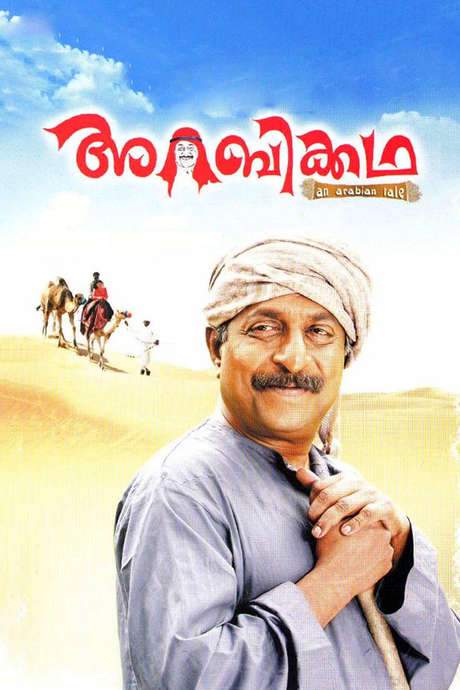
Reluctantly, ‘Cuba’ Mukundan travels to Dubai to clear his father’s alleged embezzlement from the local cooperative bank. While working abroad, he confronts the stark realities of migrant labor, grasps what it truly means to be working‑class, and comes to see that the Communist ideals that once guided his hometown have become obsolete.


Does Arabikkatha have end credit scenes?
No!
Arabikkatha does not have end credit scenes. You can leave when the credits roll.
Meet the Full Cast and Actors of Arabikkatha
Explore the complete cast of Arabikkatha, including both lead and supporting actors. Learn who plays each character, discover their past roles and achievements, and find out what makes this ensemble cast stand out in the world of film and television.
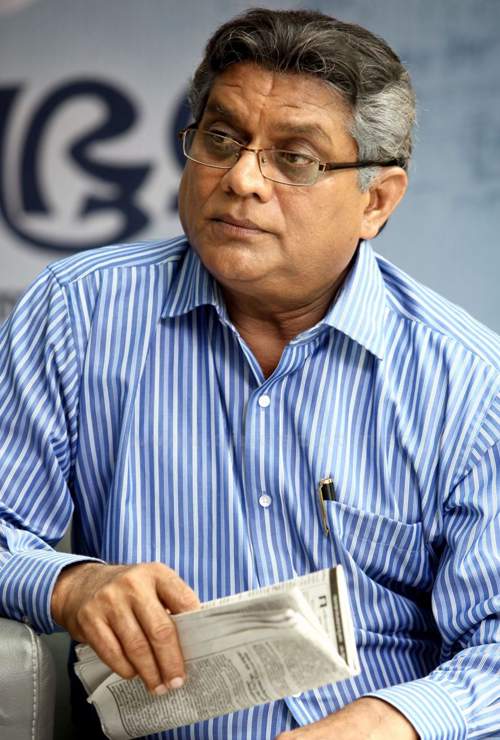
Jagathy Sreekumar
Kunhunni

Suraj Venjaramoodu
James

Sadiq
Abbas
Samvrutha Sunil
Maya
Jayasurya
Sidharttan
Indrajith Sukumaran
Anwar

Salim Kumar
Karim
Shivaji Guruvayoor
Sakhavu Karunan
Manikandan Pattambi
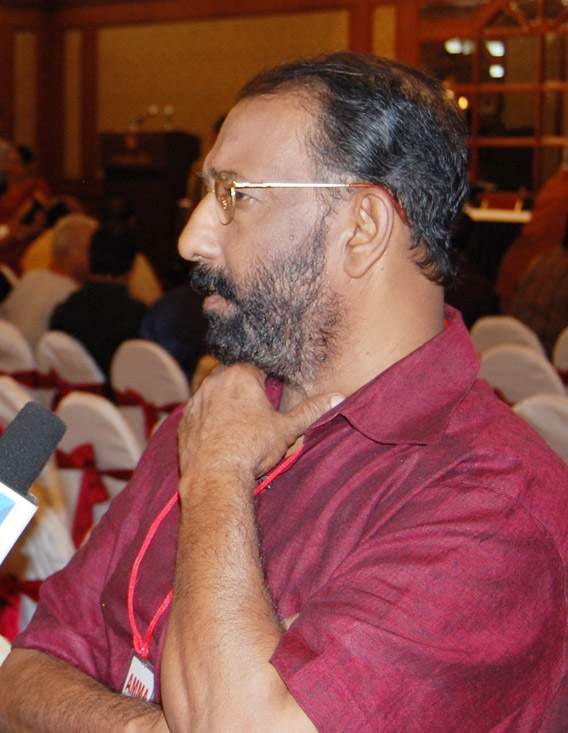
Nedumudi Venu
"Society" Gopalan
Augustine
Varghese
Sreenivasan
"Cuba" Mukundan
Kozhikode Narayanan Nair
Ravunni Mash
K T C Abdullah
Moideen Koya K K
Viswan Kathalikaadu
M.M Ramachandran
'Coat' Nambiar
Zhang Chu Min
Shu Min
External Links and Streaming Options
Discover where to watch Arabikkatha online, including streaming platforms, rental options, and official sources. Compare reviews, ratings, and in-depth movie information across sites like IMDb, TMDb, Wikipedia or Rotten Tomatoes.





Full Plot Summary and Ending Explained for Arabikkatha
Read the complete plot summary of Arabikkatha, including all major events, twists, and the full ending explained in detail. Explore key characters, themes, hidden meanings, and everything you need to understand the story from beginning to end.
Cuba Mukundan, a steadfast voice for the people and a genuine believer in leftist ideals, drifts through life with a clear purpose: to advance the movement that shapes his rural Kerala world. Sreenivasan portrays this relentless reformer whose conviction colors every choice, even when the road ahead grows thorny. The story opens with the quiet fidelity of a man who measures his worth by what he gives to the collective, not by personal gain. Yet the political landscape around him is crowded with shadows—specifically the scheming Karunan, a corrupt provincial politician whose hunger for position makes him see Mukundan as a dangerous rival.
To escape the political heat, Mukundan heads off to Dubai, a dazzling but perilous hub of commerce where many Kerala migrants chase an elusive dream. There, the thread of power tightens around him as he encounters Kunhunni Muthalali, a powerful local operator who collaborates with Karunan to exploit vulnerable workers. This looming alliance between Kunhunni and Karunan exposes a stark contrast between idealism and the predatory side of globalization: even a noble cause can be monetized, and even the noble-hearted can be drawn into a web of compromise if the system rewards it. The encounter underscores a central tension of the film: staying true to a political creed in a world that often prizes profit over principle.
In the Persian Gulf’s heat and glare, the migrant labor force endures grueling, low-wage jobs that keep families back home afloat. Mukundan’s experiences abroad reveal a harsh reality: the riches of Dubai are built on the fatigue and resilience of laborers who risk everything for a better future. It is within this crucible that his ideals are both tested and clarified. He witnesses how the very structure he champions—equality, solidarity, collective good—can be bent by those who manipulate talk of progress for private gain. The contrast between the rhetoric of the movement and the reality of exploitation forms a pivotal arc in the narrative, inviting viewers to reflect on how much of the dream survives when faced with the pressures of the market.
As Mukundan navigates these moral mazes, he meets a young Chinese woman named Shu Min, a figure who becomes a symbol of his broader sympathies toward China and its people. Zhang Chu Min brings warmth and complexity to the screen, and the character’s presence tests Mukundan’s beliefs in an intimate way. Shu Min’s resolve hints at a larger geopolitical tension—one that places personal loyalty against ideological purity. Although she arrives with her own complicated motives—anti-communist and seeking funds to aid her boyfriend who fought against the Chinese government—Mukundan’s generosity leads him to share his earnings, grounded in a conviction that a true communist should not hoard wealth beyond necessity. The moment is a quiet moral counterpoint to the political battles around him, illustrating how individual ethics can outpace political doctrine in real life.
Back home, Mukundan’s circle widens with the help of trusted friends who stand by him as both allies and witnesses to the corruption he aims to expose. Indrajith Sukumaran plays Anwar, a steadfast companion who lends practical support and courage; Samvrutha Sunil embodies Maya, whose loyalty and sharp observation help illuminate the truth behind the machinations; Sadiq brings Abbas, whose streetwise insight and solidarity with the common people prove crucial to gathering the evidence that will challenge Karunan and Kunhunni Muthalali. Together, this small band of friends embodies the film’s heartbeat: a community that believes in transparency, courage, and collective action even when the system conspires to bury those values beneath its glare.
The narrative then foregrounds the ambitious, sometimes conflicted charisma of Karunan (the political antagonist) and the slippery cunning of Kunhunni Muthalali. Mukundan and his allies work to reveal how the two men manipulate policy, public opinion, and economic leverage to keep power anchored in their hands. The film doesn’t shy away from showing that politics can be a theater of appearances, where reformers are pressed to perform even as the truth is bent to fit a convenient narrative. Yet Mukundan’s resolve endures—partly because his faith in the people who taught him to dream remains intact, and partly because his friends rally around him, providing the practical backbone needed to confront corruption head-on.
A turning point arrives when Mukundan decides where his life’s work should lead him: back home to rural Kerala, where his beloved political mission still breathes through the fields, the markets, and the communities he vowed to serve. The journey into the modern world’s temptations and the old-world call of public duty converge, offering a meditation on whether a person can stay true to a cause while navigating a world that often prizes expediency. The ending plants Mukundan firmly within the circle of those who believe that long-term social progress requires a fidelity that transcends time and place. He returns with the aim of re-energizing the movement, not merely as a symbol of resistance, but as a practical force for reform, teaching that ideology, when married to service, can endure even as the landscape around it shifts.
Across its landscape—rural Kerala, booming Dubai, and the complex space in between—the film uses Mukundan’s journey to explore how a single steadfast believer can illuminate the path for others, even when the world asks him to bend. The texture of the story—its political reflections, its humane moments, and its focus on companionship—emerges as a compassionate portrait of a man who loves his homeland, his people, and the idea of justice enough to risk everything for them. By the finale, Mukundan’s return is less a retreat than a recommitment: a pledge to keep faith with the movement he has always valued, to keep listening to the people who trust him, and to keep pushing for a society where ideology serves humanity rather than the other way around.
Characters and their journeys are brought to life by a broad ensemble, with each actor contributing a crucial strand to the tapestry. The film balances intimate, personal stakes with social and political questions, inviting audiences to consider the cost of integrity in a world where power and profit often pull in opposite directions. The message remains clear: true devotion to a cause requires more than words—it requires courage, solidarity, and a willingness to return home to do the hard work of building the world you believe in.

Coming soon on iOS and Android
The Plot Explained Mobile App
From blockbusters to hidden gems — dive into movie stories anytime, anywhere. Save your favorites, discover plots faster, and never miss a twist again.
Sign up to be the first to know when we launch. Your email stays private — always.
Explore the mobile appDiscover Film Music Concerts Near You – Live Orchestras Performing Iconic Movie Soundtracks
Immerse yourself in the magic of cinema with live orchestral performances of your favorite film scores. From sweeping Hollywood blockbusters and animated classics to epic fantasy soundtracks, our curated listings connect you to upcoming film music events worldwide.
Explore concert film screenings paired with full orchestra concerts, read detailed event information, and secure your tickets for unforgettable evenings celebrating legendary composers like John Williams, Hans Zimmer, and more.


Arabikkatha Themes and Keywords
Discover the central themes, ideas, and keywords that define the movie’s story, tone, and message. Analyze the film’s deeper meanings, genre influences, and recurring concepts.
Arabikkatha Other Names and Titles
Explore the various alternative titles, translations, and other names used for Arabikkatha across different regions and languages. Understand how the film is marketed and recognized worldwide.
Similar Movies To Arabikkatha You Should Know About
Browse a curated list of movies similar in genre, tone, characters, or story structure. Discover new titles like the one you're watching, perfect for fans of related plots, vibes, or cinematic styles.











Quick Links: Summary, Cast, Ratings, More

What's After the Movie?
Not sure whether to stay after the credits? Find out!
Check out our other apps:

SAT Sphere
Build confidence for the Digital SAT.

Mori Atlas
Discover wild places worth protecting.

Luntero
Search smarter for a home in Amsterdam.

Plot Explained
Unravel movie endings and hidden clues.

Pokechamp
Dive into Pokémon data and battle logic.

Driving Theory
Get ready for your European theory test.

Movie Dust
Plan your next cinema trip with ease.

Musemap
Find art and culture as you travel.

Selkobase
Compare credentials before committing.

Local Manual
Turn an unfamiliar country into practical next steps.

Lernavi
Compare school systems before your next move.

GymRoam
Find a workout stop wherever your plans take you.
Explore Our Movie Platform
New Movie Releases (2026)
Famous Movie Actors
Top Film Production Studios
Movie Plot Summaries & Endings
Major Movie Awards & Winners
Best Concert Films & Music Documentaries
Movie Collections and Curated Lists
© 2026 What's After the Movie. All rights reserved.
Privacy Policy