And the Ship Sails On 1983


Set in 1914, a cruise departs from Naples to scatter the ashes of beloved opera singer Edmea Tetua near Erimo, her birthplace. Among the eclectic passengers, a group of Serbian refugees is found aboard. Peace holds until an Austrian warship attacks, forcing the Serbians onto an enemy ship. They resist, sparking a brief battle that ends in destruction.



Does And the Ship Sails On have end credit scenes?
No!
And the Ship Sails On does not have end credit scenes. You can leave when the credits roll.
Meet the Full Cast and Actors of And the Ship Sails On
Explore the complete cast of And the Ship Sails On, including both lead and supporting actors. Learn who plays each character, discover their past roles and achievements, and find out what makes this ensemble cast stand out in the world of film and television.

Janet Suzman
Edmea Tutua

Ugo Fangareggi
Il Barista
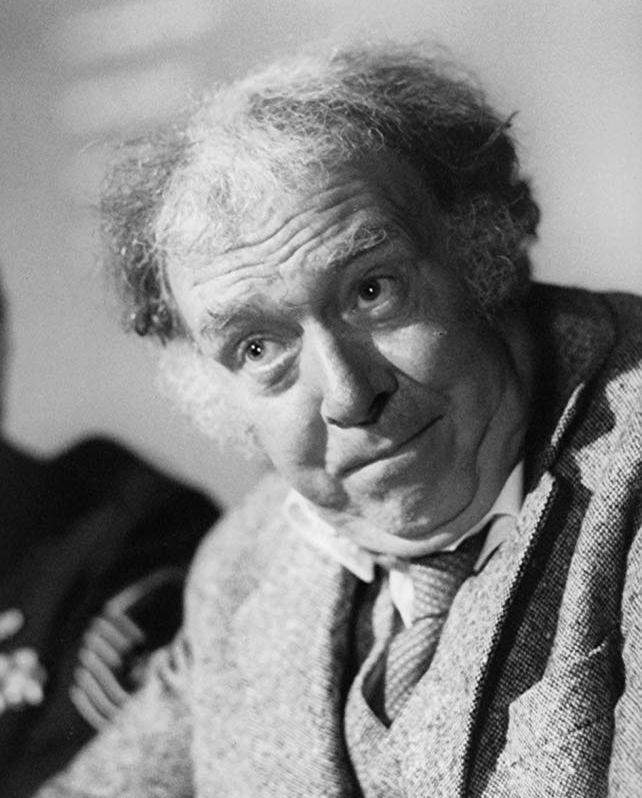
Freddie Jones
Orlando
Paolo Paoloni
Il Maestro Albertini
Filippo De Gara
Alessandro Partexano
Ufficiale
Franca Maresa
Madre di Dorotea
Pina Bausch
Principessa Lherimia
Peter Cellier
Sir Reginald J. Dongby
Salvatore Omnis
Maestro di Canto (uncredited)
Francesco Scali
Natale Tulli
Fuochista (uncredited)
Monica Bertolotti
Barbara Jefford
Ildebranda Cuffari
Philip Locke
Il Primo Ministro
Francesco Maselli
Guardiano del Rinoceronte (uncredited)
Elisabeth Kaza
La Produttrice
Jean Schlegel
Sovraintendente (uncredited)
Salvatore Billa
Cameriere (uncredited)
Vittorio Zarfati
Secondo Maestro Rubetti
Franco Angrisano
Il Cuoco
Elisa Mainardi
Teresa Valegnani
Fiorenzo Serra
Il Granduca
Roberto Caporali
Padre di Dorotea
Claudio Zucchet
Sailor (uncredited)
Gianni Di Segni
Boiler Room Worker (uncredited)
Cesare Martignoni
Musician (uncredited)
Umberto Zuanelli
Primo Maestro Rubetti
Franco Ressel
Il Medico (uncredited)
Luigi Uzzo
Il Terzo di Bordo (uncredited)
Fred Williams
Sabatino Lepori
Rolando De Santis
Il Cuoco (uncredited)
Jonathan Cecil
Ricotin
Helen Stirling
Julian Jenkins
(uncredited)
Maurice Barrier
Ziolev
Linda Polan
Ines Ruffo Saltini
Danika La Loggia
Christian Fremont
Antonio Vezza
Il Capitano
Claudio Ciocca
Secondo di Bordo
Victor Poletti
Aureliano Fuciletto
Cecilia Cerocchi
Moglie del Sovrintendente
Wolf Gaudlitz
Segratario di Ildebranda (uncredited)
Fides Stagni
(uncredited)
Norma West
Lady Violet Dongby Albertini
Pasquale Zito
Il Conte di Bassano
Sarah-Jane Varley
Dorotea
Domenico Pertica
Pastore
Marielle Duvelle
Umberto Barone
Scala
Salvatore Calabrese
Banchiere
Johna Mancini
Segretario del Sovrintendente
Pietro Fumelli
Aisha Bragadin
Moglie di Lepori (uncredited)
Roger de Bellegarde
Il Generale (uncredited)
Carlo Di Giacomo
Sabatino Lepori (uncredited)
Raffaele Giangrande
(uncredited)
Roberto Jacar
(uncredited)
Adam Kotwizky
(uncredited)
Andrew Lord Miller
Andrew, Sir Reginald's Secretary (uncredited)
Regina Nemni
Giovane Indovina (uncredited)
Francesco Tiano
(uncredited)
External Links and Streaming Options
Discover where to watch And the Ship Sails On online, including streaming platforms, rental options, and official sources. Compare reviews, ratings, and in-depth movie information across sites like IMDb, TMDb, Wikipedia or Letterboxd.




Take the Ultimate And the Ship Sails On Movie Quiz
Challenge your knowledge of And the Ship Sails On with this fun and interactive movie quiz. Test yourself on key plot points, iconic characters, hidden details, and memorable moments to see how well you really know the film.
And the Ship Sails On (1983) Quiz: Test your knowledge of the characters, plot points, and distinctive details from the 1983 film "And the Ship Sails On".
What is the name of the cruise ship that becomes the floating stage for the film's events?
Full Plot Summary and Ending Explained for And the Ship Sails On
Read the complete plot summary of And the Ship Sails On, including all major events, twists, and the full ending explained in detail. Explore key characters, themes, hidden meanings, and everything you need to understand the story from beginning to end.
The film opens in July 1914 with a quiet, sepia-toned scene at Naples Harbor, just before the cruise ship Gloria N. slips away. The visual shift from silent projection to living color marks the moment when dialogue returns and the ship becomes a moving stage for a sprawling, Fellini-like panorama. On board, Freddie Jones as Orlando—the Italian journalist who narrates directly to the camera—explains that this voyage is no ordinary trip. It is a funeral procession meant to scatter the ashes of the beloved opera singer Edmea Tetua, near her birthplace on the island of Erimo.
Edmea Tetua, Janet Suzman, is celebrated in legend as the greatest singer of all time, her voice described in godlike terms that seem almost mythical. The narration sprinkles the voyage with sly, gossip-fueled humor about a parade of fantastical caricatures—opera singers, voice teachers, orchestra directors, theatre producers, actors, prime ministers, counts, princesses, grand dukes, and fans driven to feverish devotion. The ship becomes a floating gallery of personalities and pretensions, each figure longing for a moment in Edmea’s shadow.
A jealous and brazen soprano, Franca Maresa as Ildebranda, presses to uncover the secret of Edmea’s incomparable voice, while a bristle-haired Russian basso wanders the mess hall and hypnotizes a chicken with nothing but his voice. A curly-cued actor travels with his mother in a comical bid to charm sailors, and Peter Cellier as Sir Reginald Dongby, a voyeuristic English aristocrat, revels in watching his wife, Lady Violet. The ship’s social ladder is further complicated by the Grand Duke of Harzock—a portly, almost boyish aristocrat—whose blind sister, the dancer Pina Bausch, plots with her lover, the prime minister, to disinherit him. Meanwhile, the brooding Count of Bassano retreats to his cabin, which he has converted into a temple in memory of the diva.
A dreaded stench erupts from the hold and reveals a neglected rhinoceros, a misfit beast that must be washed and returned to the hold with water and hay, a surreal hiccup in the glamorous pageantry. On the ship’s third day, a crowd of shipwrecked Serbians appears on deck, refugees rescued and sheltered just long enough to be brought toward Italy. The Grand Duke and his entourage mistake the Serbians for terrorists and order the captain to segregate them, while the captain agrees to disperse Edmea’s ashes at Erimo first.
As the ceremony concludes, refugees are moved to lifeboats; a bomb hurled by a youthful Serbian screams through panic, and the Austro-Hungarian flagship answers with cannon fire. The Gloria N. sinks amid chaos: Albertini, conducted by Paolo Paoloni as Il Maestro Albertini, leads the musicians in a desperate, cinematic effort, the grand piano sliding across the deck and mirrors shattering as suitcases drift through flooded corridors. The workers behind the scenes reveal a grand mechanical ballet—giant hydraulic jacks, acres of plastic sea, and an army of technicians stoking smoke and fire effects—while an enigmatic figure, perhaps Orlando or Fellini himself, watches the chaos unfold.
The camera returns to a final, intimate image: Orlando in a lifeboat, the rhinoceros happily nibbling on hay beside him. In a rustic, almost deadpan aside, he confides, > Did you know, that a rhinoceros gives very good milk? <
This closing beat loops back to the voyage’s core illusion: what began as a ceremonial race through theatrical excess ends with a playful, self-referential wink. The film uses the spectacle of the sinking Gloria N. to question the difference between performance and catastrophe, and to remind the audience that what they are watching is as much a production behind the camera as it is a story on the deck. The ostentatious pageantry, the political infighting, the surreal comic touches, and the dreamlike absorption in Edmea Tetua’s legend all fold into a single, strange voyage that leaves viewers with a lingering mix of amusement, awe, and reflection.

Coming soon on iOS and Android
The Plot Explained Mobile App
From blockbusters to hidden gems — dive into movie stories anytime, anywhere. Save your favorites, discover plots faster, and never miss a twist again.
Sign up to be the first to know when we launch. Your email stays private — always.
Explore the mobile appDiscover Film Music Concerts Near You – Live Orchestras Performing Iconic Movie Soundtracks
Immerse yourself in the magic of cinema with live orchestral performances of your favorite film scores. From sweeping Hollywood blockbusters and animated classics to epic fantasy soundtracks, our curated listings connect you to upcoming film music events worldwide.
Explore concert film screenings paired with full orchestra concerts, read detailed event information, and secure your tickets for unforgettable evenings celebrating legendary composers like John Williams, Hans Zimmer, and more.


And the Ship Sails On Themes and Keywords
Discover the central themes, ideas, and keywords that define the movie’s story, tone, and message. Analyze the film’s deeper meanings, genre influences, and recurring concepts.
And the Ship Sails On Other Names and Titles
Explore the various alternative titles, translations, and other names used for And the Ship Sails On across different regions and languages. Understand how the film is marketed and recognized worldwide.
Similar Movies To And the Ship Sails On You Should Know About
Browse a curated list of movies similar in genre, tone, characters, or story structure. Discover new titles like the one you're watching, perfect for fans of related plots, vibes, or cinematic styles.


Quick Links: Summary, Cast, Ratings, More

What's After the Movie?
Not sure whether to stay after the credits? Find out!
Check out our other apps:

SAT Sphere
Build confidence for the Digital SAT.

Mori Atlas
Discover wild places worth protecting.

Luntero
Search smarter for a home in Amsterdam.

Plot Explained
Unravel movie endings and hidden clues.

Pokechamp
Dive into Pokémon data and battle logic.

Driving Theory
Get ready for your European theory test.

Movie Dust
Plan your next cinema trip with ease.

Musemap
Find art and culture as you travel.

Selkobase
Compare credentials before committing.

Local Manual
Turn an unfamiliar country into practical next steps.

Lernavi
Compare school systems before your next move.

GymRoam
Find a workout stop wherever your plans take you.
Explore Our Movie Platform
New Movie Releases (2026)
Famous Movie Actors
Top Film Production Studios
Movie Plot Summaries & Endings
Major Movie Awards & Winners
Best Concert Films & Music Documentaries
Movie Collections and Curated Lists
© 2026 What's After the Movie. All rights reserved.
Privacy Policy