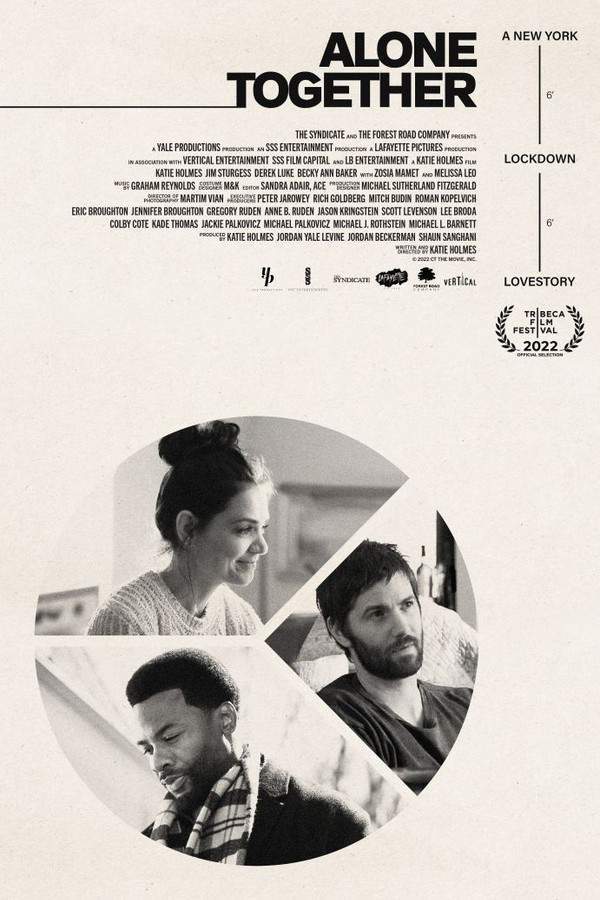
Alone Together 2018


Ian Adams, a young physics professor, is grappling with the aftermath of a painful breakup with his girlfriend, Catelyn Magdeline. He struggles to maintain his sanity and finds it increasingly difficult to focus on his work while trying to move past the relationship. The experience deeply affects his ability to cope with daily life and leaves him searching for a way to regain his equilibrium.


Does Alone Together have end credit scenes?
No!
Alone Together does not have end credit scenes. You can leave when the credits roll.
Meet the Full Cast and Actors of Alone Together
Explore the complete cast of Alone Together, including both lead and supporting actors. Learn who plays each character, discover their past roles and achievements, and find out what makes this ensemble cast stand out in the world of film and television.

External Links and Streaming Options
Discover where to watch Alone Together online, including streaming platforms, rental options, and official sources. Compare reviews, ratings, and in-depth movie information across sites like IMDb, TMDb, Wikipedia or Rotten Tomatoes.







Ratings and Reviews for Alone Together
See how Alone Together is rated across major platforms like IMDb, Metacritic, and TMDb. Compare audience scores and critic reviews to understand where Alone Together stands among top-rated movies in its genre.

The Movie Echo Score
Alone Together delivers a modestly crafted sitcom that leans heavily on dry, self‑aware humor. The production values are competent, with steady pacing and clear editing, though no standout visual flair is evident. Performances hinge on the chemistry of the leads, offering moments of genuine amusement amid uneven jokes. While some viewers find the episodic plots shallow, the series sustains enough relatability to keep occasional interest. Consequently, the show registers as an average offering with limited but present appeal.
The Movie Echo Score Breakdown for Alone Together

Art & Craft
In terms of direction and production design, the series maintains a consistent, functional aesthetic without notable innovation. Cinematography is straightforward, supporting the dialogue‑driven format, and editing keeps episodes brisk, though occasional pacing lulls appear. No distinctive visual motifs or elaborate set pieces are highlighted, resulting in a competent but unremarkable craftsmanship overall.

Character & Emotion
When assessing character and emotional depth, the leads exhibit a dry, deadpan style that resonates with a segment of the audience seeking self‑aware humor. Initial impressions suggest shallow, self‑absorbed personas, yet the chemistry between the protagonists gradually becomes engaging. Supporting roles are viewed as uneven, with some cast members adding limited nuance. Overall, performances are mixed, offering moments of relatable quirkiness amid inconsistency.

Story & Flow
Story and narrative flow rely on self‑contained episodes that prioritize punchy dialogue over intricate plot development. The humor often stems from situational awkwardness, which some viewers find fresh, while others perceive the premises as vague and lacking depth. Pacing is generally brisk, though occasional episodes feel like a framework for jokes rather than a cohesive storyline. The overall narrative is therefore uneven, delivering intermittent engagement.

Sensory Experience
Sensory experience, including soundtrack and sound design, receives limited commentary, suggesting it neither stands out nor detracts from the viewing. Visual style aligns with a conventional sitcom framework, employing a modest color palette and straightforward lighting. Absence of a laugh track is noted as a neutral choice. Consequently, the auditory and visual elements function adequately without providing memorable impact.

Rewatch Factor
Rewatch potential hinges on the show’s niche humor and character dynamics. Viewers who connect with the self‑aware, millennial perspective anticipate returning for additional episodes, citing the chemistry between the leads as a draw. Conversely, audiences critical of the shallow plot and inconsistent jokes are unlikely to revisit. Overall, the series offers modest replay value for a specific segment but limited broader appeal.
Full Plot Summary and Ending Explained for Alone Together
Read the complete plot summary of Alone Together, including all major events, twists, and the full ending explained in detail. Explore key characters, themes, hidden meanings, and everything you need to understand the story from beginning to end.
Christine “Tin” Lazaro, an Art Studies major and volunteer tour guide at the National Museum of the Philippines, crosses paths with Rafael “Raf” Toledo, a medical student and an ardent fan of the Eraserheads. Their first conversations spark a lively exchange about art and life as they wander through galleries and discuss the museum’s crown jewel, Juan Luna’s Spoliarium, a painting Raf admires deeply enough to have inspired his favorite song. What starts as a spark between two young dreamers—his wish to become a doctor, her ambition to someday lead a museum—gradually shifts into a steady relationship filled with shared aspirations and personal ambitions.
As their romance grows, Tin and Raf imagine a future where they can support each other’s biggest dreams. Tin envisions guiding the heart of Philippine culture as a museum director, while Raf pursues medicine with the quiet determination that marks his days. They compliment one another, balancing Tin’s reverence for art with Raf’s relentless pursuit of healing. Yet the path isn’t without friction. Tin’s professional life becomes tangled in a money scandal at her workplace, a crisis that threatens her reputation and sense of self. She finds a surprising lifeline in Gregory “Greg” Fausto, a coworker who shows her care and admiration. The strain of the scandal, coupled with Raf’s inability to secure graduation and steady status, fractures the couple. Raf’s heartfelt proposal—a bid to salvage what they shared—lands on Tin’s shoulders as an option to hold onto the future, but Tin, wary of breaking Raf’s heart and perhaps the life they could still unbuild, declines.
Five years drift by, reshaping both lives in unexpected, revealing ways. Tin, now connected with Greg, attends an awarding ceremony where she unexpectedly crosses paths with Raf again. He is now a doctor and has recently earned recognition, a quiet testament to his unyielding dedication. Raf waits for Tin in a hallway after a bathroom break, hopeful to rekindle a dialogue that could bridge their past with a new, more mature present. When they reconnect later at a familiar gathering spot, Tin opens up about the five years that changed them both. Raf’s life has changed in turn; he introduces Aly, a fellow doctor who is his girlfriend, a mild surprise to Tin who still carries memories of what they once were.
Tin has carved out a significant role in Greg’s company, excelling at her work but feeling unacknowledged and undervalued. The chance to revisit the museum together becomes a turning point: Tin confesses that this would be her first museum visit since the scandal, a personal step toward reclaiming her sense of self. Raf’s influence nudges her toward pursuing a new opportunity—perhaps a chance to represent their company in exciting projects abroad. Greg, initially doubtful, eventually grants Tin the opportunity to lead. The door to New York opens, and Tin steps through it with a mixture of resolve and anticipation, determined to prove her capabilities while staying true to her passions.
In New York City, Tin fulfills her business objectives and finds time to visit the Metropolitan Museum of Art. Unbeknownst to her, Raf has bought a ticket to join her, turning a professional trip into a chance to share museums, ideas, and memories that once bound them. During their time at the Met, Tin encounters Alex, a Filipino American car dealer and former artist, and she expresses interest in viewing Alex’s artworks. The encounter is brief but meaningful, a reminder of the many threads that art and life weave together. After the museum visit, Tin asks for copies of application forms as mementos, a small gesture that suggests she is building something tangible from her experiences. Later, in a park, Raf reveals that he has ended things with Aly and wants to resume their relationship, even to the point of marriage. Tin faces a painful choice: embrace the possibility of a life with Raf or protect the life she has built with Greg. She chooses to step back from the leap, believing that such a union could hurt Greg and, more importantly, Greg’s daughter Aisha. The conversation intensifies, and they part ways with heavy hearts.
Back in the Philippines, Tin confronts her own discontent more openly. She realizes she is not happy with the life she has allowed herself to inhabit and decides to leave Greg. She seeks Raf to share her decision, but the news is complicated by Raf’s own revelation: Aly is pregnant with his child. Torn between personal happiness and the consequences for others, Tin’s path becomes blurrier. She returns to her roots—her alma mater—where she sits in on a class led by her favorite professor, Sir Alwyn. The professor’s guidance helps her see a possible future she hadn’t considered: honesty and perseverance could open doors, even in a city that often feels indifferent to progress. With renewed resolve, Tin works through a string of unsuccessful job interviews, ultimately landing a museum position precisely because of her candidness about her past mistakes. The new chapter begins with a sense of authenticity fueling her ambition.
Her emotional world remains unsettled, yet she finds solace in the reinvigorated purpose of her work. She visits Raf at the hospital, where they have a candid conversation about their past and present. Both apologize for their rash decisions—their sparring and the hurt they caused one another. Raf reveals he is estranged from Aly, and Tin, though moved, cautions him about the fragile balance of repairing lives, even when love remains. Just as they begin to reconnect, Raf receives another call to duty, a reminder of how their lives continue to pull them in different directions. Before he leaves, Tin confesses that she still loves him, a confession that lingers in the air as a fragile, hopeful thread.
Tin’s life begins to align with her deepest passions once more. She returns to the National Museum for an event celebrating emerging local artists, including Alex. In a moment of heartfelt acknowledgment, Alex thanks Tin for helping her see that there is a vibrant life for Filipino artists within the country, even as art serves a broader purpose of public service and connection. Alex’s invitation for Tin to join her onstage becomes a symbolic bridge between Tin’s past and present, a recognition of her influence and her willingness to champion others’ voices. After the ceremony, Tin steps outside to find Raf waiting, a quiet, emotional reunion that culminates in a tight, shared embrace.
The film closes on a scene imbued with quiet hope as Tin and Raf come together to gaze at the Spoliarium, the painting that threaded their story from the museum to the heart of their lives. They meet again in person, and their reunion carries the weight of all they experienced—the dreams pursued, the missteps taken, and the possibility that art, memory, and love can converge to shape a future that honors both their past and the person they have become. The last image lingers on their joined figure and the painting behind them, a symbol of resilience, shared history, and the enduring pull of a world where culture and humanity intersect.

Coming soon on iOS and Android
The Plot Explained Mobile App
From blockbusters to hidden gems — dive into movie stories anytime, anywhere. Save your favorites, discover plots faster, and never miss a twist again.
Sign up to be the first to know when we launch. Your email stays private — always.
Explore the mobile appDiscover Film Music Concerts Near You – Live Orchestras Performing Iconic Movie Soundtracks
Immerse yourself in the magic of cinema with live orchestral performances of your favorite film scores. From sweeping Hollywood blockbusters and animated classics to epic fantasy soundtracks, our curated listings connect you to upcoming film music events worldwide.
Explore concert film screenings paired with full orchestra concerts, read detailed event information, and secure your tickets for unforgettable evenings celebrating legendary composers like John Williams, Hans Zimmer, and more.


Alone Together Themes and Keywords
Discover the central themes, ideas, and keywords that define the movie’s story, tone, and message. Analyze the film’s deeper meanings, genre influences, and recurring concepts.

Unlock the World of Movies with Our Comprehensive Wiki
Dive into our Movie Wiki for in-depth film encyclopedia entries, including cast biographies, production trivia, plot synopses, behind-the-scenes facts, and thematic analyses. Whether you’re researching iconic directors, exploring genre histories, or discovering hidden easter eggs, our expertly curated movie database has everything you need to fuel your cinematic passion.
Similar Movies To Alone Together You Should Know About
Browse a curated list of movies similar in genre, tone, characters, or story structure. Discover new titles like the one you're watching, perfect for fans of related plots, vibes, or cinematic styles.


Quick Links: Summary, Cast, Ratings, More

What's After the Movie?
Not sure whether to stay after the credits? Find out!
Check out our other apps:

SAT Sphere
Build confidence for the Digital SAT.

Mori Atlas
Discover wild places worth protecting.

Luntero
Search smarter for a home in Amsterdam.

Plot Explained
Unravel movie endings and hidden clues.

Pokechamp
Dive into Pokémon data and battle logic.

Driving Theory
Get ready for your European theory test.

Movie Dust
Plan your next cinema trip with ease.

Musemap
Find art and culture as you travel.

Selkobase
Compare credentials before committing.

Local Manual
Turn an unfamiliar country into practical next steps.

Lernavi
Compare school systems before your next move.

GymRoam
Find a workout stop wherever your plans take you.
Explore Our Movie Platform
New Movie Releases (2026)
Famous Movie Actors
Top Film Production Studios
Movie Plot Summaries & Endings
Major Movie Awards & Winners
Best Concert Films & Music Documentaries
Movie Collections and Curated Lists
© 2026 What's After the Movie. All rights reserved.
Privacy Policy