A Choice of Weapons: Inspired by Gordon Parks 2021


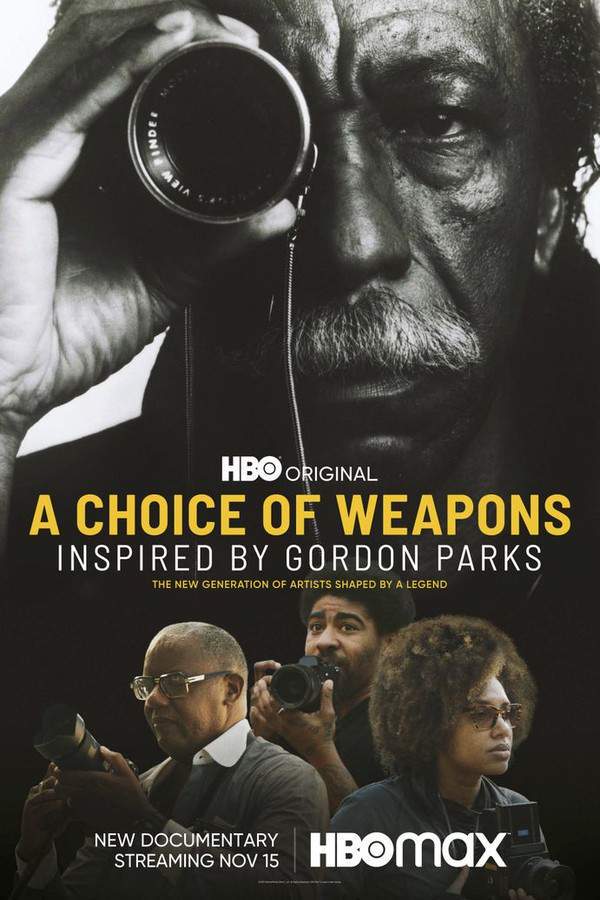
Gordon Parks’ extraordinary life and career are explored through gritty realism and unflinching honesty. The documentary traces his journey from staff photographer at LIFE magazine to a groundbreaking filmmaker, novelist, and documentarian. It highlights how everyday Americans became artfully framed portraits, showcasing their resilience and offering glimpses of hope amidst challenging circumstances.

Does A Choice of Weapons: Inspired by Gordon Parks have end credit scenes?
No!
A Choice of Weapons: Inspired by Gordon Parks does not have end credit scenes. You can leave when the credits roll.
Where to Watch A Choice of Weapons: Inspired by Gordon Parks
See current US streaming, rental, and purchase options for A Choice of Weapons: Inspired by Gordon Parks (2021) via JustWatch.


Streaming availability powered by 
Meet the Full Cast and Actors of A Choice of Weapons: Inspired by Gordon Parks
Explore the complete cast of A Choice of Weapons: Inspired by Gordon Parks, including both lead and supporting actors. Learn who plays each character, discover their past roles and achievements, and find out what makes this ensemble cast stand out in the world of film and television.

External Links and Streaming Options
Discover where to watch A Choice of Weapons: Inspired by Gordon Parks online, including streaming platforms, rental options, and official sources. Compare reviews, ratings, and in-depth movie information across sites like IMDb, TMDb, Wikipedia or Rotten Tomatoes.







Ratings and Reviews for A Choice of Weapons: Inspired by Gordon Parks
See how A Choice of Weapons: Inspired by Gordon Parks is rated across major platforms like IMDb, Metacritic, and TMDb. Compare audience scores and critic reviews to understand where A Choice of Weapons: Inspired by Gordon Parks stands among top-rated movies in its genre.

The Movie Echo Score
Overall, the documentary offers a commendable introduction to Gordon Parks' legacy, delivering moments of genuine emotional resonance while occasionally falling short of a comprehensive portrait. Critics highlight its moving tributes and striking dialogue, yet note a lack of depth that prevents a fully immersive experience. User feedback mirrors this balance, praising its inspirational qualities but desiring more personal detail. Consequently, the film succeeds as an accessible overview yet leaves room for a deeper, more committed exploration.
The Movie Echo Score Breakdown for A Choice of Weapons: Inspired by Gordon Parks

Art & Craft
In terms of direction and visual presentation, the film is described as workmanlike yet striking, with a polished dialogue that underscores its thematic focus. Critics point to a polished yet streamlined aesthetic that occasionally feels uninspired due to limited depth. The cinematography and editing support the narrative without drawing attention to themselves, resulting in a competent but not exceptional craft execution.

Character & Emotion
When evaluating character depth and emotional resonance, reviewers find the documentary deeply moving and effective at illustrating Parks' lasting impact. However, several critics observe a lack of commitment to fully exploring Parks' personal life, leading to an occasionally superficial portrait. The emotional core remains strong, yet the limited insight into the subject's inner world tempers the overall character assessment.

Story & Flow
Regarding narrative structure and pacing, the film presents a coherent overview that streams Parks' legacy into a digestible format. Critics note its tendency toward a cursory introduction, with some describing the pacing as overly streamlined and lacking in depth. While the storyline remains clear and engaging, the absence of a more detailed exploration diminishes its originality and depth.

Sensory Experience
The sensory experience, encompassing sound design and visual style, receives praise for its striking and stirring qualities. Reviewers comment on the scintillating content and effective use of dialogue to reinforce themes. Although specific soundtrack details are sparse, the overall audiovisual cohesion contributes positively to the film's atmosphere, supporting its thematic intentions without overwhelming the viewer.

Rewatch Factor
In terms of rewatch value, the documentary offers an inspiring and moving glimpse into Parks' influence, encouraging viewers to explore further. Positive user responses highlight its motivational impact, while critiques about limited personal detail suggest diminishing returns on subsequent viewings. Overall, the film maintains sufficient appeal to merit repeat engagement, particularly for those interested in cultural history.

73
Metascore
tbd
User Score


88%
TOMATOMETER

41%
User Score

7.6 /10
IMDb Rating

68
%
User Score

3.7
From 1 fan rating
Take the Ultimate A Choice of Weapons: Inspired by Gordon Parks Movie Quiz
Challenge your knowledge of A Choice of Weapons: Inspired by Gordon Parks with this fun and interactive movie quiz. Test yourself on key plot points, iconic characters, hidden details, and memorable moments to see how well you really know the film.
A Choice of Weapons Quiz: Test your knowledge on the impactful life and work of Gordon Parks and Devin Allen.
What profession did Gordon Parks hold at LIFE magazine?
Full Plot Summary and Ending Explained for A Choice of Weapons: Inspired by Gordon Parks
Read the complete plot summary of A Choice of Weapons: Inspired by Gordon Parks, including all major events, twists, and the full ending explained in detail. Explore key characters, themes, hidden meanings, and everything you need to understand the story from beginning to end.
In this compelling British documentary, the life and impact of Gordon Parks, the only Negro staff photographer at LIFE magazine, are explored. Not only was Parks a talented photographer, but he also made his mark as a composer, author, and film director. As a black man in a predominantly white industry, Parks felt compelled to exceed expectations, believing he had to be far more productive and talented than his colleagues to secure his position and prove his worth.
The film also features Devin Allen, a photographer who gained recognition for capturing the poignant images of the Black Lives Matter protests and riots in Baltimore. Allen shares a moment when he stumbled upon Parks’ work during a visit to Barnes & Noble, where he saw photographs illustrating gang life in Harlem. This experience led him to appreciate the profound power of photography in storytelling. His career skyrocketed in 2015, after he took a striking photograph during the uprising at Camden Yards that became the cover of TIME magazine.
Reflecting on his journey, Parks noted that although he might have selected a gun or knife as his weapon, he ultimately chose the camera as a means to express his perspective on the pervasive injustices facing African Americans. Growing up in the South, he experienced the harsh realities of lynching and racial terrorism firsthand. This upbringing fostered a duality in Parks’ personality—one persona shared with white society and another reserved for his family. After the tragic deaths of several friends, his mother moved him away from Kansas, propelling him to take a job as a waiter on a train, where he would encounter the nation’s complex landscape, often marred by poverty and addiction.
Parks honed his photography skills from training manuals, using his kitchen as a makeshift studio and crafting light sources from tin cans. He aimed to highlight the dignity and artistry in the daily lives of ordinary black individuals, selling his work to newspapers. In 1942, he received a significant fellowship allowing him to serve as a photographer for the Farm Security Administration in Washington, D.C., documenting the challenges faced by families impacted by the Dust Bowl under the mentorship of Roy Stryker. One of Parks’ notable projects involved photographing a dedicated cleaning woman named Ellen Watson, capturing her essence in a series of intimate images that painted a vivid picture of her life.
Inspired by Parks, artist Latoya Ruby Frazier endeavored to impact the world through photography. In 2016, she was tasked by Elle magazine to document the Flint water crisis, where she met Shea Cobb and her daughter, Zion. This encounter led to an ongoing visual narrative over four years, echoing the themes of empathy and presence that Parks had instilled in her.
Parks’ collaborations with literary figures like Ralph Ellison, particularly on topics concerning the psychology of Harlem and his visionary project on “The Invisible Man,” marked pivotal moments in his career. By approaching LIFE magazine with a portfolio that included the stories of Harlem’s gang leaders, he broke barriers as the first African American photographer on the staff. His relationship with gang leader Red Jackson illustrates this as he documented Jackson’s daily life, weaving in personal stories of love and tragedy, including a heart-wrenching moment when he captured the aftermath of a gang member’s death.
Moreover, Jamel Shabazz shares his perspective from his vast experience photographing youth in Brooklyn, motivated by a wish to inspire rather than see them fall victim to the streets. Parks’ legacy blossomed further as he took powerful images of Alabama’s segregated life during the mid-1950s, showcasing the bitter contrast between black and white living conditions, particularly following the gruesome murder of Emmett Till.
As the narrative unfolds, Ava DuVernay underscores the intimate connection established by Parks between his subjects and the camera, drawing parallels to actors’ efforts to resonate with audiences emotionally. The documentary highlights that Parks’ storytelling extended beyond social justice, spanning genres from photojournalism to fashion and capturing a wide spectrum of human experience.
With iconic figures like Gloria Vanderbilt, Parks was able to bridge the gap between different societal classes, gaining respect across racial divides. In the late 1960s, he became a significant voice, navigating the complexities of race and crime, ultimately culminating in significant journalistic achievements that shaped public perceptions of black Americans.
The concluding segments of the documentary showcase Parks’ interactions with major cultural icons such as Malcolm X and how Parks’ work became foundational in movements for racial justice. He developed a complex rapport with the Nation of Islam, which not only gained him unprecedented access to photograph the community but also earned him the respect of its leaders.
Parks also inspired future generations of photographers, including Devin Allen, who learned that emotion and context often speak louder than clarity in a photograph. The documentary beautifully encapsulates Parks’ relentless spirit, creativity, and his aspiration to tell stories that encourage change, ultimately leaving a lasting legacy that resonates with today’s artists and activists.

Coming soon on iOS and Android
The Plot Explained Mobile App
From blockbusters to hidden gems — dive into movie stories anytime, anywhere. Save your favorites, discover plots faster, and never miss a twist again.
Sign up to be the first to know when we launch. Your email stays private — always.
Explore the mobile appWatch Trailers, Clips & Behind-the-Scenes for A Choice of Weapons: Inspired by Gordon Parks
Watch official trailers, exclusive clips, cast interviews, and behind-the-scenes footage from A Choice of Weapons: Inspired by Gordon Parks. Dive deeper into the making of the film, its standout moments, and key production insights.
A Choice of Weapons: Inspired by Gordon Parks Other Names and Titles
Explore the various alternative titles, translations, and other names used for A Choice of Weapons: Inspired by Gordon Parks across different regions and languages. Understand how the film is marketed and recognized worldwide.
Quick Links: Summary, Cast, Ratings, More

What's After the Movie?
Not sure whether to stay after the credits? Find out!
Check out our other apps:

SAT Sphere
Build confidence for the Digital SAT.

Mori Atlas
Discover wild places worth protecting.

Luntero
Search smarter for a home in Amsterdam.

Plot Explained
Unravel movie endings and hidden clues.

Pokechamp
Dive into Pokémon data and battle logic.

Driving Theory
Get ready for your European theory test.

Movie Dust
Plan your next cinema trip with ease.

Musemap
Find art and culture as you travel.

Selkobase
Compare credentials before committing.

Local Manual
Turn an unfamiliar country into practical next steps.

Lernavi
Compare school systems before your next move.

GymRoam
Find a workout stop wherever your plans take you.
Explore Our Movie Platform
New Movie Releases (2026)
Famous Movie Actors
Top Film Production Studios
Movie Plot Summaries & Endings
Major Movie Awards & Winners
Best Concert Films & Music Documentaries
Movie Collections and Curated Lists
© 2026 What's After the Movie. All rights reserved.
Privacy Policy