What's After the Blog?
news • industry
Transformers Comics Reveal Megatron's True Master Is The Fallen
The latest issue of Skybound Entertainment's Transformers comic series has unveiled the true identity of Megatron's master, confirming long-standing franchise lore while subverting fan expectations of Unicron's involvement. The revelation establishes Megatronus Prime—also known as The Fallen—as the architect of the Decepticon leader's power through the corrupting Matrix of Oppression.
April 9, 2026
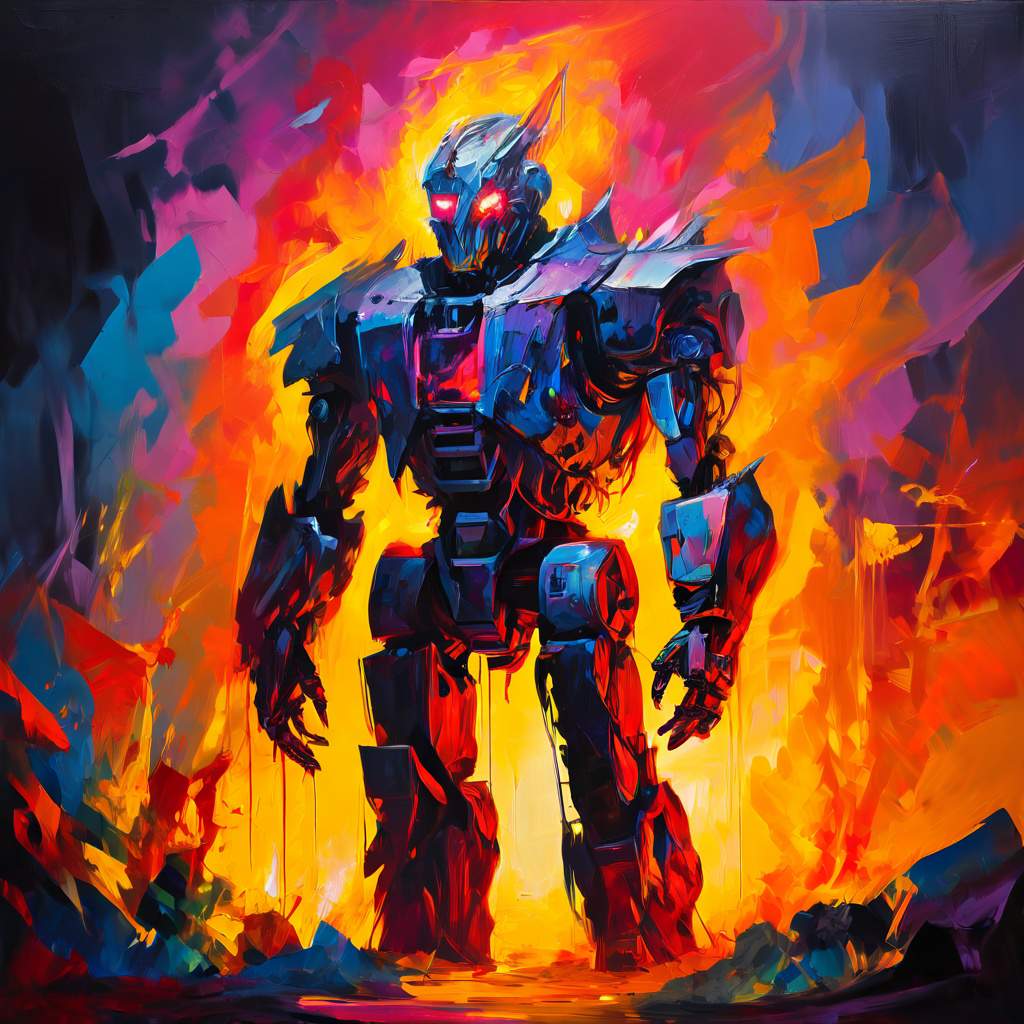
Transformers Comics Reveal Megatron’s True Master Is The Fallen
Skybound Entertainment’s ongoing Transformers series has reached a pivotal moment in its narrative, delivering a revelation that recontextualizes the Decepticon leader’s entire arc. In the pages of issue #31, now available in stores, writer Robert Kirkman and returning artist Ludo Lullabi have unveiled the shadowy figure who has been pulling Megatron’s strings since his earliest days on Cybertron. After months of visions and torment, the comic confirms that Megatronus Prime—better known throughout franchise history as The Fallen—stands as the true architect of the tyrant’s power, serving as the source behind the Matrix of Oppression.
This revelation marks a significant shift in the current comic continuity, which had previously left the master’s identity unanswered when Daniel Warren Johnson concluded his run at issue #24. While many readers had anticipated the planet-sized Unicron from the 1986 animated film to fill this role, editor Ben Abernathy notes that the creative team opted for a different interpretation of Megatron’s corruption that draws deeply from comics lore while setting the stage for a dramatic physical transformation.
The Revelation in Issue #31
The current storyline finds Megatron plagued by visions of Dezimir, the Quintesson who originally abducted him eons ago and forced him through repeated trials by combat. These sequences have been haunting the Decepticon leader for several issues, building toward a climactic vision quest that finally introduces him to the true power behind his torment. Standing before Megatron in this psychic landscape is Megatronus Prime, offering the same choice that Unicron presented in the classic 1986 movie: oblivion or servitude.
The issue delves into the mechanics of the Matrix of Oppression, revealing that the talisman functions as a prison for the souls of past Decepticon leaders. Readers familiar with franchise history will recognize names such as Trannis and Straxus among these imprisoned essences. In a narrative twist reminiscent of spiritual possession tales, the Matrix carries the accumulated power and domination of these previous tyrants, but requires absolute submission from its wielder.
Megatron initially rejects this offer, echoing his defiance toward Unicron by declaring, “I was born to command. Not serve.” However, after enduring a vision showing thousands more trials awaiting him and being literally torn apart by Dezimir’s monsters, the warlord relents. His acceptance—“I accept your terms”—comes not from strength but from fear, establishing that for all his rhetoric about the rule of the strong, Megatron values survival above autonomy. As he awakens in the physical world, crystals emerge from the Matrix embedded in his chest, covering his body while his troops look on in horror. “He’s … changing,” observes an unnerved Rumble, with Skywarp questioning, “But into what?” Seasoned fans will recognize the implication: the Matrix of Oppression appears to be metamorphosing Megatron into Galvatron, even as Optimus Prime has recently ceded his own Matrix of Leadership to a successor.
The Origins of the Matrix of Oppression
To understand the significance of this revelation, one must look back to the groundwork laid in earlier issues of the Skybound run. Under Daniel Warren Johnson’s writing, the series held off on featuring Megatron prominently, instead giving lieutenants Starscream, Soundwave, and Shockwave time in command before the true leader returned in issue #18. The following issue, #19, presented an origin story illustrated by guest artist Ludo Lullabi that established how Megatron gained his current form and power.
According to this backstory, Megatron was not always the master of his own destiny. After being abducted by Dezimir, he was subjected to gladiatorial trials that riff on his classical origin as a revolutionary fighter. Upon completion of these trials, he was returned to Cybertron with new abilities, including his iconic alternate form as a weapon that controls whoever wields it. More significantly, he received the Matrix of Oppression, described as a talisman of corrupting power that stands in direct opposition to the Creation Matrix carried by Autobot leaders.
This distinction between the two Matrices—wisdom and leadership versus oppression and domination—has become a central thematic pillar of the series. While Optimus Prime carries a spark of creation and hope, Megatron harbors a vessel of enslavement and control, literally housing the souls of his predecessors. Johnson left the ultimate source of this corruption mysterious, but Kirkman’s arrival has now provided the definitive answer, connecting the current narrative to decades of Transformers mythology.
Megatronus Prime Across Transformers History
The Fallen, as Megatronus Prime became known, represents one of the most enduring antagonists in Transformers lore, created by prolific comics writer Simon Furman. The character debuted in 2003’s Transformers: War Within: The Dark Ages, with artwork by Andrew Wildman. Furman, who had previously established much of the cosmic mythology surrounding Primus and Unicron during his original run on Marvel’s Transformers comics in the 1980s, positioned the Fallen as one of the first thirteen Transformers created by Primus to battle his evil twin, Unicron.
The character serves as a Lucifer analogue within this mythology: a creation of the divine Primus who fell under Unicron’s sway and betrayed his kind. Wildman’s original design for the character emphasized his infernal nature, depicting him as a living furnace with a grate-like mask and fire glowing from within his mechanical body. This visual motif has evolved across different media interpretations:
- Comic Origins (2003): A furnace-like entity with internal fire and industrial horror aesthetics
- Live-Action Film (2009): Michael Bay’s Transformers: Revenge of the Fallen adapted the character with a pharaoh motif, voiced by the late Tony Todd, establishing him as the original Decepticon whose face inspired the faction’s insignia
- Aligned Continuity (2010): The Transformers: Prime animated series made Megatronus Prime into a metaphorical mentor; the miner D-16 took the name Megatronus before shortening it to Megatron, establishing the name connection without direct corruption
- Animation (2024): Transformers One utilized the Megatronus name for the character’s pre-fallen identity, though Jon Hamm’s Sentinel Prime served as the primary villain rather than Megatronus himself
Issue #31 returns to the classic fiery aesthetic for the Fallen, emphasizing his role as a corrupting influence who demands worship and submission rather than partnership. Unlike Unicron, who offers power through destruction, Megatronus offers dominion through subjugation—fitting for a character whose very existence predates the Autobot-Decepticon war.
The Path to Galvatron and Decepticon Leadership
The revelation arrives at a crucial moment for the Decepticon hierarchy. In issue #24, Megatron failed to maintain control over his treacherous lieutenant Starscream, exposing flaws in his command structure. This failure directly informs his current desperation; having proven incapable of maintaining order through his own strength, he turns to external power, accepting the very servitude he once preached against.
The crystalline transformation beginning in the issue’s final pages suggests a metamorphosis similar to the one depicted in the 1986 animated film, where Unicron rebuilt a damaged Megatron into the more powerful but utterly obedient Galvatron. However, this iteration offers a darker psychological underpinning: Megatron becomes Galvatron not through physical destruction and reconstruction, but through spiritual capitulation, accepting the accumulated tyranny of his predecessors into his own spark.
As the crystals envelop him, witnessed by Rumble, Skywarp, and the assembled Decepticons, the power dynamic within the faction shifts irrevocably. Megatron may still wear the crown, but he has acknowledged that he serves at another’s pleasure, creating a recursive chain of command where the strong rule the weak, but only the weakest serve willingly. This development positions the ongoing series to explore themes of autonomy, corruption, and the cyclical nature of tyranny as it moves beyond its thirty-first issue.
What’s After the Movie
For fans tracking the ever-expanding Transformers universe across comics, animation, and film, keeping up with continuity shifts and character revelations can be as complex as navigating the Cybertronian war itself. Whether you’re following Skybound’s comic series, revisiting the 1986 animated classic, or catching up on the latest animated releases, having a reliable source for comprehensive franchise coverage proves invaluable.
What’s After the Movie serves as your all-around destination for movie information, industry news, box office data, and detailed breakdowns of the franchises you love. From spoiler-free summaries to ending explanations and casting announcements, the site provides the context needed to understand how individual installments like Transformers #31 fit into larger narrative tapestries. Explore more coverage at https://www.whatsafterthemovie.com or browse the movies section for comprehensive franchise guides and the latest industry updates.
Continue reading



What's After the Movie?
Not sure whether to stay after the credits? Find out!
Check out our other apps:

SAT Sphere
Build confidence for the Digital SAT.

Mori Atlas
Discover wild places worth protecting.

Luntero
Search smarter for a home in Amsterdam.

Plot Explained
Unravel movie endings and hidden clues.

Pokechamp
Dive into Pokémon data and battle logic.

Driving Theory
Get ready for your European theory test.

Movie Dust
Plan your next cinema trip with ease.

Musemap
Find art and culture as you travel.

Selkobase
Compare credentials before committing.

Local Manual
Turn an unfamiliar country into practical next steps.

Lernavi
Compare school systems before your next move.

GymRoam
Find a workout stop wherever your plans take you.
Explore Our Movie Platform
New Movie Releases (2026)
Famous Movie Actors
Top Film Production Studios
Movie Plot Summaries & Endings
Major Movie Awards & Winners
Best Concert Films & Music Documentaries
Movie Collections and Curated Lists
© 2026 What's After the Movie. All rights reserved.
Privacy Policy