What's After the Blog?
news • analysis
Starfleet Academy Season 1 Finale Subverts Classic Trek Courtroom Trope
Star Trek: Starfleet Academy concludes its first season with a courtroom drama that reimagines a franchise staple. The finale pits Paul Giamatti's Nus Braka against Starfleet authority while drawing deliberate parallels to Deep Space Nine's Maquis storyline.
March 13, 2026
Starfleet Academy Season 1 Finale Subverts Classic Trek Courtroom Trope
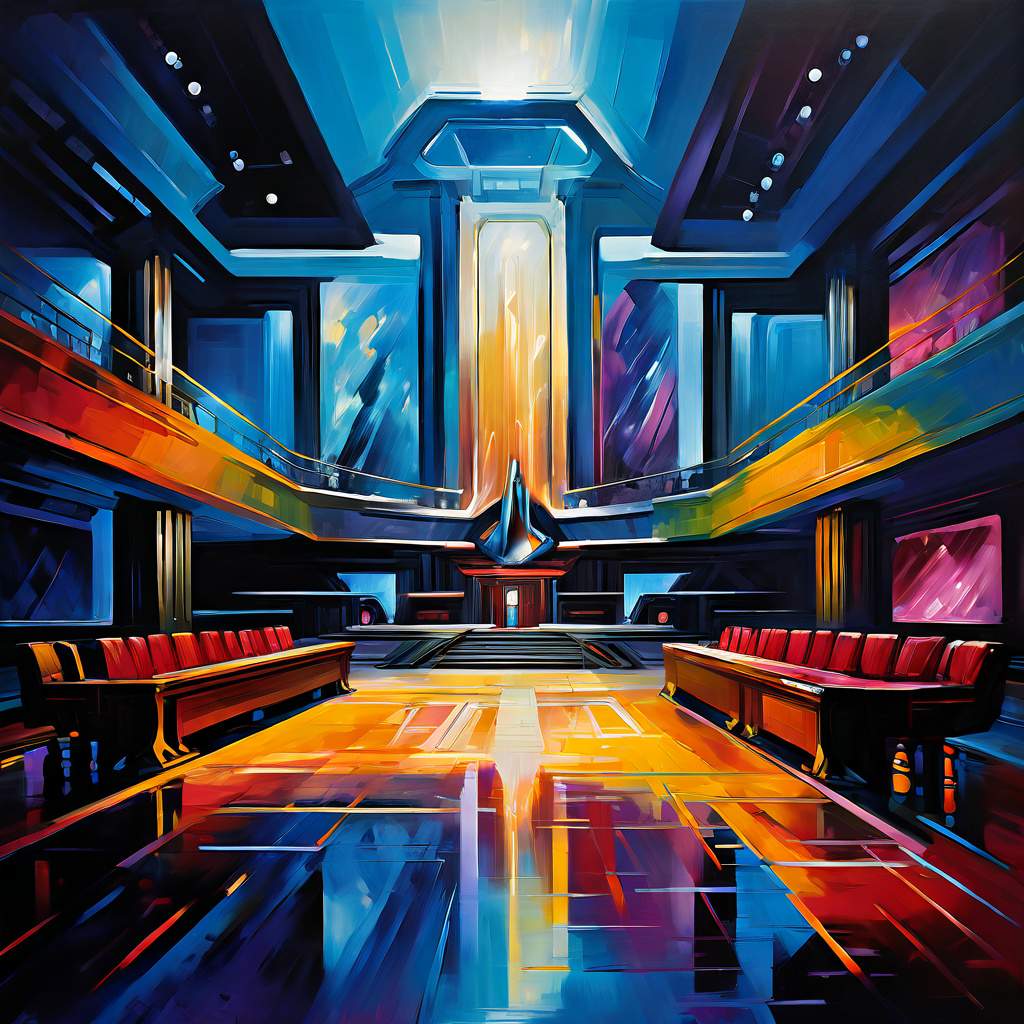
The first season of Star Trek: Starfleet Academy culminates in a theatrical courtroom confrontation that reframes one of the franchise’s most durable narrative traditions. Rather than merely replicating the series’ history of legal dramas—from Data’s humanity hearings to Spock’s court-martial—the finale uses the format to put Starfleet itself on trial, interrogating the institution’s moral failings through the lens of a grieving villain who may have finally found an audience for his grievances. The episode transforms the vandalized remains of the USS Athena’s atrium into a galactic stage, broadcasting proceedings to the entire quadrant while forcing Chancellor Nahla Ake (Holly Hunter) and reluctant participant Anisha Mir (Tatiana Maslany) to face accusations of institutional cruelty.
The Accusation: Braka’s Public Tribunal
Nus Braka has spent the season cultivating an image of theatrical menace, yet his ultimate strategy reveals a calculated desire for legitimacy through public spectacle. After capturing Ake and Mir, the Venari Ral leader constructs an impromptu courtroom within the destroyed atrium—once a bustling hub for cadets, now a symbol of Starfleet’s decay in Braka’s narrative. Through drone cameras broadcasting to sympathetic systems across occupied space, he forces the Chancellor to answer for decades-old sins, particularly the forced separation of families and the Federation’s failure to address rampant hunger and dwindling resources in the outer colonies.
The proceedings rope in Anisha Mir as an unwilling participant, leveraging her personal history with Braka to add emotional weight to the accusations. While the setup initially appears as another supervillain monologue, the writing grants Braka uncomfortable validity in specific grievances. His father’s desperate attempt to signal passing Starfleet vessels during a childhood crisis—receiving only “hellfire” in response—grounds his rage in concrete trauma rather than abstract megalomania. This complexity distinguishes the episode from simpler villain defeats, suggesting that while Braka’s methods have grown extreme, the institutional failures he cites remain unresolved within Federation space.
Franchise DNA: Trek’s Courtroom Legacy
The trial episode has remained a Star Trek staple across multiple decades and series, serving as a vehicle for philosophical debate about justice, personhood, and military ethics. The Original Series famously placed Spock himself before a court-martial board, while The Next Generation elevated the format with “The Measure of a Man,” debating Data’s legal status as property or person. Deep Space Nine continued this tradition through episodes examining war crimes, extradition, and the limits of Starfleet authority during conflict.
What distinguishes the Starfleet Academy finale from these precedents is the reversal of institutional roles:
- Traditional Structure: Individual officers defend themselves against accusations or advocate for outsiders seeking Federation protection
- Academy Twist: Starfleet as an organization faces judgment for systemic failures, with its highest-ranking officials compelled to testify against their own record
- Audience Shift: Proceedings broadcast to skeptical civilian populations rather than confined to military tribunals
- Stakeholder Inclusion: Cadets and disaffected colonists serve as the implied jury rather than senior command staff
This structural inversion allows the episode to interrogate the gap between Starfleet’s aspirational self-image and its practical abandonment of vulnerable populations—questions that previous courtroom episodes approached from the perspective of those seeking inclusion rather than those rejected by the system.
Shadows of the Maquis: Disillusionment and Defection
The finale’s most striking resonance emerges through its implicit dialogue with Deep Space Nine and the Maquis storyline that defined much of that series’ political tension. Braka’s fundamental grievance—that the Federation makes “hard decisions” about which populations deserve salvation and which become acceptable losses—mirrors the disillusionment that drove Starfleet officers to join the Maquis militia. These renegade colonists rejected the Federation’s peace treaty with Cardassia after feeling abandoned by the very organization sworn to protect them.
Michael Eddington, the security chief turned Maquis operative, serves as the most direct antecedent to Braka’s philosophical position. Both characters accuse Starfleet of moral compromise disguised as pragmatic diplomacy. Captain Sisko eventually acknowledged that the Maquis possessed legitimate grievances regarding the Federation’s treatment of border colonies, even while opposing their terrorist methods. Starfleet Academy extends this tradition by presenting Braka not merely as an antagonist but as a prosecutor of historical wrongs—one whose theatricality cannot fully obscure the reality of Starfleet’s failures to prevent civilian suffering.
The comparison falters only at the point of remedy. Where the Maquis sought territorial autonomy and protection, Braka’s isolationist Venari Ral movement appears less interested in reform than in public humiliation of specific leaders. Yet the underlying accusation—that Starfleet prioritizes its own ideological purity over the material needs of colonists—remains consistent across both narratives, suggesting that the Federation’s post-Dominion War reconciliation with its own citizens remains incomplete.
The Reveal: Self-Destruction Over Starfleet Aggression
Braka’s prosecution collapses not through legal maneuvering but through the revelation that his foundational premise rests upon a catastrophic falsehood. The destruction of his homeworld—the act that initially justified his crusade against Starfleet—was not caused by Federation vessels ignoring distress calls, but by his own people’s desperate actions. This twist reframes the villain’s entire narrative from righteous vengeance to tragic misdirection, undermining his theatrical condemnation while paradoxically validating his broader critique of institutional neglect.
The revelation serves multiple narrative functions. It prevents the finale from endorsing Braka’s specific accusations against Ake while preserving the uncomfortable reality that Starfleet’s failures, though not genocidal in this instance, remain numerous enough to fuel such beliefs. The character’s inability to process this truth—his continued insistence on Starfleet’s villainy despite contradictory evidence—suggests a psychological dependency on grievance that transcends political reality. Yet the episode avoids absolving Starfleet entirely; the organization’s actual sins regarding Anisha Mir’s family and resource distribution remain unaddressed even as Braka’s specific claims are debunked.
This nuanced resolution allows the season to conclude with clear heroic victories—Ake and Mir survive, the immediate threat neutralized—while preserving complex thematic questions about institutional accountability. The finale ultimately argues that recognizing Braka’s legitimate grievances does not require accepting his fabricated history, a distinction that mirrors the series’ broader interrogation of how organizations remember and atone for past failures.
Streaming Availability and Season Completion
All ten episodes of Star Trek: Starfleet Academy are currently available for streaming exclusively on Paramount+. The season concludes with this finale, wrapping major storylines regarding Braka’s conspiracy and the Academy’s first-year crises while leaving open questions about Starfleet’s institutional reform and the future of the Venari Ral movement. Unlike previous Trek series that utilized courtroom episodes as mid-season philosophical interludes, this finale integrates the format into its climactic arc, suggesting that legal accountability and historical reckoning will remain central themes should the series continue into subsequent seasons.
What’s After the Movie?
If you’re exploring the complex moral universes of contemporary science fiction television, What’s After the Movie offers comprehensive resources for viewers navigating ambiguous endings and institutional critiques. Our platform provides detailed plot summaries that clarify narrative twists without losing thematic nuance, alongside spoiler-free guides for viewers catching up on serialized storytelling. Visit our main site for curated collections of courtroom dramas and political thrillers across the Star Trek franchise, or browse our summary section for detailed breakdowns of season finales and character arcs. For ongoing coverage of streaming releases and franchise developments, check our blog for the latest analysis of major platform exclusives and limited series conclusions.
Continue reading




What's After the Movie?
Not sure whether to stay after the credits? Find out!
Check out our other apps:

SAT Sphere
Build confidence for the Digital SAT.

Mori Atlas
Discover wild places worth protecting.

Luntero
Search smarter for a home in Amsterdam.

Plot Explained
Unravel movie endings and hidden clues.

Pokechamp
Dive into Pokémon data and battle logic.

Driving Theory
Get ready for your European theory test.

Movie Dust
Plan your next cinema trip with ease.

Musemap
Find art and culture as you travel.

Selkobase
Compare credentials before committing.

Local Manual
Turn an unfamiliar country into practical next steps.

Lernavi
Compare school systems before your next move.

GymRoam
Find a workout stop wherever your plans take you.
Explore Our Movie Platform
New Movie Releases (2026)
Famous Movie Actors
Top Film Production Studios
Movie Plot Summaries & Endings
Major Movie Awards & Winners
Best Concert Films & Music Documentaries
Movie Collections and Curated Lists
© 2026 What's After the Movie. All rights reserved.
Privacy Policy