What's After the Blog?
feature • analysis
Every Star Trek Enterprise Captain Ranked: From Worst to Best
A comprehensive ranking evaluates every official captain to hold the center seat of the USS Enterprise across Star Trek's sprawling canon. From the indecisive command of the Enterprise-B to the diplomatic excellence of the Enterprise-D, this list measures leadership impact, historical significance, and command effectiveness.
March 29, 2026
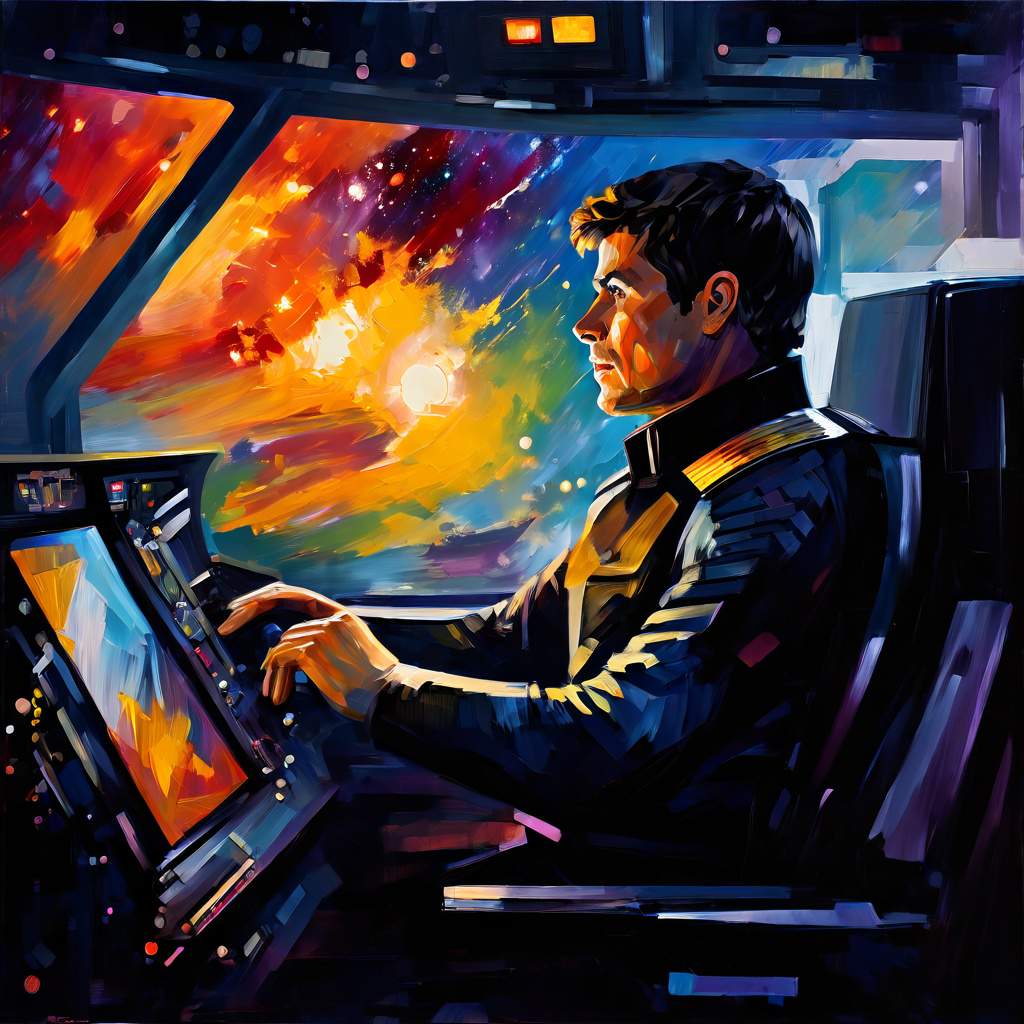
Every Star Trek Enterprise Captain Ranked: From Worst to Best
The USS Enterprise stands as the most legendary vessel in science fiction history, serving as the flagship for Starfleet’s mission of exploration and defense across multiple centuries. While countless officers have temporarily seized the conn during emergencies, a select few have held the permanent rank of captain aboard the various iterations of this iconic starship. This definitive ranking examines every official Enterprise captain depicted on screen—from the experimental NX-01 to the advanced Enterprise-G—evaluating their leadership qualities, historical achievements, and overall command effectiveness. Acting captains have been excluded to focus strictly on those who held the permanent posting, providing a clear hierarchy of who truly mastered the responsibilities of the center seat.
The Brief and Tragic Tenures
Some captains of the Enterprise are remembered less for their leadership and more for the unfortunate circumstances that defined their short-lived commands. At the bottom of the list stands Captain John Harriman, who commanded the Enterprise-B during its maiden voyage in 2293 as depicted in Star Trek Generations. Portrayed by Alan Ruck, Harriman appeared visibly out of his depth during a crisis involving the Nexus energy ribbon, requiring the retired James T. Kirk to seize control of the situation. The character functioned largely as a plot device to give Kirk one final heroic moment, leaving Harriman as merely a footnote in Starfleet history—a portrait of command indecisiveness during what should have been a routine ship-to-ship rescue mission.
Similarly brief was the tenure of Captain William Decker aboard the refit NCC-1701 at the beginning of 1979’s Star Trek: The Motion Picture. The son of Commodore Matt Decker, William Decker had just begun his command when Admiral Kirk relieved him to investigate the V’Ger crisis. While Decker demonstrated quick thinking that saved the ship from a wormhole incident and ultimately sacrificed himself by merging with the sentient machine to create a new lifeform, his command was defined by frustration and displacement. Like Harriman, Decker existed primarily to be replaced by Kirk, leaving him quietly forgotten by the time the crew reunited for subsequent sequels.
Captain Rachel Garrett of the Enterprise-C represents another tragic entry, appearing in the Star Trek: The Next Generation episode “Yesterday’s Enterprise.” As the first female captain of an Enterprise, Garrett commanded the vessel when it disappeared approximately twenty years before the start of The Next Generation. When a temporal rift brought the Enterprise-C forward in time, Garrett agreed to return to her own era despite knowing it meant certain death, attempting to correct the altered timeline. Though she died before completing the mission—leaving Acting Captain Richard Castillo and Tasha Yar to finish the sacrifice—Garrett handled her doomed fate with solemn dignity, cementing her place in Starfleet lore despite her minimal screen time.
Legacy Commanders and Transitional Leaders
Several Enterprise captains served during transitional periods or alternate timelines, leaving complex legacies that differ significantly from their prime universe counterparts. Admiral Robert April represents one of the earliest commanders, cited across various Star Trek ancillary materials as Christopher Pike’s direct predecessor. April made his on-screen debut in the animated series finale voiced by James Doohan, later appearing in live-action in Star Trek: Strange New Worlds portrayed by Adrian Holmes. Though his actual captaincy has never been depicted on screen, April maintains an esteemed reputation as one of Starfleet’s most decorated officers, suggesting he played a pivotal role in expanding the Federation’s presence throughout the galaxy.
Spock’s brief promotion to captain of the Enterprise following The Motion Picture placed him in command during the training cruise depicted in 1982’s Star Trek II: The Wrath of Khan. While Spock would rank higher based on character strength alone, his official tenure as captain was fleeting—he voluntarily relinquished command back to Kirk upon receiving the distress signal from Regula I, and famously died by the film’s conclusion. Following his resurrection, Spock returned to the role of first officer before eventually retiring to pursue diplomacy, making his captaincy a brief highlight rather than a defining chapter.
In the Kelvin Timeline launched by the 2009 Star Trek reboot, Christopher Pike served as the Enterprise’s initial captain, portrayed by Bruce Greenwood. This divergent version of Pike recruited James Kirk into Starfleet and named him acting captain before being kidnapped by Nero. After retaking command in Star Trek Into Darkness, Pike was murdered by Khan Noonien Singh, with his death serving as the catalyst that galvanized Kirk’s crew. While Greenwood delivered a reliably strong performance, this Pike functioned primarily as a mentor figure destined to step aside for the next generation, lacking the extended character development seen in the prime timeline.
Seven of Nine represents the most recent addition to this pantheon, assuming command of the USS Enterprise-G (formerly the Titan-A) in the final season of Star Trek: Picard. Following the heroic death of Captain Liam Shaw during the Borg Collective’s alliance with the Changelings, Seven—portrayed by Jeri Ryan—took the center seat with Raffi Musiker serving as her first officer. Though her tenure has been limited to the series finale and subsequent comic book continuations, with a potential Star Trek: Legacy series remaining in development limbo, Seven’s captaincy represents a significant evolution for the former Borg drone turned Starfleet officer.
The Mavericks and Founding Fathers
Jonathan Archer and the Kelvin Timeline’s James T. Kirk represent commanders who prioritized action and instinct over strict protocol, though with vastly different results. Archer, portrayed by Scott Bakula, captained the Enterprise NX-01—the first Starfleet vessel to bear the name—during the 22nd century. Commanding a crew of eighty-four aboard a ship initially capable of only warp five, Archer made first contact with dozens of alien species and served as an instrumental figure in the Xindi War. His efforts helped bring together the founding members of the United Federation of Planets, establishing the template for Starfleet leadership. However, Archer remains a more visibly flawed commander than many successors, functioning as a wartime commander and explorer who lacked the well-rounded refinement of later captains.
By contrast, the Kelvin Timeline’s Kirk, portrayed by Chris Pine, dialed up the brashness and impulsive behavior compared to his prime universe counterpart. This version of Kirk operated as a rule-breaker who flagrantly violated the Prime Directive to accomplish objectives, displaying a cockiness and recklessness that occasionally cost him command—albeit temporarily. While this tenacity provided an edge against opponents like Nero and Khan, the character felt noticeably more immature, seemingly cut from the Han Solo cloth rather than the iconic starship captain archetype. Without further films in the Kelvin Timeline, this Kirk remains frozen in a state of arrested development, never achieving the maturity seen in the original timeline.
The Gold Standard of Starfleet
At the pinnacle of Enterprise commanders stand three officers who defined excellence in different eras. Christopher Pike of the prime timeline, portrayed by Anson Mount in Star Trek: Strange New Worlds, brought an empathic touch to leadership finely attuned to his crew’s needs. Leading the Enterprise during its exploratory missions while aware of his tragic destiny, Pike demonstrated effective command against threats like the Gorn. However, Strange New Worlds implies that Pike’s more cautious approach might not have suited the Enterprise’s future needs, suggesting that the more assertive Kirk was necessary to avoid war with the Romulans—a subtle indication that even great leaders have limitations.
The original James T. Kirk, portrayed by William Shatner across The Original Series and its film sequels, remains the franchise’s most famous captain. Leading the five-year mission aboard the NCC-1701, Kirk saved the Federation from numerous extinction-level threats, from energy-consuming amoebas to rogue artificial intelligences. After saving Earth in Star Trek IV: The Voyage Home, he accepted demotion to captain to command the USS Enterprise-A. While Kirk possessed notable flaws—including obsessive vendettas and prejudice against Klingons—his ability to snap back into focus and save the day through physical action or puzzle-solving strategy cemented his status as one of Starfleet’s finest.
Yet even Kirk is surpassed by Jean-Luc Picard, the captain who brought even-keeled judgment and diplomatic excellence to the Enterprise-D throughout The Next Generation and its four feature films. Portrayed by Patrick Stewart, Picard embodied the full package of Starfleet ideals: skilled diplomat, tactical thinker, explorer, and stoic intellectual. His principled stance frequently put him at odds with rogue elements within Starfleet itself, reminding superior officers of the Federation’s core values. While capable of physical action as demonstrated in Star Trek: First Contact, Picard’s balanced approach to command and unwavering commitment to principle set the standard by which all other captains are measured.
Complete Ranking At a Glance
For clarity, here is the definitive ranking of every official Enterprise captain from worst to best:
- 12. John Harriman (USS Enterprise-B) – Indecisive during his sole crisis
- 11. William Decker (USS Enterprise NCC-1701) – Sacrificed himself but defined by displacement
- 10. Rachel Garrett (USS Enterprise-C) – Dignified but doomed before completing her mission
- 9. Robert April (USS Enterprise NCC-1701) – Decorated predecessor to Pike, limited on-screen depiction
- 8. Spock (USS Enterprise NCC-1701) – Brief training cruise command, quickly relinquished
- 7. Christopher Pike (Kelvin Timeline USS Enterprise) – Effective mentor killed before full potential
- 6. Seven of Nine (USS Enterprise-G) – Newest captain, limited tenure so far
- 5. James T. Kirk (Kelvin Timeline USS Enterprise) – Brash and effective but immature
- 4. Jonathan Archer (Enterprise NX-01) – Foundational but flawed pioneer
- 3. Christopher Pike (Prime Timeline USS Enterprise) – Empathic leader with tragic limitations
- 2. James T. Kirk (Prime Timeline USS Enterprise) – Iconic action-oriented commander
- 1. Jean-Luc Picard (USS Enterprise-D) – The embodiment of Starfleet ideals and balanced leadership
What’s After the Movie
If you’re fascinated by the command structures and character journeys of the Star Trek universe, What’s After the Movie offers comprehensive coverage of the franchise and beyond. From detailed movie summaries and ending explanations to box office analysis and industry news, our platform serves as your all-around destination for film and television information. Explore our movie database for similar rankings and breakdowns, or visit our blog for the latest updates on streaming releases and casting announcements.
Continue reading



What's After the Movie?
Not sure whether to stay after the credits? Find out!
Check out our other apps:

SAT Sphere
Build confidence for the Digital SAT.

Mori Atlas
Discover wild places worth protecting.

Luntero
Search smarter for a home in Amsterdam.

Plot Explained
Unravel movie endings and hidden clues.

Pokechamp
Dive into Pokémon data and battle logic.

Driving Theory
Get ready for your European theory test.

Movie Dust
Plan your next cinema trip with ease.

Musemap
Find art and culture as you travel.

Selkobase
Compare credentials before committing.

Local Manual
Turn an unfamiliar country into practical next steps.

Lernavi
Compare school systems before your next move.

GymRoam
Find a workout stop wherever your plans take you.
Explore Our Movie Platform
New Movie Releases (2026)
Famous Movie Actors
Top Film Production Studios
Movie Plot Summaries & Endings
Major Movie Awards & Winners
Best Concert Films & Music Documentaries
Movie Collections and Curated Lists
© 2026 What's After the Movie. All rights reserved.
Privacy Policy