What's After the Blog?
news • interview • feature
Pixar's Hoppers Draws Visual Inspiration From Studio Ghibli's Pom Poko
Director Daniel Chong revealed in an exclusive interview that Pixar's new film "Hoppers" employs a dual-perspective visual device borrowed from Studio Ghibli's 1994 film "Pom Poko." The technique allows animals to appear anthropomorphic with expressive features when communicating with each other, while rendering them as realistic wildlife when observed by human characters.
March 9, 2026
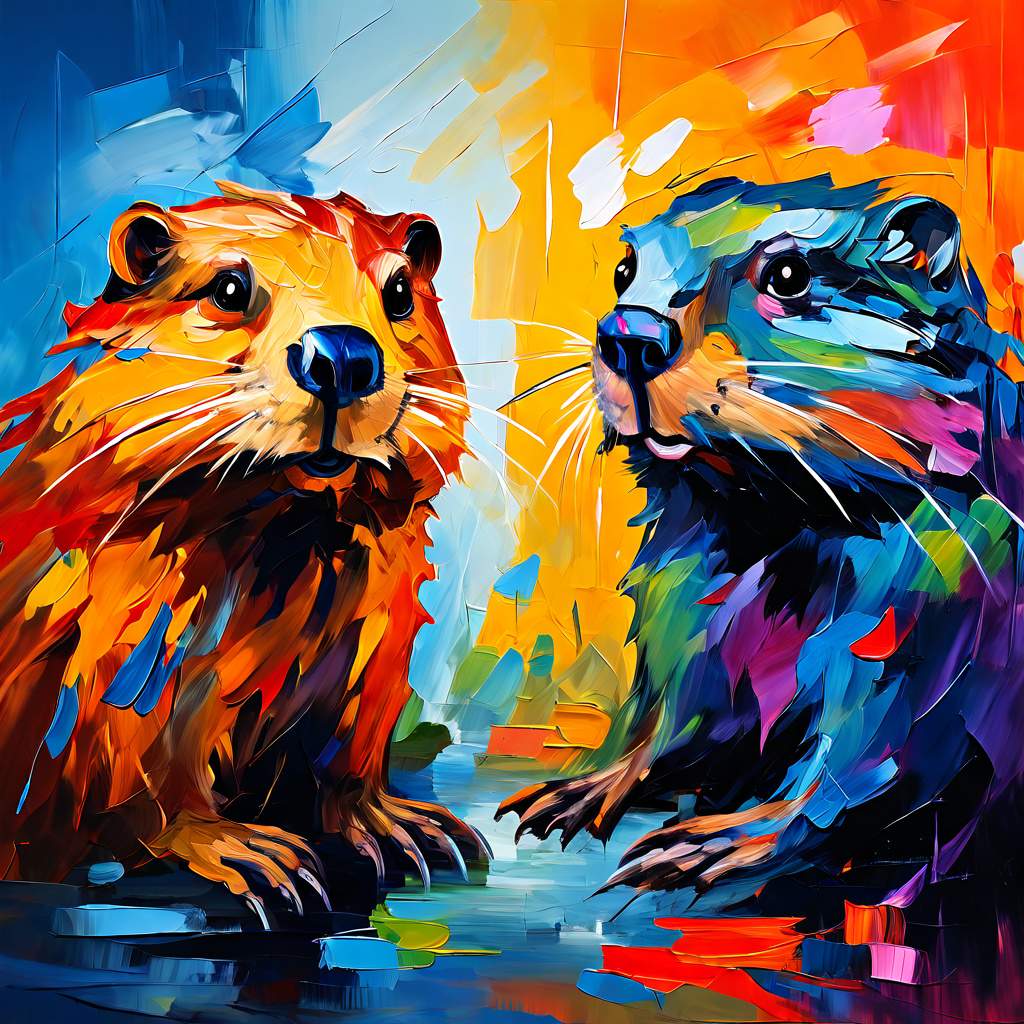
Pixar’s Hoppers Draws Visual Inspiration From Studio Ghibli’s Pom Poko
Pixar’s latest animated feature introduces audiences to a world where perception fundamentally shapes reality, employing a distinctive visual language that distinguishes between human and animal viewpoints. Director Daniel Chong recently disclosed in an exclusive interview with /Film that this storytelling approach—where creatures appear dramatically different depending on the observer—draws direct creative influence from Studio Ghibli’s 1994 classic “Pom Poko,” directed by the legendary Isao Takahata. This revelation highlights the ongoing cross-cultural exchange between American and Japanese animation studios, demonstrating how decades-old techniques from anime continue to influence contemporary CGI filmmaking.
The Dual-Perspective Mechanics of “Hoppers”
“Hoppers” centers on Mabel, a teenage conservationist voiced by Piper Curda, who wages a battle against City Hall to protect a local glade from demolition. The municipal government, represented by an ambitious mayor voiced by Jon Hamm, plans to bulldoze the environmentally sensitive area to construct a highway, claiming legal right to do so because the wildlife has already evacuated. To save the ecosystem, Mabel must convince beavers to return and construct a dam, thereby establishing legal protections that would prevent construction.
The narrative incorporates science-fiction elements through the character of Dr. Sam Fairfax, portrayed by Kathy Najimy, who has developed technology reminiscent of James Cameron’s “Avatar.” This system allows human consciousness to project into ultra-realistic animal robots, enabling Mabel to inhabit a mechanical beaver body and move undetected among wildlife. When viewing the world through animal eyes—both Mabel’s robotic perspective and the audience’s viewpoint—the creatures display large, expressive cartoon eyes and communicate in clear English dialogue. However, when the camera shifts to human observation, the same animals appear with small, inexpressive dot eyes and emit only naturalistic chittering and squawking sounds.
The Studio Ghibli Precedent: “Pom Poko” and Visual Storytelling
The inspiration for this perceptual duality stems from Takahata’s “Pom Poko,” a film chronicling a clan of Japanese raccoon dogs—known as tanuki—fighting to save their forest from encroaching housing development. Like “Hoppers,” the 1994 Ghibli production utilizes a flexible visual vocabulary that shifts based on perspective. When communicating among themselves, the tanuki appear anthropomorphic, standing upright and speaking human language. When observed by human characters, they revert to realistic wildlife appearances, indistinguishable from actual forest animals.
“Pom Poko” draws heavily from Japanese folklore, where tanuki traditionally appear as impish shapeshifters more concerned with mischief and comfort than external threats. The film balances environmental messaging with fantasy elements as the creatures hone their transformation abilities to conduct espionage against developers. Distribution challenges emerged when the film reached American markets, as the animation faithfully depicts the tanuki’s anatomical features according to traditional folklore representations—a detail uncommon in Western family animation that complicated marketing efforts.
Chong’s Creative Philosophy and Homage
In his discussion with /Film’s Bill Bria, Chong elaborated on the internal terminology and thought process behind the visual distinction. The production team referred to the concept as a “two world kind of rule,” establishing separate visual languages for human and animal perspectives from the earliest development stages. This framework proved essential for orienting audiences during sequences where Mabel alternates between her human and robotic beaver forms.
Chong explicitly credited the Ghibli film as a foundational reference point, stating the production “took a lot of cues from ‘Pom Poko.’” While acknowledging the narrative differences between the two films—one involving robotic avatars and conservation law, the other concerning magical shapeshifters and folklore—he emphasized how Takahata’s execution provided a blueprint for “showcas[ing] two different versions of the animals, and yet the audience understands we’re talking about the same animal.” This approach allows filmmakers to maintain character continuity while exploring how perception filters reality.
Comparing Environmental Themes and Techniques
Both films share thematic DNA beyond their shared visual device, centering on environmental conservation and the conflict between urban development and natural ecosystems. However, their narrative approaches differ significantly:
- Protagonist Structure: “Hoppers” follows a single teenage human advocate using technology to bridge species divides, while “Pom Poko” employs an ensemble of non-human creatures utilizing innate supernatural abilities
- Conflict Method: Mabel utilizes Dr. Fairfax’s consciousness-transfer technology to infiltrate animal society, whereas the tanuki rely on traditional shapeshifting and transformation magic drawn from Japanese folklore
- Visual Indicators: Pixar’s film uses eye size and expressiveness as the primary differentiator (large cartoon eyes versus small dots), while Ghibli’s approach relies on posture and anthropomorphic stance (upright humanoid forms versus quadrupedal wildlife)
- Antagonist Representation: Both feature bureaucratic/developmental threats, with “Hoppers” focusing on municipal highway construction and “Pom Poko” depicting residential housing sprawl
- Cultural Context: The Ghibli film incorporates specific Japanese mythological elements, while the Pixar production focuses on contemporary conservation law and robotic technology
Implications for Modern Animation
This cross-pollination between Studio Ghibli’s hand-drawn tradition and Pixar’s computer-generated aesthetic demonstrates how influential animation techniques transcend technological boundaries. By adopting Takahata’s perceptual framework, Chong solves a common narrative problem in talking-animal films: maintaining biological realism while enabling emotional expression. The solution allows “Hoppers” to present scientifically accurate animal behavior when viewed from human perspectives, while granting the anthropomorphic connection necessary for character development during animal-only sequences.
The technique also serves as an elegant storytelling compass, immediately signaling to viewers which consciousness currently dominates the scene. When audiences see large, emotive eyes and hear English dialogue, they understand they’re experiencing the animal reality; when confronted with small, dark eyes and natural sounds, they recognize the human limitation of perception. This dual-reality approach enriches the film’s thematic exploration of environmental empathy, suggesting that true understanding requires seeing the world through another species’ eyes—quite literally, in Mabel’s case.
What’s After the Movie
As “Hoppers” continues its theatrical run, audiences can appreciate not only the original storytelling but also the careful lineage of animation history informing its visual language. For more coverage on animation techniques, box office performance, and the latest industry interviews, visit What’s After the Movie. Our platform provides comprehensive movie information, spoiler-free summaries, ending explanations, and in-depth industry analysis to enhance your understanding of contemporary and classic cinema. Whether you’re tracking the latest releases or exploring the influences behind your favorite animated features, check out our movie collections and industry news section for continuous updates on films like “Hoppers” and their place in animation history.
Continue reading



What's After the Movie?
Not sure whether to stay after the credits? Find out!
Check out our other apps:

SAT Sphere
Build confidence for the Digital SAT.

Mori Atlas
Discover wild places worth protecting.

Luntero
Search smarter for a home in Amsterdam.

Plot Explained
Unravel movie endings and hidden clues.

Pokechamp
Dive into Pokémon data and battle logic.

Driving Theory
Get ready for your European theory test.

Movie Dust
Plan your next cinema trip with ease.

Musemap
Find art and culture as you travel.

Selkobase
Compare credentials before committing.

Local Manual
Turn an unfamiliar country into practical next steps.

Lernavi
Compare school systems before your next move.

GymRoam
Find a workout stop wherever your plans take you.
Explore Our Movie Platform
New Movie Releases (2026)
Famous Movie Actors
Top Film Production Studios
Movie Plot Summaries & Endings
Major Movie Awards & Winners
Best Concert Films & Music Documentaries
Movie Collections and Curated Lists
© 2026 What's After the Movie. All rights reserved.
Privacy Policy