What's After the Blog?
interview • news • feature
Kate Mulgrew Pitched Voyager's Leonardo da Vinci Holodeck Episodes
Kate Mulgrew revealed at a Star Trek convention that she personally pitched the Leonardo da Vinci holodeck episodes for Captain Janeway in Star Trek: Voyager. The actress sought to establish an intellectual fantasy for her character rather than the romantic subplots that appeared later in the series.
May 13, 2026
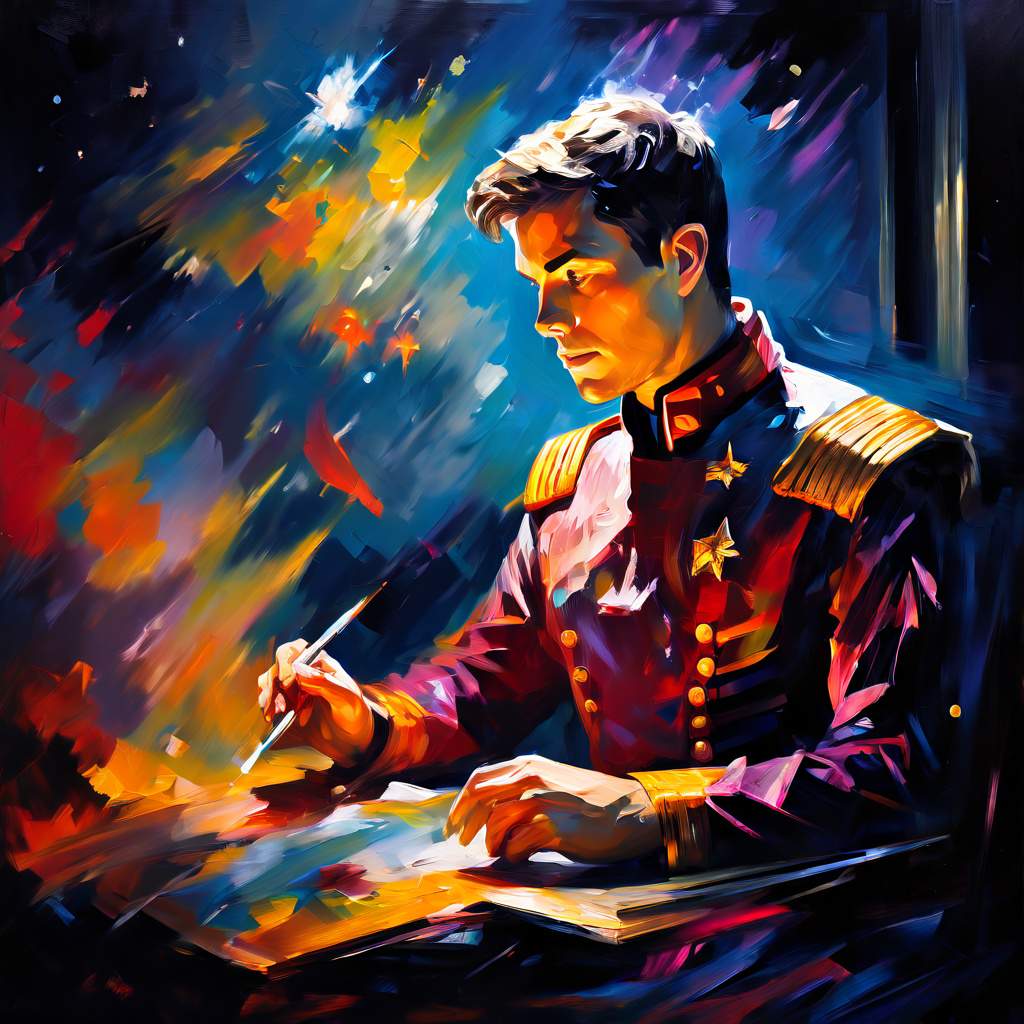
Kate Mulgrew Pitched Voyager’s Leonardo da Vinci Holodeck Episodes
Kate Mulgrew recently disclosed that Captain Janeway’s scholarly retreats with Leonardo da Vinci in Star Trek: Voyager originated not from the writers’ room but from the actress’s own creative advocacy. During a convention appearance transcribed by TrekMovie, Mulgrew revealed she personally pitched the concept to the series’ executive producers, seeking to establish her character’s downtime as intellectually stimulating rather than purely recreational. This behind-the-scenes intervention resulted in two distinct episodes that offered rare insight into the captain’s inner life while providing the series with visual and narrative variety beyond the confines of the starship.
The Pitch: Defining Janeway’s Downtime
Mulgrew approached Voyager’s leadership triumvirate—franchise overseer Rick Berman and showrunners Jeri Taylor and Michael Piller—with a specific mandate for how Captain Kathryn Janeway should spend her holodeck hours. Rejecting the romantic entanglements sometimes favored for female characters, Mulgrew insisted on an educational dynamic that would reflect Janeway’s established identity as a scientist and commander.
Mulgrew recalled telling the producers she did not want to “make out with the guy,” emphasizing her desire to learn from genius rather than pursue holographic romance. This directive aligned with Janeway’s characterization as a cerebral leader who valued scientific rigor and historical curiosity. The pitch resonated with the creative team, who authorized the construction of elaborate Renaissance-era sets and the casting of respected character actor John Rhys-Davies as the 15th-century polymath.
The approval of Mulgrew’s request demonstrated the producers’ willingness to incorporate performer input into the series’ mythology. At a time when Star Trek franchises were carefully guarded by Berman’s oversight, this collaborative approach allowed for character-specific storytelling that diverged from standard holodeck tropes.
Two Episodes, Two Dimensions
The Leonardo da Vinci concept manifested across two separate installments during the series’ run, each exploring different aspects of the mentor-apprentice relationship:
-
“Scorpion” (1997): The storyline debuted in this pivotal episode, establishing Janeway’s habit of visiting da Vinci’s workshop in 16th-century Florence despite living in the 24th century. Confined primarily to the holodeck’s simulated studio, these scenes revealed the captain’s fascination with the inventor’s mind and her willingness to assume the role of student to a historical master.
-
“Concerning Flight”: The narrative expanded significantly in this later episode when alien interference stole the Doctor’s mobile emitter, projecting da Vinci onto a desert planet where he believed himself to be exploring the New World. Stranded together, Janeway leveraged the hologram’s topographical expertise—rooted in centuries-old cartographic techniques—to locate stolen Starfleet technology.
The second episode required ambitious location shooting that took the cast and crew into actual desert environments. Mulgrew described the experience of filming scenes inside a primitive flying machine, being lifted into the air while holding onto Rhys-Davies as he “howled with laughter.” The physical production values provided a stark contrast to the bridge sets, offering viewers tangible textures that grounded the science fiction premise in historical reality.
A Deliberate Alternative to Romance
While the da Vinci episodes reflected Mulgrew’s specific creative vision, later holodeck storylines pursued different thematic territory. The 2000 episode “Fair Haven” introduced Michael Sullivan, a rugged Irish bartender portrayed by Fintan McKeown, who served as either romantic interest or sexual fantasy for the captain—a narrative direction notably distinct from the intellectual partnership Mulgrew had championed.
Mulgrew expressed genuine appreciation for McKeown’s performance, describing him as “lovely” and truly talented in every respect. However, she acknowledged that this romantic subplot emerged from different creative impulses. Born in Iowa but of Irish descent, Mulgrew speculated that the writers may have drawn inspiration from her heritage when constructing the “Fair Haven” setting, suggesting the Irish village possibly reflected her background rather than her specific requests for the character.
Sullivan’s return in “Spirit Folk”—frequently cited among the series’ least successful episodes—further cemented the divergence between Mulgrew’s initial intellectual pitch and the romantic directions the writers eventually explored. This tension between scholarly curiosity and romantic escapism highlighted the complex negotiations between actor intent and narrative demands in long-running television production.
Janeway Among the Captains: Holodeck Habits as Character Revelation
Captain Janeway’s da Vinci fantasies position her uniquely within Star Trek’s tradition of holodeck storytelling, offering distinct contrast to her fellow command officers’ recreational preferences. Where Captain Picard (Patrick Stewart) favored 1930s noir fiction as hard-boiled detective Dixon Hill, and Data (Brent Spiner) preferred poker games with holographic representations of Albert Einstein, Isaac Newton, and Stephen Hawking, Janeway pursued hands-on education from history’s greatest inventor.
This pattern of engagement reveals Janeway’s fundamental identity as a perpetual student of the universe. The choice to study engineering and art under da Vinci’s tutelage reinforced her character’s commitment to growth and intellectual humility, even while commanding a vessel stranded decades from Federation space. These episodes provided visual variety to the space-bound series while deepening audience understanding of her psychological complexity.
The successful implementation of Mulgrew’s pitch demonstrated how performer advocacy could enrich franchise storytelling, creating memorable sequences that expanded the captain’s character beyond standard command tropes. These installments remain notable examples of how science fiction television can balance action-driven plots with character studies that prioritize intelligence and curiosity.
Explore More Television History with What’s After the Movie
What’s After the Movie serves as your comprehensive destination for entertainment coverage, offering detailed episode guides, industry interviews, and behind-the-scenes features on classic and contemporary television. From Star Trek retrospectives to current streaming analysis, our platform provides spoiler-free summaries, ending explanations, and box office reporting for film and television enthusiasts.
Visit our main site for the latest industry news, browse our blog for curated features on science fiction history, or explore our movie collections to discover related franchises and cinematic universes.
Continue reading




What's After the Movie?
Not sure whether to stay after the credits? Find out!
Check out our other apps:

SAT Sphere
Build confidence for the Digital SAT.

Mori Atlas
Discover wild places worth protecting.

Luntero
Search smarter for a home in Amsterdam.

Plot Explained
Unravel movie endings and hidden clues.

Pokechamp
Dive into Pokémon data and battle logic.

Driving Theory
Get ready for your European theory test.

Movie Dust
Plan your next cinema trip with ease.

Musemap
Find art and culture as you travel.

Selkobase
Compare credentials before committing.

Local Manual
Turn an unfamiliar country into practical next steps.

Lernavi
Compare school systems before your next move.

GymRoam
Find a workout stop wherever your plans take you.
Explore Our Movie Platform
New Movie Releases (2026)
Famous Movie Actors
Top Film Production Studios
Movie Plot Summaries & Endings
Major Movie Awards & Winners
Best Concert Films & Music Documentaries
Movie Collections and Curated Lists
© 2026 What's After the Movie. All rights reserved.
Privacy Policy