What's After the Blog?
news • interview • feature
Andy Weir Wrote Doctor Who Fan Fiction Before Project Hail Mary
The "Project Hail Mary" author penned unauthorized stories about the Time Lady Romana long before his Hollywood success. Weir has actively campaigned to write for the BBC series, offering to work for just one pound.
May 12, 2026
Andy Weir Wrote Doctor Who Fan Fiction Before Project Hail Mary
Long before Ridley Scott adapted The Martian for the big screen or Ryan Gosling signed on to star in the film version of Project Hail Mary, author Andy Weir was honing his craft in the unauthorized corners of genre fandom. The hard science fiction writer, renowned for embedding rigorous technical accuracy into thrilling space-based narratives, recently revealed that he has written extensive fan fiction set within the Doctor Who universe. Specifically, Weir crafted stories centered on Romana, the Time Lady companion who traveled alongside Tom Baker’s Fourth Doctor during the late 1970s and early 1980s, demonstrating an early dedication to the mechanics of established fictional worlds.
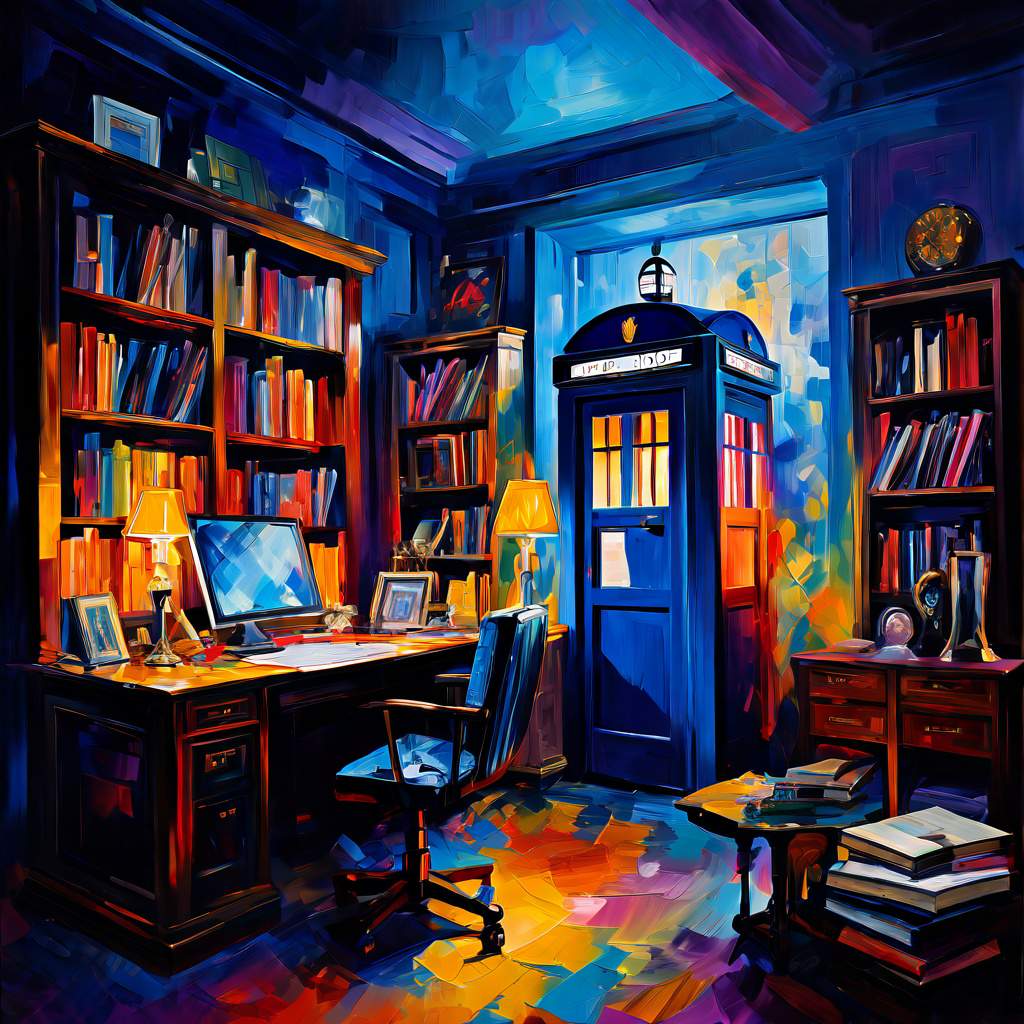
In a wide-ranging discussion on the video podcast A Night In, Weir showcased the depth of his devotion to the long-running BBC series, displaying a replica TARDIS that occupies prominent space in his office and declaring his comprehensive knowledge of the show’s complex canon. His passion extends beyond passive viewership into active creative contribution, with the author maintaining a public campaign to join the series’ writing staff despite the geographical and industrial barriers that typically separate Hollywood productions from British television institutions.
A Bestselling Author’s Gallifreyan Credentials
Weir’s attachment to Doctor Who represents a natural convergence of interests for a writer whose work consistently explores the scientific realities of space travel, botany, and extraterrestrial survival. The author has positioned himself firmly within the tradition of science fiction enthusiasts who cut their teeth on the imaginative possibilities of time travel and alien civilizations. During his appearance on A Night In, he readily identified himself as a devoted Whovian, one who has viewed nearly the entirety of the show’s extensive archive spanning nearly six decades of broadcast history.
The statistics of Weir’s viewership are themselves a testament to his dedication. He claims to have watched all 892 episodes of the series that currently exist in the BBC archives, a marathon that excludes only those installments that were permanently lost during the network’s infamous tape-wiping era of the 1960s and 1970s. This gap in his viewing history is not due to lack of effort, but rather the physical unavailability of material that the British Broadcasting Corporation erased before recognizing the enduring cultural value of its science fiction holdings. Weir’s office reportedly contains a model of the TARDIS, the Doctor’s time machine that resembles a British police box, serving as a physical manifestation of his immersion in the franchise.
The Lost Episodes and BBC Archives
The mystery of the missing Doctor Who episodes constitutes a significant chapter in television preservation history, one that Weir knows intimately. During the interview, he referenced the ongoing archaeological efforts to recover these lost installments, noting that dedicated fans and archivists occasionally unearth tapes from foreign broadcasters who preserved what the BBC discarded. He specifically cited a recent recovery where an Algerian television station provided a missing serial that had been presumed destroyed forever, illustrating the international scope of preservation efforts.
This knowledge of the show’s complex archival history demonstrates the depth of Weir’s engagement with Doctor Who culture. Unlike casual viewers who might stream modern episodes exclusively, Weir has clearly immersed himself in the production history, cultural impact, and preservation efforts surrounding the franchise. His awareness extends to the specific mechanisms by which episodes were lost and the cooperation required between international television archives to piece together the complete history of the series.
The Romana Chronicles and “The Xoloans”
While many successful authors hide their early fan fiction endeavors, Weir’s contributions to Doctor Who lore remain accessible through the Galactanet website, offering readers a glimpse into his pre-fame creative process. His collection, titled The Xoloans, focuses specifically on Romana, the Time Lady from Gallifrey who accompanied the Fourth Doctor during his middle-to-late television tenure. Unlike many companions who served as audience surrogates requiring explanation of scientific concepts, Romana functioned as an intellectual equal to the Doctor, possessing her own Time Lord education and technical expertise that allowed for more sophisticated scientific dialogue.
The character appeared on BBC1 between 1978 and 1981, portrayed initially by Mary Tamm and subsequently by Lalla Ward, who brought different temperaments to the role of the aristocratic Time Lady. Weir’s selection of this particular character for his creative exploration suggests an affinity for protagonists who combine scientific competence with narrative authority, traits that would define his later original characters like Mark Watney. The stories represent more than casual dabbling; they demonstrate a writer engaging seriously with established canon and character voice during his formative years.
Weir’s early experimentation with established universes extended beyond the Doctor Who canon. The same Galactanet archive houses his Sherlock Holmes fiction, specifically tales centered on Professor Moriarty rather than the detective himself. This pattern of engaging with established antagonists and complex supporting characters reveals a writer interested in the mechanical and moral complexities of genius-level characters operating within constrained systems.
- The Xoloans: Romana-focused Doctor Who fan fiction exploring the Time Lady’s independent adventures
- Moriarty Stories: Sherlock Holmes universe fiction re-examining the infamous antagonist
- Platform: Galactanet website hosts these early creative works from the author’s pre-professional period
- Character Context: Romana served as companion to the Fourth Doctor (Tom Baker) from 1978-1981
Pitching to Showrunner Chris Chibnall
Weir’s dedication to potentially contributing to the series officially surfaced during his discussion of industry aspirations. He revealed specific outreach to Chris Chibnall, who assumed showrunning duties in 2018 following Steven Moffat’s departure, offering his services as a staff writer. The author proposed working under remarkably modest terms, suggesting he would contribute scripts either entirely pro bono or for a token payment of merely one pound sterling, a gesture designed to emphasize his passion over financial motivation.
This overture acknowledges the complicated geopolitical history of American writers attempting to contribute to the distinctly British institution of Doctor Who. Weir directly referenced the failed 1996 television movie, a Fox Broadcasting Company co-production starring Paul McGann that attempted to transplant the franchise to American networks. That project failed to launch a new series and is generally regarded as a cautionary tale about cultural translation gone wrong. By acknowledging this history, Weir attempts to reassure skeptical British fans that he understands the specific tonal and cultural requirements that distinguish the BBC series from American science fiction productions.
His grassroots campaign, which he half-jokingly termed “Weir for Who,” represents a fascinating reversal of typical industry trajectories. Rather than leveraging his Hollywood success to force a meeting, Weir positions himself as a supplicant eager to earn a place in the writers’ room through demonstrated knowledge and enthusiasm. The author has publicly urged British fans to contact their Members of Parliament in support of his candidacy, blending genuine creative aspiration with the performative absurdity that characterizes much of online fan culture.
Regeneration and Favorite Incarnations
Like many fans, Weir maintains strong preferences regarding the various actors who have portrayed the Doctor through the character’s regenerations. He identified Peter Davison’s Fifth Doctor as his personal favorite, adhering to a common fan theory that the first Doctor one encounters usually becomes the standard against which all other interpretations are measured. The Fifth Doctor’s tenure ran from 1981 to 1984, featuring more vulnerable, humanistic storytelling compared to the bohemian eccentricity of Tom Baker’s Fourth Doctor.
This preference potentially influenced the character-driven approach Weir would later bring to protagonists like Mark Watney in The Martian and Ryland Grace in Project Hail Mary. Both characters display the kind of resourceful competence under pressure that characterized Davison’s interpretation of the Time Lord, suggesting that early television influences can echo throughout a writer’s entire career trajectory.
What’s After the Movie
For fans tracking the latest developments in science fiction adaptations and author crossovers, What’s After the Movie offers comprehensive coverage of industry news, casting announcements, and behind-the-scenes features. Whether you’re looking for box office analysis of films like Project Hail Mary or exploring our blog for deep dives into genre history, the site serves as your central resource for entertainment intelligence. Browse our movie database to discover connections between your favorite authors and upcoming adaptations.
Continue reading


What's After the Movie?
Not sure whether to stay after the credits? Find out!
Check out our other apps:

SAT Sphere
Build confidence for the Digital SAT.

Mori Atlas
Discover wild places worth protecting.

Luntero
Search smarter for a home in Amsterdam.

Plot Explained
Unravel movie endings and hidden clues.

Pokechamp
Dive into Pokémon data and battle logic.

Driving Theory
Get ready for your European theory test.

Movie Dust
Plan your next cinema trip with ease.

Musemap
Find art and culture as you travel.

Selkobase
Compare credentials before committing.

Local Manual
Turn an unfamiliar country into practical next steps.

Lernavi
Compare school systems before your next move.

GymRoam
Find a workout stop wherever your plans take you.
Explore Our Movie Platform
New Movie Releases (2026)
Famous Movie Actors
Top Film Production Studios
Movie Plot Summaries & Endings
Major Movie Awards & Winners
Best Concert Films & Music Documentaries
Movie Collections and Curated Lists
© 2026 What's After the Movie. All rights reserved.
Privacy Policy