What's After the Blog?
analysis • feature
Next: How Philip K. Dick's The Golden Man Became a Forgotten Cage Film
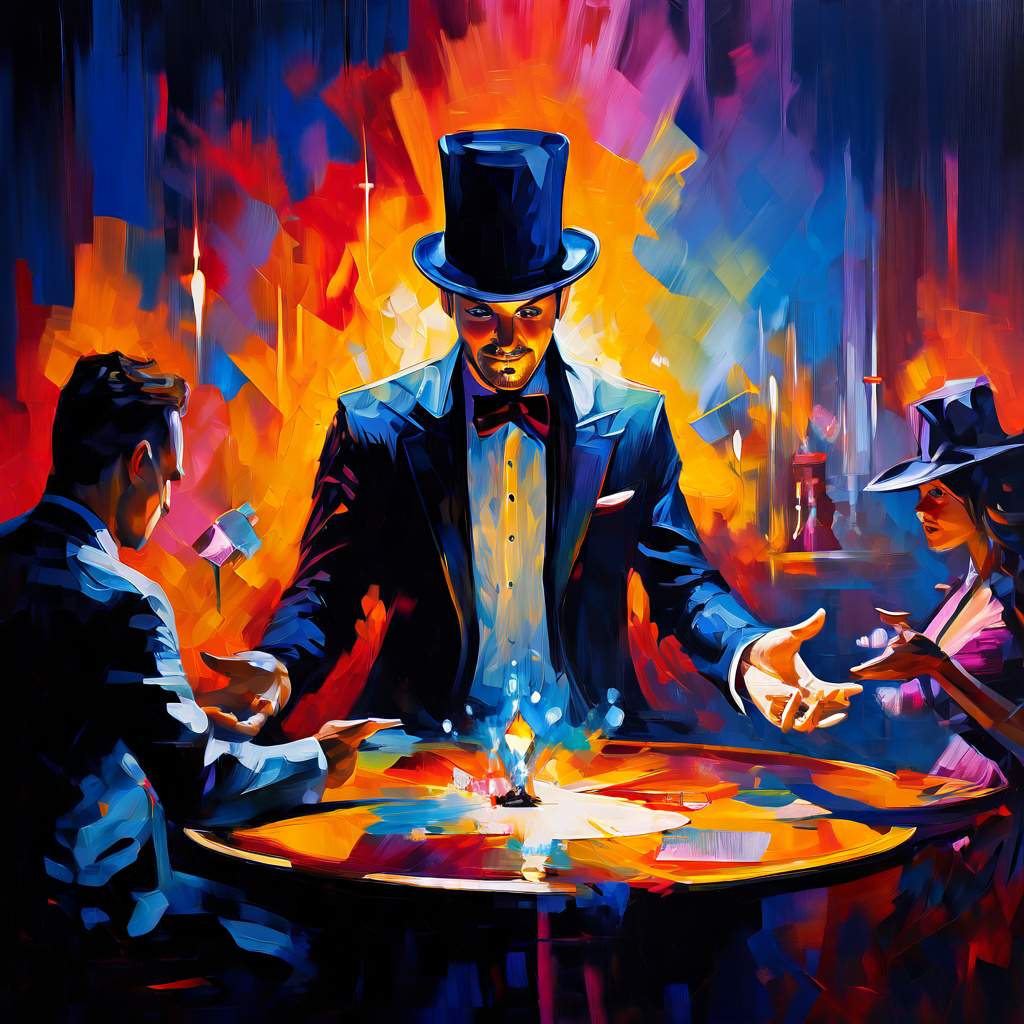
The 2007 action film "Next" starring Nicolas Cage barely resembles the Philip K. Dick short story that supposedly inspired it. While the source material explored themes of genetic superiority and post-apocalyptic mutation, the adaptation transformed into a conventional blockbuster about a Las Vegas magician fighting terrorists.
April 7, 2026
Next: How Philip K. Dick’s The Golden Man Became a Forgotten Cage Film
When Paramount Pictures released the science fiction thriller Next in 2007, the film arrived with the pedigree of Philip K. Dick’s literary legacy attached to its marketing. Starring Nicolas Cage as a Las Vegas magician with limited precognitive abilities, the movie promised an adaptation of Dick’s 1954 short story “The Golden Man.” Yet beneath this prestigious connection lay a stark reality: the finished film bore almost no resemblance to its source material, transforming a disturbing meditation on genetic superiority and post-apocalyptic mutation into a conventional action vehicle about nuclear terrorism and improbable romance.
The disconnect between Dick’s dystopian vision and director Lee Tamahori’s final product illustrates the challenges of adapting complex speculative fiction for mainstream audiences. While the author explored the dangers of master races and evolutionary superiority through allegory, the cinematic version opted for blockbuster formulas that ultimately failed to resonate with critics or moviegoers.
Box Office Performance and Critical Reception
Next arrived in theaters as a high-stakes gamble that failed to pay off. Produced for $78.1 million, the film generated only $77.6 million in global ticket sales—a disappointing return that placed it firmly in the red when accounting for marketing and distribution costs. The financial underperformance cemented the movie’s status as a footnote in Cage’s extensive filmography rather than a memorable entry in the sci-fi action genre.
Critical reception proved equally chilly. Review aggregation site Rotten Tomatoes recorded a 28% approval rating based on 128 reviews, with critics dismissing the film as forgettable and derivative. The consensus positioned Next as another example of mid-2000s action cinema that prioritized explosive set pieces over narrative coherence, despite the rich thematic material available in its supposed literary foundation. The combination of commercial disappointment and critical indifference ensured that the film quickly faded from public consciousness, becoming exactly the kind of “forgotten” movie that prompts retrospective curiosity years later.
The Source Material: Dick’s Disturbing Vision
To understand the divergence between page and screen, one must examine the original 1954 short story and its 1980 republication in a collection also titled The Golden Man. Dick’s narrative unfolds in a distant, post-apocalyptic future where a new race of super-powered mutants has emerged among human survivors. These evolutionary advances trigger systematic persecution, with specialized police forces hunting down individuals displaying enhanced abilities.
The protagonist of Dick’s story stands in stark contrast to Cage’s charismatic gambler. Cris, as conceived by Dick, possesses golden skin, massive physical stature, and an animalistic sexuality that borders on feral. When captured by mutant-hunting authorities, he proves too physically attractive to contain—seducing his captor’s fiancée into releasing him, suggesting a biological imperative toward survival and propagation that transcends human morality. The story concludes with the haunting possibility that Cris represents not a threat to eliminate, but the vanguard of humanity’s next evolutionary stage.
These elements create a narrative fraught with philosophical complexity. Dick explored themes of genetic mastery, the ethics of racial superiority, and the dangerous implications of evolutionary hierarchies. The story interrogates whether “superior” beings would necessarily dominate “inferior” life forms, and what such domination might mean for human civilization.
Philosophical Roots and Historical Context
Dick provided crucial context for these themes in his 1980 introduction to the short story collection. He revealed that “The Golden Man” originated from an argument with another science fiction author regarding the possibility of superhuman mutants arising among human populations. Dick maintained that genetically superior beings should be regarded with suspicion, particularly if they sought to establish dominance over ordinary humans.
The author’s reasoning carried the heavy weight of historical trauma. As Dick explained, his suspicion of master races and genetic superiority claims stemmed directly from the Holocaust, cryptically referencing “buildings marked SHOWERS but which really weren’t.” This connection to Nazi Germany’s eugenics programs and genocidal ideology infused the story with a darkness that transcended typical science fiction tropes of the era. The narrative served as a warning about the seductive danger of biological determinism and the tyranny that often follows claims of inherent superiority.
The Cinematic Translation: Romance and Nuclear Threats
The film adaptation jettisoned nearly every element of Dick’s philosophical framework. Cage portrays Cris Johnson as a low-level gambler and stage magician in Las Vegas who has learned to exploit his ability to see approximately two minutes into his own future. Rather than exploring evolutionary superiority or genetic danger, the screenplay focuses on a terrorist plot involving a stolen nuclear device.
Julianne Moore appears as FBI Agent Callie Ferris, who believes Cris’s abilities can help locate the weapon. Jessica Biel co-stars as Liz Cooper, a stranger from Cris’s extended vision who becomes the film’s romantic interest. The screenplay introduces a contrived limitation wherein Cris can only see far into the future when Liz’s safety is at stake—a romantic device that allows the plot to function but replaces Dick’s biological determinism with Hollywood sentimentality.
The nuclear threat narrative and true-love subplot transformed the material into familiar blockbuster territory. Where Dick questioned fate, causality, and the ethics of evolution, the film concerned itself with ticking clocks and unlikely attraction. The result was what contemporary observers described as shallow Hollywood blockbuster concerns that bore no meaningful connection to the author’s warnings about master races and genetic tyranny.
Development Changes: From Feral Mutant to Relatable Hero
The transformation from Dick’s vision to the final product occurred during an extensive development process. Screenwriter Gary Goldman’s original draft, which remains available online, reportedly preserved more of the source material’s edge. In that initial draft, Cris appeared as a feral, handsome mutant closer to Dick’s conception—a genuinely inhuman figure with animalistic qualities that made him simultaneously threatening and compelling.
Studio notes and subsequent rewrites systematically eroded these distinctive characteristics. Development executives determined that audiences required a more relatable protagonist, someone who could anchor a conventional romantic subplot. The character underwent complete reconstruction, emerging as the down-on-his-luck magician rather than the golden-skinned evolutionary leap. This shift from biological other to everyman with a quirk exemplifies the homogenization process that often affects ambitious science fiction during studio development.
The changes reflect a broader industry tendency to sand down the rough edges of source material in pursuit of four-quadrant appeal. By removing the disturbing implications of Cris’s superiority and replacing them with a standard love story, the adaptation lost the very elements that distinguished Dick’s work from generic action cinema.
Story vs. Screen: Key Differences
The divergence between Dick’s narrative and the 2007 film extends across nearly every narrative element:
- Setting: Dick’s post-apocalyptic future versus the film’s contemporary Las Vegas
- Protagonist: A golden-skinned, feral mutant versus a disheveled gambler-magician
- Antagonist: Institutionalized mutant persecution versus generic nuclear terrorists
- Themes: Genetic superiority and evolutionary ethics versus romantic destiny and counter-terrorism
- Tone: Philosophical horror and biological suspense versus action-comedy romance
- Resolution: Open-ended evolutionary uncertainty versus tidy heroic triumph
The Enduring Question of Adaptation
Next stands as a case study in how Hollywood development can obscure even the most distinctive source material. While Dick’s story asked uncomfortable questions about superiority, attraction, and survival, the film offered only the temporary distraction of explosions and flirtation. The failure to capture the author’s intent likely contributed to the film’s poor reception; audiences and critics sensed the disconnect between the promise of Dick’s name and the generic product on screen.
The adaptation ultimately serves as a reminder that fidelity to source material involves more than borrowing a premise or character name. By stripping away the historical context and philosophical weight that gave “The Golden Man” its power, the filmmakers created a work that was not just different from its inspiration, but lesser—a forgettable entry in Cage’s filmography that squandered the opportunity to explore one of science fiction’s most unsettling what-ifs.
Discover More Cinema Insights
If you’re fascinated by the journey from page to screen or want to explore the box office histories of other Philip K. Dick adaptations, What’s After the Movie offers comprehensive coverage of film industry news, financial performance data, and in-depth analysis. Our database tracks everything from production budgets and global grosses to critical reception for thousands of titles. Visit our main site to search for Next and other movies in our extensive collection, or check out our blog for more features on adaptation challenges and industry trends.
Continue reading




What's After the Movie?
Not sure whether to stay after the credits? Find out!
Check out our other apps:

SAT Sphere
Build confidence for the Digital SAT.

Mori Atlas
Discover wild places worth protecting.

Luntero
Search smarter for a home in Amsterdam.

Plot Explained
Unravel movie endings and hidden clues.

Pokechamp
Dive into Pokémon data and battle logic.

Driving Theory
Get ready for your European theory test.

Movie Dust
Plan your next cinema trip with ease.

Musemap
Find art and culture as you travel.

Selkobase
Compare credentials before committing.

Local Manual
Turn an unfamiliar country into practical next steps.

Lernavi
Compare school systems before your next move.

GymRoam
Find a workout stop wherever your plans take you.
Explore Our Movie Platform
New Movie Releases (2026)
Famous Movie Actors
Top Film Production Studios
Movie Plot Summaries & Endings
Major Movie Awards & Winners
Best Concert Films & Music Documentaries
Movie Collections and Curated Lists
© 2026 What's After the Movie. All rights reserved.
Privacy Policy