Dracula 2026 Reviews: Critical Consensus, Audience Reactions & Is Luc Besson’s Vampire Romance Worth Watching?
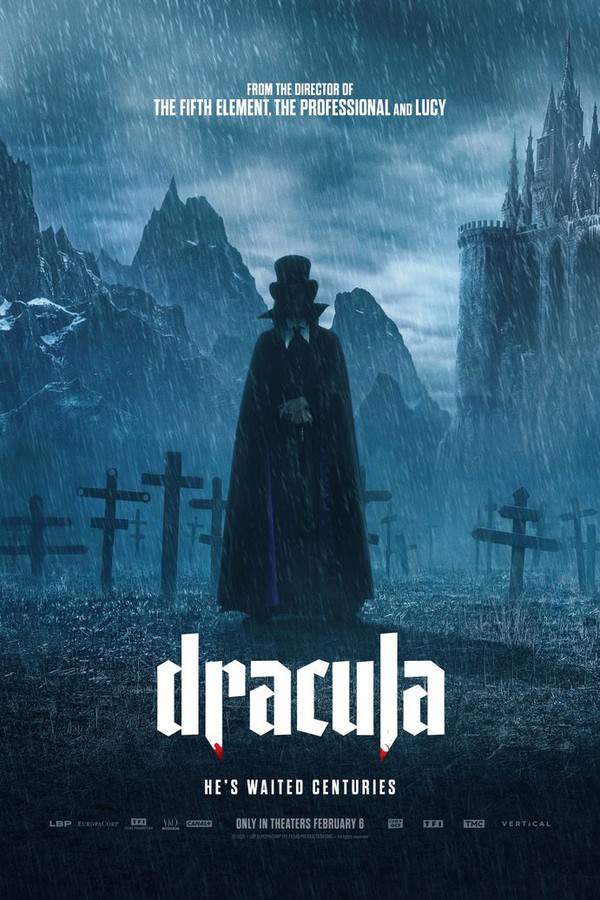
When Dracula arrived in theaters on February 6, 2026, it carried with it the weight of centuries—not just the immortal legacy of Bram Stoker’s 1897 novel, but the accumulated baggage of dozens of cinematic interpretations, from Bela Lugosi’s theatrical menace to Francis Ford Coppola’s operatic excess and Robert Eggers’ recent austere masterpiece Nosferatu. Luc Besson’s take on the legendary vampire promised something different: a “love tale” emphasizing romance over horror, redemption over damnation. But as audiences and critics began filing their Dracula 2026 reviews, one thing became immediately clear: this was destined to be one of the most polarizing genre releases of the year.
For visitors to What’s After the Movie, tracking the reception of controversial films is exactly what we specialize in. Whether you’re checking our comprehensive summary pages for detailed plot breakdowns, browsing actor profiles to follow Caleb Landry Jones’s career trajectory, or analyzing box office performance data to see if the film found its audience, understanding the critical and public conversation around Dracula 2026 requires diving deep into the schism between professional film criticism and genuine viewer reactions. This Dracula 2026 film analysis examines the divided critical consensus, explores why audiences are embracing aspects critics dismissed, and ultimately answers the pressing question: is Dracula 2026 worth watching for your next movie night?
The Critical Divide: How Dracula 2026 Split Film Critics Between Camp Delight and Gothic Disaster
The Dracula 2026 critic reviews reveal a staggering range of responses that span from outright dismissal to surprising admiration, creating one of the widest critical disparities in recent memory for a major studio horror release. With scores ranging from a dismal 38/100 to a perfect 100/100 among major outlets, Luc Besson’s vision has proven to be cinematic Rorschach test—what one reviewer sees as “lavishly upholstered” panache, another views as a “pale imitation” of superior vampire cinema.
The Guardian offered one of the most unexpected defenses of the film, awarding it 60/100 and declaring that despite reservations about Besson’s reputation for “glossiness and bloat,” the film possesses genuine “ambition and panache.” Most provocatively, the critic confessed that “in all its Hammer-y cheesiness, I’m not sure I wouldn’t prefer to it to Robert Eggers’s recent, solemnly classy version of Nosferatu.” This comparison to Nosferatu 2024 became a recurring touchstone throughout Dracula 2026 film criticism, with The Associated Press (63/100) similarly contrasting Besson’s approach against Eggers’ “beautiful but bleak” aesthetic, noting that Besson “imbues his main character with a swashbuckling sexiness that suits his star’s craggy appeal”—a far cry from the “ugly, fearsome vampire” presented in the recent competitor.
However, this camp appreciation was far from universal. The Daily Beast delivered a scathing 45/100 verdict, dismissing the film as “just a pale imitation of scarier bloodsuckers gone by,” suggesting that Besson’s interpretation fails to justify its existence in a crowded field of superior Dracula adaptations. Meanwhile, Slant Magazine (38/100) offered perhaps the harshest assessment, declaring that “not even a typically scenery-chewing Christoph Waltz can enliven the proceedings”—a particularly damning observation given Waltz’s reputation for elevating mediocre material through sheer charisma.
Collider (60/100) captured the essence of this critical ambivalence most precisely, acknowledging that “Dracula is weird. Really weird, borderline nonsensical at certain points,” while simultaneously arguing that “its great take on its title character is enough to call this one of the Leon: The Professional and The Fifth Element filmmaker’s strongest in recent years.” The review noted that Besson “takes a lot of swings, and while not all of them hit, it nails the stake in the heart of what makes this story so timeless and special.”
This divergence in Dracula 2026 critical consensus speaks to larger questions about genre expectations in modern horror cinema. The Hollywood Reporter (50/100) summarized the film as “Cheese and kitsch, with smatterings of blood and decapitated heads,” describing it as “watchable if totally ludicrous.” For critics seeking the atmospheric dread and psychological depth of recent elevated horror, Besson’s unapologetic embrace of melodrama and romantic excess felt like a betrayal of the source material’s gothic potential. Yet for those critics fatigued by the relentless grimness of contemporary horror, the film’s “Hammer-y cheesiness” represented a refreshing return to the genre’s more theatrical, emotionally operatic roots.
For readers exploring What’s After the Movie to understand these divergent perspectives, our detailed movie page for Dracula 2026 aggregates these varied critical voices alongside user ratings, helping you determine whether your taste aligns more with the camp-appreciation crowd or the gothic-purist faction before you purchase your tickets.
Caleb Landry Jones as the Count: Performance Analysis and the Critical Consensus on Dracula’s Heart
If there is one element of Dracula 2026 that approaches unanimous praise across the critical spectrum, it is Caleb Landry Jones’s interpretation of the titular vampire. In a film where opinions diverge wildly on nearly every other aspect—from visual effects to pacing to fidelity to source material—Jones’s performance emerges as the consistent anchor that even negative reviewers acknowledge as a redeeming quality. This rare convergence in Dracula 2026 reception offers insight into how a single compelling performance can sustain audience engagement even when surrounding elements prove controversial.
The Hollywood Reporter, despite dismissing much of the film as “ludicrous,” identified the movie as “another showcase for the always-interesting-to-watch Caleb Landry Jones.” This sentiment was amplified by The Associated Press, which specifically highlighted how Jones’s “craggy appeal” perfectly suited Besson’s vision of “swashbuckling sexiness”—a fundamentally different approach to the character than the grotesque, rat-like Count Orlok in Nosferatu or the aristocratic menace of classical portrayals. Where recent vampire cinema has trended toward the monstrous and alienating, Jones apparently offered something paradoxically approachable yet dangerous.
User reactions on What’s After the Movie reinforce this critical observation with remarkable consistency. Tooni O awarded the film a perfect 5/5 rating, specifically praising how “Jones has become a serious actor to be reckoned with – he’s come a long way since his debut in No Country for Old Men. He made this age-old character of Count Dracula hauntingly memorable.” This trajectory—from character actor in the Coen Brothers’ masterpiece to leading man carrying a major franchise reboot—represents a significant evolution that fans have tracked through our comprehensive actor profiles, where you can follow Jones’s complete filmography from early supporting roles to this starring vehicle.
The emotional depth Jones brought to the role appears to have resonated particularly strongly with viewers seeking the romantic core that Besson emphasized in his marketing. Houda A (4/5) noted that “The performance of Caleb Landry Jones is just perfect,” while Ash v (5/5) felt that “Everything was breath taking. I felt the love between Vlad and Elizabeta.” Even critics who found the romantic angle overwrought acknowledged Jones’s commitment to the emotional reality of the character. Original-Cin (100/100) offered the most philosophical interpretation of his performance, suggesting that Jones successfully embodied Besson’s vision of Dracula as “a lost soul in need of forgiveness and redemption” rather than a simple monster.
However, this focus on Jones’s central performance highlighted a significant weakness noted by Slant Magazine: the surrounding cast failed to match his energy. The observation that “not even a typically scenery-chewing Christoph Waltz can enliven the proceedings” suggests a potential imbalance in the ensemble that left Jones carrying an undue burden. This critique aligns with user Vladimir D’s 3.5/5 assessment that “Caleb did a wonderful performance while the rest of the crew followed his footsteps are quite forgettable in general”—though this reviewer did single out Matilda de Angelis’s Maria as a favorite character, contradicting other user opinions.
For fans interested in exploring Jones’s preparation for this physically and emotionally demanding role, What’s After the Movie’s Wiki section provides behind-the-scenes context and production details that illuminate how the actor navigated the challenges of playing cinema’s most iconic vampire while avoiding comparison to his predecessors.
Audience Reactions vs. Critic Reviews: Why Fans Are Embracing This Dracula Adaptation Despite Mixed Reviews
The most fascinating aspect of Dracula 2026’s reception landscape is the dramatic disconnect between professional critics and general audiences regarding the film’s core identity as a romantic melodrama. While critical reviews frequently dismissed the film’s emotional earnestness as “cheese and kitsch” (The Hollywood Reporter) or “Hammer-y cheesiness” (The Guardian), user reactions reveal a substantial contingent of viewers who found the romantic focus not just acceptable but deeply moving—a “beautiful love story” that transcended typical horror expectations.
Hana M’s effusive 5/5 review captures this audience sentiment perfectly: “I’m in love this movie is a beautiful love story such chemistry such a beautiful acting from main actors you got lost and in love with the Dracula you forget about the time you forget about the killings and you just feel love and desire this kind of love there is nowhere to find I cried in the end.” This reaction—prioritizing emotional catharsis over genre fidelity—represents a fundamentally different viewing priority than that of professional critics, who often approach Dracula adaptations with expectations established by decades of horror scholarship and gothic tradition.
Similarly, Trinity R (5/5) highlighted how “Such a beautiful story I’ve watched bram strokers dracula and this had a beautiful love story i highly enjoyed this movie,” suggesting that familiarity with previous adaptations did not preclude appreciation for Besson’s romantic pivot. Gregory S (5/5) reinforced this perspective, praising the film as “a completely different view of a story that we have heard and watched multiple times.”
This audience embrace of the romantic elements stands in stark contrast to the most vitriolic user review from chris m (1/5), who condemned the film as an “unfaithful adaptation” that transforms “the story into a soulless, rhythmless, and incoherent romantic melodrama.” The reviewer specifically criticized Matilda de Angelis’s performance as “borders on unbearable… taken from a cheap soap opera,” demonstrating that the divide over the film’s tone exists not just between critics and audiences, but within the audience itself. Those seeking traditional gothic horror found the romance “ridiculous,” while those seeking emotional connection found it “magical” (Tooni O: “Outstanding! Loved this take – different, magical, and engaging”).
For viewers trying to determine which camp they might fall into, What’s After the Movie offers interactive tools to explore your preferences. Our movie quizzes and games can help you identify whether you prioritize emotional storytelling or genre fidelity in your horror viewing, while our detailed summary page for Dracula 2026 provides spoiler-free context about the romantic plot elements to help you decide if this interpretation matches your interests.
The polarization extends to practical viewing advice. Vladimir D (3.5/5) offered a measured middle ground, acknowledging that the film is “True to original story with small but tasty twists” but questioning its necessity: “I can’t get rid of the thought that this whole movie was quite unnecessary. It didn’t bring anything new to the already told story.” This sentiment—“not a bad movie, just unnecessary one”—represents a third faction in the reception discourse: viewers who appreciate the craft but question the cultural need for another Dracula so soon after Nosferatu.
Pacing, Visual Style, and Production Value: Analyzing the Technical Reception of Dracula 2026
Beyond performances and romantic tone, the technical execution of Dracula 2026 generated significant debate regarding Luc Besson’s stylistic choices, budget allocation, and narrative pacing. These Dracula 2026 viewer reactions regarding craftsmanship reveal a film that struggles with consistency, delivering stunning visuals and engaging rhythms in its first half before allegedly faltering in its conclusion—a structural problem that prevented many viewers from fully embracing the experience despite individual moments of brilliance.
Liotis T (3/5) provided a representative assessment of this pacing issue: “Nice movie for the first 50% of it. after half way, the movie is being boring and the end is boring too. nice costumes, but not so good end.” This bifurcated structure—common in Besson’s recent work—suggests a film that frontloads its strongest ideas and visuals, leaving the second act to struggle with resolution and momentum. The user praise for “nice costumes” while criticizing the ending points to a production design that excelled in aesthetic detail but failed to sustain narrative tension through the climax.
The visual effects and production design generated particularly contradictory responses, highlighting the subjective nature of “cheap” versus “stylized” aesthetics in modern genre cinema. chris m (1/5) delivered a harsh critique of the technical execution, describing the VFX as “artificial” and the castle setting as “reduced to a mere digital backdrop without life or presence. everything feels plastic, improvised, and lacking the oppressive atmosphere that should accompany a story of this caliber.” This review specifically condemned the climax as “a succession of clumsy and poorly choreographed scenes” where “the fights seem like rehearsals accidentally filmed.”
Conversely, Berrie L (5/5) offered a fascinating defense that contextualizes these visual choices within budget constraints: “Budget was a fraction of Nosferatu, with more excitement and better delivery of lines.” This reviewer praised the “ballroom dancing choreography with the music score” as “amazing” and noted that “The entire cast has complete chemistry.” The suggestion that Besson achieved “more with less” compared to the lavishly funded Eggers film reframes potential technical shortcomings as resourceful filmmaking that prioritizes performance and energy over polish.
Ash v (5/5) supported this more generous interpretation of the visuals, declaring that “Everything was breath taking… Costumes were amazing, the set was stunning.” This divergence suggests that viewers who connected with the film’s emotional wavelength were more forgiving of potential budgetary limitations, while those disconnected from the romance focused intently on technical flaws. The “plastic” quality noted by detractors may, to supporters, represent a deliberate stylization evoking the Hammer Horror aesthetic referenced by The Guardian—a conscious choice to prioritize operatic theatricality over naturalistic horror.
For industry watchers and box office analysts visiting What’s After the Movie, these production value discussions have direct implications for commercial performance. Our box office tracking pages monitor whether films with mixed technical receptions but strong star performances can achieve profitability, particularly when competing against higher-budget genre entries. The comparison between Dracula 2026’s presumably modest budget (suggested by Berrie L) and the massive financial investment in Nosferatu offers a case study in efficiency versus excess in modern horror production.
The editing and rhythm problems noted by multiple viewers—chris m described the film as “boring during the first hour” (contradicting Liotis T’s praise for the first half) and complained that “the second only sinks a project that, from the start, was already doomed”—suggest that Besson’s narrative pacing may be the film’s most significant technical liability, regardless of where viewers locate the point of decline.
Adaptation Challenges: How Dracula 2026 Balances Bram Stoker’s Legacy with Luc Besson’s Vision
The question of fidelity to source material remains central to Dracula 2026 film reception, with reviewers and audiences divided not just on whether the film is good, but on whether it has the right to deviate so substantially from Bram Stoker’s original conception of the character. This debate over adaptation philosophy—whether a classic text should be honored through faithful reproduction or liberated through radical reinterpretation—animates the most passionate defenses and condemnations of Besson’s film.
Original-Cin (100/100) provided the most enthusiastic endorsement of Besson’s adaptive choices, arguing that the director found “a new angle” by returning “to the book’s inspiration, and present Dracula as a lost soul in need of forgiveness and redemption.” This review celebrates the departure from traditional horror, declaring that “refreshingly, that’s exactly what you get in this film.” The perfect score suggests that for viewers exhausted by centuries of Dracula-as-monster interpretations, the redemption arc offered legitimate novelty that justified the adaptation’s existence.
However, chris m (1/5) articulated the opposing perspective with equal passion, framing the film as a betrayal rather than an interpretation: “luc besson demonstrates… that having a classic in your hands is not enough to make good cinema… instead of paying homage to the gothic atmosphere and the meticulous character development of the original, he turns the story into a soulless, rhythmless, and incoherent romantic melodrama.” The accusation that Besson is “not interested in the essence of ‘Dracula’, but in molding the story to his own style” reflects a purist approach to adaptation that values fidelity to tone and theme over directorial vision.
Vladimir D (3.5/5) occupied a middle position, acknowledging that the film is “True to original story with small but tasty twists” while simultaneously questioning its necessity: “this whole movie was quite unnecessary. It didn’t bring anything new to the already told story and it definitely didn’t outpace the original.” This paradox—finding the adaptation faithful yet redundant—captures the unique challenge facing any Dracula film in 2026: how to justify existing in a landscape that already includes F.W. Murnau’s Nosferatu, Tod Browning’s Dracula, Coppola’s Bram Stoker’s Dracula, and now Eggers’ Nosferatu remake.
The “redemption” angle that Original-Cin praised appears to be the specific innovation that polarizes viewers. For those who view Dracula as a tragic romantic figure—a Byronic hero rather than a supernatural predator—the emphasis on love and salvation resonates as a return to the character’s literary roots in Eastern European folklore and Stoker’s own complex portrayal of the Count’s melancholy. For horror purists, this humanization represents a defanging of literature’s greatest monster, transforming a nightmare into a “cheap soap opera” (chris m’s characterization of the romantic elements).
For students of cinema history and adaptation theory exploring What’s After the Movie, our Movie Collections feature allows you to compare this interpretation directly against previous Dracula adaptations, while our Movie Lists curate the best vampire films across decades to provide context for where Besson’s version fits in the ongoing evolution of the genre. Additionally, our Awards section tracks whether controversial adaptations like this one find recognition from genre-specific ceremonies despite mixed critical reception.
Final Verdict: Should You Watch Dracula 2026? A Spoiler-Free Reception Summary and Viewer Guide
As the dust settles on the initial theatrical release of Dracula 2026, the path forward for potential viewers requires navigating a landscape of starkly contradictory opinions and passionate defenses. The Dracula 2026 critical consensus suggests a film that is technically imperfect, narratively uneven, and stylistically divisive—yet one that contains a central performance compelling enough to justify the experience for specific audience segments. Determining whether this film deserves your time depends entirely on aligning your expectations with the elements that have genuinely succeeded rather than those that have drawn criticism.
If you are a viewer who prioritizes emotional resonance and romantic storytelling over horror mechanics, the Dracula 2026 audience reactions suggest you will find much to appreciate. The film appears to function most successfully as a supernatural romance—a “beautiful love story” (Hana M) that prioritizes the tragedy of immortal longing over the mechanics of vampire mythology. Fans of Caleb Landry Jones will find this essential viewing, as the consensus identifies his performance as the film’s unqualified triumph, offering a “swashbuckling” yet vulnerable Count that stands apart from previous interpretations.
Conversely, if you seek traditional gothic horror or faithful literary adaptation, the Dracula 2026 reviews indicate you should approach with caution or potentially skip this iteration entirely. The criticism regarding “cheap soap opera” aesthetics, “plastic” digital effects, and pacing that collapses in the second half suggests that viewers with rigid expectations for the genre will likely join chris m in finding the experience “emotionally hollow” and “an insult to the original story.”
For Luc Besson enthusiasts, the film represents a return to the operatic excess of his earlier work—“weird, borderline nonsensical” (Collider) but visually ambitious and unapologetically romantic. It sits comfortably within his filmography alongside The Fifth Element and Lucy rather than attempting the grounded realism of Léon.
Ultimately, Dracula 2026 appears to be a film that requires the right viewer mindset. As Gregory S noted, it offers “a completely different view of a story that we have heard and watched multiple times”—for some, this is refreshing; for others, unnecessary. The comparison to Nosferatu (2024) is instructive: where Eggers offered art-house solemnity, Besson offers mainstream romantic melodrama. Neither approach is objectively superior, but they serve incompatible audience desires.
For those ready to explore this controversial take on the immortal Count, What’s After the Movie provides all the resources you need to enhance your viewing experience. Check our detailed summary page for cast details and production information, visit our main movie page for aggregated ratings and streaming availability updates, and explore our Concert Films section for other genre-blending experiences. Whether Dracula 2026 becomes a guilty pleasure or a disappointing misfire in your personal viewing history, it undeniably contributes to the ongoing, centuries-long conversation about cinema’s most enduring monster—and that’s always worth discussing.
| Resource | Link |
|---|---|
| Dracula 2026 TMDB | The Movie Database |
| Dracula 2026 Wikipedia | Wikipedia |
| Dracula 2026 Rotten Tomatoes | Rotten Tomatoes |
| Dracula 2026 Metacritic | Metacritic |
| Dracula 2026 Box Office Mojo | Box Office Mojo |