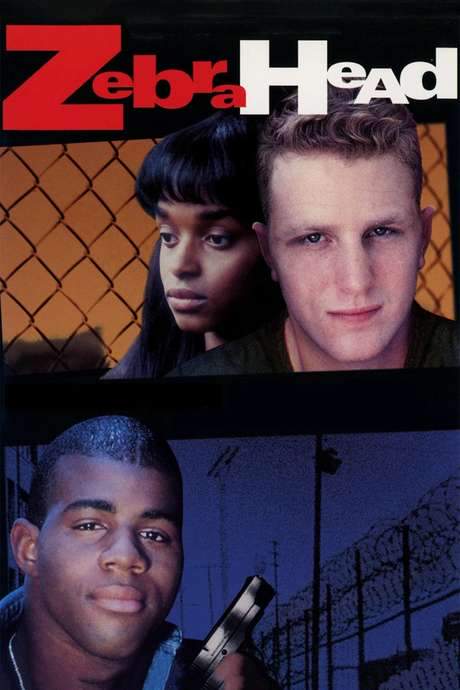
Zebrahead 1992

Directed by

Michael Rapaport
Made by

Triumph Films
Zebrahead Plot Summary
Read the complete plot summary and ending explained for Zebrahead (1992). From turning points to emotional moments, uncover what really happened and why it matters.
Zack, Michael Rapaport, is an eighteen-year-old white Jewish DJ and rapper who lives with his father, Richard Ray Sharkey, who runs a neighborhood record store. Zack records music with his best friend, DeShonn Castle Dee, and the two hustle to carve out a space for their sound in a city that constantly tests them.
At school, Zack has a tense breakup with his girlfriend Michelle, and soon after, he notices Nikki N’Bushe Wright, a new Black student who turns out to be Dee’s cousin. Zack finds himself drawn to Nikki, yet he fears the implications of pursuing a relationship across racial lines. He talks openly with Dee about his feelings, while Dee’s father warns that negativity from others could follow them.
Zack’s grandfather Saul encourages him to woo Nikki with his DJ skills, so Zack brings his turntable to the school gym for an urban music night. The crowd lights up, Nikki among them, and the dance floor becomes a place where the rhythm blends with the complexities of race. But the room also reveals tensions: some Black students, including Larry who champions Pan-Africanism, and Nut, a delinquent bully, worry that Zack might be culturally appropriating rather than honoring Black culture.
As Zack and Nikki grow closer, their relationship faces harsh scrutiny. After a date at Nikki’s home, they face harassment and racial slurs. Zack takes Nikki to his father’s record store where they share their first kiss. Later, they attend a house party with Zack’s extended circle; Nikki is the sole Black person in the room, and she endures a barrage of racist, sexually tinged jokes about her. She leaves the party and breaks up with Zack, telling Dee what happened, and the two distance themselves from him.
Nut and the other Black classmates demand that Nikki stay away from Zack, accusing him of playing a dangerous game. After a brief moment of reconciliation with Dee, Zack goes to Nikki’s house to apologize on her front porch. She invites him to a roller rink later that night. Nut, who has been listening in, harasses Nikki at the rink. Zack steps in to intervene, and Dee pushes Nut to the ground, but Nut responds with lethal force, fatally shooting Dee and fleeing the scene.
At Dee’s funeral, Zack recites the Mourner’s Kaddish in Aramaic for Dee, a moment that weighs heavily on him and on Nikki. On the walk home from the service, Nikki is attacked by Nut, who again threatens her life before fleeing. Back at school, classmates chatter about whether Dee’s death would have happened if Zack and Nikki hadn’t gotten together, but Nikki dismisses the insinuations and runs from the classroom. The school’s principal, Mr. Cimino Dan Ziskie, tells Zack to stick with his own race when it comes to relationships; Zack ignores the remark, and he finds Nikki crying in the hallway, where he goes to comfort her and they share a quiet hug.
Zebrahead Timeline
Follow the complete movie timeline of Zebrahead (1992) with every major event in chronological order. Great for understanding complex plots and story progression.
Zack's life with his father and Dee
Eighteen-year-old Zack, a white Jewish DJ and rapper, lives with his single father who runs a record store. He records music with his best friend Dee, a black rapper, in the shop's late-night rhythm. Their bond centers on music, community, and shared ambitions.
Zack and Michelle's breakup
Zack has a quarrel with his girlfriend Michelle at school, and the couple splits up. The tense moment hints at the strain that will come from his new relationship dynamics. The breakup sets the stage for Nikki's arrival and Zack's changing social circle.
Nikki arrives; Dee's cousin; Zack's attraction
A new black student, Nikki, arrives at school and is revealed to be Dee's cousin. Zack becomes increasingly infatuated with her, but he keeps his feelings largely private while navigating his insecurities. The dynamic foreshadows the interracial romance at the story's center.
Zack confides in Dee; warnings given
Zack confides his attraction to Nikki to Dee, who encourages him not to overthink it. Dee's father cautions Zack that pursing a relationship across race could bring negativity. The conversation foreshadows external pressures to come.
Saul nudges Zack to win Nikki with DJing
Zack's grandfather Saul urges him to woo Nikki with his DJ skills. Zack brings his turntable to the school gym and spins urban music while Nikki and other students dance. Some black students, like Larry and Nut, accuse him of cultural appropriation.
Zack and Nikki grow closer; first kiss
Zack and Nikki grow closer, and after school he brings Nikki to his father's record store where they share their first kiss. The moment marks a turning point in Zack's relationship with Nikki and the broader school crowd. A blend of romance and social tension begins to unfold.
Zack's house; they confront intimacy
One evening, Zack brings Nikki to his home and they make love while his father secretly watches with amused curiosity. The scene reveals complex dynamics about acceptance, gaze, and privacy. It deepens the romantic bond while inviting the father's quiet complicity.
A house party and racial tension
Zack invites Nikki to a house party filled with extended friends, where she is the only Black person. She meets Michelle, who is briefly supportive, but Nikki is subjected to racist, sexual jokes about her. She leaves hurt and breaks up with Zack.
Nikki relays the incident; Dee and Nikki distance
After the party, Nikki tells Dee what happened and she and Dee distance themselves from Zack. The rift exposes how quickly their social circles react to interracial romance. The emotional toll strains Zack's friendships and loyalties.
Porch apology and roller rink invitation
Zack makes amends with Nikki after visiting her at home and apologizing on her front porch. She invites him to a roller rink later that night, signaling a fragile chance at reconciliation. The moment previews further trouble to come.
Nut's harassment at the roller rink
At the roller rink, Nut harasses Nikki in front of Zack. Zack intervenes, and Dee intervenes as well, but Nut fatally shoots Dee and runs away. The tragedy becomes a catalyst for the community's response to the couple's relationship.
Dee's funeral and Kaddish
At Dee's funeral, Zack recites the Mourner's Kaddish in Aramaic as a tribute to his friend. The service highlights grief, faith, and the ongoing scrutiny of Zack and Nikki's romance. The community processes the loss amid rising tensions.
Nikki attacked on the way home
Walking home from the funeral, Nikki is assaulted by Nut, who threatens to kill her before escaping. The violence reinforces the danger surrounding their relationship. Nikki's fear and resilience become central to the story's emotional weight.
School confrontation and principal's admonition
At school, classmates debate whether Dee would still be alive if Zack and Nikki hadn't dated, with some blaming the couple. The principal tells Zack to stick with his own race, but Zack ignores him and comforts a crying Nikki in the hallway; they share a hopeful hug.
Zebrahead Characters
Explore all characters from Zebrahead (1992). Get detailed profiles with their roles, arcs, and key relationships explained.
Zack (Michael Rapaport)
Eighteen-year-old white Jewish DJ and rapper with a passion for urban music. He grapples with his attraction to Nikki while fearing social backlash, and his journey explores identity, desire, and the boundaries of friendship in a racially charged environment.
Nikki (N'Bushe Wright)
A Black student and Dee's cousin who becomes Zack's love interest. She confronts racial stereotypes and harassment while navigating a relationship that challenges her expectations and safety. Her resilience drives the story's emotional core.
Dee (DeShonn Castle)
Dee is Zack's best friend and a Black rapper who urges Zack to pursue Nikki. He embodies loyalty and warmth, but his life is cut short by violence, leaving a lasting impact on Zack, Nikki, and their circle.
Nut (Calvin)
A delinquent classmate and aggressive intimidator who harasses Nikki and ultimately fatally shoots Dee. His actions highlight the film's brutal consequences of racial aggression.
Mr. Cimino
The school principal who embodies the authority of the institution. He cautions Zack to stay within his own race when it comes to relationships, illustrating the social pressures at play.
Zack's Father
Runs a neighborhood record store and appears supportive of Zack's passion for music and Nikki, providing a home base and a pragmatic perspective on his son's choices.
Zebrahead Settings
Learn where and when Zebrahead (1992) takes place. Explore the film’s settings, era, and how they shape the narrative.
Time period
late 1980s to early 1990s
The story sits in the late 1980s to early 1990s, a period when hip-hop and DJ culture were reshaping youth identity in American cities. Neon-tinged nightlife, school hallways, and neighborhood hangouts reflect the era's music-driven social life. This timeframe provides context for the characters' fashion, slang, and the rapid pace of cultural change.
Location
Urban American city
Zebrahead unfolds in a dense urban American city where the rhythms of street life, a neighborhood record store, a school gym, and a roller rink frame the characters' daily lives. The setting juxtaposes a multicultural, working-class community with the personal spaces where romance and conflict develop. The city serves as a backdrop that amplifies the social tensions around race, identity, and belonging.
Zebrahead Themes
Discover the main themes in Zebrahead (1992). Analyze the deeper meanings, emotional layers, and social commentary behind the film.
❤️
Interracial Romance
Zack's feelings for Nikki push him to navigate a fraught cross-racial dynamic. The couple faces skepticism from peers and adults, exposing how personal relationships are judged through racial lines. Their bond becomes a test of courage, empathy, and willingness to challenge stereotypes.
⚖️
Racial Tension
The film places racial tensions at the center of its conflict, from whispered insults to violent acts. Nut's harassment and the reactions of classmates show how prejudice can erupt in everyday life. Authority figures, like the principal, struggle to balance rules with the lived realities of a diverse student body.
🎶
Music as Bridge
Music functions as a social glue and a means of self-expression for Zack, Dee, and their peers. DJ sets bring people together across divides, while the tragedy at the roller rink exposes how art can both connect and complicate intercultural relationships. The characters' shared love of rhythm acts as a catalyst for dialogue and, at times, conflict.

Coming soon on iOS and Android
The Plot Explained Mobile App
From blockbusters to hidden gems — dive into movie stories anytime, anywhere. Save your favorites, discover plots faster, and never miss a twist again.
Sign up to be the first to know when we launch. Your email stays private — always.
Explore the mobile appZebrahead Spoiler-Free Summary
Discover the spoiler-free summary of Zebrahead (1992). Get a concise overview without any spoilers.
In the gritty streets of Detroit, Zack is a spirited eighteen‑year‑old who lives above his father’s modest record shop. A white Jewish teen with a deep love for hip‑hop, he spends his nights spinning decks and dreaming of a sound that belongs to him as much as it belongs to the city’s pulse. His home is filled with the crackle of vinyl and the weight of family expectations, while his bond with his best friend Dee—the fellow beat‑maker who shares his restless ambition—grounds him in a community that’s both supportive and demanding.
At school, Zack wrestles with the everyday friction of teenage life, fresh from a breakup that still lingers in his thoughts. When a new student arrives—a confident Black girl named Nikki who also happens to be Dee’s cousin—his world tilts on a new axis. Their shared love for rhythm draws them together, but the city’s long‑standing racial divides whisper doubts into their ears. The budding connection is bright and tentative, setting up a delicate dance between personal desire and the cultural expectations that hover over every conversation, hallway, and mixtape.
The film settles into a tone that blends raw, street‑level realism with the lyrical optimism of music. Detroit itself feels like a character, its neighborhoods echoing with the clatter of turntables, the hum of storefronts, and the undercurrent of tension that tests youthful idealism. Family voices—Richard, the pragmatic father, and Saul, the grandfather urging Zack to let his beats speak—add layers of guidance and tradition. As Zack and Nikki navigate this world, the story promises a thoughtful exploration of identity, love, and the brave, sometimes uneasy, act of crossing lines that have long defined their community.
Movies with Similar Twists and Themes
Uncover films that echo the narrative beats, emotional arcs, or dramatic twists of the one you're exploring. These recommendations are handpicked based on story depth, thematic resonance, and spoiler-worthy moments — perfect for fans who crave more of the same intrigue.



Featured on this page

What's After the Movie?
Not sure whether to stay after the credits? Find out!
Check out our other apps:

SAT Sphere
Build confidence for the Digital SAT.

Mori Atlas
Discover wild places worth protecting.

Luntero
Search smarter for a home in Amsterdam.

Plot Explained
Unravel movie endings and hidden clues.

Pokechamp
Dive into Pokémon data and battle logic.

Driving Theory
Get ready for your European theory test.

Movie Dust
Plan your next cinema trip with ease.

Musemap
Find art and culture as you travel.

Selkobase
Compare credentials before committing.

Local Manual
Turn an unfamiliar country into practical next steps.

Lernavi
Compare school systems before your next move.

GymRoam
Find a workout stop wherever your plans take you.
Explore Our Movie Platform
New Movie Releases (2026)
Famous Movie Actors
Top Film Production Studios
Movie Plot Summaries & Endings
Major Movie Awards & Winners
Best Concert Films & Music Documentaries
Movie Collections and Curated Lists
© 2026 What's After the Movie. All rights reserved.
Privacy Policy