
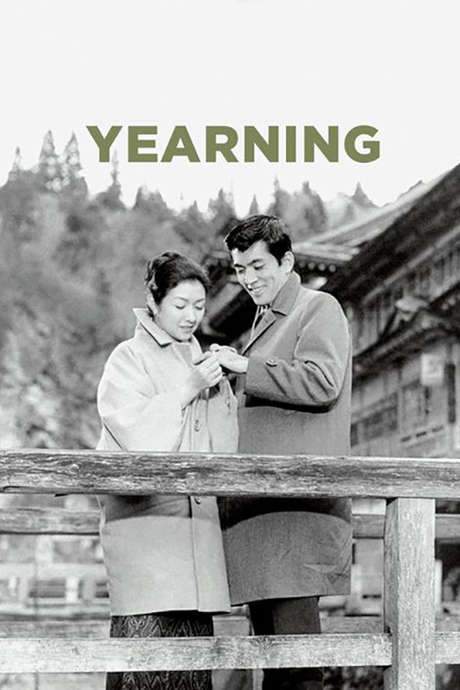
What Is Yearning About?
The premise of Yearning in 327 words, with nothing given away. The full story follows below.
In a landscape marked by the quiet scars of war, Reiko Morita has cultivated a life defined by resilience and routine. For eighteen years, the war widow has poured her energy into the family’s modest grocery shop, running the business from their traditional home with unwavering dedication. Her days are a cycle of service and survival, creating a sanctuary of stability in a world that often feels unmoored. The shop stands not just as a livelihood, but as a living memory of the husband she lost and the duty she continues to uphold.
However, the peaceful rhythm of her existence is abruptly disrupted by the arrival of a sprawling, modern supermarket nearby. This new development threatens to swallow the small family business, jeopardizing the clientele Reiko has nurtured for nearly two decades. The economic pressure exposes fault lines within the family itself, as her sisters-in-law quietly conspire to transform the property. Their plans to modernize threaten to push Reiko aside, turning her home and livelihood into a battleground between tradition and a ruthless new commercialism.
Within this atmosphere of encroaching displacement, the only ally Reiko finds is her brother-in-law, Kōji Morita. Though a young man often drawn to trouble and drunken brawls, his loyalty to Reiko remains distinct from the rest of the family’s calculating demeanor. As the family dynamics shift and the pressure mounts, the relationship between the disciplined widow and the wayward youth becomes the emotional core of the story, hinting at complex bonds that go deeper than simple in-law obligation.
Set against a backdrop of societal transformation, the film captures a poignant mood of longing and transition. It is a drama that explores how external changes force internal reckonings, challenging the characters to decide what they are willing to fight for and what they must leave behind. As tensions rise, the narrative promises a deep dive into the human heart, exploring how love and loyalty persist when the world around them begins to crumble.
What Happens in Yearning?
The complete story of Yearning, from the first scene to the last, in 251 words (about 1 minute). Spoilers throughout. Names in the text link to 2 cast member pages.
Spoilers ahead
For 18 years, war widow Reiko Morita Hideko Takamine has run a grocery shop within the house of her late husband’s family. A new supermarket threatens to push the little store out of business, and Reiko’s sisters-in-law quietly conspire to transform the family’s shop into a supermarket of its own, hoping to push her aside. Among the family, the only one who stands with Reiko is her brother-in-law, the 25-year-old Kōji Morita Yūzō Kayama. He is often drawn into drunken brawls, yet his loyalty to Reiko remains clear, and he eventually confesses that he has always loved her. She responds that her feelings for him are those of a family bond, not a romantic one.
After weighing her position, Reiko chooses not to block her sisters’ plans any longer and decides to return to her own family. Kōji Morita accompanies her on the long train ride, and during the journey she finds herself softening toward him. They get off at a country inn to talk, hoping to resolve things in a quieter setting. He resumes his advances, but at the last moment she cannot face intimacy. He storms off in anger and later phones to say he is going back home.
The morning after, Reiko sees him being carried into the village on a stretcher, and learns that he has died from a fall off a cliff. She runs after the carriers, but then she reaches a point of quiet shock, her face a blank slate as the news settles in.
Yearning Timeline: Every Key Event in Order
12 key events in the order they happen, from “Reiko runs a grocery shop in a family home” to “Reiko's silent response to tragedy”. 12 events name a place, across 8 locations.
- 1
Reiko runs a grocery shop in a family home
For 18 years, Reiko, a war widow, has managed the family grocery shop inside her deceased husband’s relatives’ house. She keeps the business afloat despite the constraints of the old house and the memories that linger there. The shop stands as a quiet anchor in a town facing change.
When:18 years after husband's death Where:House of Reiko's deceased husband's family
- 2
A new supermarket threatens Reiko's shop
A sleek new supermarket opens nearby, casting a shadow over the family shop. Reiko worries about her livelihood, while her sisters-in-law see the threat as an opportunity to push her aside. They conspire to transform the shop into a supermarket version of itself and edge Reiko out.
When:Present day Where:Town near the shop
- 3
Sisters-in-law plot to get rid of Reiko
The sisters-in-law publicly discuss strategies to undermine Reiko’s position and replace the shop with a supermarket venture. They frame modernization as progress, while quietly planning to remove Reiko from the family business. The tension between tradition and change grows.
When:Daytime Where:Sisters-in-law's house
- 4
Kōji confesses his love to Reiko
Kōji, the 25-year-old brother-in-law known for his drunken fights, finally tells Reiko that he has always loved her. He speaks with raw honesty, hoping the confession will shift their relationship toward something more than family ties.
When:Evening Where:Family home
- 5
Reiko rejects the confession
Reiko explains that she cares for him only as a family member and cannot return romantic feelings. The rejection leaves Kōji hurt but does not end his attachment. The moment underscores the fragility of their complicated bond.
When:Evening Where:Family home
- 6
Reiko decides to step back from the family conflict
Facing pressure from her sisters and the economic threat to her livelihood, Reiko decides she does not want to stand in the way of the sisters’ plans any longer. She resolves to return to her own family and leave the house she has called home for years.
When:Next day Where:Family home
- 7
Kōji follows Reiko onto a long train ride
Kōji follows Reiko as she leaves on a long train journey, seemingly intent on pursuing her or ensuring she is not alone. The trip becomes a turning point, challenging their boundaries between family duty and potential romance.
When:During journey Where:Train
- 8
They talk and disembark at a country inn
On the train, Reiko begins to soften toward him. They disembark at a country inn to talk privately, away from the house and its tensions. The setting shifts from public conflict to private deliberation.
When:Evening Where:Country inn
- 9
Koji resumes his approaches; Reiko resists
Inside the inn, Koji resumes his romantic advances while Reiko remains cautious and unable to face intimacy. The emotional stakes rise as proximity sparks both longing and hesitation.
When:Evening Where:Country inn
- 10
Koji storms out, drinks, and plans to return home
Koji storms out in a drunken mood and later phones Reiko to say he is going back home. His instability reflects the fragility of their relationship and the volatile mix of affection and frustration.
When:Night Where:Country inn
- 11
Morning tragedy: Koji dies
In the morning, Reiko sees Koji carried into the village on a stretcher, having died from a fall off a cliff. The sudden loss reverberates through her, forcing a reckoning with their choices and the cost of desire.
When:Morning Where:Village outskirts / cliff
- 12
Reiko's silent response to tragedy
She runs after the carrier processions but stops, her face blank with grief and numb resignation. The quiet, unresolved ending lingers as she confronts a future shaped by loss and duty.
When:Morning Where:Village road
Who Are the Main Characters in Yearning?
7 characters, among them Reiko Morita (Hideko Takamine), Kōji Morita (Yūzō Kayama) and Ruriko (Mie Hama): who each one is and the part they play in the story. Every profile links to the actor’s page.
- RM
Reiko Morita (Hideko Takamine)
Played by Hideko Takamine
A war widow who runs her late husband’s family grocery, she navigates mounting family pressure and personal restraint. She remains resilient and self-contained, but her choices are haunted by duty and the unfulfilled possibility of love.
- 🎭 Drama
- 💔 Unrequited love
- 🏡 Domestic resilience
- KM
Kōji Morita (Yūzō Kayama)
Played by Yûzô Kayama
The 25-year-old brother-in-law who openly loves Reiko and often drinks to cope with his unreciprocated feelings. His loyalty to family and his impulsive nature push the plot toward its tragic turn.
- 🎭 Drama
- 💔 Unrequited love
- 🥃 Alcohol
-

Ruriko (Mie Hama)
Played by Mie Hama
A sister-in-law who sides with the plan to convert the shop into a supermarket, testing family loyalties and revealing competing priorities within the Morita household.
- 🎭 Drama
- 💼 Family dynamics
- HM
Hisako Morizono (Mitsuko Kusabue)
Played by Mitsuko Kusabue
Another Morita relative who embodies the tension between tradition and modern economic pressures, participating in the family's power dynamics as the plan evolves.
- 🎭 Drama
- 🏷️ Family ties
- TM
Takako Morita (Yumi Shirakawa)
Played by Yumi Shirakawa
A Morita family member who adds to the network of relatives surrounding Reiko, contributing to the pressure around the shop and the family’s ambitions.
- 🎭 Drama
- 🏡 Family expectations
-
Bar Madam (Kumeko Urabe)
Played by Kumeko Urabe
A local bar owner who intersects with the Morita story, providing a social space where characters reveal motives outside the family home.
- 🎭 Drama
- 🍷 Social dynamics
- S(
Shopkeeper (Haruo Nakajima)
Played by Haruo Nakajima
A local shopkeeper who interacts with Reiko's grocery and the family's business decisions, embodying the everyday realities of small-town commerce.
- 🎭 Drama
- 🛍️ Small business
Where and When Is Yearning Set?
Yearning is set in Morita family home, Japanese countryside and rural village (Postwar Japan, early 1950s). Here is why the time and place matter to the story.
When
Postwar Japan, early 1950s
The narrative unfolds in the wake of World War II, a period when small shops faced pressure from emerging supermarket chains and rapid economic changes. Family duty and social expectations shape decisions in a society undergoing modernization. The pacing and context mirror a Japan transitioning from scarcity to new consumer realities.
Where
Morita family home, Japanese countryside, rural village
The story centers around Reiko's home and the family-run grocery within the Morita household, reflecting intimate domestic life. It shifts between the shop, the surrounding countryside, and a country inn reached by train, highlighting how a small business sits at the heart of family tensions. The rural village setting grounds the drama in a community where reputation and livelihood are closely tied.
- 🏠 Domestic setting
- 🇯🇵 Japan
- 🛍️ Postwar commerce
What Are the Themes of Yearning?
4 ideas the story keeps returning to, among them Love vs Duty, Family vs Modernity and Journey and Fate.
-
01
Love vs Duty
Koji's confession to Reiko exposes a clash between personal longing and family obligation. Reiko's fidelity to kin and her role within the household complicate any romantic possibility. The film probes whether love can flourish under rigid social duties, and what price loyalty exacts.
-
02
Family vs Modernity
The sisters-in-law' scheme to turn the shop into a supermarket embodies postwar economic shifts. The tension between preserving traditional kin-based commerce and embracing modern retail reveals how money and ambition strain intimate family ties. Reiko's autonomy tests the strength of family loyalty.
-
03
Journey and Fate
The train ride to a country inn becomes a pivot point where distance and chance influence the couple's future. The inn offers space for confession, yet social constraints prevent real intimacy. The journey toward connection ends in tragedy, underscoring the fragility of hope.
-
04
Time and Memory
Years of war and loss haunt Reiko, shaping decisions and isolation. The measured pace reflects memory, regret, and the cost of clinging to the past. The ending suggests time can either erode or sustain compassion, depending on whether human warmth endures.
What Kind of Film Is Yearning?
Melancholic in tone, with slow pacing and a straightforward story, going by the plot summary.
- Tone
- Melancholic
- Pacing
- Slow
- Story
- Straightforward
- Intensity
- Low
- Ending
- Sad
A meditative, melancholic drama that follows a widow's quiet struggle against family opposition and a surprising confession of love, culminating in a tragic accident that leaves her emotionally numb.
- melancholy
- quiet reflection
- unrequited love
- grief
- longing
- tragic
- widowhood
- in-law relationships
- small business
- generational conflict
Content notes: suicide.
Quiz
How well do you remember Yearning? Test yourself on the story.


