
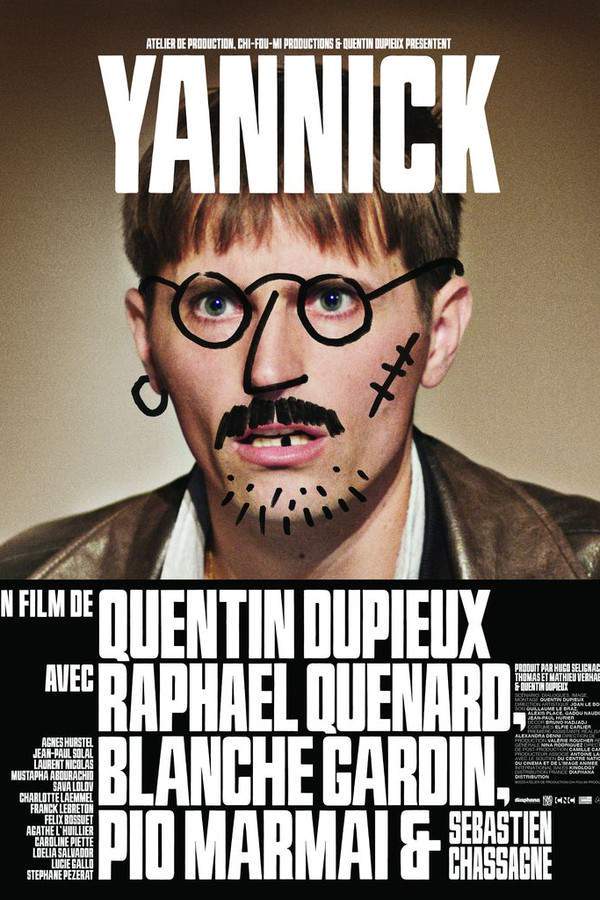
What Is Yannick About?
The premise of Yannick in 303 words, with nothing given away. The full story follows below.
In a dimly lit Parisian venue, a modest comedy called Le Cocu struggles to find its rhythm before a half‑empty audience. The bouffe theater’s intimate atmosphere is thick with the nervous energy of actors trying to coax laughter from a room that feels more like a waiting room. The stage, framed by velvet curtains and the echo of whispered expectations, becomes a pressure cooker where the line between performance and performance anxiety blurs.
Enter Yannick, a night‑shift parking attendant who has traveled to the capital seeking an escape from his routine. Disappointed by the lackluster show, he feels an urgent need to intervene, convinced that the evening can be salvaged through a bold, unplanned act. His presence turns the quiet theater into a restless arena, where the audience’s curiosity mixes with a palpable tension, hinting at the thin veil separating order from chaos.
The troupe—Sophie Denis, a pragmatic actress; Paul Rivière, whose charisma masks deeper anxieties; and William Keller, a performer teetering between comedy and drama—must suddenly navigate an unexpected shift in control. Their chemistry, already strained by the faltering play, is tested as they respond to Yannick’s impromptu direction, their lines and movements morphing into a spontaneous experiment. The actors’ attempts to reclaim the narrative spark a fragile cooperation, turning the stage into a living laboratory of humor, improvisation, and raw emotion.
The film’s tone hovers between nervous comedy and tense theater, inviting viewers to feel the electric buzz of a night where creativity erupts from frustration. The theater itself becomes a silent character, its walls absorbing the clash of intentions and the sudden surge of collective energy. As laughter and apprehension intermingle, the audience is left wondering whether the true performance lies in the script that was written or in the unpredictable moments that arise when everyone’s roles are suddenly upended.
What Happens in Yannick?
The complete story of Yannick, from the first scene to the last, in 733 words (about 3 minutes). Spoilers throughout. Names in the text link to 3 cast member pages.
Spoilers ahead
The film opens with a small, tense moment on a Paris stage: a boulevard comedy called Le Cocu is being performed at the Bouffes Parisiens, and the room is only half full. The three actors – Sophie Denis, Paul Rivière and William Keller – are doing their best to sell the laughs and the drama despite the rattling energy in the room. For the first time, the performers’ names are braided with the people behind them: Sophie Denis [Blanche Gardin], Paul Rivière [Pio Marmaï], and William Keller [Sébastien Chassagne] bring their characters to life as the audience claps and sighs in equal measure.
Into this fragile balance walks Yannick, a night parking attendant from Melun, who declares the show is terrible and won’t help him forget his daily troubles. He has driven forty five minutes to Paris, wandered the streets, and now stands in the theater with a revolver, interrupting the performance and demanding to be heard. The room’s tension spikes as some audience members and the actors urge him to leave; Paul even steps offstage in a heated moment, insisting Yannick must go. Yet Yannick stays, and when he returns, his anger has grown sharper and more personal.
What follows is an unsettling mix of coercion and improvisation. Yannick takes control of the space and begins to direct the play himself, insisting that a parking attendant can create real entertainment. He even asks a nearby spectator to lend him a laptop so he can write a new script. The crowd, half terrified and half curious, watches as Yannick wrestles with the computer, struggling with the keys yet somehow coaxing a strange, new energy from the room. The table is turned: the actors now navigate a script that is not theirs, while Yannick quietly sympathizes with the stunned spectators, their shock slowly giving way to a curious, shared curiosity.
Sophie, ever practical, hatches a plan. She signals to Paul, who seizes the moment when Yannick’s attention falters and nabs the gun. What unfolds is a tense, theatrical power-play: Paul confronts Yannick with a rough, almost brash bravado, humiliating him for the trouble he has caused and ordering him to the floor. Yannick needles Paul in return, the moment heavy with past grudges and a fragile sense of fame, until a technician hidden in the wings knocks Paul unconscious, allowing Yannick to reclaim the weapon. The tension dissipates into a curious, almost celebratory moment as the audience claps—an odd validation of the chaos they’ve witnessed.
With the weapon secured, Yannick’s rewritten play finally begins. In this new version, Paul steps into the role of a doctor, Sophie becomes the assistant, and William is recast as the dead man. The rehearsal takes on a ceremonial awkwardness: the assistant performs an autopsy on a corpse, only to be corrected by the doctor who explains that the “dead man” is not truly deceased—he is simply lacking love. The actors stumble through the new lines and clumsy blocking, yet the audience responds with sustained laughter, finding a surprising warmth in the improvised, imperfect performance. Behind the scenes, Yannick quietly guides the action, directing the performers with gentle, almost fatherly pride, and finally sheds tears of joy as the scenes come to life.
Meanwhile, the tension outside the theater escalates. A spectator quietly slips away and calls the police, signaling that the chaos inside has drawn real, cold consequences beyond the stage. The film closes on a note of impending intervention as the BR I arrives at the venue, signaling that the events inside may soon collide with outside authority.
This story unfolds with a careful balance of chaos and creativity, woven through a single night that reshapes the fates of its performers and scores the room with both fear and laughter. The film leans into the tension between art and disruption, showing how a failed show can become something unexpectedly alive when it is reframed by those who inhabit it.
- The cast anchors the world with pointed, human echoes: Blanche Gardin as Sophie Denis, Pio Marmaï as Paul Rivière, and Sébastien Chassagne as William Keller bring depth to characters who must improvise under pressure.
- The setting—an intimate Paris theater, a frustrated crowd, and a night where normal rules blur—becomes a character in its own right, inviting the viewer to consider what makes a performance true: the intention behind it, or the living moment when it happens.
Yannick Timeline: Every Key Event in Order
11 key events in the order they happen, from “Opening night interrupted” to “BRI poised to enter”. 11 events name a place, across 8 locations.
- 1
Opening night interrupted
The Bouffes Parisiens production of Le Cocu is underway with three actors performing before a half-empty audience. Yannick, a night parking watchman from Melun, interrupts to tell them the show can't forget his daily problems. He traveled 45 minutes to Paris and 15 minutes to the theatre just to voice his dissatisfaction. The moment marks the start of a tense and chaotic evening.
When:Opening night, performance begins Where:Bouffes Parisiens theatre
- 2
Yannick escalates to hostage
The actors and some audience members tell Yannick to leave, but he remains and returns in greater anger with a revolver. He takes the room hostage, shifting the night from a performance to a coercive standoff. The cast and spectators are stunned as control passes to him.
When:Early in the first act Where:Theatre auditorium
- 3
Rewrite of Le Cocu begins
Yannick takes over the space and begins rewriting the play with the actors under his direction. He insists a parking attendant can deliver a better evening than Le Cocu. He borrows a spectator’s laptop to compose a new script, and despite struggling with the keyboard, he manages to finish writing.
When:During the hostage period Where:On stage and backstage
- 4
Yannick connects with spectators
While the actors perform under threat, Yannick moves among the shocked spectators, sharing bits of his life and seeking their sympathy. He reads the room’s reactions as he guides the new script. The audience begins to respond with a mix of empathy and curiosity.
When:During the hostage period Where:Theatre auditorium
- 5
Sophie plans a counter-move
Sophie devises a plan to regain control and asks Paul to take Yannick’s gun. The cast positions themselves for a risky intervention while still under Yannick’s glare. Timing and courage become the currency of their next move.
When:During hostage Where:Backstage
- 6
Paul disarms Yannick
Paul engages Yannick in conversation, seizes a moment of inattention, and grabs the gun. He becomes aggressive, humiliating Yannick and ordering him to the floor to lick it. A technician hidden in the wings mistakes Paul for the attacker and knocks him out, and Yannick retrieves the weapon.
When:During the gun grab Where:Theatre stage/backstage
- 7
Applause and shift in momentum
Yannick regains the weapon and plays to the crowd, praising Paul for his performance. The audience and the other actors respond with cheers, and the mood swings back toward engagement and relief. The room confirms the improvisational plan is now a live show.
When:Immediately after the struggle Where:On stage
- 8
The new play opens
Yannick’s version of the play unfolds with Paul as a doctor, Sophie as the assistant, and William as the dead man. The assistant performs an autopsy and is corrected by the doctor that the dead man is not really dead, just lacking love. The assistant kisses the dead man, who wakes up, and the audience laughs at the absurdity.
When:Beginning of Yannick's new play Where:On stage
- 9
Behind the scenes guidance
Yannick watches from behind the scenes, quietly directing the actors while the improvised performance runs. He cries with joy as the chaotic takeover comes together and the crowd reacts with laughter and engagement. The moment marks a personal vindication for him in the moment.
When:During the performance Where:Behind the stage
- 10
Spectator escapes and police called
A spectator slips away from the room and calls the police, raising the stakes beyond the stage. Tension builds as authorities are alerted and the theatre braces for intervention. The situation moves toward external resolution.
When:Late in the incident Where:Theatre interior
- 11
BRI poised to enter
The film ends with the BRI about to enter the theatre, signaling an imminent intervention in the hostage situation. The performers and audience await the outcome as the night’s chaos approaches its end. Yannick’s improvised takeover has rewritten the rules of the evening.
When:Ending, awaiting intervention Where:Theatre interior
Who Are the Main Characters in Yannick?
4 characters, among them Paul Rivière, Sophie Denis and Yannick: who each one is and the part they play in the story. Every profile links to the actor’s page.
-
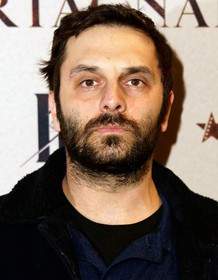
Paul Rivière
Played by Pio Marmaï
An actor in the troupe who is volatile and insecure about Yannick’s sudden popularity. He tries to preserve his status by asserting himself aggressively, turning his frustration into a performance in real life. He seizes Yannick’s gun and is later subdued by a technician, revealing his fragility behind the bravado.
- 🎭 Theater
- 😠 Jealousy
- 🧠 Manipulation
-

Sophie Denis
Played by Blanche Gardin
An actress and the play’s assistant who navigates the crisis with pragmatism. She crafts a plan with Paul to subdue Yannick and keep the show on track, guiding the ensemble through the improvised script. Her quick thinking helps stabilize the situation even as danger remains present.
- 🎭 Theater
- 🤝 Collaboration
- 🧩 Strategy
-

Yannick
Played by Raphaël Quenard
A night parking attendant from Melun who interrupts the performance to prove that his presence can entertain. He is determined, disruptive, and emotionally invested in turning the crisis into art, directing the action from behind the scenes as the audience watches. He writes a new script using a borrowed laptop and seeks connection through control of the stage.
- 🎭 Theater
- 😡 Anger
- 🧭 Improvisation
- WK
William Keller
Played by Sébastien Chassagne
One of the actors, assigned to play the dead man in Yannick’s rewritten piece. He participates in the chaotic but creative process, adapting to the new, improvised direction while maintaining his on-stage role. His presence anchors the troupe’s performance amid the upheaval.
- 🎭 Theater
- 🧭 Role
- ✨ Meta-performance
Where and When Is Yannick Set?
Yannick is set in Bouffes Parisiens, Paris and Melun (Present day). Here is why the time and place matter to the story.
When
Present day
The events take place in contemporary Paris, with modern theater life as the backdrop. A laptop is borrowed from a spectator to rewrite the play in real time, signaling current technology’s intrusion into performance. The climax arrives with the presence of the BRI, anchoring the narrative in a current urban setting.
Where
Bouffes Parisiens, Paris, Melun
The action unfolds inside Bouffes Parisiens in Paris, a venue that becomes a pressure cooker during the hostage interruption. The setting shifts between the stage, cloakroom, and the audience hall, highlighting the claustrophobic nature of a live performance under threat. The outside city context—Paris and the reach from Melun—frames the tension as the situation escalates toward a police intervention.
- 🎭 Theater
- 🗺️ Paris
- 🏛️ Bouffes Parisiens
- 🚗 Melun
What Are the Themes of Yannick?
4 ideas the story keeps returning to, among them Power Struggle, Collaboration and Violence.
-
01
Power Struggle
Yannick’s intrusion shifts control of the night from writers and actors to a hostile outsider who dictates the action. The troupe must respond in real time, blending crisis management with creative improvisation. The scene probes who truly governs a performance—the author, the performers, or the man threatening violence.
-
02
Collaboration
A forced collaboration emerges as Yannick directs the actors and even engages with a spectator to write a new script. The actors adapt under threat, turning fear into a shared, improvised show. This dynamic reveals both the vulnerability and resilience of the performers when confronted with danger.
-
03
Violence
The narrative escalates from harassment to a real threat when a gun enters the scene and the tension tightens around control and safety. Violence serves as a catalyst that exposes character flaws and loyalties within the troupe. The climax culminates in a high-stakes intervention as authorities approach the theater.
-
04
Theater
The film uses the theater itself as a meta-stage where fiction and reality blur. The rewritten play mirrors the crisis, turning performance into a reflection on art under pressure. The audience becomes an active partner in the drama, even as danger encroaches.
What Kind of Film Is Yannick?
Tense in tone, with variable pacing and a moderate story, going by the plot summary.
- Tone
- Tense
- Pacing
- Variable
- Story
- Moderate
- Intensity
- Medium
- Ending
- Ambiguous
A tense and unpredictable single-location drama that shifts from a frustrating theatrical experience into a surprisingly cathartic and creative hostage situation, filled with unsettling humor and moments of genuine connection.
- tense
- unsettling
- anxious
- cathartic
- improvisational
- claustrophobic
- theater
- art vs life
- hostage situation
- improvisation
Content notes: hostage situation, gun threat.
Quiz
How well do you remember Yannick? Test yourself on the story.

