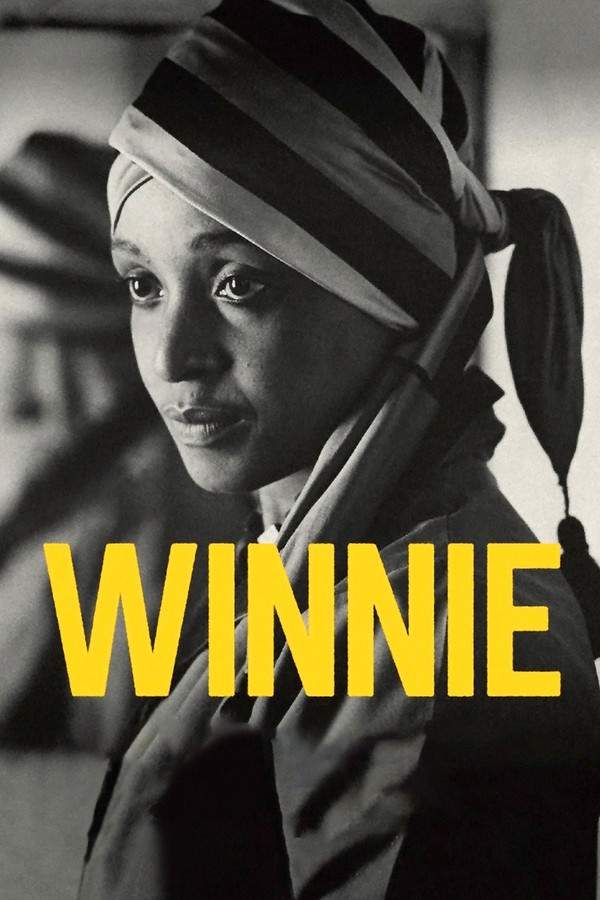
What Is Winnie Mandela About?
The premise of Winnie Mandela in 277 words, with nothing given away. The full story follows below.
In the turbulent heart of apartheid‑era South Africa, a nation choked by segregation and resistance, the story unfolds around a woman whose fire refuses to be dimmed. Winnie Mandela rises from a strict rural upbringing, burdened by expectations that clash with her own fierce sense of purpose. When the call to fight injustice echoes louder than any personal ambition, she chooses to stay on home soil, feeling that her voice is needed where the oppression is most palpable.
Her husband, a towering figure in the struggle, finds himself behind bars, and the weight of his absence reshapes her world. Nelson Mandela becomes both a distant emblem of hope and a catalyst for her own evolution, pushing her deeper into the front lines of activism. As the regime tightens its grip, she endures relentless surveillance and isolation, confronting a public that both idolizes and scrutinizes her every move.
The film paints a landscape of staunch solidarity and stark oppression, where the streets hum with whispered dissent and the walls seem to listen. Within this charged atmosphere, Winnie navigates the contradictory forces of admiration and controversy, leading a burgeoning women’s movement that seeks to lift the voices of the silenced. Her determination is matched only by the relentless pressure of a state determined to crush dissent, creating a relentless tension that drives the narrative forward.
Through vivid cinematography and an emotionally resonant score, the tone remains both intimate and epic, capturing the personal cost of a public fight. The audience is invited to feel the weight of a nation on the brink of transformation, while watching a woman whose resilience becomes a beacon for countless others yearning for freedom.
What Happens in Winnie Mandela?
The complete story of Winnie Mandela, from the first scene to the last, in 428 words (about 2 minutes). Spoilers throughout.
Spoilers ahead
The film traces the life of Winnie Madikizela-Mandela, from a strict rural upbringing that begins with a father who longs for a son, to a choice that alters the nation’s history: she gives up a possible study abroad in America to stay in South Africa where she feels she can make a greater impact. Throughout the story, her decisions are shown as acts of personal sacrifice in service of a larger struggle, and the narrative keeps a steady, humane focus on her commitment to her people and to a country fighting for freedom.
As the years unfold, the movie follows her through the turbulence of Nelson Mandela’s imprisonment and the escalating fight against apartheid. Winnie endures relentless harassment by the security police, experiences banishment to a small town in the Orange Free State, and faces betrayals from friends and allies. The film does not sugarcoat the toll of resistance, portraying more than a year spent in solitary confinement and the emotional weight of isolation, resistance, and endurance.
Upon her release, the story shows her continuing activism with renewed intensity, even as she moves within precarious social circles—her protection sometimes provided by members of her own football club, a detail that underscores the volatile intersections of politics, power, and street-level life in the apartheid era. The personal and political collide as her public life grows more controversial; after Nelson Mandela is freed, the couple faces personal strain that leads to divorce, illuminating the human costs embedded in long struggles for justice.
The plot also places Winnie within the contentious accusations that swirl around her football club, including claims of violence and murder. The film places these charges in the context of a broader fight for dignity and rights, presenting them without excusing wrongdoing but insisting on a nuanced portrayal of a figure who remained steadfast in her pursuit of equality. In the climactic moments, she appears before the apartheid truth and reconciliation committee to address her actions in a courtroom setting, a scene that invites reflection on accountability, memory, and the difficult path toward healing.
In the audience, supporters from the South African Women’s League—an organization she helped lead—signal the film’s core message: a commitment to anti-apartheid struggle and to women’s rights, and the belief that her life story embodies both the cost of resistance and the enduring fight for justice. Overall, the movie presents a balanced, empathetic portrait of a woman at the center of South Africa’s most turbulent decades, illustrating how personal courage and public activism can intertwine in a nation’s ongoing pursuit of freedom and equality.
Winnie Mandela Timeline: Every Key Event in Order
12 key events in the order they happen, from “Rural upbringing shapes her early life” to “Public support from the South African Women's League”. 10 events name a place, across 4 locations.
- 1
Rural upbringing shapes her early life
Winnie Madikizela-Mandela grows up in a strict rural setting where her father is disappointed she wasn't born a boy. This upbringing leaves a lasting imprint on her sense of duty toward family and community. It foreshadows her later commitment to collective struggle.
When:Childhood
- 2
Gives up study abroad to stay in South Africa
She chooses to forgo a chance to study in America to remain in South Africa where she feels she is more needed. This decision marks a shift from personal ambition to public service. Her resolve to contribute to her country begins to take shape.
When:early adulthood Where:South Africa
- 3
Marriage to Nelson Mandela and his imprisonment begins
She marries Nelson Mandela, and his imprisonment begins shortly after their marriage. The relationship becomes deeply connected to the anti-apartheid struggle as she carries on in his absence. The period tests her resolve under state suppression.
When:1950s-1960s Where:South Africa
- 4
Harassment by security police
Throughout the struggle, she endures harassment by the security police targeting her activism. The state’s pressure intensifies, taking a personal toll on her life. This period reveals the high price of standing up to apartheid.
When:During apartheid era Where:South Africa
- 5
Banishment to Orange Free State town
She is banished to a small town in the Orange Free State as punishment for her activism. The isolation intensifies the burdens of those fighting apartheid, yet she continues to mobilize support. Her resolve remains unbroken despite being kept at a distance from urban centers.
When:during banishment Where:Orange Free State, South Africa
- 6
Betrayal by friends and allies
The film shows betrayal by friends and allies who drift away or oppose her cause. The fracturing within anti-apartheid circles tests her leadership and commitment. She navigates suspicion and pressure from those who once supported her.
When:During anti-apartheid struggle
- 7
Imprisonment and solitary confinement
She endures imprisonment, including more than a year in solitary confinement. The harsh conditions highlight the brutal measures used to curb dissent. The experience shapes her perspective and fuels her later political work.
When:Imprisonment period Where:South Africa (prison)
- 8
Release and renewed activism
After her release, she continues activism against apartheid and fights for women's rights. She operates under the protection of thuggish members of her own football club, a controversial safeguard that blurs lines between protection and intimidation. The period marks a transition from prison to continued public life.
When:post-release Where:South Africa
- 9
Divorce follows Mandela's release
Following Nelson Mandela's release from prison, the couple divorces, signaling a personal cost amid the political changes. Their separation does not end their commitments to the struggle, though it redefines their public roles. Winnie remains a central figure in the fight against apartheid.
When:1990s Where:South Africa
- 10
Accusations of violence and murder
The football club's influence leads to accusations of violence and murder against her. The allegations reflect the era's turbulence and the controversial methods some activists used. She faces legal and political scrutiny as a result.
When:During late apartheid era Where:South Africa
- 11
Appears before the Truth and Reconciliation Commission
At the end of the film she appears before the apartheid Truth and Reconciliation Commission to own up to her actions in court. The moment frames her legacy within the process of national reckoning. The audience witnesses her accountability in a pivotal public moment.
When:End of film Where:Truth and Reconciliation Commission, South Africa
- 12
Public support from the South African Women's League
In the audience, supporters from the South African Women's League cheer her, recognizing her advocacy for women’s rights and her fight against apartheid. The scene emphasizes public support for her amid controversy. It underscores how her legacy is celebrated by those she inspired.
When:TRC era Where:South Africa
Who Are the Main Characters in Winnie Mandela?
2 characters, among them Winnie Madikizela-Mandela (Jennifer Hudson) and Nelson Mandela (Terrence Howard): who each one is and the part they play in the story.
- WM
Winnie Madikizela-Mandela (Jennifer Hudson)
A determined anti-apartheid activist who endures harassment by security police, banishment, and more than a year in solitary confinement. She remains steadfast in her fight against apartheid and becomes a symbol of resilience, leadership, and controversy within the movement. The film follows her evolution from a rural upbringing to a public figure in the struggle for freedom and women’s rights.
- ✊ Activist
- 👩 Leadership
- 🛡️ Resilience
- NM
Nelson Mandela (Terrence Howard)
Winnie’s husband and a central figure in the anti-apartheid movement, whose imprisonment and eventual release shape the course of the struggle. His absence and eventual return influence Winnie’s activism and the broader dynamics of family, loyalty, and political sacrifice within the movement.
- 🎭 Political figure
- ⛓️ Imprisoned
- ❤️ Relationship
Where and When Is Winnie Mandela Set?
Winnie Mandela is set in South Africa and Orange Free State (1930s-1990s). Here is why the time and place matter to the story.
When
1930s-1990s
The narrative spans the late 20th century apartheid period in South Africa, from Winnie’s early life through decades of political struggle, imprisonment, and banishment, to the post-apartheid era culminating in truth and reconciliation proceedings.
Where
South Africa, Orange Free State
South Africa provides the backdrop for Winnie Mandela’s life under apartheid. The Orange Free State is depicted as a place of banishment and police harassment, reflecting the era's brutal social control. The setting anchors a story of political struggle, resistance, and personal sacrifice.
- 🌍 South Africa
- 🗺️ Orange Free State
- 🕰️ Apartheid era
What Are the Themes of Winnie Mandela?
3 ideas the story keeps returning to, among them Activism, Women’s Leadership and Truth & Reconciliation.
-
01
Activism
The film centers on Winnie Mandela’s relentless activism against apartheid. It highlights the personal costs of dissent, including harassment by security police and periods of isolation. Her leadership in organizing resistance and mobilizing communities is shown as a driving force in the broader struggle for freedom.
-
02
Women’s Leadership
Winnie’s role as a female leader in a male-dominated political landscape is a focal point. The narrative explores how a woman’s voice and actions intersect with national liberation, as she leads and advocates for women’s rights while facing public scrutiny. The portrayal highlights strength, controversy, and resilience.
-
03
Truth & Reconciliation
The film culminates with the complexities of accountability during South Africa’s transition, including allegations of violence and murder. It portrays Winnie’s appearance before the Truth and Reconciliation Committee as a moment of reckoning. The end suggests that personal and political actions are scrutinized in the pursuit of reconciliation.
What Kind of Film Is Winnie Mandela?
Dark in tone, with steady pacing and a moderate story, going by the plot summary.
- Tone
- Dark
- Pacing
- Steady
- Story
- Moderate
- Intensity
- High
- Ending
- Bittersweet
A heavy and tense biographical drama that immerses the viewer in the oppressive struggle and immense personal sacrifice of a key anti-apartheid figure.
- oppressive
- defiant
- isolating
- gritty
- somber
- tense
- political activism
- apartheid
- personal sacrifice
- solitary confinement
Content notes: political imprisonment, solitary confinement, harrassment, banishment, torture, murder accusations.
Where to Watch Winnie Mandela
Stream it on ALLBLK and Hoopla, or rent or buy it from Amazon Video and Apple TV Store. US availability and prices from JustWatch.
 ALLBLK
  ALLBLK Amazon channel
  ALLBLK Apple TV channel
  Hoopla
  Philo
Philo 




Streaming availability in the US, powered by