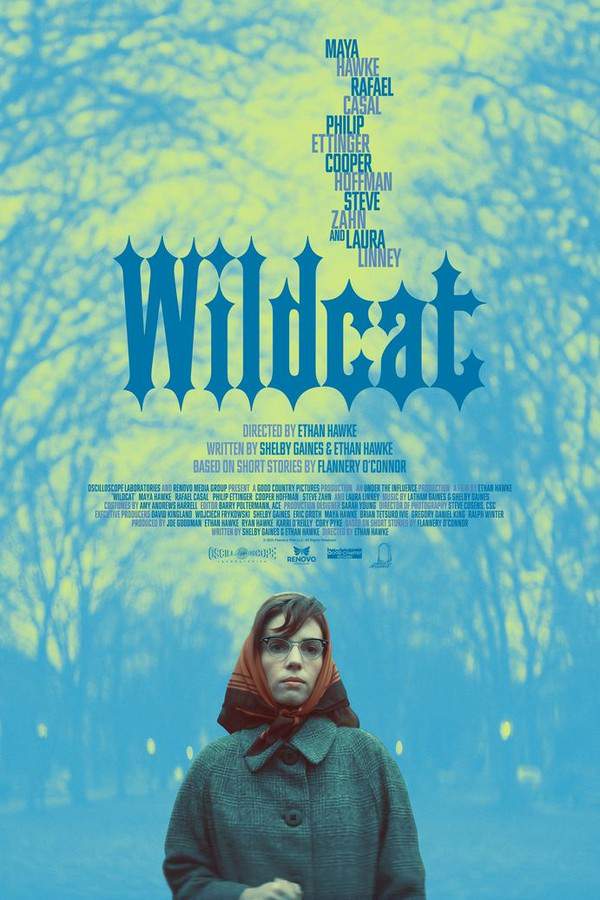
Wildcat 2024

Directed by

Ethan Hawke
Made by

Good Country Pictures
Wildcat Plot Summary
Read the complete plot summary and ending explained for Wildcat (2024). From turning points to emotional moments, uncover what really happened and why it matters.
The film follows Flannery O’Connor, an idiosyncratic young Southern writer and devout Catholic, as she imagines a melodramatic movie trailer in which the crazed, nymphomaniac boarding-house boarder Star Drake drags her hosts into violent trouble. The narrative then unfurls through a blend of imagined episodes and real life, weaving in a mosaic drawn from O’Connor’s short stories—The Comforts of Home, Everything That Rises Must Converge, Good Country People, The Life You Save May Be Your Own, Revelation, and Parker’s Back—along with a scene from her novel The Violent Bear It Away and monologues adapted from A Prayer Journal.
After a writing competition win, she heads to New York to seek approval from a publisher for her novel Wise Blood, but resists the request to outline the work. In this pivotal moment, she discusses her project with Robert Lowell, who calls O’Connor his most talented student and with whom she shares mutual romantic feelings, though Lowell ultimately marries Elizabeth Hardwick. On the return trip, she is exhausted and develops facial rashes; doctors reveal lupus, the disease that claimed her father. She hesitates to seek medical care at first, but eventually receives treatment, and there are moments when she must rely on crutches, even slipping on stairs.
Back home, her mother Regina tries to help and support her, even as she occasionally reveals racist prejudices and doesn’t always appreciate Flannery’s abrasive writing. To comfort herself, Flannery buys a peacock. An Irish priest counsels her about her inner struggles; she notes James Joyce’s Ulysses being banned in Ireland, a situation the priest agrees is needless. He urges her to channel charity into her writing and to let her Catholic faith inform her art as a good, patient path forward. After receiving Lowell’s note about his marriage to Hardwick, Flannery settles into a focused, concentrated writing life.
The film closes with an intertitle before the credits informing viewers that O’Connor lived another fourteen years, ultimately succumbing to what she called “the French wolf” lupus. The final on-screen text after the credits quotes her gratitude toward thousands of pigs whose pituitary glands were used for the lupus injections that kept her alive.
Wildcat Timeline
Follow the complete movie timeline of Wildcat (2024) with every major event in chronological order. Great for understanding complex plots and story progression.
Opening trailer imagined by Flannery
The film opens with Flannery imagining a melodramatic movie trailer starring Star Drake, a wild boarding-house figure who drags others into violent trouble. Across this frame, imagined scenes and real anecdotes from her stories begin to unfold, hinting at the movie’s literary mosaic. The sequence establishes storytelling and faith as central tensions of the biography.
Episodes drawn from her short stories
Various episodes—drawn from The Comforts of Home, Everything That Rises Must Converge, Good Country People, The Life You Save May Be Your Own, Revelation, Parker's Back—appear as vignettes, as well as scenes from The Violent Bear It Away and monologues from A Prayer Journal. These segments braid together fiction and memory, offering a kaleidoscopic portrait of her voice and faith. The scenes set up the film's core tension between artistry and conscience.
Winning a competition and NYC trip
After winning a writing competition, Flannery travels to New York to seek publisher approval for her novel Wise Blood. She refuses to outline the work for the publisher, insisting on keeping it as she wrote it.
Conversation with Robert Lowell in New York
In New York, she discusses the novel with poet Robert Lowell, who calls her his most talented student and makes clear there are mutual romantic feelings between them. The scene foreshadows the complex personal dynamics that accompany her career, including his eventual marriage to Elizabeth Hardwick.
Return home and lupus diagnosis
Returning from New York, she feels tired and develops facial rashes; tests reveal she has lupus, the disease that also claimed her father. The news reframes her subsequent years and creative work.
Initial refusal of medical treatment
She initially refuses to see a doctor for the illness, hoping it will pass. Eventually she does seek treatment, marking a turning point in her health and daily life.
Worsening illness and a fall
Her illness worsens and she must use crutches. She suffers a fall down the stairs during this period.
Mother's support and prejudice
Her mother Regina tries to help during the illness, offering support. She also reveals racist prejudices and finds Flannery's writing abrasive.
A peacock for comfort
To comfort herself, Flannery buys a peacock. The bird becomes a personal comfort amid her struggles.
Irish priest counsels her faith and writing
An Irish priest counsels her about her internal struggles with faith and art, suggesting acts of charity and using her writing for good.
Joyce, bans, and charity
During their talk, she mentions how Joyce's Ulysses is banned in Ireland, which the priest agrees is needless and misguided. He then encourages her to perform acts of charity and use her writing to serve others.
Lowell's marriage and new resolve
Flannery receives a letter from Lowell informing her of his marriage to Elizabeth Hardwick. Gravitating toward a life of disciplined work, she settles into concentrated writing.
Finale: lupus and gratitude
An intertitle reveals that O'Connor lived for another fourteen years and ultimately died of lupus, the 'French wolf'. The closing credits quote thanks thousands of pigs whose pituitary glands yielded the lupus injections that kept her alive.
Wildcat Characters
Explore all characters from Wildcat (2024). Get detailed profiles with their roles, arcs, and key relationships explained.
Flannery O'Connor (Maya Hawke)
An idiosyncratic, deeply Catholic Southern writer who wrestles with illness, ambition, and the responsibilities of her craft. She uses her imagination to navigate both the cruelty and beauty of the world, and her sharp, uncompromising voice drives the stories she weaves. Her resilience under physical pain and social scrutiny shapes a distinctive, uncompromising artistic vision.
Regina
Flannery's mother, who offers support and humor, but also reveals racist prejudices. She embodies the complexities of family loyalty and cultural background in the South. Her presence contrasts with Flannery's spiritual discipline and literary ambition.
Robert 'Cal' Lowell
A celebrated poet who recognizes O'Connor's talent and shares a mutual, evolving attraction, though their relationship is complicated by circumstance. He frames her work in a way that both elevates and challenges her. The eventual marriage of Lowell to Elizabeth Hardwick is part of the backdrop for Flannery's life and choices.
Elizabeth Hardwick
A writer encountered at a party who later marries Lowell; O'Connor's interactions with her reveal rivalries and social dynamics within the literary circle. The meeting at a writers' party hints at networking, friendships, and the complexities of a female literary network in that era.
Wildcat Settings
Learn where and when Wildcat (2024) takes place. Explore the film’s settings, era, and how they shape the narrative.
Time period
Mid-20th century (1940s–1960s)
Set in the postwar era, the narrative follows O'Connor's early career, her trip to New York to pursue a publisher's approval, and her ongoing struggle with lupus. The period is marked by the growth of American literary culture and a strict Catholic milieu influencing personal and artistic choices. It culminates with a note that she would live for many more years, despite long-term illness.
Location
Georgia, United States, New York, United States
The story moves between Flannery O'Connor's Southern homeland and the bustling New York literary world. It centers on a boarding-house setting in the South and scenes in Manhattan as she seeks publication for Wise Blood. The juxtaposition highlights a life lived between intimate, faith-filled routines and the demanding energy of the mid-century publishing scene.
Wildcat Themes
Discover the main themes in Wildcat (2024). Analyze the deeper meanings, emotional layers, and social commentary behind the film.
🖋️
Creativity
The film frames writing as a vocation that sustains Flannery through illness and social expectations. It tracks her voice across imagined stories and real-life encounters, showing how imagination clashes with publishers, critics, and daily pain. The narrative treats art as both refuge and witness, shaping a distinctive Southern voice.
✝️
Faith
Catholic faith anchors Flannery's choices and charitable impulses, even as she grapples with doubt and the demands of a secular literary world. The film portrays religious practice as a source of discipline and a lens for evaluating morality in her fiction. The priestly guidance and journal meditations illuminate a writer trying to align art with belief.
🩺
Illness
Lupus shapes her daily life, forcing adjustments like using crutches and seeking treatment. The illness threads through her writing process and personal relationships, highlighting endurance and vulnerability. The film ends by acknowledging her long fight with the disease and its impact on her work.

Coming soon on iOS and Android
The Plot Explained Mobile App
From blockbusters to hidden gems — dive into movie stories anytime, anywhere. Save your favorites, discover plots faster, and never miss a twist again.
Sign up to be the first to know when we launch. Your email stays private — always.
Explore the mobile appWildcat Ending Explained
Unravel the ending of Wildcat (2024) with our detailed explanation. Understand the final scenes, character fates, and unresolved questions.
In the final scenes of “Wildcat,” Flannery O’Connor finds a sense of peace and purpose within her Georgia home. She adjusts her writing space so that her desk now faces a Cross, symbolizing her renewed spiritual connection and her desire to serve God through her work. This act reflects her understanding that her suffering and faith are intertwined, and that her artistic expression can be a divine calling. The image of the peacock feather spreading signifies a fresh beginning—both spiritually and professionally. It suggests that even in her pain and struggle, she has discovered a form of grace and redemption. Flannery’s acceptance of her circumstances, her commitment to her faith, and her focus on her work mark her journey from hardship to a place of quiet acceptance, signalling that her story is just beginning anew. Her life in Georgia, once seen as a limitation, now becomes a foundation for her spiritual and creative growth, implying that her true purpose lies in embracing her suffering as a means to connect with the divine. She continues to write in her remaining years, and her legacy as a writer and a person of faith is ultimately affirmed in this poignant conclusion.
Wildcat Spoiler-Free Summary
Discover the spoiler-free summary of Wildcat (2024). Get a concise overview without any spoilers.
In the sultry heat of the American South, a young, devout writer wrestles with the uneasy marriage of faith and invention. Flannery O’Connor—a fiercely original mind whose Southern Gothic sensibility is as sharp as it is tender—finds herself perched on the edge of brilliance and bewilderment. The film opens a window onto her world, where the cadence of church hymns mingles with the clatter of typewriter keys, and every quiet moment hums with the possibility of a new story that could reshape how she sees herself and her surroundings.
Around her swirl a cast of vivid companions who both ground and unsettle her. Star Drake, the enigmatic boarding‑house guest whose presence crackles with restless energy, becomes a catalyst for the wild, imagined vignettes that flicker through Flannery’s consciousness. Across the miles, Robert Lowell—a charismatic poet and mentor—offers both intellectual fire and a complicated affection, hinting at the delicate balance between admiration and longing. At home, her mother Regina provides a mix of shelter and stark, sometimes judgmental reality, while an insightful Irish priest gently nudges her to let her Catholic devotion inform the raw edge of her art. These relationships pulse through the narrative, each one a thread in the tapestry of her inner and outer life.
The film breathes a tone that is both reverent and razor‑edged, blending the lyrical beauty of Southern landscapes with the unsettling shadows of personal suffering. It invites viewers into a space where imagined scenes from O’Connor’s stories bleed into her lived experience, hinting at the transformative power of illness and pain without spelling out its outcomes. Through lush cinematography, wry humor, and a persistent undercurrent of spiritual inquiry, the story captures the restless curiosity of an artist who seeks to turn her own turmoil into something hauntingly universal.
Movies with Similar Twists and Themes
Uncover films that echo the narrative beats, emotional arcs, or dramatic twists of the one you're exploring. These recommendations are handpicked based on story depth, thematic resonance, and spoiler-worthy moments — perfect for fans who crave more of the same intrigue.
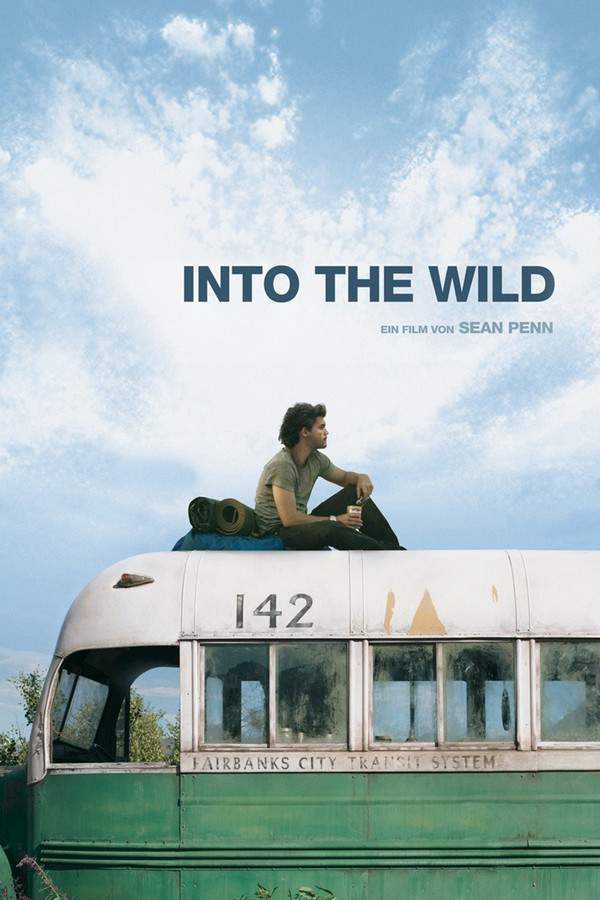

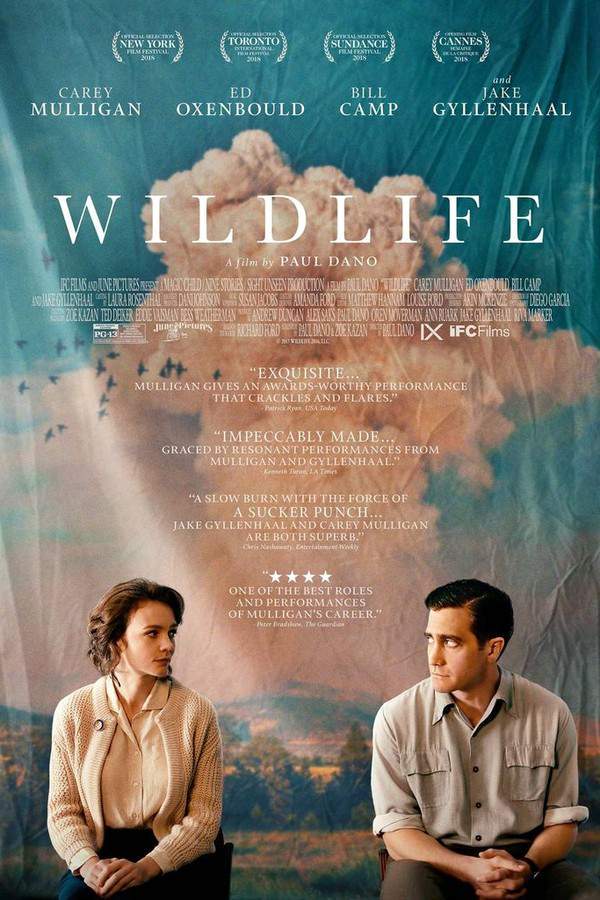
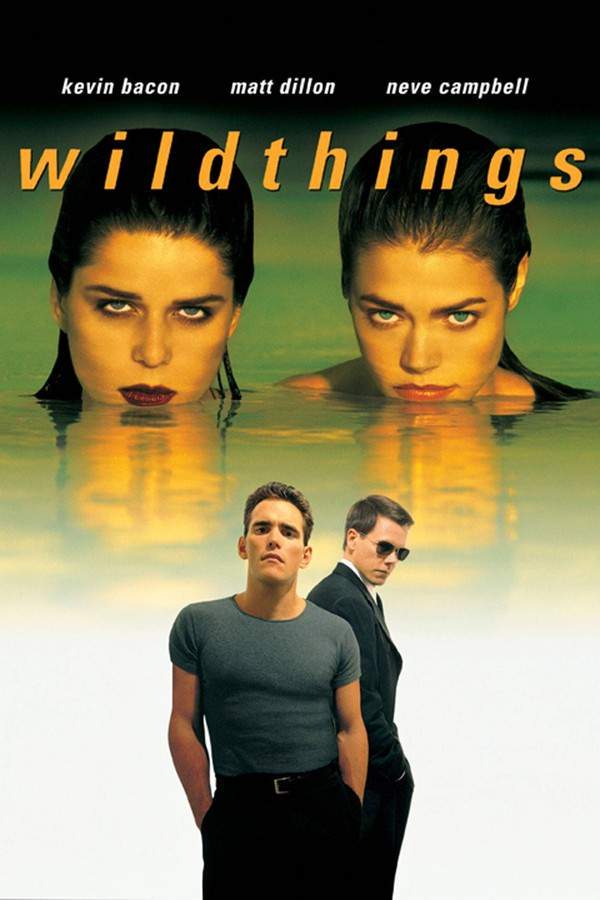
Featured on this page

What's After the Movie?
Not sure whether to stay after the credits? Find out!
Check out our other apps:

SAT Sphere
Build confidence for the Digital SAT.

Mori Atlas
Discover wild places worth protecting.

Luntero
Search smarter for a home in Amsterdam.

Plot Explained
Unravel movie endings and hidden clues.

Pokechamp
Dive into Pokémon data and battle logic.

Driving Theory
Get ready for your European theory test.

Movie Dust
Plan your next cinema trip with ease.

Musemap
Find art and culture as you travel.

Selkobase
Compare credentials before committing.

Local Manual
Turn an unfamiliar country into practical next steps.

Lernavi
Compare school systems before your next move.

GymRoam
Find a workout stop wherever your plans take you.
Explore Our Movie Platform
New Movie Releases (2026)
Famous Movie Actors
Top Film Production Studios
Movie Plot Summaries & Endings
Major Movie Awards & Winners
Best Concert Films & Music Documentaries
Movie Collections and Curated Lists
© 2026 What's After the Movie. All rights reserved.
Privacy Policy