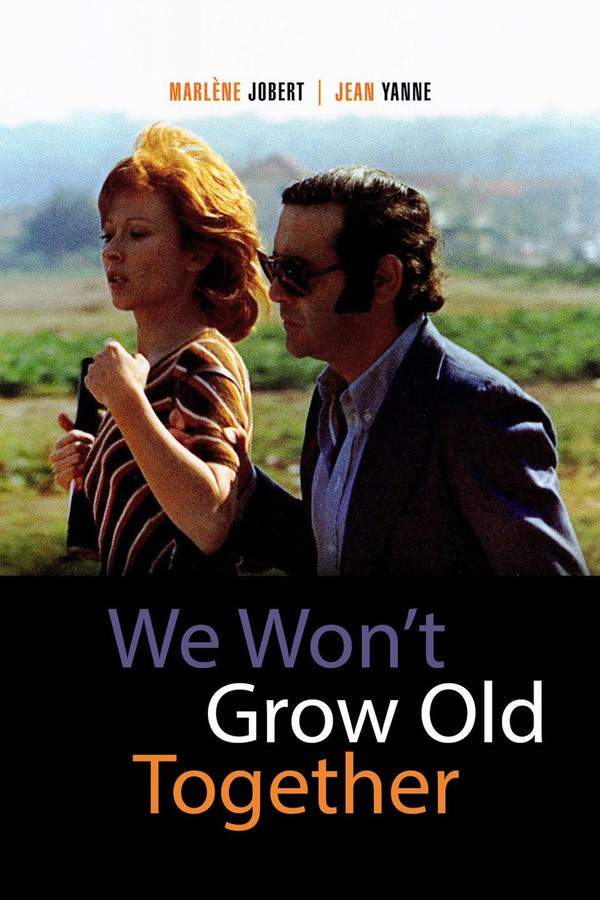
We Won't Grow Old Together (1969) 2012

Directed by

Maurice Pialat
Made by

Filmax International
We Won't Grow Old Together (1969) Plot Summary
Read the complete plot summary and ending explained for We Won't Grow Old Together (1969) (2012). From turning points to emotional moments, uncover what really happened and why it matters.
Jean, a cynical and middle-aged film technician, finds himself entangled in a complex and tumultuous relationship with Catherine, a much younger woman who works as a shop assistant. Despite being married to Françoise, Jean’s marriage has long since fallen into a state of routine and emotional detachment. He often claims that he will leave his wife, but he rarely follows through with these promises, which Catherine clings to with diminishing hope as time progresses.
The film opens in the middle of a heated argument between Jean and Catherine. On this day, Catherine is exhausted from waiting for any change in Jean’s attitude, feeling frustrated and worn down by his inconsistency. Jean, on his part, vacillates between showing affection, behaving condescendingly, and outbursts of cruelty. Their relationship is marked by impulsive outings, quiet dinners, and frequent emotional breakdowns that are usually triggered by Jean’s instability. Their interactions tend to follow a cyclical pattern: Catherine threatens to leave, Jean pleads with her to stay, and temporarily, peace is restored — only to be shattered again by the next conflict.
As the story unfolds, Catherine begins to assert her independence. She visits her family, where she receives warmth, understanding, and support that she has not experienced with Jean. This newfound connection prompts her to contemplate what life might be like outside of her relationship with Jean. Meanwhile, Jean remains trapped within his self-centered worldview, insisting that he loves Catherine but failing to provide her with any sense of stability or genuine commitment.
At one critical point in the story, Jean does separate from his wife, seemingly fulfilling his long-standing promise to be with Catherine. However, Catherine’s perception of what she needs from life starts to shift, especially after she begins dating a new man. Her new partner is described as kind, calm, and emotionally available, qualities that sharply contrast with Jean’s unpredictable and erratic behavior. This contrast makes Jean’s actions and emotional volatility even clearer and harder for Catherine to ignore.
In their final encounter, Jean makes a last-ditch effort to win her back, operating under the assumption that with his freedom finally achieved, Catherine will return to him. Yet, Catherine has changed. She is no longer the person waiting anxiously by the phone or begging for scraps of attention. In a quiet but resolute manner, she chooses to walk away from the relationship — and from Jean — accepting that her feelings have evolved beyond the tumult and instability that once defined their connection.
This story powerfully explores themes of love, dependence, independence, and the painful process of emotional growth. It paints a nuanced picture of two individuals caught in a cycle of passion and detachment, ultimately illustrating how people can grow apart when their needs and expectations no longer align. The film leaves viewers with a sense of poignant realism about the difficulties of sustaining love and the courage it sometimes takes to let go.
We Won't Grow Old Together (1969) Timeline
Follow the complete movie timeline of We Won't Grow Old Together (1969) (2012) with every major event in chronological order. Great for understanding complex plots and story progression.
Introduction of Jean and Catherine's affair
The film opens with Jean, a cynical film technician, engaged in a tumultuous affair with Catherine, a younger shop assistant. Their relationship is marked by arguments, impulsive trips, and emotional breakdowns, reflecting a cycle of desire and frustration. Jean's marriage to Françoise has deteriorated into routine, and he repeatedly claims he will leave, but never does.
Mid-argument scene
The story begins in medias res, with Jean and Catherine embroiled in a heated argument. Catherine expresses frustration over waiting for Jean to change, while Jean oscillates between showing affection and cruelty. This confrontation highlights the fragile and volatile nature of their relationship.
Catherine's growing independence
Catherine starts to become more independent by visiting her family, where she receives warmth and support. She begins to reflect on her life outside Jean’s influence and contemplates a future beyond their tumultuous relationship. This marks a turning point in her emotional journey.
Jean's brief separation from his wife
Jean appears to finally separate from his wife Françoise, seemingly fulfilling his long-standing promise to leave her. However, this separation does not bring stability to his life or relationships, and it becomes clear that his commitment is superficial.
Catherine begins dating a new man
Catherine starts dating a new, kind, and emotionally available man. Her new relationship highlights the contrast with Jean’s erratic behavior and underscores her desire for stability and genuine connection, making her reconsider her attachment to Jean.
Jean's attempt to win her back
In their final meeting, Jean tries to persuade Catherine to return, believing that with him now 'free,' she will come back to him. His assumptions reveal his lack of understanding of her growth and desire for a more stable, authentic relationship.
Catherine's decision to leave
Catherine refuses Jean’s pleas and makes a firm decision to leave him behind. Her departure signifies her emotional growth and rejection of the toxic cycle they have been trapped in, asserting her independence and self-worth.
Catherine walks away from Jean
Catherine quietly but firmly walks away from Jean, ending their tumultuous relationship. This moment embodies her final realization that she deserves better than the unstable and cyclical love they shared.
We Won't Grow Old Together (1969) Characters
Explore all characters from We Won't Grow Old Together (1969) (2012). Get detailed profiles with their roles, arcs, and key relationships explained.
Jean
Jean is a cynical, middle-aged film technician trapped in a stagnant marriage and a tumultuous affair. His unstable emotional state and self-centered attitude drive much of the film’s tension, revealing a man resistant to change and intimacy.
Catherine
Catherine is a younger woman seeking emotional fulfillment and independence from her tumultuous relationship with Jean. Her growing self-awareness and willingness to move on mark her as resilient and evolving through the story.
We Won't Grow Old Together (1969) Settings
Learn where and when We Won't Grow Old Together (1969) (2012) takes place. Explore the film’s settings, era, and how they shape the narrative.
Time period
1960s
The story takes place in the late 1960s, a period marked by social change and shifting attitudes toward relationships and personal freedom. This era was characterized by cultural upheaval and a focus on individualism, which influences the characters' actions and mindset throughout the film.
Location
France, Urban setting
The movie is set in France, likely in an urban environment given the social dynamics and settings described. The cityscape serves as a backdrop for the characters' personal struggles and relationships, reflecting the modern, everyday life typical of French urban areas. The film captures the subtle emotional tensions within a city environment.
We Won't Grow Old Together (1969) Themes
Discover the main themes in We Won't Grow Old Together (1969) (2012). Analyze the deeper meanings, emotional layers, and social commentary behind the film.
💔
Relationship Breakdown
The film explores the fragile nature of romantic relationships, highlighting cycles of hope, disappointment, and emotional pain. It delves into the complexities of love and fidelity, showing how routines and unfulfilled expectations can erode intimacy.
🎭
Emotional Detachment
Themes of emotional withdrawal and detachment are central, emphasizing characters' struggles with commitment and vulnerability. Jean’s self-centered behavior contrasts with Catherine’s quest for independence and genuine connection, illustrating different ways of coping with dissatisfaction.

Coming soon on iOS and Android
The Plot Explained Mobile App
From blockbusters to hidden gems — dive into movie stories anytime, anywhere. Save your favorites, discover plots faster, and never miss a twist again.
Sign up to be the first to know when we launch. Your email stays private — always.
Explore the mobile appWe Won't Grow Old Together (1969) Spoiler-Free Summary
Discover the spoiler-free summary of We Won't Grow Old Together (1969) (2012). Get a concise overview without any spoilers.
In the muted corridors of 1960s France, a weary film technician drifts through a marriage that has settled into quiet routine. Jean, a cynical man whose work keeps him close to the flickering light of cinema, finds his days marked by a lingering sense of detachment. His life is interrupted when he becomes entangled with a far‑younger shop assistant, whose presence awakens both hope and conflict. The film paints a portrait of an everyday world where ordinary jobs and modest apartments become the backdrop for an intense, almost forensic examination of yearning.
Catherine arrives as a bright, restless force, her youth contrasted against Jean’s resigned pragmatism. Their connection is instantly charged with an electric mixture of attraction and unease, setting off a pattern of affection, accusation, and apology that repeats itself with a disquieting rhythm. The narrative captures the subtle power plays and emotional manipulations that characterize their bond, allowing the audience to sense the weight of guilt and submission hanging over each interaction. The tone remains hushed and contemplative, inviting viewers to linger on the unspoken tensions that linger in glances and silences.
Against this intimate tableau, the story expands to reveal the fragile architecture of a relationship built on dependency. The director’s approach is unflinching, using restrained cinematography and natural dialogue to expose the characters’ fragility without sensationalism. The atmosphere is one of melancholy realism, where the everyday becomes a stage for exploring how love can both bind and erode. As the couple navigates their tangled emotions, the film holds a mirror to the difficulty of breaking free from a cycle that feels both inevitable and suffocating, leaving the audience with a lingering sense of unresolved yearning.
Featured on this page

What's After the Movie?
Not sure whether to stay after the credits? Find out!
Check out our other apps:

SAT Sphere
Build confidence for the Digital SAT.

Mori Atlas
Discover wild places worth protecting.

Luntero
Search smarter for a home in Amsterdam.

Plot Explained
Unravel movie endings and hidden clues.

Pokechamp
Dive into Pokémon data and battle logic.

Driving Theory
Get ready for your European theory test.

Movie Dust
Plan your next cinema trip with ease.

Musemap
Find art and culture as you travel.

Selkobase
Compare credentials before committing.

Local Manual
Turn an unfamiliar country into practical next steps.

Lernavi
Compare school systems before your next move.

GymRoam
Find a workout stop wherever your plans take you.
Explore Our Movie Platform
New Movie Releases (2026)
Famous Movie Actors
Top Film Production Studios
Movie Plot Summaries & Endings
Major Movie Awards & Winners
Best Concert Films & Music Documentaries
Movie Collections and Curated Lists
© 2026 What's After the Movie. All rights reserved.
Privacy Policy