What Is We Are Still Here About?
The premise of We Are Still Here in 317 words, with nothing given away. The full story follows below.
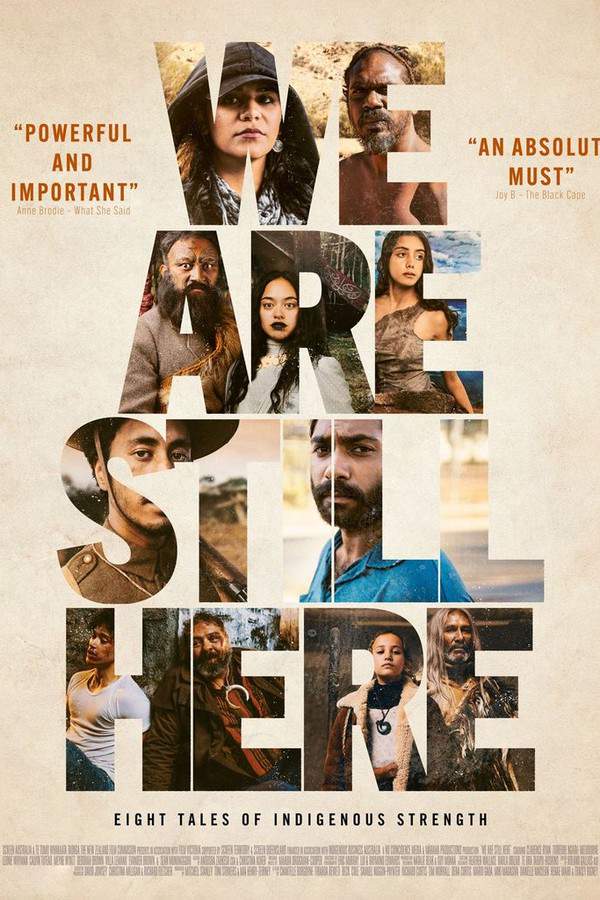
We Are Still Here unfolds as a linked anthology rather than a single, linear narrative, weaving ten short films by Indigenous Australian and Māori filmmakers across Australia, New Zealand, and the South Pacific. Its temporal sweep—from ancient traditions and nineteenth-century encounters to contemporary unrest and a distant dystopia—asks how cultural identity survives when colonial systems reshape daily life. Conceived in response to the 250th anniversary of James Cook’s second voyage to Australia, the project places that history at the center of a broader reflection on the region’s complex past.
Historical stories establish the enduring tension between tradition and foreign intrusion. Two fisherwomen encounter the changing power structures brought by colonial shipping, while an Indigenous guide agrees to assist a settler and finds himself divided between outside obligations and his family’s safety. A young Māori woman seeks to draw her cautious father into resistance, testing the weight of communal responsibility against personal fear. Farther afield, a Samoan soldier and an Ottoman soldier serving opposite sides find unexpected common ground despite war, language, and cultural distance.
The contemporary chapters turn that history into an urgent personal landscape. An activist and graffiti artist considers a dangerous act of resistance with help from a new friend, while a young man searching for his family moves through civil unrest and encounters the realities of institutional brutality. In the Northern Territory, an Aboriginal man’s ordinary attempt to buy alcohol exposes the discriminatory pressure surrounding Indigenous life.
A far-future strand imagines the consequences of those pressures magnified: after a devastating global war, a young girl searches for medicine for her ailing father under an authoritarian regime that has displaced Indigenous peoples to off-world colonies. Across these shifting worlds, resilience, grief, love, and cultural memory become threads binding distinct experiences together. The anthology’s changing tones—from historical drama to political suspense and surreal dystopia—create a mosaic about endurance, identity, and the enduring human cost of colonialism.
What Happens in We Are Still Here?
The complete story of We Are Still Here, from the first scene to the last, in 285 words (about 1 minute). Spoilers throughout.
Spoilers ahead
Created as a response to the 250th anniversary of James Cook’s second voyage to Australia in 1772, this project features ten linked short films directed by Indigenous Australian and Māori filmmakers. The anthology examines the profound impact of settler colonialism across the region, weaving together eight different narrative strands that shift between the past, present, and future.
The stories explore various facets of struggle and resilience:
- Two fisherwomen endure a surreal, psychedelic struggle between tradition and modernity after being attacked by British colonial slavetrader ships.
- A tragic betrayal unfolds when an Indigenous man helps a white settler find his family, only to discover his own kin were killed by colonisers led by the very man he assisted.
- A young Māori woman attempts to persuade her father to join the resistance against British occupation, despite his fears for their community’s safety.
- In a poignant World War I setting, a Samoan slave-soldier and a Turkish soldier discover a rare friendship despite their opposing sides and cultural differences.
- In a horrifying dystopian future, a young girl searches for medicine for her father. In this timeline, a Nazi-like regime has deported Indigenous peoples to off-world slave colonies following a global war that wiped out 80% of humanity.
- An activist and graffiti artist, driven by the memory of her mother being assaulted by state security, plans to burn down Cooks’ Cottage with the help of a friend.
- A young man, grieving the loss of his mother, witnesses firsthand the brutality of police during violent riots while searching for his family.
- In the Northern Territory, an Indigenous man is targeted by white police during a simple attempt to purchase beer in a region where such purchases are illegal for Aboriginal people.
We Are Still Here Timeline: Every Key Event in Order
13 key events in the order they happen, from “Fisherwomen Attacked at Sea” to “A Desperate Search for Medicine”. 9 events name a place, across 8 locations.
- 1
Fisherwomen Attacked at Sea
Two Indigenous fisherwomen are attacked by British colonial slave-trader ships while they are out fishing. The assault marks a violent encounter with European colonisers arriving on their shores. Their ordeal becomes the starting point for a collision between two very different worlds.
When:Late 18th century Where:At sea off the Australian coast
- 2
A Tug-of-War Between Worlds
Caught between tradition and modernity, the two fisherwomen experience a surreal, psychedelic struggle. They are forced to confront the disruptive forces of colonisation threatening their way of life. Their fight becomes a symbolic battle to hold on to their heritage.
- 3
An Indigenous Guide's Fateful Choice
An Indigenous man agrees to help a white settler search for his missing family. Trusting the stranger's goodwill, he guides him across the land his own people have known for generations. The decision will prove to be a fateful mistake.
When:19th century Where:Colonial Australia
- 4
Betrayal and Massacre
After helping the settler, the man returns to discover that his own family has been killed. The massacre was carried out by colonisers led by the very settler he had helped. The betrayal exposes the brutal violence Indigenous communities endured during settlement.
- 5
Joining the Resistance
A young Māori woman tries to persuade her father to join the resistance against the British occupation. He is torn apart by fear for the safety of his family and community. Ultimately, she convinces him to stand up and fight alongside his people.
When:19th century Where:New Zealand
- 6
Enemies Find Common Ground
During World War I, a Samoan slave-soldier fighting for the British and a Turkish soldier of the Ottoman army face each other from opposite sides of the battlefield. Despite language barriers and cultural differences, the two men discover they share more than divides them. An unlikely friendship forms amid the brutality of war.
When:World War I Where:Gallipoli
- 7
A Racist Attack on an Activist's Mother
In the present day, state security officers carry out a racist assault on the mother of a young activist. The attack leaves her daughter, a graffiti artist, outraged and seeking justice. She begins plotting a dramatic response to the injustice her family has suffered.
When:Present day Where:Melbourne, Australia
- 8
Plotting to Burn Cooks' Cottage
The young graffiti artist is joined by a new friend as they plan to burn down Cooks' Cottage. The building celebrates the legacy of Captain Cook, a symbol of the colonisation of Australia. Destroying it would be their defiant act against settler colonialism.
Where:Melbourne, Australia
- 9
Caught in the Riots
A young man, still reeling from the loss of his mother, searches for his family amid violent street riots. In the chaos he witnesses police brutality firsthand. The experience deepens his grief while exposing the systemic injustice surrounding him.
When:Present day
- 10
Buying a Six-Pack of Beer
An Indigenous man living in the Northern Territory, where it is illegal for Aboriginal people to purchase alcohol, attempts to buy a six-pack of beer. His simple errand immediately draws the attention of white police officers. He becomes a target for merely seeking the same freedoms others take for granted.
When:Present day Where:Northern Territory, Australia
Show the other 3 events of We Are Still Here Hide the last 3 events
- 11
The Great War Between North and South
Thousands of years in the future, a devastating war between the global north, led by the United States, and the global south, led by China, has ravaged the planet. The conflict wipes out 80% of the human population. In the ashes of the world, a Nazi-like regime rises to power.
When:Thousands of years in the future Where:Earth
- 12
Indigenous Peoples Deported Off-World
Under the new regime, Aboriginal and other Indigenous peoples are deported to off-world colonies as slave labour. The colonisation that began centuries earlier has escalated into brutal interplanetary segregation. The regime echoes the darkest chapters of Earth's colonial history.
Where:Off-world colonies
- 13
A Desperate Search for Medicine
A young girl ventures through the dystopian world in search of medicine for her ailing father. Her quest takes her through a regime-controlled future shaped by centuries of colonial oppression. Her struggle shows that Indigenous people endure, still fighting for survival and dignity even thousands of years on.
Who Are the Main Characters in We Are Still Here?
3 characters, among them Hokonui (Calvin Tuteao), Kngwarraye (Sean Mununggurr) and Willie Wilson (Barry Te Hira): who each one is and the part they play in the story. Every profile links to the actor’s page.
- H(
Hokonui (Calvin Tuteao)
Played by Calvin Tuteao
Hokonui is a strong-willed Indigenous man who embodies resilience and determination. He struggles with the weight of his community's history and grapples with complex emotions regarding betrayal and loyalty. His character reflects the broader themes of courage in the face of colonial oppression.
- 🧭 Identity
- 🌌 Struggle
- 🔗 Betrayal
- K(
Kngwarraye (Sean Mununggurr)
Played by Sean Mununggurr
Kngwarraye is a symbolic figure representing the connection between ancestors and contemporary issues. His role involves navigating the harsh realities of colonialism while seeking solace in traditional practices. He embodies a bridge between the past and present struggles faced by Indigenous communities.
- 🌳 Tradition
- 💔 Loss
- ⚖️ Justice
- WW
Willie Wilson (Barry Te Hira)
Played by Barry Te Hira
Willie Wilson is a character torn between his heritage and the pressures of assimilation into settler culture. His journey is marked by moments of betrayal, as he learns about the violent history his actions support. His storyline highlights the internal conflict faced by many Indigenous individuals.
- 💔 Betrayal
- 🔄 Conflict
- 🌏 History
Where and When Is We Are Still Here Set?
We Are Still Here is set in Australia, Northern Territory and off-world slave colonies (1772, World War I, Dystopian future). Here is why the time and place matter to the story.
When
1772, World War I, Dystopian future
The film spans multiple time periods starting with the year 1772 during James Cook's second voyage to Australia. It touches on significant historical events such as World War I, highlighting the struggles faced by soldiers from diverse backgrounds. Additionally, it delves into a horrifying dystopian future where a regime has displaced Indigenous peoples, stemming from a catastrophic global conflict.
Where
Australia, Northern Territory, off-world slave colonies
The movie is set across various locations in Australia, particularly highlighting the Northern Territory. This region has a rich history intertwined with Indigenous culture and is known for its unique landscapes. Given the dystopian future scenario, part of the narrative also takes place in off-world slave colonies, reflecting a dramatic shift from the known world.
- 🌏 Australia
- 🚧 Conflict
- 👽 Dystopia
What Are the Themes of We Are Still Here?
3 ideas the story keeps returning to, among them Colonialism, Friendship and Resilience.
-
01
Colonialism
The movie examines the grave impacts of settler colonialism on Indigenous communities. Through various narratives, it highlights the ongoing struggles against oppression, cultural erasure, and the quest for identity in the face of hostile forces. The theme resonates throughout the anthology, showcasing resilience and resistance.
-
02
Friendship
Amidst conflict, the narratives explore the theme of unexpected friendships between individuals from opposing sides. The bond between the Samoan slave-soldier and the Turkish soldier exemplifies how human connections can transcend cultural and ideological divides even in dire circumstances.
-
03
Resilience
Resilience is a central theme throughout the anthology, showcasing the courage and determination of Indigenous peoples. The stories portray various forms of resistance against colonial forces and highlight personal triumphs over adversity. Each character's journey embodies the spirit of survival and cultural preservation.
What Kind of Film Is We Are Still Here?
Dark in tone, with variable pacing and a very complex story, going by the plot summary.
- Tone
- Dark
- Pacing
- Variable
- Story
- Very complex
- Intensity
- High
A sweeping, often somber anthology that moves across centuries and cultures, pairing historical trauma with surreal dystopia while sustaining a resilient collective spirit.
- sobering
- somber
- oppressive
- haunting
- surreal
- urgent
- colonialism
- indigenous sovereignty
- cultural survival
- intergenerational trauma
Content notes: colonial violence, slavery, racial discrimination, police brutality, war violence, assault.
Quiz
How well do you remember We Are Still Here? Test yourself on the story.