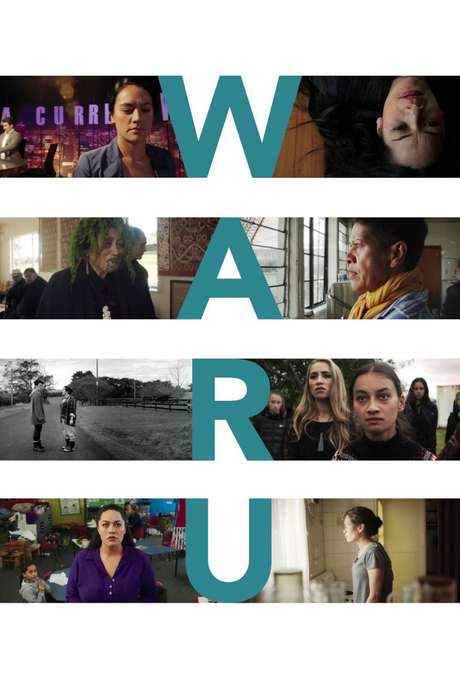
Waru 2017

Directed by

Briar Grace Smith
Made by

Brown Sugar Apple Grunt
Where to Watch Waru
See current US streaming, rental, and purchase options for Waru (2017) via JustWatch.

Hoopla
SD
Fandango at Home Free
HD
Plex
HD
Plex Channel
HD
Pluto TV
SD
Tubi TV
SD
Amazon Video
SD
Apple TV Store
HD Fandango At Home
SD
Google Play Movies
SD
YouTube
SD Streaming availability powered by 
Waru Plot Summary
Read the complete plot summary and ending explained for Waru (2017). From turning points to emotional moments, uncover what really happened and why it matters.
On the day Waru dies at the hands of his caregiver, the film centers on his tangi and threads eight interwoven stories through the morning, all beginning at 9:59. This is a community-wide reckoning where grief, memory, and responsibility ripple outward, shaping conversations, choices, and quiet acts of resilience. Each segment shines a different light on how people carry loss, how they speak up or stay silent, and how a single tragedy can redraw the lines of family, friendship, and obligation.
Charm, Tanea Heke, directs the food preparation for the funeral at the kāuta in the local marae, turning the kitchen into a space where nourishment meets memory. The choreography of meals becomes a language of care, with small decisions about who cooks, what gets plated, and how the trays travel between the fire and the hall reflecting a shared responsibility to honor Waru. In Charm’s stead, the community gathers, and the weight of absence is felt as much in the steam rising from pots as in the stories spoken between bites.
Anahera, Roimata Fox, Waru’s kindergarten teacher, processes the loss with her class and colleagues, weaving moments of routine and tenderness into a day saturated with sorrow. She guides young students through questions they don’t yet have words for, offering a steady hand as the classroom becomes a space where grief and learning collide. The adults around her lean on one another, and the room’s soft chatter sharpens into a chorus of shared memory.
Mihi, Ngapaki Moetara, a single mother, struggles to care for her kids with nothing left for gas or food, while the world’s judgments press in from every corner. The daily grind—paying bills, keeping routines, balancing fear and hope—tests her strength, yet her quiet persistence threads through the day, revealing a stubborn, stubbornly human resolve to protect what matters most. Through her eyes, the film asks how communities respond when money and dignity hang in the balance.
Em, Āwhina-Rose Henare Ashby, a young singer, comes home after a wild night out only to find she’s locked out while her baby remains inside, forcing a collision between art, impulse, and responsibility. The moment reframes her priorities and pushes her toward decisions that are both practical and painful, illustrating the tension between self-expression and the obligations of parenthood.
Ranui, Kararaina Rangihau, and Merehaka Maaka as Hinga, two great-grandmothers, argue over where Waru’s body should rest so that his wairua (spirit) can find peace. The disagreement exposes generations-long perspectives on death, memory, and honoring a child, as practical concerns about space and ritual collide with deep emotional needs. Their exchange becomes a window into how families negotiate sacred duties when grief is freshest.
Kiritapu, Maria Walker, the anchorwoman who holds the camera on the day’s events, endures microaggressions and overt racism alike while her colleagues discuss the murder of Waru. Her professional composure is tested as the room’s power dynamics shift, and she remains a steady observer—even as the noise around her intensifies—reflecting the heavy toll of reporting tragedy in a world quick to judge.
Mere, Acacia Hapi, a young teen armed with a tokotoko, plucks up the courage to talk back to her abuser, turning fear into a moment of quiet, defiant strength. Her stance is a small but potent beacon of resistance, illustrating how youth can assert boundaries and demand safety in the face of harm. The scene sits beside others that emphasize the cost—and necessity—of speaking up within a layered community.
Titty, Amber Curreen, and Bash, Miriama McDowell, two sisters, drive to reclaim Bash’s children from an abusive household. The journey traverses car rides, conversations, and the emotional terrain of guardianship, highlighting the unbreakable ties that endurance and care can forge even when the path forward is uncertain. Their resolve underscores the film’s broader meditation on protection, voice, and the ways families fight to keep each other safe.
Together, these eight vignettes compose a tapestry of a community’s response to a child’s death: a mosaic of voices, perspectives, and rituals that honor Waru while laying bare the social pressures, personal traumas, and enduring compassion that bind people to one another. The film remains a compassionate, unflinching look at memory, justice, and the quiet courage it takes to keep moving forward after an unimaginable loss.
Waru Timeline
Follow the complete movie timeline of Waru (2017) with every major event in chronological order. Great for understanding complex plots and story progression.
Charm directs the funeral food prep at the kāuta
Charm coordinates the meal and oversees the volunteers in the kitchen, organizing offerings and the shared rites that nourish the mourners. The kāuta within the local marae becomes a hive of activity as cooks work together to honor Waru. Her leadership sets the tone for the tangi as the day unfolds.
Anahera guides the class through processing the loss
Anahera guides her kindergarten class and colleagues through processing the loss, helping students name their feelings and share memories of Waru. She models grief and resilience while offering space for questions and support. The classroom becomes a small center of communal healing within the tangi's morning.
Mihi cares for her kids amid financial strain
Single mother Mihi struggles to care for her children with no money for gas or food, highlighting the everyday consequences of Waru's death on families. She tries to balance practical needs with the emotional weight of the tangi. Her situation underscores the ripple effects of violence and loss across the community.
Em confronts responsibility after a night out
Em returns home after a raucous night out to discover she is locked out and her baby is inside, forcing her to face urgent responsibility. The moment tests her resilience and makes her vulnerability visible to those around her. Her story threads into the tangi, showing how Waru's death touches personal lives.
Ranui and Hinga clash over Waru's resting place
Ranui and Hinga, Waru's great-grandmothers, argue over where his body should rest to keep his wairua at peace. Their debate highlights tensions between tradition and practicality and elevates the importance of resting places in Maori beliefs. The moment anchors a key emotional thread that runs through the tangi.
Kiritapu faces racism as colleagues discuss Waru's murder
Kiritapu, an anchorwoman, endures microaggressions and overt racism as her colleagues discuss Waru's murder. She tests her resolve to speak up and push back against prejudice within the media. The scene reveals how public narratives around tragedy intersect with personal dignity.
Mere finds courage to confront abuse
Mere, a young teen, is armed with a tokotoko and finds the courage to talk back to her abuser. Her moment demonstrates personal growth amid the tangi and shows how youth respond to violence with quiet strength. The incident ties Waru’s death to ongoing cycles of threat in the community.
Titty and Bash drive to reclaim Bash's children from an abusive household
Titty and Bash drive to reclaim Bash's children from an abusive household. Their journey carries urgency and danger as they confront a vulnerable situation to protect the kids. This action adds emotional urgency to Waru's tangi and reinforces themes of care and guardianship.
The tangi begins and threads eight stories together
The morning of Waru's tangi marks the start of a collective vigil, with each story unfolding to reveal different facets of grief. As the eight chapters progress, the community's shared mourning weaves disparate lives into a single narrative. The setting remains the marae as the first threads of healing are laid.
Community supports families and remembers Waru
Across the morning, the community rallies to support families affected by Waru's death, sharing meals, advice, and practical aid. Neighbours come together to demonstrate resilience and generosity in the face of tragedy. Waru's memory anchors conversations about safety, healing, and intergenerational care.
Waru Characters
Explore all characters from Waru (2017). Get detailed profiles with their roles, arcs, and key relationships explained.
Charm (Tanea Heke)
Charm is the matriarch who organizes the tangi's food preparation in the local marae kitchen. She embodies tradition, hospitality, and quiet leadership, guiding others through ritual practices. Charm's steady presence anchors the community's response to tragedy.
Anahera (Roimata Fox)
Anahera, Waru's kindergarten teacher, processes the child's death with her class and colleagues. She fosters empathy and resilience among young children, turning loss into a lesson in care. Her approach models communal support and gentle leadership in the face of grief.
Mihi (Ngapaki Moetara)
Mihi is a single mother struggling to care for her kids with limited resources. Her story highlights economic precarity, perseverance, and the daily struggle to keep a family afloat. Her resilience under pressure shows the human cost of systemic hardship.
Em (Āwhina-Rose Henare Ashby)
Em is a young singer who returns home after a night out to find she is locked out and her baby is inside. The moment triggers reflection on responsibility, motherhood, and personal choices. Her arc explores the tension between personal freedom and family obligation.
Ranui (Kararaina Rangihau)
Ranui is one of Waru's great-grandmothers who argues with Hinga about where the body should rest to honor the child's wairua. The clash reflects generational divides and deep respect for spiritual alignment. Her stance embodies tradition and elder authority in the grieving process.
Kiritapu (Maria Walker)
Kiritapu is an anchorwoman who endures microaggressions and overt racism from colleagues as they discuss Waru's murder. Her character brings to light the pressures of public discourse and the impact of bias on storytelling. She stands as a testament to resilience within a demanding media environment.
Mere (Acacia Hapi)
Mere, a young teen, is armed with a tokotoko and finds the courage to speak back to her abuser. Her moment of defiance signals a broader push for personal agency and safety. Mere's arc emphasizes empowerment and standing up against oppression.
Titty (Amber Curreen)
Titty is Waru's aunt who, alongside Bash, drives to reclaim Bash's children from an abusive household. Her loyalty and determination highlight family solidarity in the face of danger. Titty's presence underscores the film's theme of protective care.
Bash (Miriama McDowell)
Bash is Waru's sister whose drive to reclaim her children from abuse forms a pivotal part of the narrative. Her bond with Titty showcases mutual support and courage. Bash's actions illustrate a fierce commitment to family safety and dignity.
Waru Settings
Learn where and when Waru (2017) takes place. Explore the film’s settings, era, and how they shape the narrative.
Time period
Present day
Waru unfolds in contemporary Aotearoa New Zealand, following eight interwoven stories that begin on the morning of Waru's tangi. The film reflects current social realities affecting Māori communities, including poverty, racism, and intergenerational trauma. Its time frame emphasizes immediacy and relevance to modern audiences.
Location
Marae, New Zealand
Set around a Māori marae during a tangi, the film roots its action in a communal space where family and elders gather. The tangi anchors the narrative in tradition, memory, and ritual. The marae represents both a sanctuary for mourning and a stage for the community to confront collective grief.
Waru Themes
Discover the main themes in Waru (2017). Analyze the deeper meanings, emotional layers, and social commentary behind the film.
🤝
Community
The film treats the community as a living protagonist, weaving together eight voices that gather around Waru's tangi. Neighbors, teachers, elders, and family members intersect to support one another and confront tragedy. By refracting grief through shared rituals, Waru shows how communal action sustains resilience. The tangi becomes a platform for collective memory and healing.
💔
Grief
Grief is depicted as multifaceted, touching every generation from toddlers to elders. The film stages intimate moments of sorrow and public rituals that help process loss. Characters confront the emotional aftermath, sometimes clashing with tradition or personal guilt. The threads of mourning bind the community in a restrained, dignified manner.
🗺️
Identity
Waru centers Māori identity and cultural practices, using wairua and tangi as its through-lines. The eight stories highlight different facets of belonging, tradition, and modern life. Through the characters' choices, the film examines how culture informs resilience and moral responsibility. It presents identity as something lived in daily acts of care and memory.
⚖️
Racism
Kiritapu's experience as an anchorwoman reveals systemic bias and microaggressions within the media landscape. The dialogue around Waru's death exposes overt racism and the fragility of marginalized voices. The film uses newsroom tensions to critique how race shapes whose stories are believed and how they're told. These moments underscore the broader social injustices the community faces.

Coming soon on iOS and Android
The Plot Explained Mobile App
From blockbusters to hidden gems — dive into movie stories anytime, anywhere. Save your favorites, discover plots faster, and never miss a twist again.
Sign up to be the first to know when we launch. Your email stays private — always.
Explore the mobile appWaru Spoiler-Free Summary
Discover the spoiler-free summary of Waru (2017). Get a concise overview without any spoilers.
In a quiet coastal community where the marae’s carved pillars hold centuries of memory, a small boy’s untimely loss gathers the village together for a tangi that begins at the precise moment the clock strikes 9:59 in the morning. The film unfolds as an eight‑part tapestry, each thread offering a distinct viewpoint on grief, belonging, and the ways everyday life bends around ritual. The atmosphere is intimate yet expansive, bathed in the soft light of early dawn and the resonant cadence of waiata that echo through communal spaces, inviting the audience to feel the weight of cultural inheritance without ever losing the immediacy of personal sorrow.
At the heart of the first segment, Charm oversees the bustling kitchen of the kāuta, where the preparation of food becomes a quiet act of care and continuity. In the classroom, Anahera guides young minds through the tender process of acknowledging loss, her gentle presence a reminder that education is both a refuge and a conduit for shared mourning. Meanwhile, Mihi, a single mother, navigates the stark realities of limited resources, her resilience a quiet assertion that love persists even when the world feels fragile.
The narrative then drifts toward the night‑cap of Em, a young singer returning home to an unexpected barrier, and the intergenerational dialogue between Ranui and her sister Hinga as they deliberate the spirit’s journey. Kiritapu, a poised anchorwoman, confronts the undercurrents of bias that ripple through professional circles, while Mere, clutching a tokotoko, gathers the courage to voice truths long held in silence. Finally, the film follows the determined duo of Titty and Bash as they drive toward a moment of reclamation, their bond underscored by the urgency of protecting what matters most.
Through these overlapping lenses, the story weaves a powerful meditation on how a community’s rituals, language, and shared moments of tenderness shape the way individuals process loss. The tone remains reverent yet unflinching, inviting viewers to sit beside each character as they negotiate identity, memory, and the profound echo of a life that has touched them all.
Movies with Similar Twists and Themes
Uncover films that echo the narrative beats, emotional arcs, or dramatic twists of the one you're exploring. These recommendations are handpicked based on story depth, thematic resonance, and spoiler-worthy moments — perfect for fans who crave more of the same intrigue.



Featured on this page

What's After the Movie?
Not sure whether to stay after the credits? Find out!
Check out our other apps:

SAT Sphere
Build confidence for the Digital SAT.

Mori Atlas
Discover wild places worth protecting.

Luntero
Search smarter for a home in Amsterdam.

Plot Explained
Unravel movie endings and hidden clues.

Pokechamp
Dive into Pokémon data and battle logic.

Driving Theory
Get ready for your European theory test.

Movie Dust
Plan your next cinema trip with ease.

Musemap
Find art and culture as you travel.

Selkobase
Compare credentials before committing.

Local Manual
Turn an unfamiliar country into practical next steps.

Lernavi
Compare school systems before your next move.

GymRoam
Find a workout stop wherever your plans take you.
Explore Our Movie Platform
New Movie Releases (2026)
Famous Movie Actors
Top Film Production Studios
Movie Plot Summaries & Endings
Major Movie Awards & Winners
Best Concert Films & Music Documentaries
Movie Collections and Curated Lists
© 2026 What's After the Movie. All rights reserved.
Privacy Policy