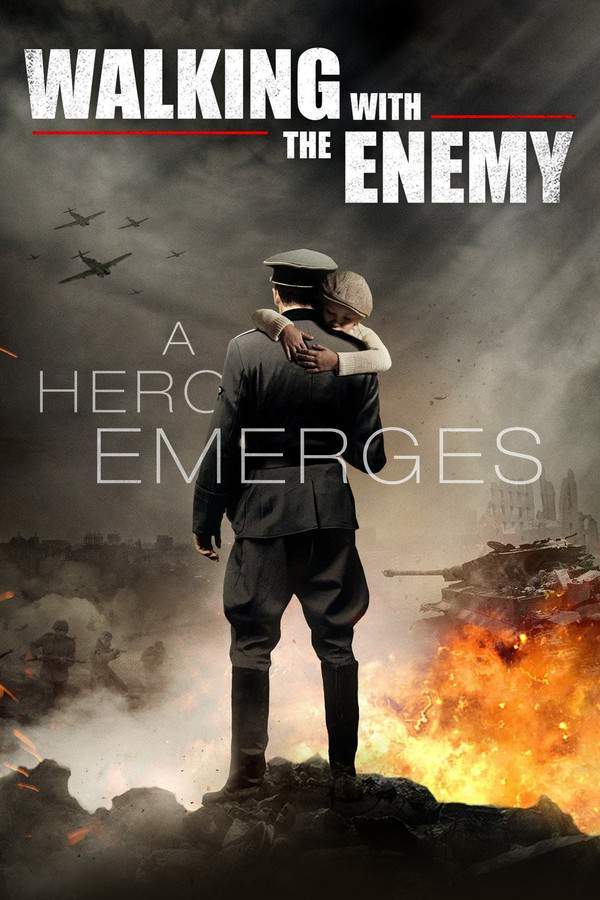
What Is Walking with the Enemy About?
The premise of Walking with the Enemy in 317 words, with nothing given away. The full story follows below.
In the cold, cobblestone shadows of 1944 Budapest, the city trembles under the weight of a suffocating occupation. The air is thick with suspicion, whispered prayers, and the sound of distant artillery that never quite reaches the narrow alleys where ordinary lives are forced into extraordinary choices. Against this backdrop of looming dread, the film paints a portrait of a society teetering between survival and surrender, its palette muted by ash‑gray winter skies yet brightened by fleeting moments of humanity.
At the heart of the story is a daring young man, József, a modest radio‑repair shop owner whose quiet existence is shattered by the brutal reality of the Holocaust. When the stakes become unbearably personal, he embraces a perilous gamble: assuming the uniform of the very force that threatens his loved ones. This audacious masquerade thrusts him into the heart of enemy territory, where every step is a balance between deception and desperation. His inner conflict—protecting his family while navigating a world of lies—drives the narrative’s tense, pulse‑quickening rhythm.
Parallel to his covert undertaking, the film examines the strained conscience of Hungary’s wartime ruler, Horthy. As the nation wrestles with external pressures and internal morality, his decisions hover between political expediency and a lingering sense of compassion. This dual focus creates a compelling contrast: the intimate, ground‑level struggle of a single man against the sprawling, high‑stakes calculus of a head of state.
The tone is a careful blend of stark historical realism and quiet, almost lyrical introspection. Cinematography lingers on rain‑slick streets and dimly lit rooms, echoing the inner fog of doubt that clouds every character. Amidst the oppressive atmosphere, moments of hope flicker—small acts of bravery, fleeting alliances, and the stubborn belief that even in darkness, a single individual can tilt the scales. The film invites the audience to contemplate the cost of courage, the malleability of identity, and the fragile line between survival and sacrifice.
What Happens in Walking with the Enemy?
The complete story of Walking with the Enemy, from the first scene to the last, in 707 words (about 3 minutes). Spoilers throughout. Names in the text link to 3 cast member pages.
Spoilers ahead
As the dark specter of German occupation envelops Budapest in 1944, József, played by Ben Kingsley, a Jewish radio repair shop owner, confronts a heartrending choice: he must send his two young employees, Elek Cohen and Ferenc Jacobson, portrayed by Jonas Armstrong and Simon Kunz, back to their families. Taking advantage of a benevolent Catholic priest, they procure forged baptismal certificates, urging their families to use them as a vital escape route when they are coerced into joining the brutal Hungarian labor service, where Jewish men suffer horrific treatment—facing summary execution for any sign of weakness or injury.
In the midst of this turmoil, Carl Lutz, a steadfast figure at the Swiss diplomatic office known as the Glass House in Budapest, finds himself empowered to issue 8,000 Swiss passports to individual Jews. Yet, in a remarkable act of defiance, he expands this mandate, issuing passes for entire families rather than just solo individuals.
As Elek and Ferenc successfully navigate their escape from the labor service, they return home only to confront the devastating reality that their families have already been deported. Elek discovers his home thoroughly ransacked, finding only the baptismal certificates tucked away in a family photo, an invaluable memento he carries with him as a lifeline to hope.
In a dramatic twist, Hungarian leader Horthy clandestinely negotiates an armistice with Stalin. But this coup is quickly uncovered by the Nazis, who respond by abducting his son, storming Buda Castle, and ultimately overthrowing him, leading to his imprisonment in Germany. The fascist Arrow Cross Party, led by Ferenc Szálasi, rises to power, joining forces with the Nazis to relentlessly hunt down Jewish refugees.
Instinctively driven, Elek and Ferenc take it upon themselves to aid Jewish families in peril. They eventually establish a partnership with Lutz, who remains committed to the cause of protecting Hungarian Jews during this harrowing period. A poignant encounter introduces Elek to Hannah, a young Jewish woman whose life becomes entwined with his when Nazi officers track her to a hiding place shared by Elek and others.
Demonstrating remarkable courage, Elek defends Hannah, killing the intruding Nazis before any harm can come to her. Boldly, he and Ferenc later exhume the bodies of the Nazi officers they dispatched and don their uniforms. For several months, this audacious duo impersonates SS officers, skillfully redirecting thousands of Jews to safe havens where they embark on their treacherous journey towards freedom, all while under the ever-watchful eyes of the Swiss, and occasionally, a convent.
The narrative culminates with the triumphant arrival of the Russian army in Budapest, signaling the end of German occupation. Amidst the upheaval, Elek’s life hangs in the balance when an SS lieutenant aims at him, his son’s innocent act towards a group of captured Jews triggering a catastrophic chain of events. Astonishingly, the officer’s fate is sealed by a weary German commander, serving as a frightening reminder of the severe repercussions that follow acts of defiance against tyranny.
Fast forward thirteen years to 1958, the story transports us to New York City, where Elek’s son is joyously celebrating his adopted son’s wedding. This touching denouement resonates as a tribute to resilience and the passage of time, memorializing those who weathered the storm of human history’s darkest hours.
This film, anchored in true events, pays homage to the intrepid spirit of Pinchas Rosenbaum, whose valiant rescue efforts saved numerous lives during the tumult of World War II. It also highlights the tragic losses endured by his family, victims of Auschwitz alongside 500,000 Hungarian Jews, a haunting reminder of the war’s catastrophic toll.
Additionally, the narrative touches upon other significant figures such as SS Lt. Colonel Otto Skorzeny, Dieter Wisliceny, Ferenc Szalasi, Arrow Cross Captain Kovarcz, and Adolf Eichmann, whose haunting legacies resonate throughout history. The fates of Regent Horthy and his son, who were both imprisoned until the war’s conclusion, are also acknowledged as they faced their final days in Portugal, in 1957 and 1993, respectively.
In honor of heroism, Carl Lutz’s legacy is celebrated for forming the Swiss Legion (The Glass House), a bastion of hope that ultimately safeguarded countless lives. His story serves as a poignant reminder of the unyielding power of compassion and courage in the face of overwhelming adversity.
Walking with the Enemy Timeline: Every Key Event in Order
15 key events in the order they happen, from “German Occupation Begins” to “Legacy of Carl Lutz”. 10 events name a place, across 5 locations.
- 1
German Occupation Begins
In 1944, the dark specter of German occupation begins to engulf Budapest. This period marks the start of severe oppression for the Jewish community, creating an atmosphere of fear and uncertainty.
When:1944 Where:Budapest
- 2
József's Heartbreaking Decision
József, a Jewish radio repair shop owner, is faced with an agonizing choice. He resolves to send his two young employees, Elek Cohen and Ferenc Jacobson, back to their families for safety.
Where:Budapest
- 3
Forged Certificates Acquired
Elek and Ferenc, with the help of a benevolent Catholic priest, procure forged baptismal certificates. These documents become vital tools for their families' escape from impending danger.
Where:Budapest
- 4
Carl Lutz's Mission
Carl Lutz, an official at the Swiss diplomatic office, is empowered to issue 8,000 Swiss passports for Jews. He courageously expands this to include entire families, providing essential lifelines.
Where:Swiss Legation, Budapest
- 5
Family Deportations Begin
As Elek and Ferenc navigate their escape, they return home to discover a tragic reality. Their families have been deported, leaving them to face the grim consequences of occupation.
Where:Budapest
- 6
Horthy's Armistice Negotiations
Hungarian leader Horthy secretly negotiates an armistice with Stalin, trying to shift the tides of power. However, the Nazis uncover this plot, leading to his son's abduction.
Where:Buda Castle
- 7
Arrow Cross Party Rise to Power
The fascist Arrow Cross Party, led by Ferenc Szálasi, seizes control with Nazi support. This takeover marks a dangerous escalation in the hunt for Jewish refugees.
Where:Hungary
- 8
Elek and Ferenc Take Action
Driven by instinct and necessity, Elek and Ferenc decide to assist Jewish families facing peril. Their efforts align with Carl Lutz's mission to safeguard Hungarian Jews.
Where:Budapest
- 9
Elek Meets Hannah
During their mission, Elek meets Hannah, a young Jewish woman. Their lives become intertwined as they take refuge from Nazi officers seeking her capture.
- 10
Elek's Heroic Defense
In a moment of courage, Elek defends Hannah from Nazi intruders by killing them. This act of bravery solidifies his commitment to protect those in danger.
Show the other 5 events of Walking with the Enemy Hide the last 5 events
- 11
Impersonating SS Officers
To further their efforts, Elek and Ferenc daringly exhume Nazi bodies and wear their uniforms. For months, they successfully impersonate SS officers, misleading other Nazis.
- 12
Arrival of the Russian Army
The narrative culminates with the triumphant arrival of the Russian army in Budapest, signaling the end of German occupation. This historic moment brings hope and a chance for freedom.
Where:Budapest
- 13
Elek's Son's Near-Death Experience
In a culminative moment, Elek's life hangs in balance when an SS lieutenant aims at him. A small act from his son serves as the catalyst for life-altering events.
- 14
Thirteen Years Later
Fast forward to 1958, Elek's son is celebrating his adopted son's wedding in New York City. This moment serves as a poignant testament to resilience and the passage of time.
When:1958 Where:New York City
- 15
Legacy of Carl Lutz
The film pays tribute to Carl Lutz, whose actions saved countless lives during WWII. His legacy symbolizes the unyielding power of compassion in the face of adversity.
Who Are the Main Characters in Walking with the Enemy?
5 characters, among them József, Elek Cohen and Ferenc Jacobson: who each one is and the part they play in the story. 3 of them link to the actor’s page.
-

József
Played by Ben Kingsley
József, a resilient Jewish radio repair shop owner, emerges as a pivotal figure in the narrative, embodying the struggle for hope during the oppressive German occupation. (Ben Kingsley) His character is characterized by deep compassion and an unwavering sense of responsibility towards his employees, showcasing his commitment to their safety amid escalating danger. Through his courageous actions, József becomes a beacon of hope and determination.
- 💪 Leader
- ❤️ Protector
- EC
Elek Cohen
Played by Jonas Armstrong
Elek Cohen, portrayed by Jonas Armstrong, is a dynamic and brave individual whose journey reflects the themes of sacrifice and resilience. His transformation from a young man threatened by Nazi persecution to a figure of hope shines through his daring attempts to save others. Elek's character showcases unwavering loyalty as he devises courageous plans to protect himself and the vulnerable around him.
- 🚀 Brave
- 💕 Loyal
-

Ferenc Jacobson
Played by Simon Kunz
Ferenc Jacobson, played by Simon Kunz, is a steadfast ally and friend to Elek, possessing a strong sense of justice and duty. His bravery is showcased through the lengths he goes to protect his community, often standing by Elek in their dangerous endeavors. Ferenc's character illustrates themes of camaraderie and selflessness, highlighting the strength found in solidarity during harrowing times.
- 🎖️ Supportive
- ⚔️ Courageous
- H
Hannah
Hannah is a young Jewish woman whose character becomes intertwined with Elek’s life, representing the enduring human spirit and hope amidst despair. As she faces the threats of the regime, her presence serves as a vital reminder of the personal stakes involved in the broader conflict. Hannah’s courage and resilience exemplify the profound connections formed in times of turmoil.
- 🌸 Hopeful
- 🕊️ Resilient
- CL
Carl Lutz
Carl Lutz is portrayed as a determined and compassionate figure working at the Swiss diplomatic office, playing a crucial role in the rescue of Hungarian Jews. His decision to issue thousands of Swiss passports reflects his moral courage and commitment to humanitarian efforts, showcasing the impact that one person can have in the face of systemic injustice.
- 🛡️ Humanitarian
- 📜 Diplomat
Where and When Is Walking with the Enemy Set?
Walking with the Enemy is set in Budapest and New York City (1944, 1958). Here is why the time and place matter to the story.
When
1944, 1958
The movie primarily unfolds against the harrowing backdrop of 1944, a time characterized by the horrors of World War II and the Nazi regime's brutal oppression of Jewish communities. In sharp contrast, 1958 signifies a period of reflection and resilience as the story shifts to New York City, illustrating the trajectory of survivors as they navigate life after the war, celebrating new beginnings amid the scars of their past.
Where
Budapest, New York City
Budapest, during the dark days of World War II, becomes a backdrop of turmoil and courage, as the German occupation intensifies. This city, known for its rich history and beautiful architecture, witnesses both the suffering of its Jewish population and the bravery of those fighting for their survival. Meanwhile, New York City emerges as a symbol of hope and new beginnings, marking the transformation of lives shaped by the war's tragedies.
- 🏙️ City
- 🌍 Historical
What Are the Themes of Walking with the Enemy?
3 ideas the story keeps returning to, among them Resilience, Justice and Sacrifice.
-
01
Resilience
The theme of resilience resonates powerfully throughout the narrative, showcasing the indomitable human spirit in the face of unspeakable adversity. Characters like Elek and Ferenc epitomize bravery as they undertake formidable risks to save lives, revealing the extraordinary strength that emerges in times of crisis. This theme culminates in the film’s conclusion, paying tribute to those who persevered through the darkest hours of history.
-
02
Justice
Justice, both moral and social, threads through the film as characters confront the brutal realities of war and the persecution of the Jewish people. The audacious acts of Elek and Ferenc to save their fellow Jews signify a fight not just for survival, but for dignity and honor in a world stripped of humanity. Their defiance against the Nazis encapsulates the broader struggle for justice during an era marked by oppression.
-
03
Sacrifice
Sacrifice stands as a poignant theme amid the backdrop of war, as characters make difficult choices for the sake of their loved ones and their community. The film intricately weaves personal sacrifices with broader narratives of bravery, exemplified by Elek’s commitment to protecting Hannah and the Jewish families. These sacrifices highlight love's powerful role, driving individuals to act nobly even when faced with perilous consequences.
What Kind of Film Is Walking with the Enemy?
Tense in tone, with steady pacing and a moderate story, going by the plot summary.
- Tone
- Tense
- Pacing
- Steady
- Story
- Moderate
- Intensity
- High
- Ending
- Bittersweet
A tense and high-stakes historical drama that follows a man's courageous infiltration of the Nazi ranks, creating a gripping atmosphere of constant danger shadowed by the immense tragedy of the Holocaust, yet punctuated by acts of profound hope.
- tense
- gripping
- urgent
- sad
- hopeful
- courageous
- holocaust survival
- disguise and infiltration
- moral courage
- resistance movement
Content notes: war violence, holocaust themes, anti-semitism, summary execution, family deportation, imprisonment.
Quiz
How well do you remember Walking with the Enemy? Test yourself on the story.
Where to Watch Walking with the Enemy
Stream it on Fawesome and Tubi TV, or rent or buy it from Apple TV Store and Fandango At Home. US availability and prices from JustWatch.
Stream 2
 Fawesome
  Tubi TV

Streaming availability in the US, powered by