
Viva Maria! 1965

Directed by
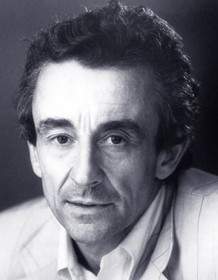
Louis Malle

Viva Maria! Plot Summary
Read the complete plot summary and ending explained for Viva Maria! (1965). From turning points to emotional moments, uncover what really happened and why it matters.
Maria Fitzgerald O’Malley, known as Maria II, is portrayed by Jeanne Moreau. Born in Ireland to a French mother and an Irish republican father, she has spent years aiding her father in bombing campaigns against the British government. In Central America, a mission goes awry when she is forced to blow up a bridge, and the confrontation leaves her father dead in a shootout with British authorities. Orphaned and on the run, she finds refuge in the wagon of Maria I, a French vaudeville performer who travels with a bustling circus troupe. The two Marias form an unlikely bond, and after Maria I’s partner has recently taken his own life over a failed romance, they decide to team up for a song-and-dance act called “Maria and Maria,” even though Maria II is still brand-new to performing.
During their first show, Maria II unexpectedly invents striptease when her skirt tears, transforming their routine into a sensational crowd-pleaser that pushes the act into the public eye. As the troupe moves from town to town, they witness a small village being overrun by the henchmen of Rodríguez, a coercive landowner. Villagers are murdered and enslaved, and the troupe is shaken by the brutality they see. Maria II steps in and shoots one of Rodríguez’s men, a bold act that seals their fate: the troupe is imprisoned and shipped off to Rodríguez’s hacienda along with the enslaved villagers. While behind bars, Maria I meets Florès, a socialist revolutionary who is fighting to topple the dictatorship of the fictional Central American nation of San Miguel, and the pair fall deeply in love.
The next morning Rodríguez comes to the jail to carry out his plan against the two Marias, but they distract him long enough for the troupe to stage a daring escape. They flee with Florès, and in the escape, Florès is mortally wounded by one of Rodríguez’s henchmen. On his deathbed, Florès urges Maria I to carry his revolutionary cause forward, and she accepts. Maria II, initially hesitant, rediscovers a sense of purpose when Maria I’s vulnerable friends are endangered, and she joins the cause. As the duo mobilizes their supporters, Maria II uses her bombmaking skills to defend their fledgling resistance, while Maria I helps to rally a peasant army. The countryside gradually reshapes itself into a loose, quasi-socialist state.
Their radical movement draws both awe and fear. The Marias become revered almost like saints, a transformation that unsettles San Miguel’s dictator and the Catholic authorities, who worry that devotion to two women could destabilize the social order and be seen as sacrilege. As the rebels press toward the capital, the two Marias are captured by the Father Superior and his churchmen, who attempt to torture them with older Inquisition apparatus that proves ineffective. In a climactic turn, their army arrives to rescue them, and the dictator, Rodríguez, and the Father Superior are all defeated. The Marias emerge as revolutionary heroines, celebrated by their followers and the people they freed.
Back in France, the troupe commemorates the revolution with a Spanish-language musical retelling, where the two Marias return in striking black wigs, symbolizing a lasting legend rather than a mere performance.
Throughout their journey, the film intertwines acts of courage, political idealism, and personal loyalties, painting a portrait of two fearless women who transform from fugitives into symbols of resistance. The musical numbers, the dangers they face, and the evolving social landscape all contribute to a story that is as much about collective action as it is about personal bonds, leaving audiences with a bittersweet sense of how revolutions are lived, not just imagined.
Viva Maria! Timeline
Follow the complete movie timeline of Viva Maria! (1965) with every major event in chronological order. Great for understanding complex plots and story progression.
Maria II's early life and revolutionary roots
In 1907, Marie Fitzgerald O'Malley—Maria II—appears as the Irish-born daughter of a deceased Frenchwoman and an Irish republican anarchist who has assisted her father in bombings against the British government since youth. Her upbringing is steeped in political violence and resistance, shaping a mindset dedicated to upheaval. The narrative establishes her as a prodigy of improvisational rebellion who will later channel these skills into a larger socialist cause.
Mission in Central America and father's death
While in Central America, Maria II is forced to blow up a bridge as part of a dangerous mission. Her father is killed in a shootout with British authorities during the operation. The tragedy leaves Maria II an orphan on the run, catalyzing her search for new allies.
Escape to the Maria I's circus
Orphaned and pursued, Maria II escapes capture and finds refuge in the wagon of Maria I, a French vaudeville performer traveling with a touring circus. The unlikely duo begins to form an alliance born of shared hardship and a longing for belonging. The circus setting provides the stage for their future collaboration.
Bond and the Maria and Maria act
Maria II and Maria I bond and decide to team up for a song-and-dance act called 'Maria and Maria,' even though Maria II is inexperienced as a performer. The partnership blends Maria I's flair with Maria II's bombmaking-inspired backstory into a provocative new show. Their act becomes a vehicle for rebellion as well as entertainment.
First performance and accidental striptease
During their inaugural performance, Maria II's skirt rips and the routine unexpectedly turns into a striptease. The shocking turn of events catches the audience's imagination and quickly becomes a nationwide sensation. The moment marks a dramatic shift in their careers and in public perception.
Village ransacking and enslavement
As the troupe tours the countryside, they witness Rodríguez's henchmen ransack a small village, killing some villagers and enslaving others. The brutality exposes the social injustices fueling their revolutionary impulse. The event deepens Maria II's resolve to confront Rodríguez.
Imprisonment at Rodríguez's hacienda
Maria II shoots a henchman in a bid to intervene, but she and Maria I are imprisoned along with villagers at Rodríguez's hacienda. The confinement tightens their bond and forces them to confront the looming threat of oppression. The hacienda becomes the crucible for their evolving political alliance.
Florés in prison and blossoming romance
In the hacienda jail, Maria I meets Florès, a socialist revolutionary fighting San Miguel's dictatorship, and they quickly fall in love. The romance injects a personal stake into the political struggle. Their bond gives Maria I a sharper sense of purpose in the impending fight.
Escape and Florès is shot
The next morning Rodríguez arrives intending to kill the Marias, but the women distract him long enough for the troupe to escape. Florès is shot by one of Rodríguez's henchmen, a blow that galvanizes Maria I to carry on his revolution. The death marks a turning point in the protagonists' resolve.
Florès' deathbed vow
On Florès' deathbed, he urges Maria I to continue his revolutionary cause, and she reluctantly agrees to carry it forward. The vow expands the scope of their fight beyond personal romance to a broader political mission. Maria I accepts the burden with quiet determination.
Maria II joins the revolutionary cause
Reluctant at first, Maria II joins the cause when she comes to the aid of her friend Maria I and witnesses the peasants' desire for change. Her decision marks a turning point in the movement's legitimacy. The Marias' partnership deepens into a shared leadership.
Rallying a peasant army and forming a quasi-socialist state
They gather a peasant army and organize the countryside into a quasi-socialist state, with Maria I's leadership and Maria II's bombmaking skills providing strategic edge. The two Marias unite the rural population around their revolutionary vision. The movement's growth shifts the balance of power away from Rodríguez.
Veneration, fear, and capture
The Marias' revolutionary activities draw admiration from townspeople but fear from San Miguel's dictator and Catholic authorities who deem the devotion sacrilegious. As they press toward the capital, the Marias are captured by the Father Superior and churchmen. A botched torture attempt—due to old Inquisition equipment—fails, and their army rescues them, paving the way for final defeat of Rodríguez and the Father Superior.
Final victory and epilogue in France
Rodríguez, the dictator, and the Father Superior are defeated, and the Marias are hailed as revolutionary heroines. Back in France, the troupe stages a Spanish-language musical retelling of the revolution, featuring the Marias in black wigs. The epilogue closes with a celebratory note on their enduring legacy.
Viva Maria! Characters
Explore all characters from Viva Maria! (1965). Get detailed profiles with their roles, arcs, and key relationships explained.
Maria II - Jeanne Moreau
Marie Fitzgerald O'Malley is an Irish-born daughter with a history of bombings against colonial powers. Resourceful and impulsive, she uses her clandestine skills to defend the oppressed. Her experiences as an orphan fuel her commitment to a larger cause and to protecting her new ally, Maria I.
Maria I - Brigitte Bardot
A French vaudeville performer who joins Maria II in a traveling circus, bringing performance and wit to the revolutionary cause. Recovering from a partner’s suicide, she evolves from a companion to a capable leader within the troupe. Her bond with Maria II deepens the partners' resolve to fight for justice.
Flores - George Hamilton
A socialist revolutionary who fights to overthrow the San Miguel dictatorship and falls in love with Maria I. He inspires the movement with his ideals and sacrifices his life in the struggle, urging the women to carry on his mission. His death becomes a catalyst for the peasant uprising.
Rodríguez
A powerful landowner whose henchmen murder villagers and imprison the troupe. He represents the corrupt, entrenched elite that the Marias must defeat. His downfall marks a turning point in the struggle for control of the countryside.
The Dictator of San Miguel
The authoritarian ruler who fears disruption and imposes order through force. His regime is the primary obstacle the Marias must overcome to free the peasantry. He is ultimately defeated as the revolution gains momentum.
Father Superior
A representer of church authority who attempts to suppress the Marias through torture. His power is challenged as the revolutionary army advances, highlighting the tension between religious control and popular liberation. He is overcome along with other oppressors by the end.
Viva Maria! Settings
Learn where and when Viva Maria! (1965) takes place. Explore the film’s settings, era, and how they shape the narrative.
Time period
1907
The events take place in 1907, a period of political turmoil in a fictional Central American country. Rural villages, haciendas, and urban centers frame the action as power structures clash with revolutionary impulses. Religious and state authorities heighten tension as the movement grows from a troupe's adventure into a peasant-led uprising.
Location
San Miguel (fictional Central American country), village, hacienda, traveling circus, France
The story unfolds across a fictional Central American country called San Miguel, moving through villages, a hacienda, and a traveling circus. The circus serves as a mobile stage for both performance and escape, linking remote hamlets to larger city centers. The narrative eventually returns to France, where the revolution is reimagined on stage as a Spanish-language musical.
Viva Maria! Themes
Discover the main themes in Viva Maria! (1965). Analyze the deeper meanings, emotional layers, and social commentary behind the film.
🔥
Revolution
Two women catalyze a peasant uprising that redefines power in San Miguel. The revolution blends personal daring with collective action, turning entertainment into political insurgency. As leadership shifts to the Marias, traditional gender roles are challenged and the movement gains mass support.
⛪
Faith vs Power
Religious and imperial authorities fear the disorder of revolution and attempt to control it through intimidation. The Inquisition and church leaders clash with the insurgents, testing the boundaries between faith, authority, and popular devotion. The conflict highlights how power leverages ideology to suppress change.
🤝
Solidarity
Friendship and partnership between Maria I and Maria II evolve into a unified front against oppression. The troupe's cohesion mirrors a broader social alliance, rallying peasants and urban supporters alike. The young revolution proves that collective effort can overcome entrenched tyranny.

Coming soon on iOS and Android
The Plot Explained Mobile App
From blockbusters to hidden gems — dive into movie stories anytime, anywhere. Save your favorites, discover plots faster, and never miss a twist again.
Sign up to be the first to know when we launch. Your email stays private — always.
Explore the mobile appViva Maria! Spoiler-Free Summary
Discover the spoiler-free summary of Viva Maria! (1965). Get a concise overview without any spoilers.
In the restless twilight of the early twentieth‑century Americas, a restless spirit flees the turmoil of her homeland and finds herself on the dusty tracks of a traveling circus. Maria Fitzgerald O’Malley carries the fire of a revolutionary past, yet the open road offers a strange kind of anonymity, a place where borders blur and the promise of a new stage beckons. The vivid backdrop of bustling towns, swaying jungle canopies, and makeshift caravans sets a tone that mixes the grit of frontier life with the flamboyant allure of spectacle.
It is there she encounters the magnetic performer who commands the troupe with song and swagger. Maria—a charismatic circus singer with a voice that can drown out the clamor of a crowd—welcomes the newcomer into a daring duet. Their partnership, christened “Maria and Maria,” fuses raw, untamed energy with polished showmanship, turning the traveling vaudeville act into a magnet for curious onlookers. The chemistry between the two women crackles onstage, their contrasting histories feeding a rhythm that feels both rebellious and intimate, inviting audiences into a world where performance is as much about survival as it is about applause.
When the singer’s heart is captured by a passionate rebel leader, the pair’s focus shifts from bright lights to dimmer, more consequential horizons. The lure of the stage gives way to a quieter, more urgent call, urging them to trade costumes for cause. Their bond, forged in the heat of the spotlight, now glows with a steadfast resolve, hinting at a journey where wit, courage, and a shared sense of purpose will guide them through uncertain terrain.
The film balances the exuberance of circus spectacle with the simmering undercurrents of political unrest, wrapping its story in a tone that is simultaneously playful and earnest. With vibrant visuals, razor‑sharp humor, and the fierce companionship of its two heroines, the narrative invites viewers to wonder how far the love of art—and each other—can carry two women when the world around them teeters on the brink of upheaval.
Movies with Similar Twists and Themes
Uncover films that echo the narrative beats, emotional arcs, or dramatic twists of the one you're exploring. These recommendations are handpicked based on story depth, thematic resonance, and spoiler-worthy moments — perfect for fans who crave more of the same intrigue.


Featured on this page

What's After the Movie?
Not sure whether to stay after the credits? Find out!
Check out our other apps:

SAT Sphere
Build confidence for the Digital SAT.

Mori Atlas
Discover wild places worth protecting.

Luntero
Search smarter for a home in Amsterdam.

Plot Explained
Unravel movie endings and hidden clues.

Pokechamp
Dive into Pokémon data and battle logic.

Driving Theory
Get ready for your European theory test.

Movie Dust
Plan your next cinema trip with ease.

Musemap
Find art and culture as you travel.

Selkobase
Compare credentials before committing.

Local Manual
Turn an unfamiliar country into practical next steps.

Lernavi
Compare school systems before your next move.

GymRoam
Find a workout stop wherever your plans take you.
Explore Our Movie Platform
New Movie Releases (2026)
Famous Movie Actors
Top Film Production Studios
Movie Plot Summaries & Endings
Major Movie Awards & Winners
Best Concert Films & Music Documentaries
Movie Collections and Curated Lists
© 2026 What's After the Movie. All rights reserved.
Privacy Policy