

What Is Up There About?
The premise of Up There in 299 words, with nothing given away. The full story follows below.
In this off‑beat afterlife, the recently deceased discover that death is less a haunting and more a bureaucratic waiting room. Fresh from a traffic accident, Martin finds himself thrust into a gray‑toned “re‑start centre,” where newly arrived souls must be ushered toward whatever lies “up there.” The environment is oddly clinical yet peppered with mandatory optimism, group‑counselling sessions, and a strange set of rules that forbid any ghostly interference with the world of the living. The tone balances deadpan humor with a quiet melancholy, hinting that progress beyond this limbo is earned through odd assignments rather than divine grace.
Paired with an exuberant colleague, Rash—a fellow carer who embraces the absurdity of the afterlife with relentless optimism—Martin is tasked with guiding newcomers who are still adjusting to their new reality. Their partnership becomes a study in contrast: Martin’s yearning for upward movement clashes with Rash’s contentment in the present, setting up a dynamic that is both comedic and emotionally resonant. Together they are sent to locate a missing arrival, a mission that nudges them out of the sterile corridors and into a quirky seaside town where the living and the dead intermingle in unexpected ways.
In this coastal setting, the duo encounters a cast of oddly charming locals—a rebellious teen crowd, enigmatic elderly women, and the enigmatic Liz, a living librarian whose presence blurs the boundaries between the two worlds. The atmosphere is a blend of wistful melancholy and whimsical curiosity, suggesting that the answers Martin seeks about moving on may be tied to the hidden stories of those they meet. As they navigate this peculiar town, the film teases the possibility that personal growth, forgiveness, and perhaps a chance at redemption lie just beyond the next turn, waiting to be discovered in the spaces between life and death.
What Happens in Up There?
The complete story of Up There, from the first scene to the last, in 982 words (about 4 minutes). Spoilers throughout. Names in the text link to 3 cast member pages.
Spoilers ahead
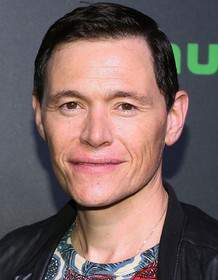
Martin, Burn Gorman, speaks directly to the camera, stating that he died in a traffic accident and is now dead. He clarifies that the afterlife in this story isn’t a world of ghosts who can walk through walls or manipulate objects; instead, the recently deceased find themselves in a liminal space. Two “carers” arrive to usher him into a waiting area called a re-start centre, where the atmosphere is focused on therapy-like routines and positive thinking. In this setting, Martin attends group counselling sessions that push hopeful thinking as a path to meaning, even as he tries to project a cheerful façade. His attempts at feigned optimism are observed by another dead person who becomes a quiet friend, and soon the two are assigned roles as carers at a hospital to guide newly dead souls through their strange afterlife.
Burn Gorman’s Martin is hopeful that this new caregiving role will earn him credit that could lead to a further step “up there,” a staircase toward something presumably more pleasant than the re-start centre. Yet progress is slow, and only his colleague is promoted to a higher rung of this peculiar afterlife system. The routine shifts when Martin is paired with a new co-worker, Rash, Aymen Hamdouchi, and their early days are framed by challenges as they encounter difficult newly-dead clients. One such client is a criminal whose name Martin struggles to pronounce, a man who runs away from them, testing Martin’s resolve and patience. Rash, who talks plenty and seems to relish this strange afterlife far more than Martin, pushes the duo into a mission that takes them away from the centre toward a seaside town.
In a library, Martin encounters a woman named Liz, Kate O’Flynn, and he realizes he can read a book or newspaper aloud beside a living person if the pages are turned by the living person at the right moment. Liz hides when another dead man appears, and she reveals that she used to know that man, suggesting he cannot take a hint. His co-worker hints that Liz was a suicide, adding a layer of rumor and mystery to her presence in this world. A chase soon follows when the pair spot the runaway, though they initially lose him. They learn that his real identity isn’t Polish—he goes by Chick—and his father, who is a “starer” dead man who simply stares into space, lives in the town.
As the town becomes their focus, the planned send-off for Chick is printed in the morning paper; Rash argues that Chick should be allowed to say goodbye to his family and stay, while Martin is anxious to return for his assessment and move on. Liz hints that there might be a path out of town if the right boat comes, and she eventually rows with the dead man who has been following her, then apologises to Martin for the situation. Their odd romance of sorts deepens as the clock ticks toward consequences in the living world.
One night, at an all-night garage, Rash trails a couple who are a little wild, and they decide to stick with them because Mandy, the woman in the car, must appear before a judge early the next morning, so they’ll drive back to the city. Liz joins them, and the scene becomes awkward as the group witnesses the couple’s intimate moment in the backseat. The story sharpens when Chick, visiting Chick’s mum, recounts how his death happened and implies it involved a mistake. He describes seeing Rash chased by a group of unnamed lads, and a Fiat Punto was involved in the fatal incident. Martin’s frustration grows as he notices two young lads who copy Rash and mock Chick, and he blames Chick for Rash’s death in a heated moment, causing the youths to back away.
Liz arrives again, and Martin invites her to return to the centre with him, but she refuses, announcing she is leaving with her ex who she says she killed. The tension escalates as Martin and Chick reconnect with Rash, who does not immediately recognize Chick. The car pulls away without Rash, and the trio’s movements trace a tangled path through processing and memory. Back in the city, Martin brings Chick in for processing and Chick’s wish to speak to Rash is granted in a form, while Rash’s brother is reported to have recovered, a detail that complicates the emotional landscape of the living and the dead.
Martin’s assessment finally arrives, and he is told he’ll be moving upstairs, but he pauses to search for Rash and Chick. The two head toward a strip club, where Rash has become a “starer,” a specter who stares instead of engaging. Martin reveals a painful truth about his wife: he hadn’t expected her to kill herself as a response to his death; instead, he understands that she let him go, and he must learn to let her go as well. In the quiet, Rash wakes enough to speak with Chick, accepting that Chick’s decision to kill him was tied to a larger, sturdier story about the car that took his life.
The film weaves together memory, guilt, and the stubborn contours of an afterlife that seems almost ordinary in how it behaves—bureaucratic, full of small tasks, and stubbornly human in its desires. Through Martin’s slow realization that even in death there are unresolved ties to the living, to Liz’s mysterious past, to Chick’s painful truth, and to Rash’s evolving place in this strange limbo, the narrative keeps circling the question of what it means to move on when the path upward isn’t clearly marked. The ultimate moment suggests that some bonds endure beyond death, even as the living must continue their own journeys, and the dead—whether in a re-start centre, a seaside town, or a city street—find their own versions of closure, sometimes through the most unlikely forms of connection and understanding.
Up There Timeline: Every Key Event in Order
14 key events in the order they happen, from “Death and explanation” to “Processing, Rash as starer, and goodbye”. 14 events name a place, across 10 locations.
- 1
Death and explanation
Martin addresses the camera to explain he died in a traffic accident and is now dead. He clarifies that the dead are not ghosts and cannot walk through walls or move objects. The scene establishes the rules of the afterlife and Martin's uneasy curiosity about what comes next.
Where:Re-start centre (afterlife waiting zone)
- 2
Arrival at the re-start centre
Two carers arrive to guide him into the waiting zone called the re-start centre. He begins to learn that this place governs the afterlife rather than judging souls. The introduction sets up his new existence among other newly dead.
Where:Re-start centre
- 3
Group counselling and roles
Within the re-start centre, Martin attends group counselling sessions where positive thoughts are encouraged. He pretends to accept the program, masking his unease with a practiced smile. He befriends another newly dead, and together they are assigned as carers at a hospital to guide the living dead.
Where:Re-start centre
- 4
Promotion hopes dashed
Martin hopes the new role will earn him credit to move 'up there' to a nicer zone. However, only his colleague is promoted, leaving him stuck in the same routine. The setback deepens his frustration with the afterlife system.
Where:Re-start centre
- 5
New co-worker Rash
Martin is paired with a new co-worker, Rash, and they begin to encounter difficult newly-dead clients, including a criminal with a hard-to-pronounce name who runs away. Rash is talkative and enthusiastic, often clashing with Martin's more cautious approach. The dynamic hints at tensions to come.
Where:Re-start centre
- 6
Seaside town pursuit
They set off to find the runaway and eventually reach a seaside town. The pursuit reveals the odd geography of the afterlife and introduces more characters from the living world. The mood shifts from clinical to adventurous as they leave the centre behind.
Where:Seaside town
- 7
Liz in the library
Martin meets Liz in a library and discovers he can read a book or newspaper alongside a living person if they turn the pages together. She hides when another dead man appears, hinting at a complicated past. Liz reveals she was a suicide, adding a layer of mystery to her presence.
Where:Library
- 8
Chick identity and escape plans
They spot the runaway but realize his real identity is Chick, not Wozcek, and that his father lives in town as a 'starer'—a dead who does nothing but stare. Chick's send-off is printed in the paper for the next morning, prompting Rash to want to stay so Chick can say goodbye, while Martin wants to leave to make his assessment. Liz suggests there might be a route out of town, such as a boat, rather than taking the last bus at 11.
When:Evening Where:Seaside town
- 9
Boat attempt and Liz's rowing
Later, Liz rows with the dead man who has been stalking her, and she apologizes to Martin for dragging him into danger. The boat trip becomes a fragile space for connection between the living and the dead. Their shared moment hints at possibilities beyond the town.
Where:Boat/Sea
- 10
All-night garage encounter
In an all-night garage, Martin sees Rash tailing a couple and decides they should follow because Mandy has a court appearance early. Liz joins them, and they awkwardly watch the couple have sex in the car. The scene blends uncomfortable humor with the afterlife’s odd social rules.
When:Night Where:All-night garage
Show the other 4 events of Up There Hide the last 4 events
- 11
Chick reveals death was a mistake
At Chick's mother's house, Chick explains that his death was a mistake. He recounts Rash being chased by a group of lads, while two youths mock Chick, escalating Martin's temper until he accuses Chick of killing Rash. The confrontation deepens the mystery around responsibility for Rash's death.
Where:Chick's mum's house
- 12
Liz's decision to leave
Liz arrives and Martin invites her to return to the centre with him, but she refuses and leaves town with her ex who she killed. This moment marks Liz's final break with the group and her ongoing ties to the living world.
Where:Town / Centre
- 13
Rash and Chick encounter
Martin and Chick meet Rash in the city; Rash doesn't initially realize who Chick is, but he spots the two younger lads and suddenly recognizes Chick. The car starts and Rash turns, leaving Chick behind as the trio's dynamic shifts once more.
Where:City streets
- 14
Processing, Rash as starer, and goodbye
Back in the city, Martin brings Chick in for processing and attends his own assessment, learning that Rash's brother has recovered. Rash has become a full 'starrer' and the living world feels farther away as Martin contemplates letting go. In the final moment, Rash wakes up to speak with Chick and accepts Chick's death, insisting it was a bigger, sturdier car that killed him.
Where:City
Who Are the Main Characters in Up There?
4 characters, among them Martin (Burn Gorman), Rash (Aymen Hamdouchi) and Chick (Farren Morgan): who each one is and the part they play in the story. Every profile links to the actor’s page.
-
Martin (Burn Gorman)
Played by Burn Gorman
A newly-dead man who addresses the camera, explaining that the afterlife isn’t about ghosts but a strange system of cues and checks. He schemes to earn credits for promotion to 'up there' and often fakes positivity to fit the centre’s expectations. His partnership with Rash and his growing awareness of Liz complicate his quest for meaning and a possible exit.
- 🎭 Protagonist
- 🧭 Ambitious
- 💬 Observant
- R(
Rash (Aymen Hamdouchi)
Played by Aymen Hamdouchi
Martin’s lively, talkative co-worker who enjoys the afterlife far more than his counterpart. He irritates Martin but also drives the investigation forward as they search for the runaway and navigate the town. Rash’s carefree attitude hides a deeper connection to the events that unfold and the impact of death on the living.
- 🎯 Supporting
- 😄 Charismatic
- 🕵️♂️ Curious
- C(
Chick (Farren Morgan)
Played by Farren Morgan
A deceased young man whose death triggers the pursuit and unravels questions about identity and fate. His misidentified status and the mystery surrounding his death push Martin, Rash, and Liz toward the truth, while his own fate shapes the town’s farewell dynamics.
- 🧍 Supporting
- 🕳️ Tragic
- 👟 Runaway
- L(
Liz (Kate O'Flynn)
Played by Kate O'Flynn
A living woman whom Martin can momentarily read alongside, revealing a fragile bridge between life and death. She knew one of the dead and hints at a complex past, ultimately choosing to leave with an ex who she killed. Her presence challenges the boundaries between the living and the deceased.
- 🧭 Reader
- 💬 Mysterious
- 👁️🗨️ Gatekeeper
Where and When Is Up There Set?
Up There is set in Re-start centre, Seaside town, City, Library and All-night garage. Here is why the place matters to the story.
Where
Re-start centre, Seaside town, City, Library, All-night garage
The film begins in a sterile 're-start centre' where the dead attend group counselling and are nudged toward positive thinking. From there, the narrative travels to a seaside town and a bustling city, framing the afterlife as a journey through transitional spaces. Everyday locations like libraries and garages become backdrops for encounters between the living and the dead, underscoring the blend of banter, mystery, and melancholy in this liminal world.
- ❄️ Afterlife
- ⚖️ Bureaucracy
- 🌊 Seaside town
- 🏙️ City
- 📚 Library
What Are the Themes of Up There?
3 ideas the story keeps returning to, among them Afterlife Rules, Friendship in Death and Letting Go & Closure.
-
01
Afterlife Rules
The movie presents a regulated afterlife with its own rules, where the dead are assessed, assigned roles, and expected to conform to a system that promises advancement. The re-start centre functions as a bureaucratic gate, shaping how characters cope with death and seek a path to 'up there.' This structure creates both comedy and tension as personal desires conflict with institutional boundaries.
-
02
Friendship in Death
Martin and Rash form a volatile but vital partnership as they navigate the strange afterlife together. Their dynamic shifts from friction to cooperation as they pursue a runaway, chase clues, and try to help Chick, illustrating how companionship persists beyond life and affects their choices.
-
03
Letting Go & Closure
A core thread concerns letting go of the living and the past. Martin learns that advancement in the afterlife may not align with personal desire, while Rash's actions lead to outcomes that require acceptance and forgiveness. The culmination emphasizes release and reconciliation, including the idea that closure sometimes comes at a distance.
What Kind of Film Is Up There?
Melancholic in tone, with steady pacing and a moderate story, going by the plot summary.
- Tone
- Melancholic
- Pacing
- Steady
- Story
- Moderate
- Intensity
- Medium
- Ending
- Bittersweet
A melancholic yet quirky journey through a bureaucratic afterlife, following two mismatched souls as they bicker and bond while helping the newly deceased, creating a reflective and bittersweet atmosphere.
- melancholic
- quirky
- reflective
- bittersweet
- awkward
- hopeful
- afterlife
- grief and loss
- moving on
- unlikely friendship
Content notes: suicide.
Quiz
How well do you remember Up There? Test yourself on the story.
