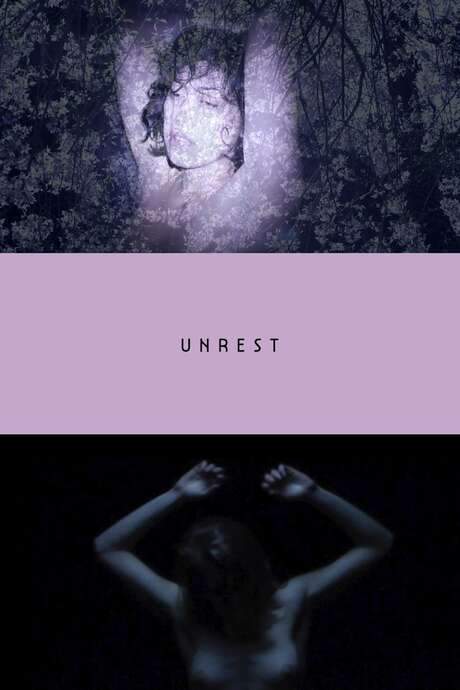
What Is Unrest About?
The premise of Unrest in 327 words, with nothing given away. The full story follows below.
In a quiet world turned upside down, Jennifer Brea—once a promising PhD student at Harvard navigating the rhythms of academic life—finds her body suddenly betraying her at twenty-eight. What begins as a creeping fatigue becomes a descent into something far more profound and disorienting, a condition that strips away the ordinary and replaces it with uncertainty. The opening frames linger on her crawling across the floor, unable to stand, establishing a visual language of vulnerability and resilience that will echo throughout the film. Doctors, trained to seek familiar answers, attribute her decline to stress, leaving Brea to confront a medical system unprepared for what afflicts her.
Refusing to let her suffering be dismissed, Brea turns the camera on herself, creating a video diary meant to prove the reality of her illness to skeptical physicians. What emerges is something larger than documentation—it becomes a lifeline. Alongside her husband Omar Wasow, she ventures into online communities, discovering a global network of people whose stories mirror her own. The film introduces a constellation of patients scattered across continents: a woman whose marriage fractures under disbelief, a young girl in Denmark whose family is targeted by authorities, a renowned geneticist’s silent son, and a young woman whose bones have grown brittle from years confined to her bed. Each portrait carries its own weight of isolation, yet together they form a mosaic of shared endurance.
Interwoven with these intimate testimonies are conversations with scientists and immunologists who shed light on the mysterious nature of the disease and the startling scarcity of research funding. Their discussions hint at deeper societal patterns—why certain illnesses are overlooked, why patients, often women, struggle to be heard. The documentary’s tone balances clinical curiosity with raw human emotion, never settling into pity but instead honoring the complexity of lives reshaped by chronic illness. As Brea’s personal project grows, it begins to carry the pulse of something collective, a quiet uprising forming in the shadows of the medical world.
What Happens in Unrest?
The complete story of Unrest, from the first scene to the last, in 418 words (about 2 minutes). Spoilers throughout.
Spoilers ahead
This powerful documentary chronicles the harrowing journey of Jennifer Brea, a brilliant PhD student at Harvard University whose life was fundamentally altered when she fell severely ill at the age of 28. As her condition worsened, Brea faced a frustrating and systemic lack of belief from the medical community; doctors initially dismissed her debilitating symptoms as mere manifestations of stress. In an effort to provide undeniable evidence of her physical decline to her healthcare providers, Brea began recording a video diary. This personal archive served as a primary tool for her survival and eventually evolved into the foundation for the documentary Unrest. The film opens with a stark, sobering image of Brea crawling across the floor, physically unable to walk, before she eventually receives a formal diagnosis of myalgic encephalomyelitis/chronic fatigue syndrome (ME/CFS).
Seeking answers and a sense of community, Brea and her husband, Omar Wasow, turned to the internet, where they connected with a global network of individuals suffering from the same mysterious condition. The film highlights several heartbreaking testimonials to illustrate the societal and familial toll of the disease. In one instance, a woman in the United States describes how her husband abandoned her because he believed her illness was purely psychological; the couple only managed to reconcile after their own daughter developed ME, providing the husband with undeniable proof of the illness’s reality. Similarly, the documentary explores a distressing case in Denmark, where a young girl was forcibly taken by police to a psychiatric hospital because authorities suspected her parents were “nurturing” her illness.
The devastation extends further through the story of the son of geneticist Ron Davis, who had been rendered mute and unable to speak for an entire year due to the progression of the disease. In the United Kingdom, the film introduces a young woman who has developed osteoporosis as a direct result of being bedridden for several years, unable to move or leave her room.
To provide a scientific context, the narrative is interspersed with detailed interviews featuring various scientists and immunologists. These experts discuss the alarming lack of research funding available for ME/CFS. They suggest that this neglect is rooted in two primary factors: the complex and difficult-to-understand nature of the symptoms and a systemic bias, as the vast majority of those afflicted by ME are women. The documentary culminates in a depiction of the 2016 #MillionsMissing protests, a global movement aimed at demanding increased awareness, medical validation, and urgent support for the millions of patients worldwide suffering in silence.
Unrest Timeline: Every Key Event in Order
15 key events in the order they happen, from “Life as a Harvard PhD Student” to “The #MillionsMissing Protests”. 5 events name a place, across 4 locations.
- 1
Life as a Harvard PhD Student
Jennifer Brea is a high-achieving PhD student at Harvard, leading an active and promising academic life. Her future appears bright as she pursues her doctoral studies.
Where:Harvard
- 2
Mysterious Illness Strikes at 28
At the age of 28, Jennifer Brea suddenly falls ill with a mysterious condition. What begins as an unexplained ailment marks the start of a dramatic turning point in her life.
When:Age 28
- 3
Progressive Decline and Medical Disbelief
Brea's condition progressively worsens, leaving her struggling with debilitating symptoms. Despite the severity of her illness, doctors refuse to believe her and dismiss her symptoms as mere stress.
- 4
The Video Diary Begins
In order to demonstrate the true severity of her illness to her skeptical doctors, Brea starts recording a video diary. This personal documentation of her daily struggles becomes a powerful tool to prove she is not imagining her suffering.
- 5
The Opening Shot
The documentary opens with a striking image of Brea crawling on the floor, unable to walk. This raw and unflinching moment captures the devastating physical toll the disease has taken on her body.
- 6
A Name for the Suffering: ME/CFS Diagnosis
After years of uncertainty and medical dismissal, Brea finally receives a diagnosis of myalgic encephalomyelitis/chronic fatigue syndrome (ME/CFS). Having a name for her condition provides long-awaited validation for her suffering.
- 7
Searching for Answers Online
Brea and her husband Omar Wasow turn to the internet in search of answers about her mysterious illness. Their online research becomes a lifeline as they navigate the poorly understood disease together.
- 8
Finding a Global Community
Through her online search, Brea connects with other people around the world suffering from the same illness. These connections reveal a hidden community of patients, many of whom are similarly disbelieved and isolated.
- 9
An American Marriage Tested
In the United States, a woman with the illness is left by her husband, who wrongly believes her condition is purely psychological. Her story illustrates the painful familial fractures the disease can cause.
Where:United States
- 10
Reconciliation Through Shared Truth
The estranged American couple reconciles only after their daughter also develops ME. Seeing the illness manifest in his own child finally convinces the husband of the disease's physical reality.
Where:United States
Show the other 5 events of Unrest Hide the last 5 events
- 11
Forced Institutionalization in Denmark
In Denmark, a young girl with ME is taken by police and placed into a psychiatric hospital against her will. Authorities believed her parents were nurturing her illness rather than recognizing it as a genuine physical disease.
Where:Denmark
- 12
The Geneticist's Silent Son
The son of renowned geneticist Ron Davis is shown in the documentary, having been unable to speak for an entire year due to his illness. Even a family with deep scientific expertise struggles against the disease's devastating effects.
- 13
Bedbound for Years in the UK
In the United Kingdom, a young woman with ME has developed osteoporosis after being unable to leave her bed for years. Her body's deterioration underscores the severe physical consequences of prolonged immobility caused by the illness.
Where:United Kingdom
- 14
Scientists Speak on Research Neglect
The documentary features interviews with scientists and immunologists discussing the critically limited research funding for ME. They attribute this neglect to the difficult-to-understand nature of the symptoms and to the fact that most ME patients are women.
- 15
The #MillionsMissing Protests
The documentary culminates with the 2016 #MillionsMissing protests, which advocated for increased awareness and support for ME patients globally. The movement brought international attention to the millions of patients missing from their lives due to the disease.
When:2016
Who Are the Main Characters in Unrest?
2 characters, among them Jennifer Brea and Omar Wasow: who each one is and the part they play in the story. Every profile links to the actor’s page.
- JB
Jennifer Brea
Played by Lilas Nagoya
Jennifer Brea is the documentary's central figure, a Harvard PhD student whose life is irrevocably changed by ME/CFS. Initially dismissed by the medical establishment, she uses her experiences to create a powerful video diary that becomes 'Unrest.' Her determination to raise awareness and share her story illustrates her resilience and advocacy for others suffering from the illness.
- 📖 Storyteller
- 🎓 Academic
- 💪 Resilience
- OW
Omar Wasow
Played by Nathalie Remadi
Omar Wasow is Jennifer's supportive husband, who alongside her, searches for answers about her illness. His character represents the partner's perspective in navigating the complexities of chronic illness. Omar's journey emphasizes loyalty, compassion, and the impact of disease on relationships.
- 💑 Supportive Partner
- 🕵️♂️ Seeker
- 🌈 Compassion
Where and When Is Unrest Set?
Unrest is set in United States, Denmark and United Kingdom (2010s). Here is why the time and place matter to the story.
When
2010s
The events of the documentary take place in the 2010s, a period characterized by a growing awareness of chronic illnesses like ME/CFS. This decade saw increased advocacy for patients suffering from misunderstood diseases, leading to movements aimed at securing more research and support. The 2016 #MillionsMissing protests, a pivotal moment depicted in the film, reflect this heightened activism.
Where
United States, Denmark, United Kingdom
The documentary unfolds primarily in the United States, where Jennifer Brea's journey begins. It also features poignant moments in Denmark, where a girl's struggle with the illness is highlighted, and the UK, showcasing the broader implications of ME/CFS. These locations emphasize the global nature of the illness and the various experiences of those affected.
- 🗺️ Locations
- 🎥 Documentary
- 🌍 Awareness
What Are the Themes of Unrest?
3 ideas the story keeps returning to, among them Healthcare Struggles, Community and Support and Advocacy.
-
01
Healthcare Struggles
The film explores the challenges faced by patients in seeking diagnosis and treatment for ME/CFS. It highlights the skepticism from the medical community and the urgent need for greater understanding of chronic illnesses. This theme resonates with many viewers who have experienced similar struggles in their healthcare journeys.
-
02
Community and Support
Brea’s journey emphasizes the importance of finding community among fellow sufferers. Through online connections, the film showcases how shared experiences can foster support and resilience. This theme underscores the emotional and psychological aspects of battling an invisible illness.
-
03
Advocacy
Documentation of the #MillionsMissing protests brings focus to the crucial theme of advocacy for ME/CFS awareness. The film serves as a rallying cry for more funding and resources, spotlighting the need for collective action. It stresses the responsibility of society to support those affected by ME/CFS.
What Kind of Film Is Unrest?
Dark in tone, with steady pacing and a moderate story, going by the plot summary.
- Tone
- Dark
- Pacing
- Steady
- Story
- Moderate
- Intensity
- High
- Ending
- Bittersweet
A heavy, eye-opening documentary that lays bare the devastating reality of chronic fatigue syndrome, exposing systemic medical neglect and gender bias while channeling patient suffering into a defiant call for recognition.
- heartbreaking
- frustrating
- urgent
- somber
- defiant
- reflective
- chronic illness
- medical gaslighting
- gender bias in medicine
- activism
Content notes: chronic illness depiction, medical gaslighting, child endangerment, forced psychiatric hospitalization, family abandonment, disability.
Quiz
How well do you remember Unrest? Test yourself on the story.