

Two Weeks Vacation 1952

Directed by
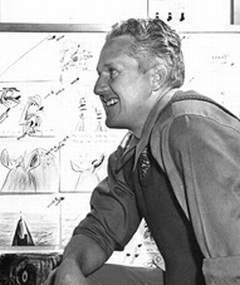
Jack Kinney
Made by

Walt Disney Productions
Two Weeks Vacation Plot Summary
Read the complete plot summary and ending explained for Two Weeks Vacation (1952). From turning points to emotional moments, uncover what really happened and why it matters.
Goofy [Pinto Colvig] is seen in a crowded office, his eyes already drifting to a daydream of paid freedom. He envisions a grand, multi-stop vacation: fishing at Fond du Lac, sunrise in the Rockies, basking on the beach, dude ranching, golfing, boating, and hunting in the North Woods. The moment the clock strikes noon, he bolts from the office to his red car and takes to the highway, launching into a string of travel misadventures that come with a sly, sardonic narration from the film’s running commentator, the narrator [Alan Reed].
From the start, a white slow-moving travel trailer pulled by a yellow car becomes an unyielding rival, somehow always just a half step ahead and relentless in causing trouble. The first clash occurs when a milk bottle falls from the trailer’s platform, smashing into Goofy’s tire and motor and forcing him into a roadside workshop for repairs. Inside the shop, the mechanic digs through the engine with comic chaos, tossing out parts until a faked grand finale: a new motor is proclaimed essential, then stashed away in a trunk. After the motor is supposedly fixed, Goofy pays and leaves—only for the shop to shut down for two weeks, leaving him to wrestle the tire himself when the trailer reappears. The trailer’s intrusion grows more brazen as Goofy works, and a traveler he offers a lift to declines the ride, citing the car’s shortcomings—no radio, no heater, lackluster paint, and thin tires.
A stopped-at-light moment amplifies the slapstick pattern: Goofy nears a red light and, defying the rule, manages a quick hop in front of it. A rain cloud unloads over his car while the light surprisingly switches to green, allowing the trailer to slip by. When he attempts another pass, dust shoots from the trailer’s door, blinding him and sending his car off the road into a tree, giving the trailer another victory lap.
Night falls, and Goofy searches for lodging. He strikes a match to read a sign, but the glow is too faint; he uses a carjack to raise the car high enough to shine the lights on the sign and discover that hotels are down the road, or back the way he came. He pivots, only to find all the hotels occupied—except one, which turns out to be a picturesque front for a plain cabin. His luck sours again when a train jolts him awake, and he trudges on through the night, a parade of passing cars flashing by as he fights fatigue. The trailer keeps returning to frame him, and he watches as people inside the trailer party as if they own a world apart from the road.
Eventually Goofy earns a brief, improbable escape by driving along a cliff face to overtake the trailer, and when he finally shouts at the driver, there is no one behind the wheel. The car speeds away, but the trailer spins out of control, and Goofy is knocked out of his own car and into the trailer’s vehicle. He discovers he’s now the one driving the trailer, catching a slow-moving version of his own car as it falls behind, only to be apprehended by a police officer for speeding. The final frame lands him in jail, and, curiously, he ends the day content, finding the “perfect haven for rest and relaxation” in confinement.
The gag-driven journey unfolds as a collage of roadside trials, each scene layering mishap upon misfortune while the sarcastic narrator’s commentary threads through Goofy’s stubborn optimism. The screenplay leans into the charm of its vaudeville roots, presenting a succession of near-misses, comic reversals, and visual gags that keep the momentum brisk and the humor accessible. At each turn, Goofy clings to his dream of a carefree holiday, even as the world seems determined to turn that dream into a running gag about the unpredictability of travel. The film’s rhythm thrives on the contrast between Goofy’s earnest, almost naïve enthusiasm and the world’s uncooperative quirks, creating a lighthearted, endlessly retrying protagonist whose misadventures push him toward an uneasy, humorous resolution: a vacation that never quite lands the way he planned, yet leaves him with a uniquely personal sense of respite in the most unlikely of places.
Two Weeks Vacation Timeline
Follow the complete movie timeline of Two Weeks Vacation (1952) with every major event in chronological order. Great for understanding complex plots and story progression.
Goofy daydreams about vacation
In a crowded office, Goofy daydreams about his upcoming paid vacation and lists activities like fishing, sunrises in the Rockies, and lounging on the beach. The daydream sets the tone for his road trip and the comic misadventures that follow.
12:00 PM: Goofy hits the road
As soon as the clock strikes noon, Goofy runs to his red car and races onto the highway, eager to start the vacation. The trip becomes a string of travel mishaps centered on a stubborn white trailer that won’t let him pass.
Milk bottle disaster and engine trouble
Early in the journey, a milk bottle falls from the trailer and damages Goofy’s tire and motor. He visits a roadside workshop where the owner dismantles the engine, claims a new motor is needed, and stores the old one in a trunk, all while the problem compounds.
Workshop closes; tire repair becomes personal
After supposedly fixing the motor, the shop closes for two weeks, leaving Goofy to fix the tire himself. The trailer continues to torment him, passing and threatening to box him in on the road.
A traveler refuses a lift due to the car’s flaws
Goofy offers a ride to a weary traveler, hoping for a friendly connection, but the man declines after noting the car’s poor condition—no radio, heater, paint, or sturdy tires. The preference for independence underscores Goofy’s ongoing travel troubles.
Stoplight mischief: rain and dust collide
Goofy passes a stoplight that shows stop, then stops briefly before darting ahead as the light turns green and the trailer slips past. Rain begins to pour while a dust cloud erupts from the trailer’s door, obscuring Goofy’s view and foiling his attempts to overtake.
Nightfall: signs, vacancies, and a trailer shadow
Night falls as Goofy struggles to read signs by shining headlights on them. He discovers hotels are scarce or full, with only one potential option looming behind the ever-present trailer.
Gas runs out and the lone vacancy is claimed
Goofy’s car stalls out of gas before reaching the last vacant hotel. To make matters worse, the trailer has already claimed that spike of lodging, leaving Goofy stranded on the road.
Push to a fake display house and a train interrupt
He pushes the car toward a gas station, but it rolls downhill into a fake display standing in front of a plain cabin. He spends the night there, only to be awakened by a passing train that ruins his brief rest.
Night ride and a trailer party
Back on the road, Goofy encounters the trailer again, seeing people partying inside. He tries to pass, nearly getting struck by a truck during the tense moment.
Cliff-wall pass reveals an empty driver seat
He finally manages to pass the trailer by skirting along a cliff wall, only to realize there is no one driving the vehicle ahead. He speeds away, attempting to put space between himself and the out-of-control trailer.
Arrest in the chaos: jail and a punchline about rest
In the ensuing chaos, Goofy is knocked into the trailer’s car and discovers he seems to be driving the trailer himself. A police officer arrests him for speeding as his own car slows behind, and he ends up in jail with a wry line about finally finding the 'perfect haven for rest and relaxation'.
Two Weeks Vacation Characters
Explore all characters from Two Weeks Vacation (1952). Get detailed profiles with their roles, arcs, and key relationships explained.
Goofy (Pinto Colvig)
A relentlessly cheerful, accident-prone traveler who dreams of a long-awaited vacation. His optimism fuels a string of slapstick escapes and improvisations as he confronts a persistent trailer and a cascade of car troubles, keeping his spirits high even when things go wrong.
Narrator / Mechanic / Hitch-Hiker (Alan Reed)
The narrator provides a sardonic, dry-humor running commentary on Goofy’s misadventures. He sharpens the humor with witty asides, frames each setback with irony, and occasionally fills the role of a quirky mechanic within the road odyssey.
Two Weeks Vacation Settings
Learn where and when Two Weeks Vacation (1952) takes place. Explore the film’s settings, era, and how they shape the narrative.
Location
Fond du Lac, Rocky Mountains, North Woods
The film follows Goofy's cross-country vacation as it unfurls across a collage of American settings. It begins in Fond du Lac and sweeps through the Rockies to the North Woods, with desert highways and roadside hotels forming the backdrop. These locations serve as stages for a string of slapstick misadventures and the sardonic narration that threads the comedy together.
Two Weeks Vacation Themes
Discover the main themes in Two Weeks Vacation (1952). Analyze the deeper meanings, emotional layers, and social commentary behind the film.
🚗
Road Trip
Goofy's quest for a dream vacation drives the entire feature, turning ordinary travel into a series of escalating gags. The road becomes a character in itself, presenting obstacles that test his optimism and tenacity. The humor stems from the clash between expectation and the chaotic reality of travel.
🌀
Chaos
A relentless sequence of breakdowns, near-misses, and misdirections punctures Goofy's smooth ride to leisure. The sandbox of mishaps — from a stubborn trailer to malfunctioning car parts — amplifies the slapstick tone. The narrator's dry comments underline the irony of the situation.
🏖️
Vacation Ideal vs. Reality
The dream of rest and relaxation collides with road-side absurdity. Goofy's pursuit ends in ironic misfortune, culminating in jail as the 'perfect haven' proves elusive. The theme underscores the joke that genuine leisure is harder to seize than it appears.

Two Weeks Vacation Spoiler-Free Summary
Discover the spoiler-free summary of Two Weeks Vacation (1952). Get a concise overview without any spoilers.
In a bustling office that seems to swallow the imagination, Goofy finally decides that enough paperwork has earned him a break. He abandons his cubicle at noon, slipping into his bright red car with a head full of day‑dreams about fishing lakes, mountain sunrise, sunny beaches, and endless highways. The film sets its stage on the open road—wide‑open stretches, dusty rest stops, and the inevitable string of motels that promise refuge but often deliver only a cramped cabin next to a rumbling railroad. A dry, sardonic narrator strings his observations through the journey, giving the everyday chaos a wry, almost theatrical commentary.
The world of the movie is a playful exaggeration of mid‑century road‑trip Americana, where every mile feels both familiar and absurd. A slow‑moving travel trailer becomes a recurring, almost mythic obstacle, hovering just out of reach and turning routine driving into a game of cat and mouse. The tone leans heavily into slap‑stick and vaudeville, with visual gags—flat tires, odd mechanics, and the occasional rainstorm—serving as the rhythm that propels Goofy forward. Even the simplest actions, like trying to read a hotel sign by the light of a match, are magnified into comedic set‑pieces that highlight the film’s love of exaggerated inconvenience.
At its core, the story follows Goofy’s unflappable optimism as he wrestles with the unpredictability of travel. He is earnest, a little naïve, and fiercely determined to turn his imagined perfect vacation into reality, despite the road’s relentless propensity to throw quirky hurdles his way. The audience is invited to share his hopeful anticipation, while the world around him gently nudges the experience toward a delightfully chaotic adventure.
Movies with Similar Twists and Themes
Uncover films that echo the narrative beats, emotional arcs, or dramatic twists of the one you're exploring. These recommendations are handpicked based on story depth, thematic resonance, and spoiler-worthy moments — perfect for fans who crave more of the same intrigue.


Featured on this page

What's After the Movie?
Not sure whether to stay after the credits? Find out!




Explore Our Movie Platform
New Movie Releases (2025)
Famous Movie Actors
Top Film Production Studios
Movie Plot Summaries & Endings
Major Movie Awards & Winners
Best Concert Films & Music Documentaries
Movie Collections and Curated Lists
© 2025 What's After the Movie. All rights reserved.