
Tu Chor Main Sipahi 1996

Directed by

Guddu Dhanoa
Made by

Tu Chor Main Sipahi Plot Summary
Read the complete plot summary and ending explained for Tu Chor Main Sipahi (1996). From turning points to emotional moments, uncover what really happened and why it matters.
Raja, Saif Ali Khan, is a notorious criminal who robs the wealthy under the alias “King.” Inspector Amar Verma, Akshay Kumar, is a tenacious police officer determined to bring him in, chasing him through the bustling streets of Mumbai. The police are relentless, pressing for King’s arrest within four days, and warning Verma that a failure could mean his transfer to Tandarikala, a remote outpost infamous as the graveyard of policemen, where few officers ever return.
Amar nearly corners King, but a dangerous incident with local bandits injures him on the return journey. Seizing the moment, King abandons Amar and travels on to Tandarikala, where he arrives pretending to be a legitimate inspector. The new setting is stark and oppressive: Tandarikala is ruled by the merciless Thakur Gajendra Singh, Amrish Puri, a man who spares no one and treats the village like his private fief. He discards the old men and abducts young men, forcing them into hard labor and perilous subservience.
Inside this harsh landscape, Raja encounters Guddu, a village simpleton who resembles Amar—a look-alike that could confuse even the sharpest minds. Guddu is not merely a doppelgänger; he is revealed to be Inspector Amar in disguise, who followed Raja to arrest him but, confronted with the villagers’ suffering at the hands of Thakur, finds his purpose shifting. Rather than uphold a brittle chase, Amar chooses solidarity with Raja to challenge the tyrant’s grip on the village.
What follows is an unlikely alliance built on a common goal: topple Thakur Gajendra Singh and end the cruelty that plagues Tandarikala. Together, Amar and Raja confront Thakur’s goons, navigate treacherous loyalties, and push back against a system that treats people as expendable. The plan blends street-smart raids with strategic courage, turning the tide against oppression and violence that had long defined life in the village.
In the final confrontation, the tyrant and his henchmen fall to a combination of bold action and shared resolve. The battle crescendos in a decisive moment where law and rebellion converge, and the city’s pulse seems to shift as justice edges closer. The aftermath brings a moment of levity after a grim struggle: Amar handcuffs Raja, sealing a remarkable, almost humorous partnership forged under fire. The two men share a laugh, signaling a hard-won sense of closure and a belief that even contrasting paths can meet to challenge overwhelming tyranny.
Tu Chor Main Sipahi Timeline
Follow the complete movie timeline of Tu Chor Main Sipahi (1996) with every major event in chronological order. Great for understanding complex plots and story progression.
King's robberies spark a manhunt in Mumbai
Raja, using the alias 'King', robs the affluent and evades the law with ease. Inspector Amar Verma is assigned to track him down, and the Mumbai Police intensify their pursuit as the city becomes a hunting ground for King.
Commissioner warns Amar about the four-day deadline
After a bold heist, the Commissioner Kushal Singh warns Amar that he must capture King within four days or be reassigned to Tandarikala, the graveyard of policemen. The pressure mounts as the clock starts ticking.
Amar nearly captures King but is injured
During the pursuit, Amar is nearly successful in cornering King, but an attack involving local bandits leaves Amar injured. King seizes the moment to slip away and heads toward Tandarikala.
King reaches Tandarikala posing as a fake inspector
Arriving in Tandarikala, King assumes the identity of a fake inspector to blend in with the corrupt atmosphere of the village. He learns about the harsh rule of Thakur Gajendra Singh.
Thakur Gajendra Singh's tyranny revealed
Thakur leaves the old men to their fate and abducts young men, including minors, to serve his tyranny. The village lives under fear and exploitation.
King meets Guddu, a village simpleton who resembles Amar
King encounters Guddu, a simpleton who looks strikingly like Amar Verma. Guddu's innocent demeanor and resemblance raise questions about identity and loyalty.
Guddu is revealed to be Inspector Amar Verma
Guddu is revealed to be Inspector Amar Verma in disguise, who had trailed King to capture him. Witnessing the villagers' suffering convinces him to rethink his mission.
Amar and Raja form an alliance to topple Thakur
Amar and King decide to join forces to overthrow Thakur, setting aside past antagonism for a common cause. They vow to protect the villagers and restore justice.
Strike against Thakur's rule begins
They mobilize, confront Thakur's guards, and coordinate with the villagers to challenge the oppressive regime. The resistance marks a turning point in Tandarikala.
Thakur and his goons are killed; tyranny ends
In a final clash, Thakur and his cronies are killed, and the oppressive regime collapses. The villagers' freedom returns as the balance of power shifts.
Amar handcuffs Raja; they share a laugh
In the aftermath, Amar handcuffs Raja and they share a rare laugh, signaling a complicated but enduring bond forged in unlikely circumstances.
Tu Chor Main Sipahi Characters
Explore all characters from Tu Chor Main Sipahi (1996). Get detailed profiles with their roles, arcs, and key relationships explained.
Inspector Amar Verma / Guddu (Akshay Kumar)
A determined Mumbai police officer who relentlessly tracks King. He is sidelined after an injury and later discovers Guddu, the village look-alike, allowing him to infiltrate Tandarikala. When he learns of the villagers’ plight under Thakur, he abandons the chase and teams up with Raja to overthrow the tyrant. In the end, he handcuffs Raja, signaling a hard-won respect and shared victory.
Raja / King (Saif Ali Khan)
A notorious thief who robs the rich under the alias King. He outsmarts Amar initially and reaches Tandarikala, where he discovers an opportunity to leverage the villagers’ suffering. He forms an unlikely alliance with Amar to topple Thakur Gajendra Singh, blending cunning with a sense of justice for the oppressed. His transformation from rival to partner drives the film’s tension and resolution.
Thakur Gajendra Singh
The merciless ruler of Tandarikala who abducts young men and subjects villagers to his tyranny. His cruelty sets the central conflict in the village and motivates Raja’s and Amar’s alliance. He is ultimately killed by the combined efforts of Raja and Amar, ending his oppressive reign. His character embodies the corrupt authority the protagonists must overthrow.
Commissioner Kushal Singh
The Commissioner warns Amar that he must arrest King within four days or face a transfer to Tandarikala, heightening the stakes and pressure on the investigation.
Tu Chor Main Sipahi Settings
Learn where and when Tu Chor Main Sipahi (1996) takes place. Explore the film’s settings, era, and how they shape the narrative.
Location
Mumbai, Tandarikala
Mumbai provides the urban backdrop where King’s crimes unfold and the police pursue him. Tandarikala is a harsh, remote village ruled by Thakur Gajendra Singh, where young men are abducted to work for him and villagers suffer under tyranny. The contrast between the bustling city and the oppressive countryside drives the film’s conflict between justice and abuse of power.
Tu Chor Main Sipahi Themes
Discover the main themes in Tu Chor Main Sipahi (1996). Analyze the deeper meanings, emotional layers, and social commentary behind the film.
⚖️
Justice
Justice drives the pursuit of King by Inspector Amar Verma and the Mumbai police, highlighting the clash between law and corruption. The hunt tests the integrity of officials and the morality of those who enforce the law. Amar’s choices reveal that justice may require unconventional alliances and sacrifices. The ending frames justice as a collaborative effort to overthrow tyranny.
🤝
Alliance
An unlikely partnership forms between Raja, the rogue King, and Amar as they confront a common foe. Their collaboration blends street-smart survival with formal police action, showing that enemies can unite against greater evil. The alliance emphasizes that courage and strategic thinking can overcome entrenched power.
🌀
Dual Identity
Guddu’s look-alike presence creates tension between identity and duty, allowing Amar to move within Tandarikala’s power structure. The twist that Guddu is actually Amar deepens the moral stakes and enables crucial moves against the tyrant. This dual identity forces characters to question loyalty and what it means to act for the greater good. The narrative uses disguise to explore how personal identity can serve a higher cause.

Coming soon on iOS and Android
The Plot Explained Mobile App
From blockbusters to hidden gems — dive into movie stories anytime, anywhere. Save your favorites, discover plots faster, and never miss a twist again.
Sign up to be the first to know when we launch. Your email stays private — always.
Explore the mobile appTu Chor Main Sipahi Spoiler-Free Summary
Discover the spoiler-free summary of Tu Chor Main Sipahi (1996). Get a concise overview without any spoilers.
In a remote town where the shadows of power stretch longer than the streets, the everyday rhythm is dictated by a single, iron‑fisted ruler. Thakur Gajendra Singh runs a criminal empire that has woven itself into every corner of the community, and his influence is such that the local police have become mere extensions of his will. The town has earned a grim reputation as a graveyard for officers who dare to oppose him, a place where duty feels more like a death sentence than a calling.
Into this hostile landscape arrives Inspector Amar Varma, freshly transferred and eager to prove his mettle. From his first days on the beat, he senses that the line between law and intimidation is razor‑thin, and that any attempt to enforce justice could ripple far beyond his own safety. The atmosphere is thick with tension, a blend of desolate quiet and the ever‑present threat of retribution that hangs over every alley and doorstep.
The contrast between Amar’s steadfast commitment to his oath and the Thakur’s unchecked dominance creates a palpable undercurrent of conflict. Amar quickly learns that his role is not limited to chasing criminals; it also involves safeguarding the fragile lives of those he loves, who could become collateral in the Thakur’s relentless grip. The town itself feels like a character—its cracked walls and wary inhabitants echoing the oppressive mood while hinting at the possibility of hidden resistance.
Against this backdrop of stark moral choices and looming danger, the story balances gritty realism with moments of sharp, uneasy humor. The tension between duty and survival, authority and oppression, sets the stage for a tense cat‑and‑mouse game where every decision carries weight, and the stakes are as personal as they are perilous.
Movies with Similar Twists and Themes
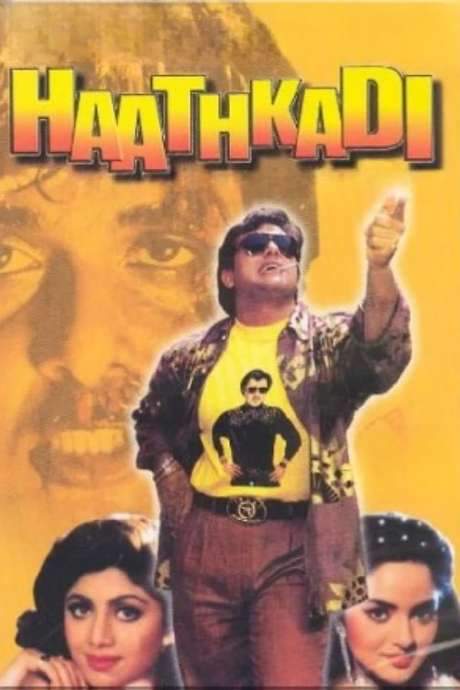
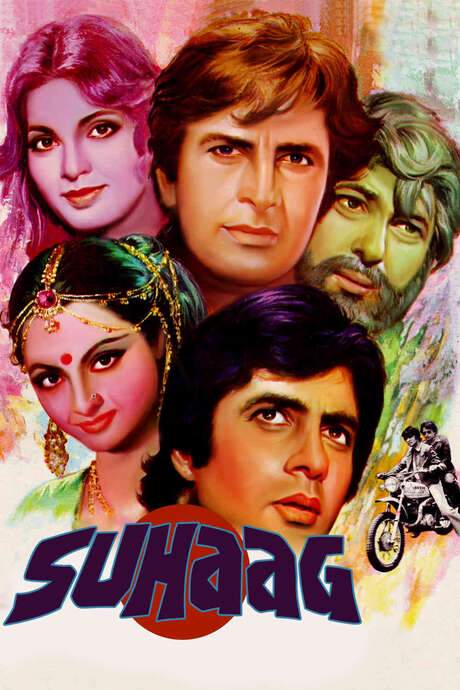
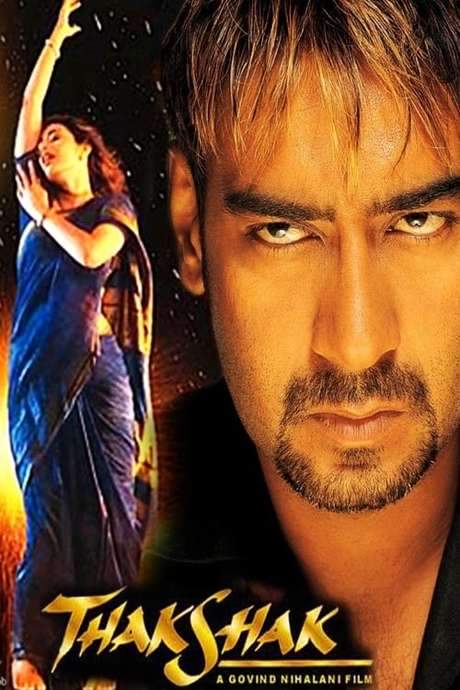
Uncover films that echo the narrative beats, emotional arcs, or dramatic twists of the one you're exploring. These recommendations are handpicked based on story depth, thematic resonance, and spoiler-worthy moments — perfect for fans who crave more of the same intrigue.




Featured on this page

What's After the Movie?
Not sure whether to stay after the credits? Find out!
Check out our other apps:

SAT Sphere
Build confidence for the Digital SAT.

Mori Atlas
Discover wild places worth protecting.

Luntero
Search smarter for a home in Amsterdam.

Plot Explained
Unravel movie endings and hidden clues.

Pokechamp
Dive into Pokémon data and battle logic.

Driving Theory
Get ready for your European theory test.

Movie Dust
Plan your next cinema trip with ease.

Musemap
Find art and culture as you travel.

Selkobase
Compare credentials before committing.

Local Manual
Turn an unfamiliar country into practical next steps.

Lernavi
Compare school systems before your next move.

GymRoam
Find a workout stop wherever your plans take you.
Explore Our Movie Platform
New Movie Releases (2026)
Famous Movie Actors
Top Film Production Studios
Movie Plot Summaries & Endings
Major Movie Awards & Winners
Best Concert Films & Music Documentaries
Movie Collections and Curated Lists
© 2026 What's After the Movie. All rights reserved.
Privacy Policy