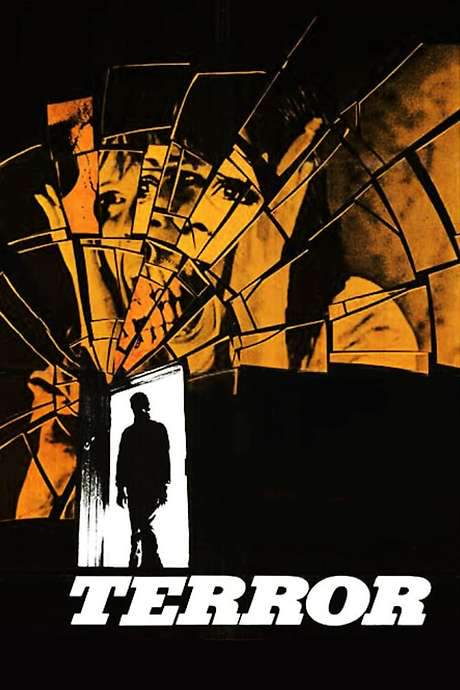
What Is T.T. Syndrome About?
The premise of T.T. Syndrome in 329 words, with nothing given away. The full story follows below.
The night has settled over an aging Turkish bath, its steam‑filled chambers and narrow, tile‑slicked corridors humming with the ghosts of forgotten rituals. The building’s dim lanterns cast trembling shadows that flicker against ancient stone, while the faint sound of water echoing through the plumbing feels like a distant, unsettled lullaby. Beneath the surface, a lingering dread hints at something far more sinister than the ordinary creaks of an old structure, as if the very walls are waiting for darkness to reveal their secret.
Into this claustrophobic world step a disparate group seeking something they cannot name. Teodora, a determined young woman, arrives with her boyfriend Vaki, their tension palpable as they navigate the labyrinthine rooms. They are joined by Tina and Sale, friends whose uneasy camaraderie masks hidden anxieties. Their purpose is desperate, tied to a risky exchange with the enigmatic dealers Cane and Sleš, whose presence adds a volatile edge to the uneasy atmosphere. The only other regulars are a weary attendant, a muted drunk, and the unsettling figure of Magistar Đorđević, whose quiet menace lingers in every corner.
The film paints a tone of relentless suspense, where ordinary fear is amplified by the knowledge that a rare neurological condition—referred to as T.T. Syndrome—spawns a predator whose sociopathic impulses turn the night into a hunt. The bathhouse becomes a character in itself, its steam‑laden hallways and echoing chambers creating a sense of being watched from unseen depths. Each footstep reverberates, each whispered murmur amplifies, and the group finds themselves caught in a tightening circle of paranoia and curiosity, wondering how long they can stay ahead of the unseen.
As the night deepens, the audience is left with a palpable feeling that something ancient and cruel is prowling just beyond the reach of light, waiting for the perfect moment to strike. The stakes are hinted at, but the true nature of the danger remains deliberately obscured, inviting viewers to linger in the unsettling space between dread and discovery.
What Happens in T.T. Syndrome?
The complete story of T.T. Syndrome, from the first scene to the last, in 733 words (about 3 minutes). Spoilers throughout. Names in the text link to 7 cast member pages.
Spoilers ahead
In 1958, a disheveled, pregnant young woman named Margita Karadzic staggers into a public toilet, once a bathhouse, and gives birth in one of the stalls. Tragedy strikes as she flushes the baby—the result of rape—down the toilet, setting off a haunting chain of events that will echo through decades. The film then jumps forward to reveal that, exactly twenty-two years later, a punk couple in the same bathhouse are found murdered and dismembered. Their remains are flushed away in the same methodical cycle, and the crime scene is left tidily cleaned, as if to erase evidence of a vicious act that continues to unfold in the shadows of the building.
Nineteen years after that grim night, Teodora, Vaki (her boyfriend), and their friends Tina and Sale regroup to revisit the bathhouse. They go there with a desperate purpose: to procure drugs from the pair of dealers Cane and Sleš. The place feels haunted, its corridors echoing with sounds that resemble an infant’s cries and laughter leaking through the plumbing. The building’s only other occupants are an unnamed attendant, a wino, and a gay Magistar Đorđević, a frightening figure whose presence adds a chilling undertone to the already tense atmosphere. The scene is vividly tense as the four friends move through the dimly lit rooms, trying to stay one step ahead of danger.
As Vaki and Sale negotiate with Cane, a violence erupts: Sleš and Tina are murdered, Tina meeting her end in front of a hidden Teodora. Panic spreads as the group scrambles to escape, but every exit in the bathhouse seems sealed. Cane, acting impulsively, shoots a drunk man who is caught in the wrong place at the wrong time, and the group discovers that this man was not the killer after all when Sale finds a dropped camcorder. The device briefly captured the real killer at the moment of the crime, a killer whose boots resemble those of Magistar Đorđević, casting doubt on the obvious culprit and deepening the mystery.
The discovery leads the survivors to a disturbing realization: the attendant’s body—initially found in a back room—vanishes, and a tunnel to the sewers is revealed in her living quarters. The tension escalates as Vaki and Djordjević are murdered by the unseen killer, who is eventually revealed to be the attendant herself, a shocking twist that also explains why the bathhouse has felt so unnaturally alive for so long. The killer is Margita, the same woman who began this grim saga decades earlier, and she has spent years pursuing a singular purpose: feeding her offspring, nicknamed Cloaca, by flushing the bodies of those who come into the bathhouse. Margita is aided by a deranged former professor, Hadži-Tošić, and Cane, who was abducted as a toddler and raised as Margita’s son in a dark, twisted partnership.
As the trio of captives—Teodora, the pregnant Teodora, and Sale—face an imminent, brutal fate, the family’s fragile bonds begin to crumble from inside. Margita slashes Hadži-Tošić’s throat after Cane is injured by one of his own traps and, crucially, because Hadži-Tošić appears drawn to Teodora. The act of betrayal triggers Teodora’s desperate bid for freedom: she breaks free, seizes a weapon, and stabs Margita, turning the tide just long enough for Teodora and Sale to flee. They make their way toward the sewers, pursued by Cane, who is desperate to recover the captives and return them to their fates.
In the claustrophobic sewers, Teodora manages to shove Cane into a pit, and the myth of Cloaca appears to claim him as part of its ominous appetite—the pit seems to swallow him, and the audience is left with a chilling sense of a creature or force living beneath the city. The surface moment arrives with a fraught reunion: Teodora and Sale, battered but alive, come face to face with the wounded Margita. A passing vagrant intervenes, sacrificing himself to end Margita’s life, and in her final breath, Margita reveals one last, devastating truth: Teodora is pregnant.
The film closes on a haunting note, as Teodora gives birth to a child whose physiology appears to align with the same mysterious disorder associated with Cloaca, the “T.T. Syndrome.” The ending emphasizes cycles of violence and the terrifying possibility that some sins of the past persist, haunting new generations in a world where the walls of a bathhouse and the sewer system beneath it seem to breathe with long-held secrets.
T.T. Syndrome Timeline: Every Key Event in Order
12 key events in the order they happen, from “Margita gives birth in the bathhouse and the baby is flushed” to “Teodora gives birth to a Cloaca-linked child”. 12 events name a place, across 6 locations.
- 1
Margita gives birth in the bathhouse and the baby is flushed
In 1958, Margita, a pregnant young woman, staggers into a public toilet and gives birth in a stall. She then tragically flushes the newborn away, setting a grim pattern in motion. The bathhouse seems to cradle the tragedy, hinting at a haunting cycle that will echo through the decades.
When:1958 Where:Public toilet / bathhouse stall
- 2
Twenty-two years later: the murder of a punk couple
In 1980 the bathhouse becomes the scene of a brutal murder and dismemberment of a punk couple, whose remains are flushed away. The crime is cleaned up as if to erase evidence, suggesting a methodical killer operating from the shadows. The incident foreshadows a repeating pattern tied to the building.
When:1980 Where:Bathhouse
- 3
Nineteen years on: Teodora and friends return to the bathhouse
Nineteen years after the grim night, Teodora and her friends revisit the bathhouse to obtain drugs from Cane and Sleš. The place feels haunted, with sounds that resemble an infant’s cries leaking through the plumbing. The few other occupants—the unnamed attendant, a wino, and Magistar Đorđević—heighten the tension.
When:1999 Where:Bathhouse
- 4
Sleš and Tina are murdered; panic erupts
During the drug negotiation, Sleš and Tina are killed, with Tina meeting her end before Teodora. Panic spreads as the group scrambles to escape, but every exit seems sealed. The sense of being trapped intensifies the danger inside the bathhouse.
When:1999 Where:Bathhouse
- 5
Cane shoots a bystander; a camcorder reveals the real killer
Cane fires at a drunken man who is caught in the wrong place at the wrong time. Sale finds a dropped camcorder that briefly captures the moment of the crime, challenging the assumption of who the killer is. The footage points to a killer whose boots resemble Magistar Đorđević, deepening the mystery.
When:1999 Where:Bathhouse
- 6
The attendant’s body vanishes; a tunnel to the sewers is revealed
The attendant’s body disappears, and a hidden tunnel to the sewers is revealed in her living quarters. The group realizes the bathhouse is more than a building—it is a labyrinth that may harbor a malevolent force. Tension escalates as pursuit and fear intensify.
When:1999 Where:Back rooms to sewer tunnel
- 7
The killer is revealed: Margita is the mastermind
The killer is revealed to be Margita, the same woman connected to the earlier tragedy. She uses the bathhouse’s network to feed her offspring, Cloaca, by flushing bodies down the plumbing. Hadži-Tošić and Cane are revealed as her accomplices in this dark scheme.
When:1999 Where:Bathhouse / sewer area
- 8
Margita strikes: Hadži-Tošić is killed during a betrayal
Margita slashes Hadži-Tošić’s throat after Cane is injured by one of his own traps. The act reveals a brutal betrayal that shatters any remaining trust among the survivors. The danger tightens as Margita tightens her malicious hold on the situation.
When:1999 Where:Bathhouse
- 9
Teodora fights back and stabs Margita
Teodora seizes a weapon and stabs Margita, turning the fight in their favor. She and Sale seize the chance to flee toward the sewers while Cane pursues, shifting the dynamic from victimhood to resistance. The escape becomes a desperate bid for survival.
When:1999 Where:Bathhouse
- 10
In the sewers, Teodora shoves Cane into a pit
The trio escapes into the claustrophobic sewers, where Teodora manages to shove Cane into a pit. The myth of Cloaca seems to claim him as the pit swallows him, leaving the audience with a chilling sense of a force living beneath the city. Teodora and Sale press on, battered but alive.
When:1999 Where:Sewers
- 11
A vagrant sacrifices himself; Margita dies
A passing vagrant intervenes, sacrificing himself to end Margita’s life. In her final breath, Margita reveals that Teodora is pregnant, heightening the personal stakes for the survivors. Teodora and Sale’s reunion is haunted by the looming threat of what comes next.
When:1999 Where:Sewers
- 12
Teodora gives birth to a Cloaca-linked child
The film closes on a haunting note as Teodora gives birth to a child whose physiology aligns with the T.T. Syndrome associated with Cloaca. The cycle of violence seems poised to continue into a new generation. The bathhouse and sewer system linger as haunted witnesses to long-kept secrets.
When:1999 Where:Post-escape location
Who Are the Main Characters in T.T. Syndrome?
15 characters, among them Margita (older), Mlada Margita and Vaki: who each one is and the part they play in the story. 14 of them link to the actor’s page.
- M(
Margita (older)
Played by Dušica Žegarac
A calculated matriarch whose long shadow drives the plot, using the bathhouse as a locus of control and a method to feed her offspring. Her scheming and ruthlessness reveal a psyche that stabilizes violence across generations.
- 🧪 Villain
- 🕵️♂️ Manipulative
- 🧬 Maternal Trauma
- MM
Mlada Margita
Played by Radmila Tomović
The younger Margita in 1958, the flashpoint that begins the saga. Her actions set in motion a chain of violence that reverberates through the decades. The character embodies both vulnerability and the capacity for calculated harm.
- 🧪 Villain
- 🕵️♂️ Manipulative
- 🧬 Maternal Trauma
- V
Vaki
Played by Nebojša Glogovac
Teodora’s partner and member of the group who navigates danger in the bathhouse, a figure caught between loyalty and self-preservation as violence closes in.
- 🧭 Ally
- 🌀 Tension
- 🫂 Companionship
- S
Sale
Played by Nikola Đuričko
Friend of Teodora; negotiates with Cane for drugs and becomes entangled in the nightmarish events that unfold inside the bathhouse.
- 🧭 Ally
- 🧬 Risk
- 🗝️ Mystery
- T
Teodora
Played by Sonja Damjanović
Protagonist who endures brutal danger and ultimately becomes pregnant, fighting to escape with Sale as the bathhouse tightens its grip around them.
- 🧭 Survivor
- 🕯️ Resilience
- 🖤 Determination
- C
Cane
Played by Branko Vidaković
A dealer who is coerced and later revealed to be the offspring raised by Margita; his fate intertwines with the house’s sinister rituals.
- 🧩 Suspect
- 🪤 Captor
- 🗡️ Violence
- S
Sleš
Played by Nenad Gvozdenović
One of the bathhouse’s clients who is murdered during the chaotic events, his death marking the brutal reach of the killer.
- 🗡️ Victim
- 😨 Fear
- 🧭 Hazard
- T
Tina
Played by Ljubinka Klarić
Friend of Teodora who falls victim to the killer, her death underscoring the danger of the bathhouse and the price of involvement.
- 🩸 Victim
- 🧭 Danger
- 🕯️ Security
- MĐ
Magistar Đorđević
Played by Boris Komnenić
A frightening, visually unsettling figure whose presence casts a chilling undertone and is tied to the mystery surrounding the killer.
- 🧪 Mentor/Threat
- 🧭 Ambiguity
- 🕯️ Fear
- H
Hadži-Tošić
Played by Feđa Stojanović
Deranged former professor who aids Margita in her dark scheme, a crucial piece in the sinister alliance.
- 🧩 Accomplice
- 🧬 Perverse
- 🗝️ Knowledge
- M
Merlin
Played by Džemail Maksut
A minor character in the bathhouse world, appearing in scenes that add texture to the environment but with limited narrative impact.
- 🗨️ Minor
- 🧭 World-building
- 🗝️ Shadow
- P
Panker
Played by Mihailo Zaverla
A drug dealer connected to the bathhouse’s network, part of the ecosystem of vice that fuels the plot.
- 🧪 Dealer
- 🧭 Criminal
- 🗝️ Network
- P
Pankerka
Female associate in the drug network who operates within the bathhouse’s margins and participates in the illicit trade.
- 🧪 Dealer
- 🧭 Criminal
- 🗝️ Network
- P
Pijanac
Played by Ljubomir Ćipranić
A drunken figure present in the bathhouse’s corridors, part of the surrounding environment that witnesses the events.
- 🧪 Drunk
- 🫂 Background
- 🗝️ Witness
- P
Psiholog
Played by Tijana Mandić
A psychologist character who appears in the bathhouse setting, contributing to the atmosphere and human dynamics.
- 🧠 Therapist
- 🧭 Atmosphere
- 🗝️ Insight
Where and When Is T.T. Syndrome Set?
T.T. Syndrome is set in Bathhouse and Sewers (1958–1999). Here is why the time and place matter to the story.
When
1958–1999
The narrative moves through three key moments: a 1958 birth inside the bathhouse, a second act approximately 22 years later in the 1980s, and a final sequence in the late 1990s. The setting shifts from intimate, decaying interiors to the dark underworld beneath the city, emphasizing cycles of violence across generations.
Where
Bathhouse, Sewers
An aging public bathhouse that becomes a claustrophobic stage for violence and ritual. Its damp corridors echo with unsettling sounds, from infant cries to running water, hinting at a past that never fully left. Hidden tunnels connect the building to the city sewers, providing a secret route for those pursuing or hiding from danger.
- 🛁 Bathhouse
- 🚰 Sewers
What Are the Themes of T.T. Syndrome?
4 ideas the story keeps returning to, among them Mystery, Violence and Decay.
-
01
Mystery
The film builds a layered mystery around the bathhouse and its deadly past. Clues—such as a dropped camcorder and boot prints—steer the investigation toward a hidden perpetrator. The reveal points to Margita as the orchestrator, tying decades of violence to a single matriarch. The investigation unfolds through a haunted space that breathes with the city’s secrets.
-
02
Violence
Violence erupts repeatedly: the 1958 birth gone wrong, the murders in the following years, and the brutal pursuit through the sewer tunnels. The killings are methodical and ritualistic, reinforcing the sense of a haunting pattern. The violence extends across generations, shaping the survivors and the city alike.
-
03
Decay
The bathhouse itself is a character of decay, a crumbling urban relic that houses fear as much as people. Its walls and plumbing carry generations of secrets, while the surrounding city becomes a hidden landscape of danger. The space shapes behavior, amplifying paranoia and mistrust.
-
04
Birth/Continuity
The film centers on progeny and continuity, culminating in Teodora's pregnancy at the end. The myth of Cloaca and the idea that violence can sustain itself through offspring underpins the narrative. The final birth suggests that the cycle may continue into a new generation.
What Kind of Film Is T.T. Syndrome?
Dark in tone, with fast pacing and a moderate story, going by the plot summary.
- Tone
- Dark
- Pacing
- Fast
- Story
- Moderate
- Intensity
- High
- Ending
- Bleak
A brutally intense and claustrophobic slasher film that traps its characters in a haunted bathhouse, delivering relentless gore and tension while exploring a dark legacy of violence passed through generations.
- claustrophobic
- oppressive
- brutal
- harrowing
- paranoid
- gory
- slasher
- inherited trauma
- cycles of violence
- confinement horror
Content notes: graphic violence, gore, murder, infanticide, rape, child abduction.
Quiz
How well do you remember T.T. Syndrome? Test yourself on the story.