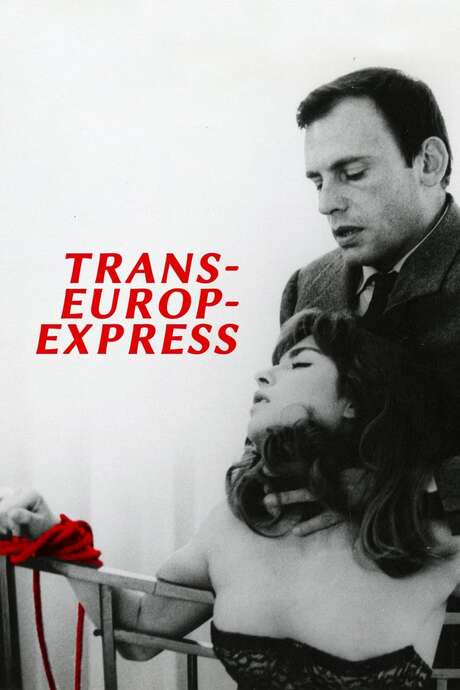


Where to Watch Trans-Europ-Express
See current US streaming, rental, and purchase options for Trans-Europ-Express (1966) via JustWatch.


Streaming availability powered by 
Trans-Europ-Express Plot Summary
Read the complete plot summary and ending explained for Trans-Europ-Express (1966). From turning points to emotional moments, uncover what really happened and why it matters.
In a film-within-the-film, the Frenchman Elias takes his first consignment of cocaine from Paris to Antwerp aboard the Trans Europ Express. There, he is passed from one mysterious intermediary to another, and with some time to spare, enacts a troubling rape fantasy with a prostitute named Eva Eva. Eventually, he reaches his top contact, who reveals that his cargo was powdered sugar, and the whole exercise was a test of his loyalty.
Told that his next assignment will be to take a shipment back to Paris, he looks up Eva for another session and discovers that she has betrayed him to the police. Initiating a bondage fantasy, he strangles her and immediately goes into hiding. Slipping out to buy a newspaper, he sees a report of the murder above an advertisement for a strip club where the star performer in a bondage fantasy resembles Eva. On arriving there, he is surrounded by police, but before they can arrest him, he is shot dead by his contact.
When the characters in the frame story return to Paris and buy a newspaper, Elias and Eva are seen embracing.
Trans-Europ-Express Timeline
Follow the complete movie timeline of Trans-Europ-Express (1966) with every major event in chronological order. Great for understanding complex plots and story progression.
Elias begins first cocaine consignment from Paris to Antwerp
Elias departs Paris with his first cargo, traveling to Antwerp on the Trans Europ Express. Along the way he is shuffled from one mysterious intermediary to another. The journey hints at a dangerous, controlled test rather than a straightforward delivery.
Intermediaries cycle tests Elias' loyalty
In Antwerp, a chain of intermediaries passes the cargo along, each evaluating his reliability. Elias remains composed as he negotiates payments, rules, and the growing pressure. The constant handoffs emphasize the film's themes of manipulation and loyalty.
Elias enacts a rape fantasy with Eva
With some time to spare, he uses a prostitute named Eva to enact a rape fantasy. The encounter is staged and controlled, revealing Elias's power dynamics and sexual fantasies within the crime world. Eva's reactions foreshadow later betrayals and danger.
Top contact reveals powdered sugar cargo
Elias reaches the top contact who controls the operation. The contact reveals that the cargo is powdered sugar, not cocaine, and explains that the entire exercise was a loyalty test. Elias is left to weigh the consequences of his choices within this test of trust.
Next assignment issued: bring shipment back to Paris
The top contact assigns Elias to transport a shipment back to Paris. This reversal suggests that the operation is more about proving obedience than the cargo itself. Elias accepts, preparing for a second leg of the scheme.
Elias searches for Eva for another session
While preparing for the return trip, Elias looks up Eva to arrange another session. The encounter signals a burgeoning dependency on Eva within the dangerous world he inhabits. The search foreshadows the upcoming confrontation and Eva's role in his fate.
Eva betrays Elias to the police
Elias learns that Eva has betrayed him to the authorities. The revelation escalates the danger and twists of the illegal trade they inhabit. The betrayal reshapes Elias's plan and accelerates the sense of impending doom.
Elias enacts bondage fantasy and strangles Eva
In response to the betrayal, Elias enacts a bondage fantasy and strangles Eva. The act marks a violent culmination of the sexualized power dynamic between them. He immediately retreats and goes into hiding afterward, fearing pursuit.
News and a vestige of Eva's fate appear on the street
Elias slips out to buy a newspaper and discovers a report of Eva's murder alongside an advertisement for a strip club featuring a performer resembling Eva. The coincidence blurs fiction and reality and heightens his sense of being cornered. The discovery links the frame narrative back to the world of the film-within-the-film.
Arrival at the strip club; police close in
Elias arrives at the strip club, triggering a tense moment as police close in. Before any arrest can occur, his contact shoots him dead. The scene cements the film's fatal culmination and the fragility of the espionage world.
Final frame in Paris: Elias and Eva embrace
Back in Paris, the frame story shows Elias and Eva embracing in a crowd as they buy a newspaper. The closing image interweaves fiction and reality, hinting at the unresolved or ambiguous nature of the events. It contrasts the violence with a fleeting sign of intimacy.
Trans-Europ-Express Characters
Explore all characters from Trans-Europ-Express (1966). Get detailed profiles with their roles, arcs, and key relationships explained.
Elias (Jean-Louis Trintignant)
A calculating Frenchman who undertakes a cocaine run that is really a loyalty test. He maintains a cool exterior while engaging in power plays and increasingly dangerous fantasies, revealing a volatile need to control outcomes.
Eva (Marie-France Pisier)
A prostitute tied into the transit network who becomes a pivotal link in the operation. She moves from being a target of Elias's fantasies to a betrayer of him to the police, driving the plot toward its violent twist.
Le policier (Daniel Emilfork)
A police figure who follows the movement of Elias's crew, embodying the enforcement side of the criminal web and pressuring the narrative toward its resolution.
L'inspecteur (Henri Lambert)
An inspector who coordinates with others in the pursuit, representing bureaucratic oversight and the tension between formal investigation and illicit operations.
Le jeune hôte (Gérard Palaprat)
An intermediary who facilitates the journey, illustrating the casual, opportunistic figures who enable the crime network within the frame narrative.
Trans-Europ-Express Settings
Learn where and when Trans-Europ-Express (1966) takes place. Explore the film’s settings, era, and how they shape the narrative.
Location
Paris, Antwerp, Trans-Europ-Express train
The action moves between Paris and Antwerp aboard the Trans-Europ-Express, with the train's corridors forming a constant backdrop for dealings. Paris provides the initial context and Eva's connections; Antwerp marks the key transit node where Elias meets the intermediaries. The train itself becomes a microcosm of Europe's modern crime network, a moving stage for power plays and deception.
Trans-Europ-Express Themes
Discover the main themes in Trans-Europ-Express (1966). Analyze the deeper meanings, emotional layers, and social commentary behind the film.
🔍
Betrayal
Loyalty is tested as Elias is passed from one mysterious intermediary to another, and Eva betrays him to the police. The powdered sugar ruse reveals the fragility of trust in a world built on secret deals. The pursuit and punishment that follow underscore how quickly loyalties crumble under pressure.
🎭
Illusion
The film-within-a-film structure blurs fantasy and reality, with Elias enacting sexual power fantasies that contrast with real-world consequences. The line between performers and actual outcomes dissolves as actions ripple outward. Identity and role-playing become tools for control in a high-stakes game.
🚨
Danger
The operation spirals toward violence as Elias is hunted and shot by his contact, and police involvement heightens the sense of imminent peril. The ending newspaper report reinforces the idea that crime disrupts ordinary life and leaves traces in the public sphere. Tension is sustained through pursuit, confrontation, and sudden death.

Coming soon on iOS and Android
The Plot Explained Mobile App
From blockbusters to hidden gems — dive into movie stories anytime, anywhere. Save your favorites, discover plots faster, and never miss a twist again.
Sign up to be the first to know when we launch. Your email stays private — always.
Explore the mobile appTrans-Europ-Express Spoiler-Free Summary
Discover the spoiler-free summary of Trans-Europ-Express (1966). Get a concise overview without any spoilers.
Aboard the rhythmic clatter of the Trans-Europ-Express traveling from Paris to Antwerp, the boundaries between storytelling and reality begin to dissolve. Within the confines of the train, a producer, a director, and an assistant embark on a creative journey, improvising a screenplay as the landscape rushes by. Their subject is a drug smuggler, and as they weave the narrative threads, the film-within-a-film starts to mirror the atmosphere of the carriage itself—a space where imagination dictates the rules of engagement.
In the story conjured by the trio, the smuggler Elias navigates a labyrinthine world of shadowy contacts and cryptic assignments. As the script takes shape, the tone shifts unpredictably, blending eroticism with danger and dark humor with suspense. The narrative refuses to settle into a single genre, instead oscillating between a detective mystery, a psychological game, and something far more disquieting. Elias is drawn into scenarios that test his limits, pulling the audience into a seductive yet perilous dance that blurs the line between fantasy and consequence.
As the creators debate the direction of their protagonist’s fate, the film explores the very nature of cinema as a playground for dark desires and paradoxes. The atmosphere is thick with a sense of “neo-sadism” and playful intellectualism, where the stakes are constantly being rewritten. The train becomes a metaphorical stage where the characters in the script and the artists behind it are trapped in a mutual reliance, each shaping the other’s destiny through a series of imagined encounters and shifting motivations.
Ultimately, the film invites viewers to question what is real and what is merely a fabrication of the script. As the layers of the story intersect, the tension mounts not just from the potential crimes depicted, but from the realization that the storytellers hold a godlike—and perhaps dangerous—power over their creation. It is a stylish, disorienting ride where the only certainty is the inevitable merging of the artist’s mind with the character’s world.
Movies with Similar Twists and Themes
Uncover films that echo the narrative beats, emotional arcs, or dramatic twists of the one you're exploring. These recommendations are handpicked based on story depth, thematic resonance, and spoiler-worthy moments — perfect for fans who crave more of the same intrigue.
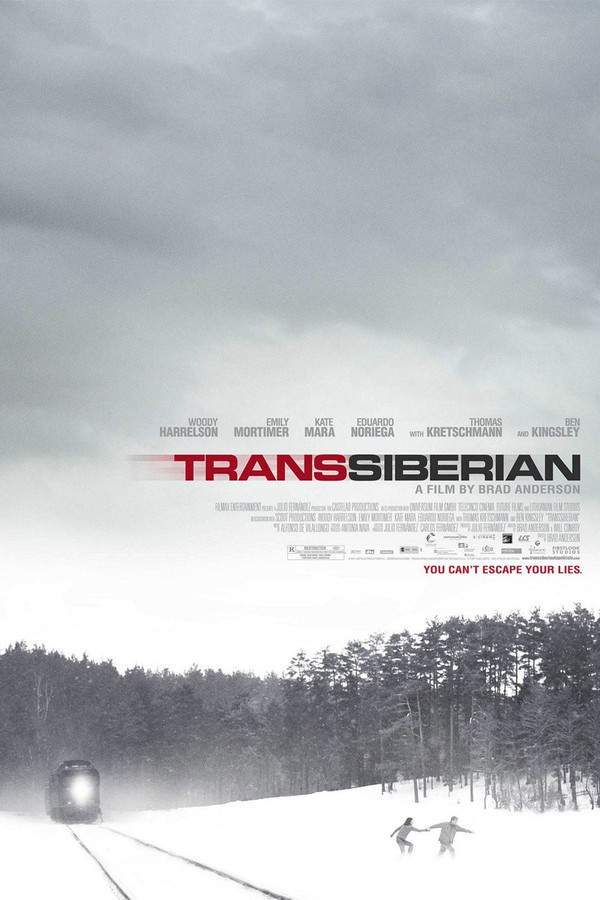


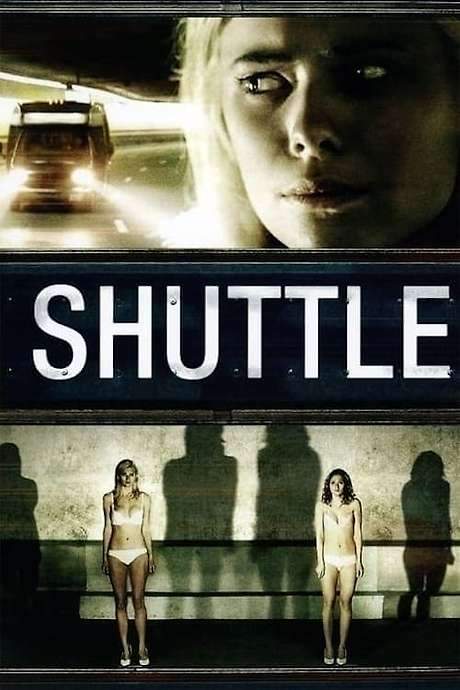

Featured on this page

What's After the Movie?
Not sure whether to stay after the credits? Find out!
Check out our other apps:

SAT Sphere
Build confidence for the Digital SAT.

Mori Atlas
Discover wild places worth protecting.

Luntero
Search smarter for a home in Amsterdam.

Plot Explained
Unravel movie endings and hidden clues.

Pokechamp
Dive into Pokémon data and battle logic.

Driving Theory
Get ready for your European theory test.

Movie Dust
Plan your next cinema trip with ease.

Musemap
Find art and culture as you travel.

Selkobase
Compare credentials before committing.

Local Manual
Turn an unfamiliar country into practical next steps.

Lernavi
Compare school systems before your next move.

GymRoam
Find a workout stop wherever your plans take you.
Explore Our Movie Platform
New Movie Releases (2026)
Famous Movie Actors
Top Film Production Studios
Movie Plot Summaries & Endings
Major Movie Awards & Winners
Best Concert Films & Music Documentaries
Movie Collections and Curated Lists
© 2026 What's After the Movie. All rights reserved.
Privacy Policy