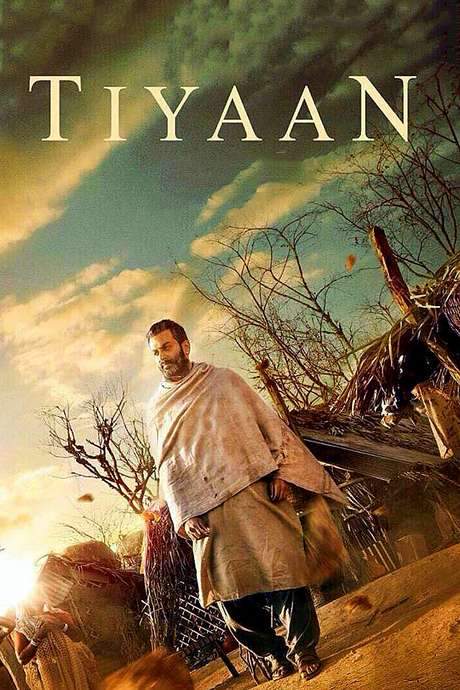
Tiyaan 2017


Directed by

Jiyen Krishnakumar
Made by

Red Rose Creations
Where to Watch Tiyaan
See current US streaming, rental, and purchase options for Tiyaan (2017) via JustWatch.

Streaming availability powered by 
Tiyaan Plot Summary
Read the complete plot summary and ending explained for Tiyaan (2017). From turning points to emotional moments, uncover what really happened and why it matters.
Pattabhiraman Giri, Indrajith Sukumaran, a respected Malayali Brahmin teacher living far from home in North India, spends his days guiding Sanskrit aspirants and earning the trust of the village with his quiet wisdom. He shares a simple life with his wife, Amba, Ananya, and their daughter, Arya, Nakshatra Indrajith, in a house built by the ancestors of Giri’s people, a lineage tied to the Adi Shankara tradition and a notable land parcel tied to old power. The home sits on land with a well that never dries, a sacred water source that nourishes the entire community and a symbol of the balance Giri tries to maintain between tradition, duty, and modern pressures.
Across the way, a powerful, manipulative figure, Mahashay Bhagavan (a godman at the center of a growing land-movement), wants Giri to move out so he can convert the space into an ashram and leverage it for the interests of a local land mafia. The godman’s influence runs through a network of followers who believe in miracles even when the truth feels murkier than the smoke of a public spectacle. Giri’s steadfastness earns him respect, but it also puts a target on his back as the godman’s men scheme to take control of the land and the surrounding resources.
An unnamed middle‑aged man warns Giri that rebellion against the godman will come with grave consequences, yet Giri refuses to bow. He is urged to seek help from above—“look upwards to the fire on the hill”—an instruction that hints at forces larger than any mortal plan. The godman’s dirty tricks grow bolder, and tragedy strikes when Arya is poisoned; the young girl dies, and the sorrow threatens to fracture the family and the community that depends on Giri’s steady presence.
As fear spreads, Giri’s allies and friends begin to turn away, taken in by the godman’s fake miracles and the rhetoric of power. The godman and his men launch a nocturnal assault on Giri’s home, attempting to force him from his land. Though the attackers wield guns and intimidation, the house remains standing—its walls absorbing the blows while the well keeps faith with the people who rely on it. In his quest for answers about the mysterious helper, Giri ascends toward the hill, hoping to find the truth, but the search leaves him empty-handed.
Giri learns from Jameel Askari, Shine Tom Chacko that the unknown liberator is Azlan Muhammed, who once lived in Mumbai and was a priest who stood for nonviolence and healing. Azlan’s backstory unfolds through loss and violence: his sister Jaseela—the target of a violent assault—is left gravely wounded after a conflict involving a ruthless don, Khan Sahib, Ranjeet Bedi. Azlan’s wife, Parineeti Adve, Mridula Sathe, and his sister die protecting him, while Azlan survives with a heart that seems to beat on the other side of the chest, hinting at a deeper, almost miraculous destiny.
Azlan’s arc moves beyond personal revenge. With the blessing of a priestly figure who has ties to Bhagavan, a deadly antagonist named Ramnath Gujjar, Amit Kumar Tiwari, launches a pre-dawn assault on Azlan’s people. The onslaught claims Parineeti, Jaseela, and his wife, even as Azlan himself is gravely wounded. Yet his survival is not only physical; it becomes spiritual: his heart’s position and his encounter with human cruelty drive him to continue a journey that tests his faith and his sense of duty. He first escapes into the desert, then is rescued by a traveling group of yogis—ascetic travelers who guide him toward a wider sense of dharma and a clearer sense of purpose.
Azlan’s path toward enlightenment becomes a weapon in its own right. He moves as a living instrument of dharma, carrying a promise to protect the vulnerable and to resist the corruption that has found root in power, money, and fear. His appearances anchor a broader struggle between truth and illusion as the godman’s own visions begin to betray him. A frightening vision of Vasundhara Devi, a figure associated with Bhagavan’s greed and fall, haunts him, signaling that the cycle of deception may be closing in on those who abuse faith for profit.
As Bhagavan attempts to showcase his supposed power to a crowd driven by investors, Giri’s own growing abilities become a counterpoint. When Bhagavan asks Giri to demonstrate the same miracle‑like force, he falters under the dawning realization that Azlan’s presence—his steadfast courage and his example of selflessness—weakens Bhagavan’s grip on the people. In a tense moment of conviction, Bhagavan burns from within, unable to locate his own “remote” to control the crowd and the narrative, and he collapses in the wake of his sins.
The shared visions of two lookalikes—ancient rivals in a long-ago conflict—recur for both Baba (the godman) and Giri. The narrative hints at an old war narrative tied to the Battle of Raichur in 1520 A.D., where two soldiers who could be brothers fought side by side. These dreams connect their present and past selves, suggesting that the fight for justice, integrity, and honor is not merely political or personal, but a cyclical test of character passed only by those who choose to fight for a higher good.
Across this sprawling tale, the film threads themes of tradition versus exploitation, the value of community resources like the well that sustains a village, and the redemptive potential of courage in the face of corruption. It follows Giri’s transformation—from a revered teacher to a figure who discovers a deeper reservoir of inner strength, one that allows him to stand against a godman’s machinations and to defend those who cannot defend themselves. Throughout, the cast—led by the voices and presences of the figures above—serves to illuminate a story about belief, power, and the enduring pull of dharma in a world where faith is both life and weapon.
Tiyaan Timeline
Follow the complete movie timeline of Tiyaan (2017) with every major event in chronological order. Great for understanding complex plots and story progression.
Giri's peaceful life as a Sanskrit teacher
Giri is a respected Brahmin teacher in North India who educates Sanskrit and upholds his family values. He enjoys the trust of villagers and is tied to a house with a well built by Adi Shankara's followers. He leads a simple, scholarly life with his wife Amba and daughter Arya.
A mysterious warning challenges Giri
An unknown middle-aged man warns Giri about the consequences of opposing the godman Mahashay Bhagavan. Giri weighs the risk but resolves to stand his ground against the powerful antagonist. The warning foreshadows the deadly conflict to come.
Tragedy strikes as Bhagavan poisons Giri's daughter
The godman Mahashay Bhagavan poisons Giri's daughter, leading to her death. The loss shakes Giri and distances his supporters, who fall under the godman’s influence. The tragedy intensifies the battle over land and power.
Night confrontation: demand to leave
Bhagavan and his followers come to Giri at night and demand that he abandon his land and house. He is warned that only someone brave enough to kill a Brahmin could seize it. The confrontation marks a turning point as public fate hinges on Giri’s resolve.
Attacks on the house and isolation
After multiple failed attempts to scare him away, Bhagavan’s troop attacks Giri's home with armed men. The assault forces him to relocate temporarily, and he is forbidden from entering his own house. The defense strengthens Giri's resolve to fight the godman.
Giri seeks the mysterious ally on the hill
Giri climbs the hill, hoping to meet the unknown man who warned him. He finds no one there, and Jameel explains that the stranger is Azlan Muhammed, a respected priest from Mumbai. The revelation reframes the struggle as a larger, personal vendetta against the godman.
Azlan Muhammed's backstory and the deadly feud
Azlan Muhammed is introduced as a principled priest whose peaceful life is shattered when a rowdy attacks his sister Jaseela and a don, Khan Sahib, escalates violence. Ramnath Gujjan, backed by Bhagavan, plots to kill Azlan and seize his land. Azlan survives the onslaught, ultimately killing Gujjan and setting out to follow a wiser, dharma-guided path.
Azlan's desert pilgrimage and transformation
Wounded and defeated, Azlan travels through the desert with yogis who teach him patience and dharma. The journey reshapes him into a living weapon devoted to justice and protection of his people. He continues his pilgrimage across places, gaining strength and clarity.
Kisa Gotami moment: revival of the dead daughter
A mother arrives at Bhagavan's ashram with the dead child, asking for a miraculous revival. Giri sits outside Bhagavan's ashram and, by touching the child's body, brings her back to life. The miracle shifts public perception in Giri's favor and weakens Bhagavan's grip on power.
Azlan's dramatic entrance reconnects the struggle
As Bhagavan's power wanes, Azlan makes a dramatic entrance during a confrontation with Bhagavan’s forces. Giri realizes the expansion of their alliance and the potential to reclaim justice. The godman's power begins to crack under Azlan’s presence.
Godman’s downfall: visions and self-destruction
Bhagavan pushes to demonstrate fake miracles for his investors, but a vision of Azlan undermines him. He cannot locate his remote device during a stampede and burns himself in despair, paying for his sins. The crowd reels as Bhagavan's power collapses and Giri's influence rises.
Prophetic dreams of Raichur and brotherly fate
Baba and Giri share recurring dreams about an ancient Battle of Raichur in 1520 A.D., featuring two lookalikes as two brothers fighting side by side. The visions hint at a shared destiny and mutual support across generations. The two lives seem fated to unite in their fight for dharma.
Tiyaan Characters
Explore all characters from Tiyaan (2017). Get detailed profiles with their roles, arcs, and key relationships explained.
Pattabhirama Giri (Indrajith Sukumaran)
A respected Malayali Brahmin teacher living in a North Indian village, he guides Sanskrit aspirants and earns the trust of the community with quiet wisdom. He defends ancestral land and a sacred well, balancing tradition with modern pressures. His steadfastness makes him a focal point in the struggle against the godman’s schemes.
Amba (Ananya)
Wife of Giri, she shares a simple, rooted life with their daughter Arya. She remains a steady presence for her family as violence and manipulation threaten their world. Her strength lies in nurturing the family amid rising tensions.
Arya (Nakshatra Indrajith)
The couple’s young daughter whose poisoning becomes a catalyst for tragedy and resolve. Her death tests the family and fuels the community’s resolve to resist exploitation. Arya’s memory underscores the cost of the fight for justice.
Jameel Askari (Shine Tom Chacko)
An ally who reveals the identity of the liberator Azlan Muhammed and helps connect Giri with a larger resistance. He acts as a messenger and facilitator within the village’s struggle. His role is pivotal in illuminating a path toward truth and resistance.
Azlan Muhammed (Aslam Mohammad) (Prithviraj Sukumaran)
A former Mumbai priest who stands for nonviolence and healing. His backstory includes loss and violence, shaping him into a symbolic liberator who defies the godman’s power. His survival and guiding presence propel the fight toward a higher moral purpose.
Parineeti Adve (Mridula Sathe)
Azlan’s wife, who sacrifices herself to protect him during a pre-dawn assault. Her death underscores the personal costs of the broader battle against exploitation. Her memory motivates Azlan and the community to persevere.
Jaseela (Manasa Radhakrishnan)
Azlan’s sister, who becomes a target in the conflict and dies protecting her brother. Her sacrifice highlights the collateral cost of power struggles and the personal stakes for those close to Azlan. Her memory fuels the resolve of those opposing the godman.
Khan Sahib (Ranjeet Bedi)
A ruthless don whose influence and violence drive the assault on Azlan’s people. He represents the corrupt network that profits from fear and exploitation. His actions catalyze the heroism and resistance that unfold in the village.
Ramnath Gujjar (Amit Kumar Tiwari)
A deadly antagonist whose pre-dawn assault aims to seize control of the land. His role embodies the raw violence that accompanies greed and political manipulation. His actions escalate the conflict and test the villagers' courage.
Vasundhara Devi (Padmapriya Janakiraman)
A figure associated with Bhagavan’s greed and fall, she appears as a symbolic presence tied to the manipulation of power. Her presence amplifies the critique of when faith and wealth corrupt leadership. She embodies the seductive pull of capital within the sacred space.
Bhagavan (Godman) (Unknown Actor)
A powerful godman whose miracles and rhetoric lure followers and fuel a land-movement. His dirty tricks and desire for control drive much of the conflict, including the use of fear to manipulate communities. Ultimately, his own dependence on a controlling 'remote' contributes to his downfall as truth surfaces.
Tiyaan Settings
Learn where and when Tiyaan (2017) takes place. Explore the film’s settings, era, and how they shape the narrative.
Time period
Present day
The events unfold in contemporary times, where a Brahmin teacher defends ancestral land against a godman’s exploitation. The narrative threads in a distant historical reference to frame cycles of justice and dharma across generations. The plot intertwines village life with broader journeys that span the desert and urban backstory in Mumbai.
Location
North India village, Mumbai, desert
The story centers on a North Indian village built around a sacred, ever-running well and ancestral land. It moves between the village and occasional sequences set in Mumbai and a desert, reflecting the broader reach of the conflict. The setting highlights the tension between traditional life and modern pressures from land developers and religious figures.
Tiyaan Themes
Discover the main themes in Tiyaan (2017). Analyze the deeper meanings, emotional layers, and social commentary behind the film.
🕉️
Dharma
The film probes dharma as duty and moral right, contrasting Giri's steadfast adherence to tradition with the godman’s manipulation of faith for personal gain. Courage and integrity emerge as a test against corruption, shaping the community’s fate. Azlan’s path embodies nonviolence and healing, challenging violence as a solution.
🏛️
Power
Religious authority is co-opted for wealth and control through a land-movement and miracle-based politics. Followers are swayed by spectacle while real resources—the land and the well—become the center of struggle. The conflict pits Bhagavan’s exploitation against the community’s defense of their livelihood.
⚖️
Justice & Courage
Giri’s resistance and Azlan’s sacrifices highlight the resilience of ordinary people facing intimidation. The story threads themes of community defense, personal sacrifice, and the pursuit of a higher good beyond vengeance. Through trials, characters seek a balance between tradition and justice.

Coming soon on iOS and Android
The Plot Explained Mobile App
From blockbusters to hidden gems — dive into movie stories anytime, anywhere. Save your favorites, discover plots faster, and never miss a twist again.
Sign up to be the first to know when we launch. Your email stays private — always.
Explore the mobile appTiyaan Spoiler-Free Summary
Discover the spoiler-free summary of Tiyaan (2017). Get a concise overview without any spoilers.
In the quiet stretches of North India, a centuries‑old house stands as a living testament to a lineage of scholars and saints. The land, nourished by a perennial well that feeds the surrounding village, hums with the echoes of ancient Vedic chants while the modern world presses ever nearer. The atmosphere balances reverent tradition with an undercurrent of unease, as whispers of change drift through the fields and the distant hills.
Pattabhiramagiri is a learned Brahmin teacher whose days are spent imparting Sanskrit to eager students. At home, his gentle wife Amba tends to the family with steady devotion, and their bright‑spirit daughter Arya shares in the quiet rhythms of their heritage. Their lives are rooted in the house built generations ago by followers of Adi Shankara, a place that feels as much a character as any person, embodying both history and hope for the community that gathers there.
A charismatic figure known as Mahashay Bhagavan arrives with the promise of a new spiritual center, envisioning an ashram that would reshape the landscape and claim the ancestral home. As his influence spreads, Pattabhiramagiri finds himself confronting an inexplicable curse that renders his once‑steady world uncertain. In this moment of vulnerability, an enigmatic ally—hinted at through veiled counsel and unexpected assistance—steps forward, offering a glimmer of resolve amid the gathering storm.
The film weaves together mythic resonance, rustic realism, and a subtle tension between devotion and dominion. Its tone is contemplative yet charged, inviting viewers to linger on the delicate balance between preserving the past and confronting forces that demand transformation. Through the interplay of tradition, family bonds, and the looming shadow of power, the story teases a journey where faith, courage, and mystery intertwine, leaving the audience eager to discover how the ancient house and its caretakers will navigate the tide that threatens to reshape their world.
Featured on this page

What's After the Movie?
Not sure whether to stay after the credits? Find out!
Check out our other apps:

SAT Sphere
Build confidence for the Digital SAT.

Mori Atlas
Discover wild places worth protecting.

Luntero
Search smarter for a home in Amsterdam.

Plot Explained
Unravel movie endings and hidden clues.

Pokechamp
Dive into Pokémon data and battle logic.

Driving Theory
Get ready for your European theory test.

Movie Dust
Plan your next cinema trip with ease.

Musemap
Find art and culture as you travel.

Selkobase
Compare credentials before committing.

Local Manual
Turn an unfamiliar country into practical next steps.

Lernavi
Compare school systems before your next move.

GymRoam
Find a workout stop wherever your plans take you.
Explore Our Movie Platform
New Movie Releases (2026)
Famous Movie Actors
Top Film Production Studios
Movie Plot Summaries & Endings
Major Movie Awards & Winners
Best Concert Films & Music Documentaries
Movie Collections and Curated Lists
© 2026 What's After the Movie. All rights reserved.
Privacy Policy