What Is The Visit About?
The premise of The Visit in 338 words, with nothing given away. The full story follows below.
The story unfolds in a once‑thriving village whose streets now echo with the quiet desperation of a community left hollow after the local factory shut its doors. Empty shopfronts and faded signs tell the tale of a place that once pulsed with industry, now clinging to the memory of better days while the sky over the fields seems perpetually overcast. The mood is a careful blend of melancholy and a faint, restless hope that something—anything—might reignite the stalled rhythm of everyday life.
Into this landscape arrives Karla Zachanassian, a strikingly affluent woman whose childhood was shaped by the very same town. Decades ago, as a teenager, she bore a child fathered by the local shopkeeper Serge Miller and was cast out when he refused to acknowledge the responsibility. Returning now as a magnate, Karla expects a grand reception, confident that her wealth could restore the village to its former glory. Her arrival is marked by elegant ceremonies, red‑carpet welcomes, and the palpable anticipation of a community yearning for salvation through riches.
The townspeople respond with a mixture of reverence and cautious calculation. The promise of a substantial financial gift hangs over the streets like a bright, unreachable star, stirring both excitement and a subtle, uneasy tension. As the villagers contemplate the possibilities that wealth could bring—new homes, modern comforts, a revived local economy—they are also forced to confront the shadows of a past that never fully faded. Karla’s presence becomes a catalyst, exposing the fragile balance between longing for prosperity and the moral questions that such a bargain inevitably raises.
Amid the swirling currents of hope and doubt, a younger resident named Anya quietly observes the unfolding drama, her own aspirations and vulnerabilities reflecting the town’s broader struggle. The atmosphere is thick with unspoken expectations, delicate alliances, and the sense that every smile could be masking a deeper, unresolved conflict. The stage is set for a tense exploration of how far a community will go when the promise of wealth beckons from the edge of its collective conscience.
What Happens in The Visit?
The complete story of The Visit, from the first scene to the last, in 662 words (about 3 minutes). Spoilers throughout. Names in the text link to 1 cast member page.
Spoilers ahead
Karla Zachanassian, Ingrid Bergman, a extraordinarily wealthy woman, returns to the decaying village where she grew up. Twenty years earlier, at the age of 17, she was impregnated by the local shopkeeper Serge Miller, who faced a trial in which he denied paternity and bribed two men to testify that they had slept with Karla. This cascade of lies ruined her credibility and ensured that Serge would not be held accountable for the consequences of his actions. Now, with the town’s economy languishing since the factory closed, the once-quiet streets buzz with a new opportunity: the chance to be saved through wealth.
At a formal reception in her honor, Karla presents a staggering offer: she will give the town two million dollars—one million for the town itself and one million to be divided among its people. The condition is stark and chilling: Serge must be put to death. The townsfolk react with indignation at first, yet their initial moral posture quickly fades into calculated ambition as they weigh the lure of money against the life of a man they once knew. The economic despair that has gripped the community feeds their temptation, and they begin to toy with the idea of testing the limits of Karla’s generosity.
To entice the townspeople further, Karla begins to flood the market with luxury goods on credit. Expensive items—televisions, furniture, designer clothes—pour into the town, offered without down payment and with no immediate obligation to repay. The influx of opulence stirs both excitement and unease, as people imagine a revitalized future built on material abundance. Amid this shifting moral weather, Karla forges a bond with Anya, a young and naïve girl who is entangled in a clandestine affair with the much older, married chief of police. Karla sees in Anya a younger version of herself—ambitious, vulnerable, and ripe for manipulation.
The town’s leadership—the mayor and the police leadership—succumbs to Karla’s influence. They are drawn into the seductive logic of prosperity, and the old social fabric begins to fray as people rationalize the prospect of murder for money. A dramatic turn comes when Karla’s pet panther escapes, transforming a routine manhunt into a chorus of fear and excitement that exposes the town’s underlying readiness to do whatever it takes for a windfall. Serge, already isolated by rumor and betrayal, discovers that his own fate now rests in the hands of a community that has grown hungry for wealth.
As pressure mounts, the council expels Serge and then reinstates the death penalty, assembling a makeshift, kangaroo court in the town square. The mayor and the police leadership offer Serge a chance to end his life by suicide, but he refuses, choosing the legal stage of a trial to face whatever judgment the town deems appropriate. The court finds him guilty and sentences him to death, a verdict that feels like a theatrical culmination of the town’s moral erosion.
In a shocking reversal, Karla hands over two one-million-dollar cheques to the crowd—an explicit display of how far the town has wandered from its former ethos. Yet instead of executing Serge, she halts the hanging and speaks a chilling truth: the townspeople must live with the guilt of their murderous choice for the rest of their lives, and Serge must live with the knowledge that his wife, friends, and neighbors would have killed him for money. The moment is a stark meditation on complicity, temptation, and the price of prosperity.
With the town reminded of its own capacity for cruelty, Karla departs, but not without ensuring Anya’s escape from a fate tied to the old power structure. She provides Anya with enough money and a car to secure her future, a final act that underscores Karla’s complex blend of control, pity, and reinvested power. The story leaves the village to contend with the consequences of choice—whether wealth can truly redeem a community or merely expose the depths to which it is willing to descend in pursuit of a brighter future.
The Visit Timeline: Every Key Event in Order
14 key events in the order they happen, from “Karla's past: pregnancy and trial” to “Anya's escape funded by Karla”. 14 events name a place, across 13 locations.
- 1
Karla's past: pregnancy and trial
Twenty years earlier, Karla grew up in the village and became pregnant by Serge Miller when she was 17. At Serge's trial, he denies paternity and bribes two men to testify they slept with Karla, destroying her credibility. The town brands her as an outsider and she is forced to flee.
When:20 years ago Where:local court and village streets
- 2
Karla is driven out of town
Her exile is sealed as the townspeople shun her, branding her as the town's shame. She vanishes from the center of village life, leaving behind a stain on the community's memory.
When:20 years ago Where:village outskirts
- 3
Karla returns to the village
Karla returns to the village as a wealthy benefactor, welcomed with curiosity and guarded hope. The old town anticipates a windfall, while jealousy and fear simmer beneath polite smiles. Her arrival marks the start of a chilling moral reckoning for the townspeople.
When:present day Where:village and hotel
- 4
Karla offers money on one condition
At a reception in her honor, Karla offers to fund the town with 2,000,000 dollars, split between the town and its people, on one condition: Serge must be put to death. The proposal unsettles the crowd, who weigh money against violence and the price of a life. Karla watches from her hotel, gleefully savoring the power she wields.
When:present day Where:reception hall and Karla's hotel
- 5
Town tests Serge's shop on credit
Pushed by the prospect of money, the townspeople begin to demand expensive items from Serge's shop on credit. Serge struggles to manage the rapidly growing debt and the unease of defying Karla's terms. The scene foreshadows how quickly greed overrides justice.
When:present day Where:Serge's shop and town streets
- 6
Karla floods the town with luxury on credit
Karla floods the town with luxury goods—televisions, furniture, and designer clothes—and offers them on credit with no down payment. The spectacle seduces residents who imagine a better life funded by others’ money. Her calculated generosity tightens the town's dependence on her wealth.
When:present day Where:town marketplace and shops
- 7
Anya becomes Karla's confidante
Karla befriends Anya, a naïve young woman involved with the much older, married chief of police. Karla sees a reflection of her younger self and begins to manipulate Anya to influence local power. Anya's vulnerability makes her a pivotal pawn in Karla’s plan.
When:present day Where:Anya's circle and town
- 8
Serge seeks help from corrupt officials
Serge appeals to the mayor and chief of police for protection, but they have already been seduced by Karla's offer and become complicit in the scheme. He realizes too late that he has traded credibility for survival. The town leadership blurs the line between law and loyalty to money.
When:present day Where:town hall and offices
- 9
Panther escape and lynch mob
When Karla's pet panther escapes, the town descends into a frenzied search that quickly turns into a lynch mob targeting Serge. Even Serge's wife withdraws her support, revealing how quickly personal bonds crumble under greed. The mob's fury feels righteous to them, but it is driven by money rather than justice.
When:present day Where:town outskirts and streets
- 10
Council reinstates death penalty
The town council, which had expelled Serge, reinstates the death penalty and organizes a kangaroo court in the town square. The ritualized trial enshrines the crowd's collective guilt and redefines law by the mob's appetite for punishment. Serge is given the option to die by suicide, which he rejects.
When:present day Where:town square
Show the other 4 events of The Visit Hide the last 4 events
- 11
Serge is found guilty and sentenced
In a formal judgment, Serge is found guilty and sentenced to death, cementing the crowd's readiness to sacrifice life for money. The courtroom-like atmosphere contrasts with the lawlessness of the mob's impulse. The episode underscores how wealth has corrupted justice.
When:present day Where:town square and kangaroo court
- 12
Karla reveals the price of greed
Karla immediately hands over two one-million-dollar cheques to the cheering crowd, presenting a stark calculus: money wins, murder secures profit. Yet she stages a reversal, stopping the execution and warning the town that they will live with guilt for the rest of their days. She also makes clear that Miller will bear the burden of his wife's scheming and complicity.
When:present day Where:town square
- 13
Karla's moral statement and departure
Karla halts the execution with a moral rebuke, forcing the townspeople to confront the consequences of their actions. She declares that the crime will haunt them forever, and that Miller must bear the burden of knowing his wife and neighbors were willing to kill for wealth. After this confrontation, she begins to leave the town, ending the scheme on her own terms.
When:present day Where:town square and roads
- 14
Anya's escape funded by Karla
Before departing, Karla gives Anya enough money and a car of her own to escape the fate that awaits her in the town. Anya's future is spared from the cycle of corruption that consumed others in Karla's wake. Karla's final act serves as both mercy and warning.
When:present day Where:Anya's home and outskirts
Who Are the Main Characters in The Visit?
6 characters, among them Karla Zachanassian (Ingrid Bergman), Serge Miller (Anthony Quinn) and Mayor (Ernst Schröder): who each one is and the part they play in the story. Every profile links to the actor’s page.
-

Karla Zachanassian (Ingrid Bergman)
Played by Ingrid Bergman
A immensely wealthy outsider who returns to her hometown to test its morals. She manipulates the town using money, watching with gleeful detachment as the villagers’ sense of justice decays. Her calculated cruelty exposes how power can corrupt communal values.
- 💎 Wealth
- 🗝️ Power
- 🧠 Manipulation
-
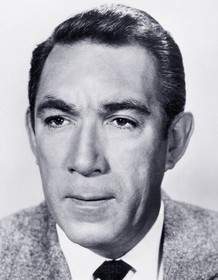
Serge Miller (Anthony Quinn)
Played by Anthony Quinn
The former shopkeeper whose past with Karla sets the plot in motion. He clings to a sense of pride, denies paternity, and misreads the town’s hunger for wealth as support. His fate is sealed by the town’s transactional morality and fear of losing prosperity.
- 💔 Pride
- 🪙 Downfall
- ⚖️ Injustice
- M(
Mayor (Ernst Schröder)
Played by Ernst Schröder
The town’s corrupt official who enables Karla’s scheme and rationalizes the mob’s actions. He embodies how political power can be bought and used to bend the truth. His leadership exposes a community that values money over due process.
- 🏛️ Authority
- 🤝 Corruption
- ⚖️ Complicity
- PC
Police Captain Dobrik (Hans Christian Blech)
Played by Hans Christian Blech
The lawman who becomes entangled in Karla’s manipulation, moving from authority to complicity. He embodies the lure of wealth and personal risk that corrupts justice. He plays a central role in enforcing the mob’s will.
- 🛡️ Authority
- 💰 Corruption
- 💔 Betrayal
- A(
Anya (Irina Demick)
Played by Irina Demick
A young, naïve woman who becomes involved with the town’s power dynamics through her affair with the married police chief. She represents innocence caught in a system driven by money and desire. Anya’s fate highlights the personal costs of moral compromise.
- 💫 Naivety
- ❤️ Forbidden Love
- 🕊️ Freedom
-

Mathilda Miller (Valentina Cortese)
Played by Valentina Cortese
Serge’s wife who is swept up in the town’s moral collapse and the social gossip surrounding the affair. Her perspective reflects how relationships fracture under pressure and greed. Her loyalty shifts as the town’s priorities shift toward wealth.
- 💔 Wife Betrayal
- 💎 Wealth
- 🤝 Loyalty
Where and When Is The Visit Set?
The Visit is set in Decaying European village. Here is why the place matters to the story.
Where
Decaying European village
A bleak, economically depressed village after the local factory closed. The town is filled with shuttered shops, crumbling buildings and wary, morally compromised residents. Key locations include the town square, where the crowd can gather, and Karla's hotel overlooking the street.
- 🏚️ Decay
- 🏘️ Small Town
What Are the Themes of The Visit?
3 ideas the story keeps returning to, among them Greed, Mob Mentality and Justice and Guilt.
-
01
Greed
Karla’s immense wealth becomes a tool to bend the town to her will. The money exposes the town’s willingness to trade justice for financial gain. The populace stages a moral alarm that resolves around remuneration rather than truth. The film uses this to critique how wealth can corrupt communal ethics.
-
02
Mob Mentality
The villagers shift from righteous anger to collective complicity when money is offered. The crowd’s enthusiasm for expensive goods and the idea of punishment for Serge reveal how quickly people abandon due process for personal gain. The kangaroo court shows how social pressure can manufacture justice.
-
03
Justice and Guilt
The town’s choice to condemn Serge for money creates an ongoing guilt that haunts the community. Karla’s reversal at the end forces the townspeople to live with the consequences of their actions. The departure of Karla and the entrapment of Anya’s fate underscore that justice without integrity is hollow.
What Kind of Film Is The Visit?
Dark in tone, with steady pacing and a moderate story, going by the plot summary.
- Tone
- Dark
- Pacing
- Steady
- Story
- Moderate
- Intensity
- High
- Ending
- Ambiguous
A tense and morally corrosive drama that steadily builds a sense of dread as a wealthy woman's revenge plot exposes the greed and desperation of a decaying community, culminating in a chillingly ambiguous conclusion.
- tense
- oppressive
- cynical
- grim
- chilling
- morally ambiguous
- revenge
- corruption
- economic despair
- moral decay
Content notes: murder plot, psychological manipulation, suicide suggestion, kangaroo court, sexual transgression.
Quiz
How well do you remember The Visit? Test yourself on the story.