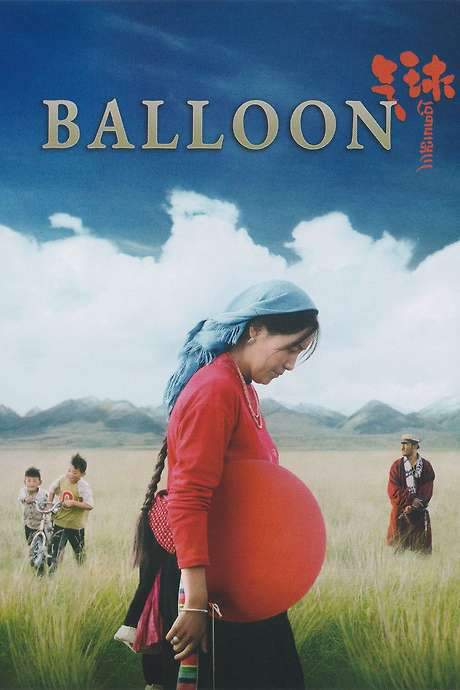
What Is The White Balloon About?
The premise of The White Balloon in 323 words, with nothing given away. The full story follows below.
In the bustling heart of Tehran, the eve of Nowruz pulses with colour, clamor and a collective hope for renewal. The city’s markets overflow with stalls, lanterns and the chatter of shoppers whose lives intersect for a fleeting moment. Within this lively tapestry, a modest family navigates the holiday’s promise: a mother cautious with the household’s limited funds, an older brother tasked with keeping the family’s routine in balance, and a seven‑year‑old girl whose simple wish—to bring home a bright goldfish—gleams like a tiny beacon amid the seasonal rush.
Razieh carries that longing with a blend of stubborn optimism and childlike wonder. Entrusted with the family’s last spare note, she steps out from the familiar confines of her home into the teeming streets, the weight of her mission forming a quiet undercurrent to the market’s roar. Her mother, ever pragmatic, watches the scene unfold with a mix of affection and anxiety, aware that the small purchase could lend the family a splash of joy during the celebrations. Meanwhile, Ali, the pragmatic adolescent, offers a grounded counterpoint, reminding the household of the practical limits that Nowruz brings.
As Razieh moves through the labyrinthine alleys, the ordinary becomes a miniature odyssey. The market’s eclectic characters—a kindly shopkeeper, a wandering street performer, a young Afghan vendor with a cluster of balloons—dot her path, each encounter hinting at the kindness and unpredictability that colour everyday life. The film’s tone remains gently observant, letting the textures of Tehran’s streets and the subtle dynamics of the family breathe without resorting to drama.
Through its soft, lyrical lens, the story captures the delicate balance between desire and restraint, the quiet heroism of a child’s simple quest, and the communal spirit that quietly threads through a city poised on the brink of a new year. The narrative promises a heartfelt portrait of ordinary resilience, inviting the audience to linger in the moment where a tiny wish meets the vast, bustling world.
What Happens in The White Balloon?
The complete story of The White Balloon, from the first scene to the last, in 965 words (about 4 minutes). Spoilers throughout.
Spoilers ahead
It is the eve of the Iranian New Year, and the city of Tehran buzzes with color, noise, and expectation. In the crowded market, seven-year-old Razieh [Aida Mohammadkhani] and her mother [Fereshteh Sadr Orafaee] navigate a sea of stalls, trying to balance desire with practicality as they prepare for the celebrations. Razieh spots a bright goldfish in a shop and begins to urge her mother to buy it, dreaming of a festive splash more vibrant than the lean goldfish that fill their home pond. The scene is lively and fleeting, and the film carefully sketches how almost all of its main players drift through this market moment, their paths converging later in the story though they are not introduced to the audience just yet.
Back at home, Razieh’s enthusiasm clashes with her mother’s caution. The request for a new goldfish becomes a small test of patience and persuasion within a family under the pressures of the season. Razieh pleads with the faint hope that a bright little fish could brighten their Nowruz, while her older brother Ali [Mohsen Kafili] returns from a quick shopping errand with a reminder that the family’s funds are limited. Ali’s practical voice—he had asked for shampoo but ended up with soap—speaks to a household where every purchase must be weighed against the year’s tighter budget. Razieh, stubborn and hopeful, tries to sway her mother by dangling a balloon as a tempting bribe to win her favor, and in desperation, the girl’s family entrusts her with their last 500 toman banknote, asking her to bring back the change and the promised treasure of a festive goldfish.
Armed with an empty glass jar and a stubborn will, Razieh sets off toward the fish shop, and the journey becomes a miniature odyssey. Along the way, she loses the money not once but twice, each time in a different, almost fateful encounter. First, an encounter with a snake charmer—a moment of danger and curiosity that suggests the market’s many possible paths, including the presence of a snake charmer portrayed by [Hasan Neamotolahi]. Then, as Razieh moves through a narrow alley toward the shop, she drops the money through a grate at the entrance of a store that has closed for the New Year’s celebrations, throwing the quest into uncertainty once more. The camera follows Razieh’s small steps and the big consequences of a child’s single mistake in a city that never truly slows down for holidays.
Ali joins Razieh again in the effort to recover the lost money, and the pair keeps meeting a chorus of neighbors and strangers who punctuate their journey. A kind older woman at the fish shop, the shop owners nearby, and even an Iranian soldier [Mohammad Shahani] cross their path as they scramble to retrieve what seems out of reach. Each encounter adds texture to the day’s mission, turning a simple errand into a tapestry of everyday life and shared humanity in a city on the cusp of celebration. The mood remains compassionate and observant, never sensational, as the siblings’ persistence becomes a quiet social drama rather than a melodrama.
The turning point arrives in the most unlikely form of practical help: a young Afghan street vendor selling balloons [Aliasghar Smadi], who carries his colorful wares on a wooden stick with only a few balloons left. The trio—Razieh, Ali, and the Afghan boy—recognize that with the stick they cannot retrieve the money by brute force alone. Ali proposes a clever solution: they attach a piece of gum to the bottom of the stick as a makeshift hook. The plan requires a moment of patience and a bit of luck, because Ali must first leave to buy gum and then return, only to find that the Afghan boy has left Razieh briefly by the grate. The mood shifts from frenzied effort to a cooperative, problem-solving spirit as the Afghan boy returns with his stick and a single remaining white balloon, along with a packet of chewing gum bought for the group.
With renewed hope, the children affix gum to the stick and extend it through the grate, coordinating every tiny movement to retrieve the money that has haunted them for hours. The moment is understated yet electric, a small triumph born from teamwork, ingenuity, and the shared aim of keeping Nowruz intact for Razieh’s family. The scene lingers on the tension of what seems almost miraculous, but above all it remains a quiet record of everyday resilience in the face of practical obstacles.
As the film draws toward its close, the focus shifts away from Razieh and Ali and settles on the Afghan boy, who sits by the grate with his stick and his white balloon, a poignant symbol of a child who has helped, and who will carry the day’s memory forward. The calendar marks the start of the new year, 1374 in the Iranian tally, and the boy rises to leave, his quiet presence lingering as Razieh and Ali return home with the now-realized hope of a goldfish and a small celebration. The stillness of that final image—an intimate portrait of a chance connection that brightened a family’s day—speaks as much about community, luck, and the slow, tender cadence of ordinary life as any spoken line.
In this intimate micro-epic of a single afternoon, the film crafts a humane portrait of ordinary people navigating parental authority, childhood longing, and the social orchestra of a city preparing for Nowruz. The scenes unfold with careful attention to detail—the textures of market life, the warmth of strangers who lend a hand, and the small, almost invisible acts of kindness that keep a family’s festive spirit alive. The result is a quiet, luminous work that respects its young protagonist while illuminating the broader currents of human connection that run beneath everyday transactions.
The White Balloon Timeline: Every Key Event in Order
12 key events in the order they happen, from “Nowruz-eve market scene” to “Ending shot: Afghan boy at the grate as Nowruz begins”. 12 events name a place, across 12 locations.
- 1
Nowruz-eve market scene
On the eve of the Iranian New Year, Razieh and her mother shop in a bustling Tehran market as color and noise fill the air. Razieh spots a goldfish and begs for it, hoping to celebrate Nowruz with a special gift. The scene also foreshadows several major characters who will appear later in the story.
When:Evening, Nowruz Eve Where:Tehran market
- 2
Home tension and the last money
Back home, Razieh's plea for the goldfish clashes with her mother's resolve. Ali returns from a shopping errand, adding to the household tension. The mother hands Razieh the family's last 500 tomans and sends her to fetch the change, setting the quest in motion.
When:Evening, Before Nowruz Where:Home
- 3
Razieh heads to the fish shop
Razieh sets off toward the fish shop with an empty jar, determined to secure the goldfish. The route passes familiar market corners and a courtyard where crowds gather for other New Year entertainments. Her mission is simple in intent but fragile in execution.
When:Late afternoon Where:From home to fish shop
- 4
First loss: money slips away to a snake charmer
On the way, Razieh loses the money during an encounter with a snake charmer, the coins slipping from her grip into the unpredictable crowd. The innocent mishap underlines the precariousness of a child's holiday wish. She presses on with renewed urgency.
When:Late afternoon Where:Market path near snake charmer
- 5
Second loss: money falls through a grate
As she nears her goal, Razieh drops the money through the grate of a shop closed for the New Year. Razieh and Ali frantically search the grate, hoping to retrieve the note. The bustling street around them continues, indifferent to their misfortune.
When:Late afternoon Where:Grate at a closed shop entrance
- 6
Seeking help from strangers
The siblings' attempts to recover the money bring them into contact with a kind older woman at the fish shop, nearby shopkeepers, and even an Iranian soldier. Each interaction adds texture to the film's portrayal of a community rallying around a child's quest. The money remains just out of reach.
When:Late afternoon Where:Fish shop vicinity and surrounding shops
- 7
An Afghan balloon vendor arrives
A young Afghan street vendor arrives with a three-balloon stick, offering help despite his own precarious position. His appearance introduces a hopeful thread into the otherwise tense scavenger hunt. The balloons symbolize the festive spirit of Nowruz.
When:Late afternoon Where:Street near market
- 8
Gum-assisted retrieval plan is born
The group devises a plan to attach chewing gum to the bottom of the balloon stick to retrieve the money from the grate. It marks a turning point from frustration to a clever improvisation born from shared effort. The sense of teamwork grows as the idea takes shape.
When:Late afternoon Where:Near the grate
- 9
Gum and sticks: a delay and a return
Ali leaves to buy gum but returns empty-handed, while the Afghan boy briefly steps away and then returns with his stick and a pack of gum. The group’s plan begins to gain momentum as they align their resources. The atmosphere shifts from desperation to cautious optimism.
When:Late afternoon Where:Market street
- 10
The retrieval succeeds
With gum attached to the end of the stick, Razieh, Ali, and the Afghan boy reach through the grate and pull the money back up. The immediate crisis is resolved and the siblings can turn toward the next step of their plan. The moment underscores the power of cooperation in a community.
When:Afternoon Where:Grate at the closed shop
- 11
Heading to buy the goldfish
Having retrieved the money, the siblings head toward the fish shop to complete the Nowruz gift. Their small victory is tempered by the film's broader focus on kindness and shared fortune.
When:Towards evening, Nowruz Eve Where:Fish shop vicinity
- 12
Ending shot: Afghan boy at the grate as Nowruz begins
The film ends with a still image of the Afghan boy sitting by the grate, watching Razieh and Ali depart with the fish. The scene lingers as Nowruz 1374 begins, and the boy eventually rises and walks away, leaving the viewer with a quiet sense of possibility.
When:1374 Nowruz start Where:Grate scene
Who Are the Main Characters in The White Balloon?
7 characters, among them Razieh (Aida Mohammadkhani), Mother (Fereshteh Sadr Orafaee) and Ali (Mohsen Kafili): who each one is and the part they play in the story. Every profile links to the actor’s page.
- R(
Razieh (Aida Mohammadkhani)
Played by Aida Mohammadkhani
A seven-year-old girl whose curiosity and persistence push the day forward. She haggles for the goldfish and navigates a maze of obstacles with a mix of naiveté and resolve. Her daring resolve to see the New Year celebration include small, clever gambits to get what she wants.
- 🧒 Child
- 💡 Curiosity
- 💪 Determination
- M(
Mother (Fereshteh Sadr Orafaee)
Played by Fereshteh Sadr Orafaee
Razieh’s mother embodies protective pragmatism, carrying the family’s last money and balancing desire with necessity. She shields her daughter from danger while making tough choices to survive the holiday. Her patience is tested by the daily grind and the pressure to secure a small happiness for their family.
- 👩 Parent
- 💰 Financial Strain
- 🏡 Family
- A(
Ali (Mohsen Kafili)
Played by Mohsen Kafili
Razieh’s older brother who is practical yet compassionate. He bristles at paying for the goldfish but ultimately helps Razieh in her quest, demonstrating loyalty and resourcefulness. His pragmatic approach often clashes with the girls’ impulsiveness, yet he remains a steady ally.
- 👦 Brother
- 🧭 Pragmatism
- 🎯 Determination
- BS
Balloon Seller (Aliasghar Smadi)
Played by Aliasghar Smadi
A young vendor who carries a wooden stick stacked with balloons. He becomes a pivotal helper, returning when needed and sharing his simple resources to aid Razieh and Ali. His presence highlights urban street life and moments of spontaneous generosity.
- 🎈 Balloon Vendor
- 🤝 Helpful
- 🛣️ Street Life
- OL
Old Lady (Anna Borkowska)
Played by Anna Borkowska
A kind, observant figure at the fish shop who strengthens the sense of community. She embodies the benevolent, small-scale generosity that can alter a child’s trajectory on a single day. Her brief interaction underscores how strangers become incidental guardians during Nowruz.
- 👵 Elderly
- 💖 Kindness
- 🏪 Shopkeeper
- S(
Soldier (Mohammad Shahani)
Played by Mohammad Shahani
An Iranian soldier they encounter in their network of daily travel. His presence adds a moment of authority and human connection within the city’s bustle. The encounter contributes to the day’s realism and emotional texture.
- 👮 Soldier
- 🧭 Authority
- SC
Snake Charmer (Hasan Neamotolahi)
Played by Hasan Neamotolahi
One of the figures drawing crowds in the courtyard, whose performance marks a boundary Razieh hesitates to cross. The mother’s warning and Razieh’s curiosity frame themes of tradition and restraint within the city’s festive chaos.
- 🐍 Snake Charmer
- 🧿 Superstition
Where and When Is The White Balloon Set?
The White Balloon is set in Tehran market, Fish shop, Courtyard with snake charmers and Home (Nowruz Eve, Iranian New Year, 1374). Here is why the time and place matter to the story.
When
Nowruz Eve, Iranian New Year, 1374
The action centers around Nowruz, the Iranian New Year, a time of festivity and renewal. The urban choreography—shopping, bargaining, and holiday preparations—highlights the contrast between celebration and poverty. The film closes as Year 1374 begins, stamping the events within a precise cultural moment.
Where
Tehran market, Fish shop, Courtyard with snake charmers, Home
The story unfolds in a bustling Tehran market on the eve of Nowruz. The market setting, with small shops and a lively crowd, frames Razieh and her mother’s struggle to secure a festive goldfish. A nearby courtyard where two snake charmers perform adds a vivid texture to the city’s traditions and daily life, while scenes of the family moving between home and commerce anchor the narrative.
- 🏙️ Tehran market
- 🐟 Fish shop
- 🧭 Street life
What Are the Themes of The White Balloon?
3 ideas the story keeps returning to, among them Hope, Kindness and Poverty.
-
01
Hope
A seven-year-old Razieh’s stubborn wish for a goldfish drives the day’s journey, illustrating how hope fuels determination. Her creative schemes and the family’s persistence turn small obstacles into stepping stones. The film frames hopeful resolve as a quiet, everyday strength in a crowded city.
-
02
Kindness
Strangers offer aid at crucial moments, bridging social gaps. The balloon seller, the old woman at the fish shop, and the Afghan street vendor contribute to the group’s effort to retrieve the money. These acts of generosity emerge amid scarcity, revealing the power of community.
-
03
Poverty
The family’s last 500 toman note becomes a focal point of tension and urgency. Money slips away through luck and mishap, forcing improvisation and risk. The film uses economic strain to reveal character, responsibility, and the cost of everyday desires.
What Kind of Film Is The White Balloon?
Hopeful in tone, with slow pacing and a straightforward story, going by the plot summary.
- Tone
- Hopeful
- Pacing
- Slow
- Story
- Straightforward
- Intensity
- Low
- Ending
- Happy
A gentle, observant film that patiently follows a child's small but determined quest, capturing the quiet resilience and unexpected kindness found in the rhythms of everyday city life.
- observant
- gentle
- hopeful
- compassionate
- patient
- innocent
- childhood
- family dynamics
- perseverance
- community
Content notes: child endangerment.
Quiz
How well do you remember The White Balloon? Test yourself on the story.
Where to Watch The White Balloon
Stream it on Criterion Channel. US availability and prices from JustWatch.
Stream 1
 Criterion Channel
 Streaming availability in the US, powered by