
The Virgin Spring 1960

Directed by
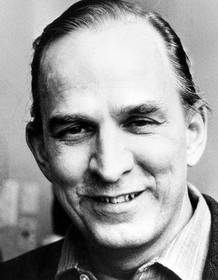
Ingmar Bergman
Made by

SF Studios
The Virgin Spring Plot Summary
Read the complete plot summary and ending explained for The Virgin Spring (1960). From turning points to emotional moments, uncover what really happened and why it matters.
In medieval Sweden, a prosperous Christian patriarch named Töre Max von Sydow tasks his daughter Karin Birgitta Pettersson with a day-long trek to carry candles to a distant church. She travels with her servant Ingeri Gunnel Lindblom, a pregnant woman who secretly worships the Norse deity Odin, adding a quiet tension to the journey.
As the two women ride through the forest, Ingeri grows fearful when they reach a stream-side mill. She urges Karin to turn back, but Karin presses onward alone, leaving Ingeri behind at the mill. At the mill, Ingeri encounters a one-eyed man who speaks of things beyond ordinary sight and sound. When Ingeri asks his name, he enigmatically replies that he has none “in these days.” He claims he can perceive truths others cannot, and when he makes sexual advances and promises her power, she flees in terror. > “in these days”
Meanwhile, Karin meets three herdsmen—two older men and a younger boy—and invites them to share her midday meal. The encounter soon turns violent and tragic: the two older men rape and murder Karin. Ingeri, having caught up with the group, witnesses the atrocity from a distance. The younger boy is left with Karin’s clothing, and his guilt weighs heavily on him; he even attempts to bury the body with dirt but abandons the effort and runs off with the others.
The three men unknowingly seek shelter at Töre’s home, where the tension rises as Karin’s mother, Märeta Birgitta Valberg, becomes suspicious when a goat herder offers to sell Karin’s clothes to her. That night, Töre confronts the unsettling truth, and Ingeri—returning and breaking down—tells him what happened. In a fit of rage, Töre resolves to punish the murderers at dawn. He fatally stabs one of the older men with a butcher knife, hurls the other into the fire, and kills the boy as well, while his wife watches in horror.
Töre and his household then join a search party to recover Karin’s body, led by Ingeri. Töre, overwhelmed by grief, breaks down and prays to God, even as he admits he cannot understand why such a thing would happen. He vows to build a church on the site of his daughter’s death. As Karin’s body is finally lifted from the ground, a spring mysteriously erupts from the spot where her head rested. Ingeri uses the water to cleanse herself, and Karin’s mother carefully washes the dirt from her daughter’s face, a quiet, haunting ritual that marks the end of the immediate tragedy while leaving the moral weight of the events to linger.
The Virgin Spring Timeline
Follow the complete movie timeline of The Virgin Spring (1960) with every major event in chronological order. Great for understanding complex plots and story progression.
Departure to deliver candles
Per Töre, a prosperous Christian, sends Karin with candles to the church, a day's journey away. Karin travels with her servant Ingeri, who is pregnant and secretly worships Odin. They begin their journey along the forest road toward the church.
Karin continues alone; Ingeri stays at the mill
Karin chooses to press on toward the church, leaving Ingeri behind at a stream-side mill. Ingeri remains fearful and unsettled, while Karin moves ahead alone. The separation marks a turning point as the forest closes in around them.
Ingeri encounters a one-eyed man
At the mill, Ingeri encounters a one-eyed man who says he has none in these days and hints that he can see and hear what others cannot. He asserts he can grant power if she accepts his gaze, and he makes advances; Ingeri flees in terror. The encounter foreshadows the dangers that lie ahead.
Karin meets the herdsmen
Karin meets three herdsmen two men and a boy in the forest. She invites them to share her midday meal and continues traveling with them. The encounter places Karin in a vulnerable position as she journeys with strangers.
Karin is raped and murdered; Ingeri witnesses
The two older men rape and murder Karin, and Ingeri, who has caught up to the group, witnesses the act from a distance. The violence takes place in the forest as night approaches. The event marks the shattering of Karin's journey.
Younger boy stays with the body
The younger boy is left with Karin's body and becomes wracked with guilt. He attempts to bury the body by sprinkling dirt but stops midway, and then runs away with the older men. The aftermath leaves him troubled and fearful.
Herders seek shelter at Karin's home
The three herders unknowingly seek shelter at the home of the murdered girl, Karin, where Märeta and Töre's household dwell. Their presence heightens suspicion in the family, though they remain unaware of the full extent of the tragedy. The home becomes a focal point for fear and rumor.
Clothes exchange heightens suspicion
During their stay, one of the goat herders offers to sell Karin's clothes to Märeta, who begins to suspect the worst. The exchange compounds the tension in the household and foreshadows impending confrontation. The family becomes fixated on the mystery surrounding Karin's disappearance.
Ingeri reveals the truth to Töre
Ingeri returns and breaks down, confessing to Töre that Karin was raped and murdered. She admits that she secretly wished for Karin's death out of jealousy, revealing her own conflicted feelings. Töre, shaken, listens as the intimate details unfold and plans begin to form.
Töre ambushes the murderers at dawn
At dawn, Töre decides to punish the murderers himself, stabbing one of the older men to death with a butcher knife and throwing the other into the fire. The act is swift and brutal, and his wife looks on in horror. The murder marks a descent into violent retribution.
Töre kills the boy
Töre also kills the boy, lifting him and hurling him against the wall, while his wife watches in horror. The brutal punishment completes the purge of Karin's murderers from the scene. The household is left in stunned silence after the violence.
Family searches for Karin's body
Töre's family and household set out into the countryside to locate Karin's body, with Ingeri leading the way. The search is solemn and grim as they move through the landscape in mourning. The quest underscores the community-wide impact of the tragedy.
Töre vows to build a church
Töre breaks down upon seeing Karin's body and calls upon God, vowing to build a church at the site of her death. He grapples with faith, vengeance, and responsibility in the wake of tragedy. The vow signals a transformation in his approach to the community and the tragedy.
Spring emerges and cleansing begins
As Karin's body is raised from the ground, a spring emerges from the spot where her head rested. Ingeri washes herself with the water while Karin's mother cleans the dirt from her daughter's face. The spring provides a stark symbolic counterpoint to the violence that preceded it.
The Virgin Spring Characters
Explore all characters from The Virgin Spring (1960). Get detailed profiles with their roles, arcs, and key relationships explained.
Karin (Birgitta Pettersson)
Karin is Töre's daughter, sent on a day's journey to deliver church candles. She interacts with the herdsmen at a meal, and her fate culminates in rape and murder by the two older men. Her death becomes the catalyst for the family's crisis and a reckoning with faith, justice, and vengeance.
Ingeri (Gunnel Lindblom)
Ingeri accompanies Karin and is pregnant with an out-of-wedlock child, secretly worshiping Odin. She experiences fear when confronted by the one-eyed man and later witnesses the assault from a distance. She reveals the rape and murder to Töre and confesses jealous feelings that influenced her wishes, revealing a complex moral state.
Töre (Max von Sydow)
Töre is a prosperous Christian patriarch who seeks justice for Karin's death. He vows to build a church at the site of the tragedy and ultimately murders the two older men and the boy involved. The siege of rage gives way to grief and prayer as he confronts the inexplicable nature of suffering.
Märeta (Birgitta Valberg)
Märeta is Karin's mother who senses something is wrong when the trio returns and later leads the household in seeking the truth. Her suspicion drives the investigation and frames the emotional core of the family’s response. She mourns Karin and participates in the collective search for answers.
Simon (Oscar Ljung)
Simon is the boy among the trio who reacts with guilt after the murder. He is left with Karin's body for a time and struggles with the horror of what happened, attempting to bury the evidence before fleeing with the others. His turmoil highlights the psychological cost of violence.
Thin Herdsman (Axel Düberg)
One of the older herdsmen who commits the rape and murder of Karin. His culpability is central to the community's moral crisis and Töre's subsequent violent retribution. He becomes a symbol of brutal impunity in the story.
Mute Herdsman (Tor Isedal)
The other older herdsman involved in the assault and murder of Karin. His actions contribute to the unraveling of the village's moral order and the cycle of vengeance that follows. He embodies the darker consequences of unchecked desire.
Frida (Gudrun Brost)
Frida is Töre's wife who witnesses the unfolding horror with horror and restraint. Her presence frames the domestic dimension of the tragedy and the shock within the family. Her reaction mirrors the communal devastation caused by Karin's death.
The Virgin Spring Settings
Learn where and when The Virgin Spring (1960) takes place. Explore the film’s settings, era, and how they shape the narrative.
Time period
Medieval period (Middle Ages)
The narrative takes place in a time when Christian institutions dominate social life and small rural communities cluster around estates and churches. Life revolves around landowners, church tasks, and long horseback journeys between hubs of activity. The setting reflects a society grappling with faith, violence, and justice within a tightly knit, hierarchical order.
Location
Medieval Sweden
Set in medieval Sweden, the story unfolds across a forested landscape and a winding journey from a prosperous estate toward a parish church. The route passes mills, streams, and pastoral homesteads, emphasizing a rural world where Christian duty and daily life intersect. The secluded countryside heightens the moral stakes of the crime and its aftermath.
The Virgin Spring Themes
Discover the main themes in The Virgin Spring (1960). Analyze the deeper meanings, emotional layers, and social commentary behind the film.
⚖️
Faith and Vengeance
The film pits religious faith against the impulse for personal retribution. Töre's vow to avenge Karin's death clashes with the idea of divine mercy, driving a chain of violent actions. Ingeri's conflicting beliefs and Karin's fate probe whether justice can be achieved through vengeance or reconciliation.
🌿
Nature as Witness
The forest, the stream, and the spring become silent witnesses to the tragedy and its consequences. The landscape isolates the characters and concentrates moral urgency on every action. The eventual emergence of a spring at Karin's resting place hints at renewal amid catastrophe.
🕯️
Innocence and Guilt
Karin embodies innocence caught in a brutal act, while the younger Simon and the older herdsmen carry burdens of guilt and complicity. Ingeri's jealousy and hidden desires add complexity to the moral calculus. The narrative continually shifts between innocence lost and the weight of conscience.

Coming soon on iOS and Android
The Plot Explained Mobile App
From blockbusters to hidden gems — dive into movie stories anytime, anywhere. Save your favorites, discover plots faster, and never miss a twist again.
Sign up to be the first to know when we launch. Your email stays private — always.
Explore the mobile appThe Virgin Spring Spoiler-Free Summary
Discover the spoiler-free summary of The Virgin Spring (1960). Get a concise overview without any spoilers.
In the stark, windswept forests of medieval Sweden, a devout Christian community clings to its rituals amid a landscape that feels both holy and unforgiving. The daily rhythm is marked by simple yet solemn tasks—one of them is a pilgrimage of light: a solitary trek to carry candles to a distant church, a rite that ties the isolated homestead to a broader spiritual network. The woods themselves seem to pulse with ancient echoes, a place where pagan whispers linger just beyond the clang of church bells.
The story centers on a small, tightly‑woven family. Töre, the patriarch, is a respected farmer whose faith shapes every decision, while Märeta, his wife, embodies the quiet strength of a mother bound to duty. Their daughter, Karin, is the picture of youthful devotion, eager to prove herself through the candle‑bearing journey. Alongside her travels Ingeri, a pregnant foster daughter whose secret reverence for Odin adds an undercurrent of tension; she moves between reverence for the Christian household and the pull of older, shadowed beliefs. Their contrasting inner worlds create a delicate balance, turning a simple errand into a test of loyalty, identity, and the limits of faith.
The film’s tone is austere and meditative, letting the cold air and looming trees speak as loudly as any dialogue. Light and darkness play across the characters’ faces, underscoring the fragile line between sanctity and the untamed wilderness that surrounds them. As the women venture deeper into the forest, the presence of goat herders hints at a world where civilization and the raw forces of nature intersect, leaving the audience to wonder how the fragile veneer of piety will hold when ancient forces stir beneath the surface.
Movies with Similar Twists and Themes
Uncover films that echo the narrative beats, emotional arcs, or dramatic twists of the one you're exploring. These recommendations are handpicked based on story depth, thematic resonance, and spoiler-worthy moments — perfect for fans who crave more of the same intrigue.






Featured on this page

What's After the Movie?
Not sure whether to stay after the credits? Find out!
Check out our other apps:

SAT Sphere
Build confidence for the Digital SAT.

Mori Atlas
Discover wild places worth protecting.

Luntero
Search smarter for a home in Amsterdam.

Plot Explained
Unravel movie endings and hidden clues.

Pokechamp
Dive into Pokémon data and battle logic.

Driving Theory
Get ready for your European theory test.

Movie Dust
Plan your next cinema trip with ease.

Musemap
Find art and culture as you travel.

Selkobase
Compare credentials before committing.

Local Manual
Turn an unfamiliar country into practical next steps.

Lernavi
Compare school systems before your next move.

GymRoam
Find a workout stop wherever your plans take you.
Explore Our Movie Platform
New Movie Releases (2026)
Famous Movie Actors
Top Film Production Studios
Movie Plot Summaries & Endings
Major Movie Awards & Winners
Best Concert Films & Music Documentaries
Movie Collections and Curated Lists
© 2026 What's After the Movie. All rights reserved.
Privacy Policy