What Is The Thirteenth Chair About?
The premise of The Thirteenth Chair in 324 words, with nothing given away. The full story follows below.
In the humid shadows of colonial Calcutta, a grand colonial residence becomes the unlikely stage for a gathering that feels more like a theatrical tableau than a simple dinner party. The city’s clamor and the mansion’s heavy drapes create a closed‑off world where whispers of intrigue linger in every corner, and the very walls seem to hold their breath. Against this backdrop, a recent, unsettling murder has left the British officials and their Indian acquaintances uneasy, prompting the invitation of an unconventional consultant.
Inspector Marney, a diligent Scotland Yard detective far from home, arrives with his characteristic blend of methodical reasoning and quiet determination. He is joined by Commissioner Grimshaw, the local police chief whose blunt appraisal of the victim hints at deeper tensions, and by Mme. Rosalie La Grange, a grandmotherly medium whose reputation rests on clever tricks rather than genuine foresight. The host, the Governor, assembles a circle of thirteen individuals—family, staff, and friends—each carrying their own secrets, doubts, and concealed ambitions.
The atmosphere is thick with a mixture of skepticism and superstition. La Grange’s modest, working‑class cadence masks a practiced confidence, while the dimmed chandeliers and sealed doors give the evening an air of a locked‑room puzzle. Light flickers, shadows dance, and the participants are coaxed into a ritual that blurs the line between performance and investigation. The seance, originally conceived as a psychological pressure test, quickly becomes a crucible where hidden motives surface and the fragile veneer of civility begins to crack.
As the night deepens, the inspector finds himself navigating a delicate dance of observation, questioning the authenticity of the medium’s gestures while weighing the subtle exchanges among the guests. The tension between rational deduction and the allure of the supernatural sets the tone for a story that revels in atmospheric suspense, leaving the audience to wonder whether the truth will emerge from the darkened circle—or whether the very act of seeking it will summon something far more unsettling.
What Happens in The Thirteenth Chair?
The complete story of The Thirteenth Chair, from the first scene to the last, in 711 words (about 3 minutes). Spoilers throughout. Names in the text link to 15 cast member pages.
Spoilers ahead
In Calcutta, India, Scotland Yard Inspector Lewis Stone Marney teams up with local Commissioner Matthew Boulton Grimshaw to unpack the murder of Leonard Lee, as they approach the bungalow where Lee was stabbed in the back. Grimshaw bluntly sums up the victim as “rotten.”
Inside the supposedly locked house, Henry Daniell as John Wales stands as Lee’s best friend, proposing a séance not to summon spirits but to apply psychological pressure on the suspects. The plan is accepted, and Grimshaw telephones the Governor, Sir Roscoe Crosby Holmes Herbert, to arrange the night’s proceedings.
At the Governor’s residence, the gathering is a mix of kin and colleagues: the Governor himself, Holmes Herbert as Sir Roscoe Crosby, his wife Lady Crosby Janet Beecher; their daughter Helen Trent Elissa Landi and her husband Major Lionel Trent Ralph Forbes; their son Dick Crosby Thomas Beck and his mother’s secretary Nell O’Neill Madge Evans, who is secretly engaged to Dick; Dr. Mason Charles Trowbridge; Mary Eastwood Heather Thatcher; Professor Feringeea Lal Chand Mehra; Mr. Stanby Robert Coote and his emotionally unstable sister Miss Stanby Elsa Buchanan; and Wales himself, as well as the medium, Mme. Rosalie La Grange May Whitty.
The medium, a grandmotherly woman with a working-class inflection, begins with a few tricks—tables that float and disembodied knocks—before promising there will be no trickery tonight. While the women step aside to witness a body search, she has a cryptic exchange with Nell. The group seals doors and windows, forming a circle with thirteen people. Following Mary Eastwood’s lead, La Grange is tied to her chair, and guests’ handkerchiefs are linked to emphasize the circle. When the lights go out, the room is dim, and La Grange’s voice is heard alongside Wales’s. Wales repeatedly asks, “Do you know who killed you?” and then falls silent. When the lights snap on again, the circle reveals Wales dead in his chair, struck by a fatal knife wound to the heart.
Inspector Marney locks down the scene, insisting that if Wales spoke truth, the killer must be among those in the room, and so too must the person who killed Wales. Dr. Mason’s caution about the possibility of hidden truths is tempered by the discovery of Nell’s handkerchief on the floor, which Marney shows to him before returning it to her. The murder weapon remains missing. The investigation unravels a tangle of motives and red herrings. Nell reveals that La Grange is her mother, a fact the medium surprisingly accepts, noting only that it changes nothing for the Crosby family’s feelings toward Nell. Nell’s visit to Leonard Lee the night of the murder is brought up, with Helen denying any involvement and Marney eyeing Nell for possible arrest.
La Grange begs for a moment of privacy in the dark, asking the heavens for a true message. The inspector interrupts, but the afternoon’s message turns out to be literal: a knife embedded in the ceiling becomes the focal point of the mystery.
The absence of fingerprints on the knife leads Marney to a new line of reasoning. Nell’s blood-stained handkerchief plus the way hands were moved within the circle reveal how the killer may have acted. The medium’s family ties come into play as Marney tests loyalties and alibis, and the room’s dynamics begin to betray hidden alignments. Dick’s lampblack-stained hand—the result of a deliberate attempt to create a misleading trace—points toward a coordinated effort involving Mason, who notably keeps his hands clean in the outward sense. Yet the crucial clue shows that the perpetrator reached across Dr. Mason, leaving a telltale trace that Marney recognizes as revealing the true culprit.
In a final, quiet accusation, the evidence aligns: Mason kept himself apart from the circle and manipulated the others’ movements to mask his own role in Wales’s death. The circle’s physiological tells—the way hands moved, who touched whom, and who reached across whom—uncovers the truth that Wales never suspected this killer for a moment. Ironically, the killer’s careful placement and the room’s order expose the murderer as someone who believed they could control every variable, only to be undone by a single, incriminating detail. The case closes with Marney laying out the deduction: the killer was Dr. Mason, whose clean hands belied a calculated obsession with concealing his crime.
The Thirteenth Chair Timeline: Every Key Event in Order
12 key events in the order they happen, from “Approach to Lee's bungalow” to “Mason exposed as Wales' killer”. 12 events name a place, across 6 locations.
- 1
Approach to Lee's bungalow
In Calcutta, Inspector Marney and Commissioner Grimshaw approach Leonard Lee's bungalow, setting the stage for the case. They assess the victim's reputation and prepare to question suspects as the investigation begins.
Where:Lee's bungalow, Calcutta
- 2
Wales proposes the séance
John Wales volunteers to organize a séance inside the supposedly locked house to pressure suspects. The plan relies on darkness and psychological pressure rather than stage tricks. This experimental approach signals that the night will uncover hidden tensions.
Where:Supposedly locked house
- 3
Governor's residence gathering
The Governor, Sir Roscoe Crosby, his wife, their daughter Helen, and other household members gather to participate in the séance. Grimshaw arranges the meeting, with Wales guiding the proceedings as organizer.
Where:Governor's residence
- 4
Medium's tricks and reassurance
Mme. Rosalie La Grange performs demonstrations and then assures the participants there will be no trickery tonight. She appears grandmotherly and reassuring. Her cryptic talk with Nell hints at deeper connections beneath the surface.
Where:Governor's residence
- 5
Locked-room séance begins
Doors and windows are locked as thirteen sit in a circle. The lights go out and the participants clasp hands around La Grange while her and Wales' voices fill the room. The tension builds as the evening unfolds.
Where:Locked room in the house
- 6
Wales is found dead
When the lights come on, Wales is found dead in his chair, stabbed through the heart. Inspector Marney seals the scene and states that someone in the room killed Lee and possibly Wales. The knife used to kill Wales remains missing.
Where:Locked room/seance room
- 7
Clue surfaces: Nell's handkerchief
Mason discovers Nell's handkerchief on the floor and blood is detected. The missing knife heightens suspicion directed at Nell and others in the circle.
Where:Locked room
- 8
Family revelations about Nell
Nell admits La Grange is her mother, but the Crosby family claims to accept it. Nell explains she visited Lee to retrieve Helen's love letters, while Helen denies this claim, complicating alibis.
Where:Governor's residence
- 9
Arrest plan and real message request
Marney contemplates arresting Nell for her visit and the bloodied handkerchief. La Grange pleads for time to obtain a true message from the dead.
Where:Governor's residence
- 10
Knife in the ceiling as a message
La Grange points to a knife embedded in the ceiling as a supposed message from the departed. The Inspector urges everyone to be mindful of hand movements as the investigation tightens.
Where:Locked room
- 11
Reenactment and rising clues
A reenactment has Wales's body propped in the chair and the rules are reiterated. In the dark, Nell cries that Wales is moving as the lights reveal his upraised arm pointing toward the ceiling knife. Clues accumulate: Mason's clean hands, Dick's lampblack-stained hand, and the mother's stained hands become key indicators.
Where:Locked room
- 12
Mason exposed as Wales' killer
The killer is revealed: Mason killed Wales and manipulated the circle, having kept out of the circle when needed. The bloodstained evidence and hands provide the final proof, and the Inspector notes that Wales never suspected Mason.
Where:Locked room
Who Are the Main Characters in The Thirteenth Chair?
14 characters, among them Inspector Marney (Lewis Stone), Commissioner Grimshaw (Matthew Boulton) and Sir Roscoe Crosby (Holmes Herbert): who each one is and the part they play in the story. Every profile links to the actor’s page.
-
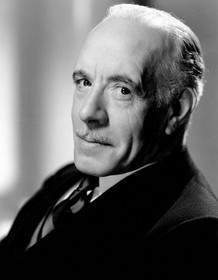
Inspector Marney (Lewis Stone)
Played by Lewis Stone
Calm, persistent, and shrewd, Marney anchors the investigation with precise logic and a knack for spotting inconsistencies. He uncovers how suspects dodge questions and uses targeted questioning to reveal motives. He orchestrates the circle’s dynamics, guiding the search for truth.
- 🧭 Detective
- ⚖️ Justice
-
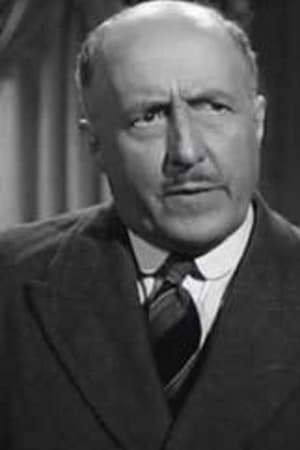
Commissioner Grimshaw (Matthew Boulton)
Played by Matthew Boulton
Grimshaw is an authoritative, practical police official who sets the procedural pace of the inquiry. He values results and maintains order as the circle tightens around suspects. His stance reflects the pressure of maintaining public confidence in a high-stakes case.
- 🧭 Authority
- ⚖️ Duty
- SR
Sir Roscoe Crosby (Holmes Herbert)
Played by Holmes Herbert
A high-status governor figure, Sir Roscoe embodies governance and tradition. His residence becomes a focal point for the investigation, reflecting colonial power structures. He is cautious, ceremonial, and protective of his family’s honor.
- 🧭 Authority
- 🛡️ Status
- LA
Lady Alissia Crosby (Janet Beecher)
Played by Janet Beecher
A poised social figure whose concern for reputation shaping the dynamics of the gathering. She navigates the room with decorum while tensions simmer beneath polite conversation. Her reactions hint at loyalties and possible motives within the circle.
- 🧭 Social role
- 💬 Gossip
- HT
Helen Trent (Elissa Landi)
Played by Elissa Landi
A central social player whose relationships are tangled in the mystery. She balances appearances with personal stakes, revealing vulnerabilities and possible motives. Her position within the family circle makes her a key figure in the alibi web.
- 🧭 Family
- 💌 Love
- ML
Major Lionel Trent (Ralph Forbes)
Played by Ralph Forbes
A husband whose actions and claims are tested by the investigation. He navigates reputation pressure while showing loyalty or potential duplicity. His role as a family member complicates the web of motives.
- 🧭 Family
- 🗝️ Secrets
- DC
Dick Crosby (Thomas Beck)
Played by Thomas Beck
A young member with romantic entanglements, whose behavior is scrutinized. He embodies youthful energy and susceptibility to influence within the circle. His choices push the plot toward a pivotal reveal.
- 🧭 Youth
- 💘 Romance
- NO
Nell O'Neill (Madge Evans)
Played by Madge Evans
Nell’s hidden background and connections to the medium create ambiguity around motives. Her secrecy adds tension to the investigation, while her emotional volatility heightens the drama around the circle.
- 🧭 Hidden ties
- 💬 Secrets
- MR
Mme. Rosalie La Grange (May Whitty)
Played by May Whitty
A grandmotherly medium whose séance blends performance with unsettling insight. Her past relationship to Nell matters to the case, and she becomes crucial as a witness who may blur or reveal the truth.
- 🕯️ Seance
- 🧭 Influence
- DM
Dr. Mason (Charles Trowbridge)
Played by Charles Trowbridge
A physician with a calm, calculating mind who earns trust by staying composed. His actions leave a lingering question about motive, and his involvement ties medical rationality to the mystery's occult elements.
- 🧭 Rational
- ⚖️ Suspicious
- PF
Professor Feringeea (Lal Chand Mehra)
Played by Lal Chand Mehra
An eccentric scholar whose curiosity about the supernatural adds color to the séance. His intellect contrasts with the colonial establishment, offering a different lens on truth and misdirection.
- 🧭 Scholar
- 🧩 Intellectual
-
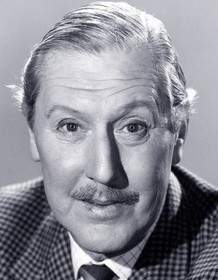
Mr. Stanby (Robert Coote)
Played by Robert Coote
A vigilant, propriety-minded figure whose presence anchors the social etiquette of the gathering. His sister’s volatility adds tension to the room, shaping the dramatic dynamics of the investigation.
- 🧭 Social role
- 🗝️ Secrets
- MS
Miss Stanby (Elsa Buchanan)
Played by Elsa Buchanan
Emotionally unstable yet central to the interpersonal web, her behavior influences the flow of information during the séance. Her relationship with Nell threads complicating loyalties.
- 🧭 Social role
- 💬 Emotions
- ME
Mary Eastwood (Heather Thatcher)
Played by Heather Thatcher
A guest whose quiet presence hints at underlying tensions within the Governor’s circle. She acts as a catalyst in the social network of suspects, contributing to potential motives.
- 🧭 Social observer
- 🧩 Motive
Where and When Is The Thirteenth Chair Set?
The Thirteenth Chair is set in Calcutta and India (1930s). Here is why the time and place matter to the story.
When
1930s
The narrative sits in the early 20th century during British rule in India, when colonial governance influenced social rituals and public life. Séances and exclusive gatherings reflect the era's fascination with mystery and the supernatural, while police procedure follows a formal, procedural cadence of the period.
Where
Calcutta, India
Calcutta provides a colonial backdrop where British officials blend with local context. The action unfolds across a bungalow and the Governor's residence, highlighting urban life, power, and social hierarchies of the era. The setting creates a closed environment ideal for a whodunit, with city politics and prestige weighing on every suspect.
- 🌆 Calcutta
- India
What Are the Themes of The Thirteenth Chair?
3 ideas the story keeps returning to, among them Murder & Investigation, Seance & Illusion and Deception & Motive.
-
01
Murder & Investigation
A single murder triggers a tense closed-circle investigation where alibis and motives are scrutinized. The inspector must read appearances to uncover truth beneath deception. The story emphasizes deduction, evidence gathering, and the timing of the final reveal.
-
02
Seance & Illusion
The séance is used to pressure suspects and extract clues, blending psychology with ritual. Darkness and performance invite misdirection, yet a genuine insight ultimately points to the killer. The arc pits belief against verifiable truth.
-
03
Deception & Motive
Hidden relationships and secrets drive the motive web, with alibis built on social masks. Letters, improvised alibis, and shifting loyalties ripple through the circle as the truth edges closer to the surface. The narrative reveals how prestige and personal gain shield crime until the final confrontation.
What Kind of Film Is The Thirteenth Chair?
Tense in tone, with steady pacing and a moderate story, going by the plot summary.
- Tone
- Tense
- Pacing
- Steady
- Story
- Moderate
- Intensity
- Medium
- Ending
- Mixed
A steadily paced, tense mystery set in a single location that creates a claustrophobic atmosphere of suspicion as an inspector methodically unravels a murder committed during a séance.
- suspenseful
- claustrophobic
- cerebral
- methodical
- anxious
- murder investigation
- seance
- false accusation
- secret identity
- psychological pressure
Content notes: murder, psychological manipulation.
Quiz
How well do you remember The Thirteenth Chair? Test yourself on the story.
Where to Watch The Thirteenth Chair
. US availability and prices from JustWatch.
Streaming availability in the US, powered by