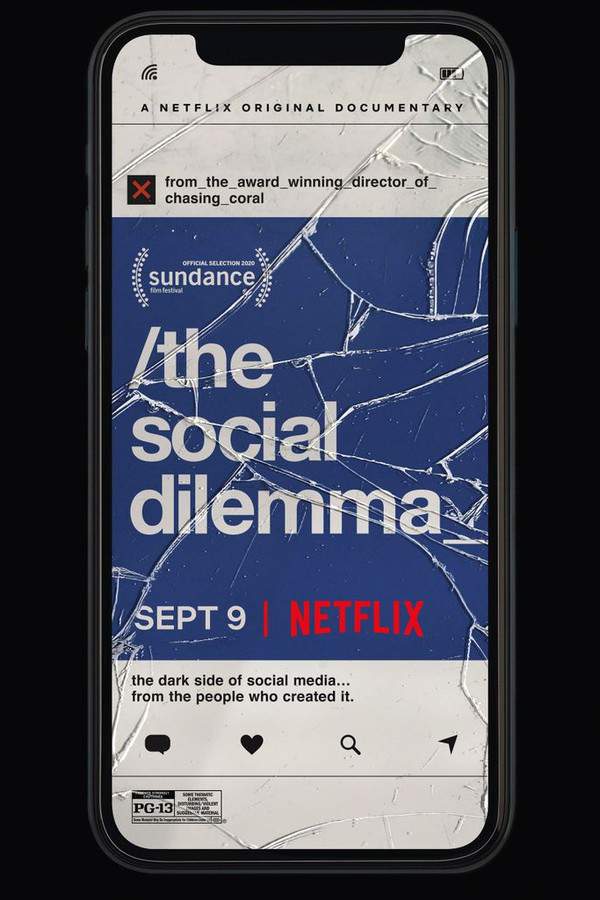
What Happens in The Social Dilemma?
The complete story of The Social Dilemma, from the first scene to the last, in 314 words (about 1 minute). Spoilers throughout. Names in the text link to 8 cast member pages.
Spoilers ahead
The Social Dilemma is a compelling examination of the profound impact social media and technology platforms have on their users. The film focuses on the dangers of persuasive design, extensive data collection, and the use of algorithmic predictions. It argues that tech giants track online activity to build artificial intelligence systems capable of predicting and manipulating human behavior.
Tristan Harris, a former Google design ethicist and co-founder of the Center for Humane Technology, highlights that these companies operate on a specific business model, warning:
“If you’re not paying for the product, you are the product”
The documentary also features insights from Tim Kendall and Aza Raskin, while addressing critical concerns regarding mental health and the proliferation of fake news, which Harris describes as a “disinformation-for-profit business model.”
To illustrate these complex issues, the film weaves in a fictional dramatized narrative about an average American family. The story follows Ben, played by Skyler Gisondo, a teenager who falls into a cycle of social media addiction and online radicalization. His sister, Isla, portrayed by Sophia Hammons, struggles with depression and low self-esteem fueled by unrealistic beauty standards. Meanwhile, the older sister, Cassandra, played by Kara Hayward, remains free from this manipulation as she does not own a mobile phone. The parents, played by Vincent Kartheiser and Barbara Gehring, struggle to manage their children’s screen time without fully understanding the psychological forces at play.
The narrative depicts the “behind-the-screen” reality where anthropomorphized tech executives—representing Engagement, Growth, and Advertisement AIs—treat users as mere avatars to be manipulated for profit. This culminates in Ben being lured back to his phone through targeted notifications and eventually being radicalized by the “Extreme Center” movement, leading to a volatile confrontation at a political rally.
The film concludes with practical advice for viewers to reclaim their autonomy, such as disabling notifications, avoiding recommended videos, and using search engines that do not track history.
The Social Dilemma Timeline: Every Key Event in Order
16 key events in the order they happen, from “The Documentary's Central Examination” to “Calls to Action in the End Credits”.
- 1
The Documentary's Central Examination
The Social Dilemma opens by examining the impact of social media and technology platforms on users. The film focuses on persuasive design, data collection, and algorithmic prediction as the core mechanisms driving these platforms. It argues that companies track and analyze users' online activity in order to build artificial intelligence systems that predict and influence human behavior.
- 2
Tristan Harris Exposes Tech Companies' Three Goals
Tristan Harris, a former Google design ethicist and co-founder of the Center for Humane Technology, explains that tech companies pursue three primary goals. His testimony provides the central framework for understanding how platforms are deliberately engineered. Harris serves as the documentary's leading voice throughout the interviews.
- 3
"If you're not paying for the product, you are the product"
Harris sums up the tech industry's business model with his now-famous warning that users themselves are the product. He paraphrases earlier insights from the film Television Delivers People, Tom Johnson, and Andrew Lewis. The quote becomes one of the documentary's defining takeaways about how platforms monetize human attention.
- 4
A Fictional Family's Story Begins
The documentary introduces a dramatized narrative centered on a middle-class, average American family whose members each interface with the internet differently. The family includes Ben and Isla, who struggle with social media, Cassandra, who owns no phone, and their mother and stepfather, who try but fail to fully understand the problem. Meanwhile, the Engagement, Growth, and Advertisement AIs are depicted as anthropomorphized tech executives in a behind-the-screen control room treating users as depersonalized avatars.
- 5
Isla Spirals into Depression
The family narrative begins with Isla ignoring her mother's requests to set the table, absorbed in her device. She soon becomes depressed after her appearance is criticized on social media. The platform's unrealistic beauty standards continue to chip away at her self-esteem.
- 6
Jonathan Haidt on Social Media and Mental Health
Jonathan Haidt, a social psychologist at NYU Stern School of Business, raises concerns about mental health in relation to social media. His interview lends scientific weight to Isla's struggles in the dramatized story. He underscores the growing psychological toll that platforms take on young users.
- 7
The Mother Proposes a Phone Safe
After Cassandra criticizes Isla and Ben's problematic smartphone use, their mother proposes locking everyone's phones in a safe. Her goal is for the family to finally have dinner together without screens. The plan immediately runs up against the children's device dependency.
- 8
Isla Breaks Open the Safe
When one of the phones receives a notification inside the safe, Isla cannot resist checking it. She tries to open the safe and ultimately breaks it open with a tool. In the process, she damages Ben's phone screen.
- 9
Ben Promises a Week Without His Phone
In return for getting his phone screen repaired, Ben promises his mother he will not use his phone for a week. The agreement represents the family's latest attempt to curb his screen time. It briefly appears that Ben might escape the grip of his device.
- 10
The AIs Lure Ben Back In
The AIs are confused by Ben's sudden inactivity and scramble to find a way to draw him back. They send him a notification that his ex has started a new relationship, deliberately exploiting his emotions. Ben breaks his promise and begins doomscrolling in an attempt to cope.
Where:Behind-the-screen control room
Show the other 6 events of The Social Dilemma Hide the last 6 events
- 11
Ben's Radicalization and Isolation
To keep Ben engaged, the AIs begin recommending him radical centrist content that quickly devolves into propaganda and conspiracy theories from the anti-democratic 'Extreme Center' movement. Ben becomes increasingly radicalized by what he consumes. His addiction affects his daily life to the point of near-isolation.
- 12
The Disinformation-for-Profit Business Model
The documentary turns to the dangers of fake news spreading across platforms. Harris argues that this amounts to a 'disinformation-for-profit business model.' Companies make more money by allowing unregulated messages to reach anyone for the best price, a dynamic that mirrors Ben's radicalization in the narrative.
- 13
The Extreme Center Rally Turns Violent
Ben attends an Extreme Center rally, demonstrating how far his online radicalization has bled into real life. The event escalates when similarly radicalized counter-protestors arrive. The confrontation spirals out of control as the two opposing groups clash.
- 14
Cassandra and Ben Are Detained
Cassandra learns that Ben is at the rally and searches for him to get him out. Her rescue attempt ends in alarm when both siblings are detained by riot police. The moment shows how the consequences of algorithmic radicalization spill over onto the entire family.
- 15
The AIs Merge and Face Ben
At the end of the narrative, the Engagement, Growth, and Advertisement AIs merge into a single entity. At the same time, Ben's avatar becomes a human representation of himself. The merged AI and the humanized Ben stare at each other in a symbolic standoff.
- 16
Calls to Action in the End Credits
In the end credits, the interviewees propose concrete ways the audience can fight back against manipulative technology. Their suggestions include turning off notifications, never accepting recommended videos on YouTube, and using search engines that do not retain search history. They also recommend establishing household rules about cell phone usage.
Quiz
How well do you remember The Social Dilemma? Test yourself on the story.