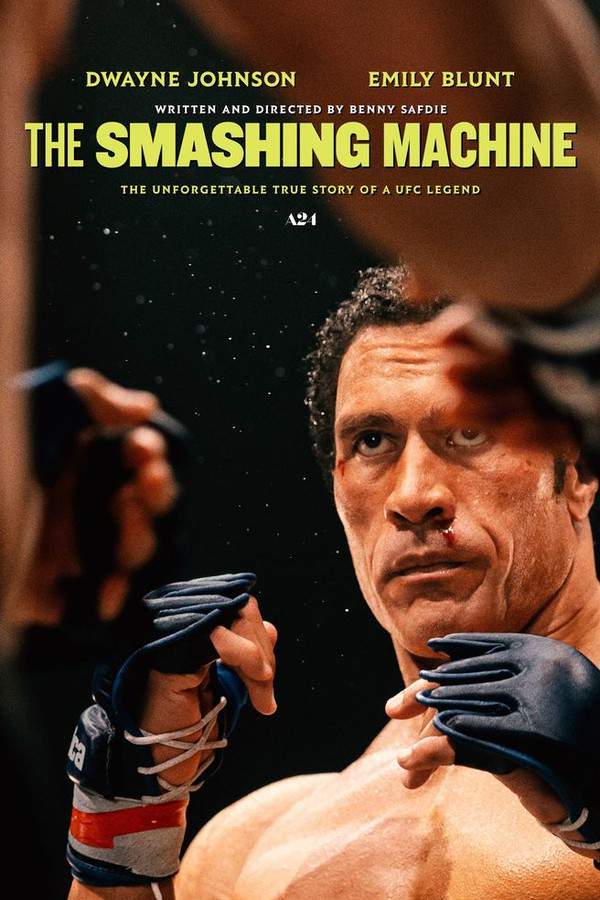
What Is The Smashing Machine About?
The premise of The Smashing Machine in 333 words, with nothing given away. The full story and the ending follow below.
In the fever‑pitch world of late‑1990s mixed‑martial‑arts, a sport still carving its identity, the film follows a singular talent whose reputation is built on raw wrestling power and an unflinching will to compete. Mark Kerr stands at the eye of this storm, a fighter whose confidence on the canvas masks a deeper quest for meaning amid the flash of lights, the roar of the crowd, and the relentless pursuit of victory. The atmosphere crackles with gritty realism, drawing viewers into the adrenaline‑soaked gyms, the hushed backstage corridors, and the global stages where every bout feels like a test of flesh and spirit.
Beyond the cage, the story peels back the layers of Kerr’s personal life, revealing a man whose public bravado coexists with moments of unexpected tenderness. His relationship with Dawn Staples offers a window into a partnership where affection and friction intertwine, underscoring the delicate balance between love and the consuming demands of a sport that tolerates no weakness. Conversations with fans, quiet reflections on the ethics of violence, and fleeting gestures of humanity hint at a complex inner world that refuses to be reduced to a single fighting persona.
Guiding and challenging him are the veteran figures who have shaped the sport’s early narrative. Mark Coleman, a towering presence in Kerr’s camp, embodies the mentorship and business realities that lie behind each fight, while the later inclusion of Bas Rutten introduces a fresh dynamic of technical refinement and mutual reliance. These relationships illustrate the tapestry of camaraderie, competition, and occasional conflict that fuels the protagonist’s evolution, while also alluding to the personal demons—addiction, doubt, and the fear of losing oneself—that quietly shadow his ascent.
The film’s tone blends documentary‑like intensity with intimate drama, delivering a portrait that feels both raw and vulnerable. It invites the audience to contemplate the cost of relentless ambition, the fragile boundaries between fame and self‑destruction, and the ways in which love and loyalty can either steady or unsettle a man standing at the precipice of greatness.
What Happens in The Smashing Machine?
The complete story of The Smashing Machine, from the first scene to the last, in 899 words (about 4 minutes). Spoilers throughout. Names in the text link to 3 cast member pages.
Spoilers ahead
Mark Kerr is at the center of this portrait of a fighter whose career in the late 1990s unfolds against a backdrop of adrenaline, ambition, and vulnerability. The film opens with a candid interview in which Kerr details his view of the Ultimate Fighting Championship and his dedication to the sport. A battle in Sao Paulo in 1997 showcases his raw, fearless freestyle wrestling as he defeats a formidable opponent, illustrating the drive that would define his public persona. The interview continues, weaving together Kerr’s thoughts on competition, discipline, and the costs that come with chasing glory in a sport that thrives on intensity.
The story then shifts to more intimate ground. In a Phoenix clinic waiting room, Kerr speaks with a woman and her grandson about the UFC’s violence, but he makes a point of saying he doesn’t hate his opponents, signaling a complex mix of respect and restraint beneath the ruthless exterior. He even signs an autograph for the boy, a small gesture that humanizes a fighter who lives in the glare of the spotlight. At home, Kerr shares a tense dynamic with his girlfriend, Dawn Staples. Their relationship has tenderness and friction in equal measure: he chides her over a milk selection for his protein shake, yet his concern and affection for her remain evident even as darker struggles simmer beneath the surface. The film does not shy away from Kerr’s private battles, including opioid use that haunts him away from public view.
The narrative broadens to the international stage as Kerr travels to Tokyo with his coach, the formidable Mark Coleman. In the lead-up to Pride 7, he negotiates the logistics and the financial side of fighting, asking officials questions about payment and the stakes of competing on a global stage. After a tense interview, Kerr confronts a hypothetical question about losing, revealing a rare doubt in a man who typically projects unwavering confidence. Dawn makes a surprise trip to Tokyo, hoping to support him, but the moment unsettles Kerr in the locker room as he worries her presence might disrupt his focus. The bout itself ends in controversy: Kerr faces an opponent who employs moves deemed illegal, and the match is ruled a “no contest.” Even so, there is room for sportsmanship, as Kerr reaches out to his rival afterward and takes a friendly photograph, showing that respect can coexist with the tremors of defeat.
Back home, the relationship with Dawn again becomes a focal point. A heated argument erupts, culminating in Kerr smashing a door in a moment of uncontrolled anger. The next morning brings a life-threatening turn: Dawn calls Coleman in tears after Kerr overdoses and ends up in the hospital. Coleman visits, offering steady support as Kerr begins the long path to recovery through rehab. The rehab process strains their relationship, and Dawn, feeling increasingly distant from a man who has cycled through sobriety and relapse, ultimately leaves him.
With the support of a new training ally, Kerr heads to Hollywood in 2000 to work with Bas Rutten on rebuilding his body and technique. The sessions test him physically and emotionally, and there is a stark moment when Bas endures a painful injury during training; Kerr’s presence—along with careful care and focus—helps him push through the strain to regain peak form. The bond with Rutten becomes a catalyst for Kerr’s renewal as a fighter, even as the personal toll of his past continues to echo in his life.
Returning to competition, Kerr enters the Pride 2000 Grand Prix with renewed resolve. He delivers a performance that proves he is capable of enduring and adapting, and Dawn—now back in his life—reappears with a simple, symbolic gift: a repaired bowl she had broken in an argument. The gesture marks a fragile reconciliation, though Bas remains wary of Kerr’s decision to leave the training camp and return home with Dawn.
Yet the relationship remains combustible. An explosive dispute reaches a peak when Dawn resents Kerr’s reluctance to have her travel with him to Japan for his next bout, and another crisis looms: Dawn, in a moment of desperation, nearly shoots herself. Kerr intervenes to restrain her, and emergency responders are called, highlighting the perilous emotional terrain the couple is navigating.
The final round of the Grand Prix in Japan tests Kerr’s concentration in a way the film has been building toward. Distracted by flashbacks to happier times, he suffers a crushing defeat, a moment that is tempered by the support of Coleman in the locker room. Coleman secures the belt in his own final round, while Kerr, left to process the loss, sits in the shower and laughs through a mix of relief, relief, and perhaps a dawning clarity about what comes next.
The film closes with a flashforward to 2025 in Scottsdale, where the real story of Kerr is anchored in a quiet grocery run. The closing text notes that Kerr and Dawn reconciled shortly after his loss and married, only to eventually divorce but raise a son together. Kerr retires from fighting in 2009, and the narrative positions him and Coleman as pioneers who helped lay the groundwork for the sport’s evolution, even as the world moves on to new stars and new stories. The ending leaves a portrait of a man shaped by triumph and turbulence, defined as much by his persistence and his relationships as by the trophies he collected.
The Smashing Machine Timeline: Every Key Event in Order
12 key events in the order they happen, from “Sao Paulo UFC debut and interview” to “Flashforward to 2025 and ending note”. 12 events name a place, across 8 locations.
- 1
Sao Paulo UFC debut and interview
Mark Kerr arrives in Sao Paulo in 1997 to compete in the Ultimate Fighting Championship tournament. He uses his fierce freestyle wrestling to defeat his opponent and makes a name for himself in the arena. The interview continues as he discusses his views on the sport and its brutal nature.
When:1997 Where:Sao Paulo, Brazil
- 2
Phoenix waiting room encounter and autograph
In a Phoenix waiting room, Mark talks with a woman and her grandson about UFC and how violent it can be, but he emphasizes that he does not hate his opponents. He signs an autograph for the boy, then gets his prescription medications. The moment reveals both fame and the private struggles he carries.
When:1997 Where:Phoenix, Arizona
- 3
Home life with Dawn; prescription drugs and addiction
Back home with girlfriend Dawn Staples, Mark chides her for using the wrong milk in his protein shake, but still shows affection. Behind closed doors, he fights an escalating opioid addiction, masking his pain. The domestic life becomes strained as his dependency grows.
When:Late 1990s Where:Home
- 4
Tokyo Pride 7 trip with coach Coleman
Mark travels to Tokyo with coach Coleman for Pride 7, negotiating payment with fight officials and preparing for the event. He talks to officials about the possibility of losing, a scenario he has never faced before. This trip marks a turning point as his career faces mounting pressure.
When:1999 Where:Tokyo, Japan
- 5
Dawn arrives in Tokyo; locker room tension
Dawn flies to Tokyo to surprise Mark, but the locker room atmosphere is tense and they argue about his focus. The fight proceeds, and his opponent uses questionable moves, resulting in a loss for Mark. The match is later declared a no contest, leaving Kerr distraught, though he shares a friendly photo with his opponent afterward.
When:1999 Where:Tokyo, Japan
- 6
Back home: explosive fight; overdose and hospitalization
Returning home, Mark and Dawn resume arguing, culminating in Mark smashing a door in a fit of rage. The next morning, Dawn calls Coleman in tears to report Mark’s overdose and hospitalization. Coleman visits and helps him begin rehabilitation.
When:1999-2000 Where:Home (Phoenix area) / Hospital
- 7
Rehab starts; Dawn departs
In rehab, Mark begins the healing process; Dawn grows frustrated as she perceives he is less loving. She leaves him, signaling the strain of recovery on their relationship. The couple’s dynamic shifts as rehabilitation takes center stage.
When:2000 Where:Phoenix, Arizona
- 8
Hollywood training with Bas Rutten
Mark goes to Hollywood in 2000 to train with Bas Rutten. One training round is stalled due to Bas’s injury, and Mark injects him with pain meds to relieve it, illustrating a troubling overlap of training and pain management. He spends substantial time with Bas to get into peak physical shape.
When:2000 Where:Hollywood, California
- 9
Pride 2000 Grand Prix win and reconciliation
Mark and Coleman compete in Pride 2000 Grand Prix; Mark pushes through to win his round. Dawn returns to visit and presents him with a repaired bowl, signaling reconciliation. Bas is dismayed when Mark leaves the training camp to return home with her.
When:2000 Where:Japan
- 10
Dawn’s resistance and a suicide attempt
Their happiness strains again as Dawn resists joining Mark in Japan for his next match, sparking another explosive argument. Dawn nearly shoots herself, and Mark subdues her as she goes into hysterics, with 911 called to secure her safety.
When:2000-2001 Where:Home
- 11
Final Grand Prix round in Japan; aftermath
Mark travels to Japan for the final round of the Grand Prix, but is distracted by flashbacks to happier times and suffers a harsh loss. Bas comforts him in the locker room while Coleman clinches the belt in his own final round. Kerr’s emotional toll is reflected in a solitary moment of laughter in the shower.
When:2000-2001 Where:Japan
- 12
Flashforward to 2025 and ending note
A flashforward to 2025 in Scottsdale shows the real Mark Kerr grocery shopping, anchoring the film in a long arc of life after fighting. The ending text reveals that Mark and Dawn reconciled eleven days after his loss, married later, but eventually divorced, and had a son. It also notes Kerr’s retirement in 2009 and positions him as a pioneer alongside Coleman in the sport.
When:2025 Where:Scottsdale, Arizona
Who Are the Main Characters in The Smashing Machine?
4 characters, among them Mark Kerr (Dwayne Johnson), Dawn Staples (Emily Blunt) and Bas (Bas Rutten): who each one is and the part they play in the story. Every profile links to the actor’s page.
-
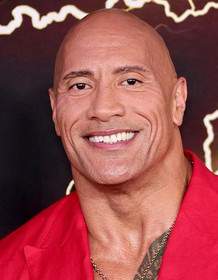
Mark Kerr (Dwayne Johnson)
Played by Dwayne Johnson
A fierce, dedicated fighter whose ambition is matched by a growing dependency on prescription opioids. The film follows his rise in the sport, his private battles with addiction, and the fracturing of his relationship with Dawn. He remains stubborn and intense, but shows vulnerability when confronted with the consequences of his choices.
- 🥊 Fighter
- 💊 Addiction
- 🧭 Redemption
-

Dawn Staples (Emily Blunt)
Played by Emily Blunt
Mark's longtime partner who provides support but is overwhelmed by the chaos of addiction and violence. She navigates shifting loyalties, anger, and a deep desire for a stable life while protecting her own boundaries. Her arc shows resilience and vulnerability as she tries to help him reform.
- ❤️ Partner
- 🛡️ Protector
- 🫶 Supporter
- B(
Bas (Bas Rutten)
Played by Bas Rutten
A seasoned trainer who pushes Mark to peak form while confronting the emotional toll of a brutal sport. He balances blunt realism with care, guiding Kerr through rehab and competition, sometimes clashing over medical decisions. His presence highlights the ethics and costs of coaching in a brutal sport.
- 🥋 Mentor
- 🧭 Guide
- 🩹 Healer
- MC
Mark Coleman (Ryan Bader)
Played by Ryan Bader
A veteran coach and fellow fighter who provides steadiness and tough wisdom. He helps Kerr navigate competition, odds, and personal turmoil, serving as a stabilizing influence in the midst of chaos.
- 🏆 Coach
- 🤝 Friendship
- 🧭 Guidance
Where and When Is The Smashing Machine Set?
The Smashing Machine is set in Sao Paulo, Phoenix, Tokyo and Scottsdale (1997–2025). Here is why the time and place matter to the story.
When
1997–2025
The timeline spans Kerr's ascent in the late 1990s through the early 2000s and into a 2025 epilogue. It captures the sport's formative, brutal era and the personal costs of peak competition. The arc follows rehab, relationship strain, and the search for stability beyond the ring.
Where
Sao Paulo, Phoenix, Tokyo, Scottsdale
Set across multiple MMA hubs, the story begins in Sao Paulo (1997) with a defining early bout. It returns to Phoenix for medical treatment and intimate conversations about the sport's violence, while in Tokyo the Pride events heighten the stakes. A 2025 epilogue in Scottsdale anchors Kerr's post-fighting life and provides closure.
- 🏙️ Urban settings
- 🥊 Combat sports
- 🎭 Drama
What Are the Themes of The Smashing Machine?
4 ideas the story keeps returning to, among them Addiction & Recovery, Violence & Pressure and Relationships & Healing.
-
01
Addiction & Recovery
The film centers on Kerr's opioid dependence and the danger it poses to his career and family. It portrays cycles of use, attempts at rehab, and relapse, without easy solutions. Recovery is shown as a turbulent, fragile process requiring support and self-discipline. The theme highlights the human cost behind a fighter's fame.
-
02
Violence & Pressure
Kerr's life is consumed by rigorous training and brutal matches that test body and mind. The sport's glamour clashes with pain, injuries, and the fear of defeat. The narrative scrutinizes whether victory justifies the personal sacrifices demanded by high-stakes combat.
-
03
Relationships & Healing
Dawn's devotion contrasts with the strain of addiction and volatile moods. The couple's arguments and reconciliations reveal the fragile balance of love under pressure. Healing unfolds through honesty, commitment, and sometimes painful distance.
-
04
Redemption & Identity
The story probes who Kerr is beyond his fights, asking whether he can redefine himself after a troubled past. Mentors and peers push him toward growth and accountability. The ending links sport legacy with family life and a quieter form of success.
How Does The Smashing Machine End?
The last act of The Smashing Machine and what it means, in 229 words. The ending lands as bittersweet. Big spoilers: read the plot summary first if you have not seen it.
The final act, in full
In the film’s closing moments Mark (played by Dwayne Johnson) and Dawn (Emily Blunt) finally confront the damage their turbulent relationship has caused. After reuniting just before Mark’s biggest bout in Japan, Dawn demands that he listen to her concerns – she sees his trainer and close friend urging her to stay away, and she knows he is still battling a crippling opioid addiction. Their conversation erupts into a ferocious argument, and Mark lashes out, accusing Dawn of holding him back from recovery. Overcome with despair, Dawn threatens to take her own life, but Mark intervenes and prevents her from doing so. The police arrive, and Dawn is escorted away for a psychiatric evaluation, leaving the couple suspended in a painful, uncertain limbo.
The fight in Japan itself ends in defeat for Mark, yet the loss is portrayed as a turning point rather than a collapse. Though he fails to win, he walks away with a sense of calm that was absent after his earlier setbacks, suggesting he has begun to confront his inner demons rather than hide behind them.
A brief epilogue reveals that the pair eventually reconciles: they marry, spend six years together, and raise a son. This resolution underscores the film’s message that even the most damaged relationships can find redemption when both people finally accept responsibility for their actions and choose a path toward healing.
What Kind of Film Is The Smashing Machine?
Dark in tone, with steady pacing and a moderate story, going by the plot summary.
- Tone
- Dark
- Pacing
- Steady
- Story
- Moderate
- Intensity
- High
- Ending
- Bittersweet
A raw and emotionally heavy portrait of a champion's turbulent life, marked by fierce competition in the ring and a desperate struggle with addiction and a volatile relationship outside of it.
- gritty
- vulnerable
- unsettling
- raw
- anxious
- somber
- addiction
- athlete's struggle
- toxic relationship
- redemption
Content notes: drug overdose, domestic argument, suicidal ideation, intense sports violence.
Quiz
How well do you remember The Smashing Machine? Test yourself on the story.