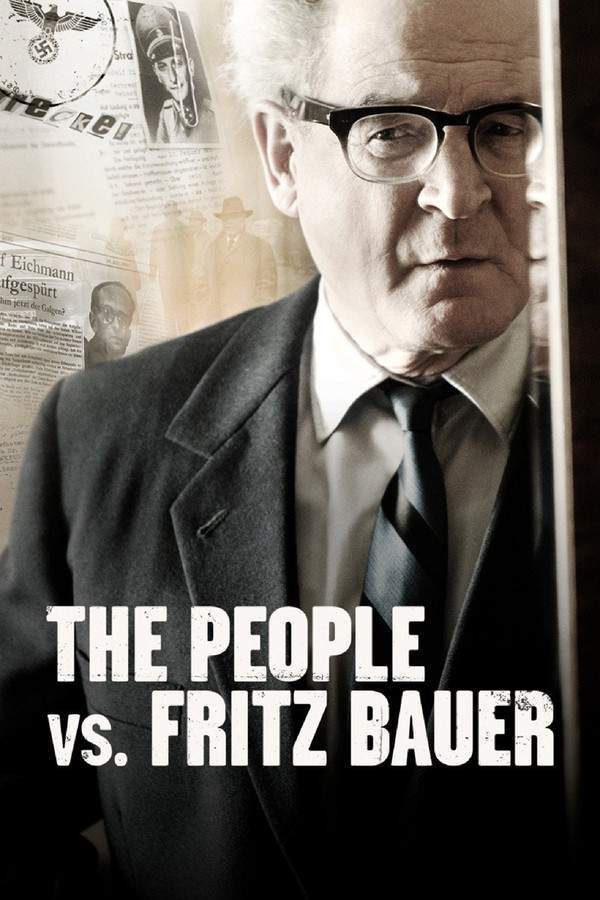
The People vs. Fritz Bauer 2016

Directed by

Lars Kraume
Made by

Cohen Media Group
Where to Watch The People vs. Fritz Bauer
See current US streaming, rental, and purchase options for The People vs. Fritz Bauer (2016) via JustWatch.







The People vs. Fritz Bauer Plot Summary
Read the complete plot summary and ending explained for The People vs. Fritz Bauer (2016). From turning points to emotional moments, uncover what really happened and why it matters.
Bauer’s driver discovers his boss unconscious in the bathtub and promptly takes him to the hospital. As Bauer recuperates, police officers, influenced by political motives, jump to conclusions and suspect a suicide attempt. This situation brings joy to his adversaries, particularly Attorney General Kreidler and Paul Gebhardt of the Federal Criminal Police Office (BKA), who believe they have gained the upper hand.
During his recovery, Bauer notices a crucial file has vanished from his office. Concerned about the prosecution of Nazi criminals, he summons the prosecutors but finds them lacking in progress. The young prosecutor, Karl Angermann, reminds Bauer that he had requested this file to prepare a statement, making Bauer realize he can trust Angermann. Inviting him to his home over the weekend, Bauer considers his authority to be like that in “enemy territory” as he plots to bring Adolf Eichmann from Argentina to face justice in Germany. However, recognizing the limitations of the BKA and Interpol regarding political crimes, Bauer contemplates enlisting the help of the Israeli intelligence service, Mossad.
When Bauer receives a letter confirming that Eichmann resides in Argentina under an alias, he forwards this information to the Mossad and discusses it further while in Israel. The Mossad chief, Isser Harel, has already investigated this lead but insists they must have a second piece of evidence before proceeding with Eichmann’s abduction.
While navigating these complexities, Angermann seeks Bauer’s guidance on sentencing in a homosexual trial. After Bauer references a similar case, Angermann pushes for an unexpectedly light sentence, which gets him noticed by Victoria, a friend of the defendant. However, it’s revealed that Victoria is transgender, complicating Angermann’s emotions further, especially when compromising photographs of their interactions surface, leading to blackmail from the BKA.
As Bauer investigates former Nazi Schneider, who now works in human resources at Daimler-Benz with connections to South America, he pressures Schneider for Eichmann’s code name in Argentina. This information is relayed to the Mossad, which successfully retrieves Eichmann and transports him to Israel. Nonetheless, Bauer’s request for Eichmann’s extradition is denied by the federal government under Konrad Adenauer, who fears a potential upheaval due to Eichmann’s testimony exposing the presence of former Nazis within the German government.
Meanwhile, Angermann refuses to succumb to the threats posed by the compromising photos and bravely confesses to violating § 175. Just as Bauer considers abandoning his pursuit, he immerses himself back into the investigation of Nazi crimes, setting the stage for the landmark Frankfurt Auschwitz trials.
The People vs. Fritz Bauer Timeline
Follow the complete movie timeline of The People vs. Fritz Bauer (2016) with every major event in chronological order. Great for understanding complex plots and story progression.
Bauer's Accident
Bauer's driver finds him unconscious in the bathtub and acts quickly to take him to the hospital. This incident sets off a series of political intrigues that will affect Bauer's career and efforts to bring Nazi criminals to justice.
Police Suspicions
As Bauer recovers, the police investigate the circumstances surrounding his accident. Influenced by political motives, they suspect it may be a suicide attempt, much to the delight of his enemies such as Attorney General Kreidler.
Missing File
During his recovery, Bauer discovers that a crucial file regarding the prosecution of Nazi criminals has gone missing from his office. Concerned about the implications, he summons the prosecutors to discuss the lack of progress on the case.
Trusting Angermann
Bauer finds a young prosecutor, Karl Angermann, who shows promise and diligence. Realizing he can trust Angermann, Bauer invites him to discuss strategy at his home, contemplating how they can bring Adolf Eichmann to justice.
Mossad Consideration
Understanding the limitations of the BKA and Interpol for political crimes, Bauer considers enlisting the Israeli intelligence service, Mossad. This decision opens a new chapter in Bauer's pursuit of justice for Nazi atrocities.
Confirmation of Eichmann's Location
Bauer receives confirmation that Eichmann is residing in Argentina under an alias. He promptly forwards this information to the Mossad, eager to facilitate Eichmann's capture and trial.
Meeting with Mossad
Bauer travels to Israel to discuss the recovery of Eichmann with Mossad officials. Mossad chief Isser Harel reveals they need a second piece of evidence to proceed, adding urgency to Bauer's mission.
Angermann's Legal Dilemma
Amidst Bauer's investigations, Angermann finds himself conflicted over a case involving sentencing in a homosexual trial. His decisions attract attention and further complicate his personal and professional life.
Blackmail Threats
Angermann faces blackmail from the BKA after compromising photos of him and Victoria, a friend of the defendant in the trial, surface. This leads him to confront his own morals and the implications of his choices.
Investigating Schneider
Bauer begins to investigate Schneider, a former Nazi who now works at Daimler-Benz and has connections in South America. He pressure Schneider for information about Eichmann's code name, vital for the case's progress.
Successful Abduction
The Mossad successfully retrieves Eichmann from Argentina, marking a significant victory for Bauer's efforts. However, this achievement does not come without political tension back home.
Extradition Denied
Despite the Mossad's success, Bauer's request for Eichmann's extradition to Germany is denied by the federal government led by Konrad Adenauer. Fears of upheaval due to Eichmann's testimony hinder Bauer’s pursuit of justice.
Angermann's Confession
Angermann bravely confesses to his violation of § 175, refusing to be cowed by blackmail threats. His courage reflects the moral complexities surrounding their fight for justice.
Bauer's Resolve
Feeling disheartened by the political setbacks, Bauer considers abandoning his investigation. However, he ultimately chooses to immerse himself back into the pursuit of justice for Nazi crimes, setting the stage for pivotal trials.
Frankfurt Auschwitz Trials Begin
Bauer's dedication culminates in the initiation of the landmark Frankfurt Auschwitz trials, a significant moment in history. These trials hold the accused accountable and pave the way for the acknowledgment of Nazi war crimes.
The People vs. Fritz Bauer Characters
Explore all characters from The People vs. Fritz Bauer (2016). Get detailed profiles with their roles, arcs, and key relationships explained.
Fritz Bauer
Fritz Bauer is a determined and principled prosecutor who is relentless in his pursuit of justice for Nazi war criminals. He navigates political pressures and personal risks, showing courage as he confronts both external adversaries and internal conflicts. His leadership inspires others to challenge the status quo.
Karl Angermann
Karl Angermann is a young prosecutor who grapples with moral dilemmas while navigating the legal complexities of cases involving sexuality and justice. His character development is marked by his bravery in the face of opposition and a willingness to confront societal norms, making him a pivotal figure in Bauer's narrative.
Adolf Eichmann
Adolf Eichmann serves as the central antagonist, representing the lingering shadows of Nazi power and influence even after the war. His capture becomes a symbol of accountability for past atrocities, encapsulating the broader struggle to bring historical injustices to light.
The People vs. Fritz Bauer Settings
Learn where and when The People vs. Fritz Bauer (2016) takes place. Explore the film’s settings, era, and how they shape the narrative.
Time period
Post World War II
The narrative is set in the years following World War II, a period marked by the international effort to confront and prosecute Nazi war crimes. This era was crucial for Israel's establishment and for global consciousness surrounding human rights and justice, particularly with the rise of trials that aimed to hold perpetrators accountable.
Location
Germany, Argentina, Israel
The movie primarily takes place in Germany, where legal and moral battles unfold regarding the prosecution of Nazi criminals. Argentina is significant as the hiding place of Adolf Eichmann, a key figure in the Nazi regime. Additionally, Israel plays a crucial role, particularly during Bauer's discussions with the Mossad about Eichmann's abduction.
The People vs. Fritz Bauer Themes
Discover the main themes in The People vs. Fritz Bauer (2016). Analyze the deeper meanings, emotional layers, and social commentary behind the film.
⚖️
Justice
The theme of justice is central to the film, as Bauer fights to bring former Nazi officials to trial and ensure that atrocities are not forgotten. His pursuit reflects the broader societal challenge of grappling with historical injustices and the significance of legal repercussions for past crimes.
🌈
Identity
Identity themes are explored through the character of Angermann and his interactions with Victoria, raising questions about sexuality, societal norms, and the complexities of human relationships amidst the legal backdrop. This theme underscores the personal struggles individuals face within larger societal contexts.
🕵️♂️
Espionage
Espionage becomes a critical theme as Bauer collaborates with Mossad to locate Eichmann. The film illustrates the intricacies of intelligence work and the moral dilemmas faced in the pursuit of justice, reflecting on how different nations navigate historical grievances.

Coming soon on iOS and Android
The Plot Explained Mobile App
From blockbusters to hidden gems — dive into movie stories anytime, anywhere. Save your favorites, discover plots faster, and never miss a twist again.
Sign up to be the first to know when we launch. Your email stays private — always.
Explore the mobile appThe People vs. Fritz Bauer Spoiler-Free Summary
Discover the spoiler-free summary of The People vs. Fritz Bauer (2016). Get a concise overview without any spoilers.
In the uneasy calm of 1957 West Germany, a nation still draped in the weight of its recent past scrambles to define its identity. The streets of Berlin pulse with a mixture of reconstruction optimism and the lingering shadows of unresolved history, where legal institutions wrestle with the desire to look forward while the ghosts of the war refuse to be silenced. This atmosphere of cautious progress, undercut by a pervasive reluctance to confront uncomfortable truths, forms the somber backdrop against which the story unfolds.
At the heart of this tension stands Fritz Bauer, the principled Attorney General whose devotion to justice is matched only by his awareness of the political minefields that surround him. When a discreet tip points to the whereabouts of a notorious architect of the Holocaust, Bauer is thrust into a moral crucible that forces him to weigh personal conviction against the fragile equilibrium of a society still nursing its wounds. His pursuit becomes a quiet rebellion against the collective amnesia that threatens to bury accountability.
Bauer’s resolve is tempered by the presence of younger allies such as Karl Angermann, an idealistic prosecutor eager to prove his mettle within a system hampered by hesitation. Their collaboration highlights a generational clash—raw enthusiasm meeting seasoned caution—as they navigate the labyrinthine corridors of justice. Beyond Germany’s borders, the enigmatic Isser Harel, head of Israeli intelligence, represents a source of both hope and complexity, hinting at the international dimensions of a pursuit that transcends national boundaries. Meanwhile, figures like Kreidler embody the entrenched bureaucratic resistance that seeks to preserve the status quo.
The film’s tone is one of measured suspense, blending the stark realism of post‑war legal drama with an undercurrent of quiet defiance. It invites viewers to linger on the moral ambiguities faced by those who dare to challenge a nation’s complacency, suggesting that the true battle lies not only in courtroom strategy but in the collective courage to acknowledge a painful legacy.
Featured on this page

What's After the Movie?
Not sure whether to stay after the credits? Find out!
Check out our other apps:

SAT Sphere
Build confidence for the Digital SAT.

Mori Atlas
Discover wild places worth protecting.

Luntero
Search smarter for a home in Amsterdam.

Plot Explained
Unravel movie endings and hidden clues.

Pokechamp
Dive into Pokémon data and battle logic.

Driving Theory
Get ready for your European theory test.

Movie Dust
Plan your next cinema trip with ease.

Musemap
Find art and culture as you travel.

Selkobase
Compare credentials before committing.

Local Manual
Turn an unfamiliar country into practical next steps.

Lernavi
Compare school systems before your next move.

GymRoam
Find a workout stop wherever your plans take you.
Explore Our Movie Platform
New Movie Releases (2026)
Famous Movie Actors
Top Film Production Studios
Movie Plot Summaries & Endings
Major Movie Awards & Winners
Best Concert Films & Music Documentaries
Movie Collections and Curated Lists
© 2026 What's After the Movie. All rights reserved.
Privacy Policy