
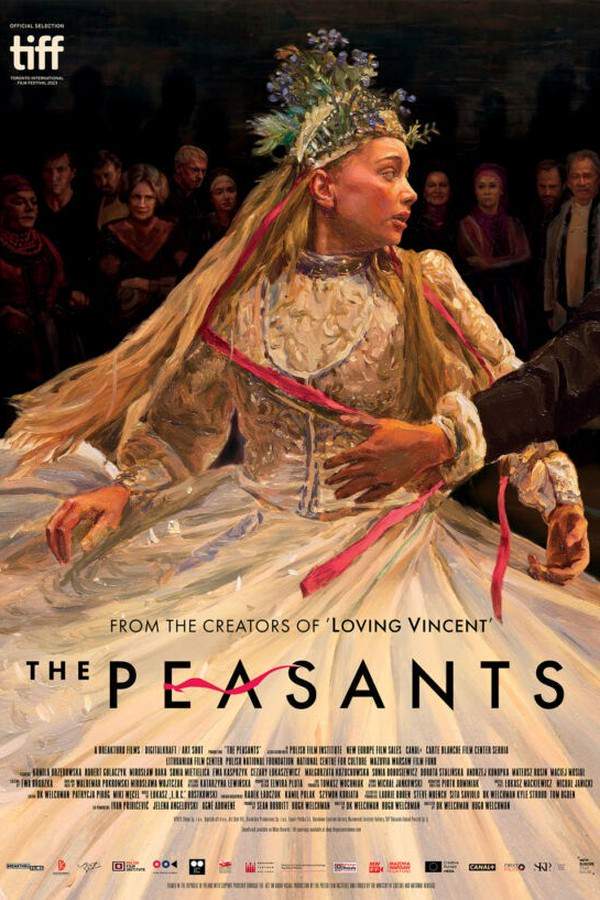
What Is The Peasants About?
The premise of The Peasants in 311 words, with nothing given away. The full story and the ending follow below.
In a remote Polish village at the turn of the twentieth century, life unfolds according to rhythms as old as the soil itself. The seasons dictate the pace of labor, gossip, and ritual, binding the community of Lipce together through shared hardship and long-held customs. Among its residents, the beautiful young peasant woman Jagna stands out — a spirited soul with a gift for crafting intricate cutouts, whose restless nature seems quietly at odds with the traditions that hold her village in their firm grip.
Beneath the pastoral surface, Lipce hums with unspoken tensions. Old feuds simmer between neighboring families, whispered rumors thread through every conversation, and the weight of generational expectations presses heavily on everyone, especially its women. When Jagna begins to challenge the customs that govern her life — pursuing her own desires and defying the expectations placed upon her — her presence becomes a quiet source of unrest. Her independence, so natural to her, is treated by some as defiance, and by others as a disruption to the fragile balance the villagers have long maintained.
The arrival of new influences and growing conflicts with outside forces only adds to the unease settling over Lipce. As disputes over land and resources threaten to erupt, Jagna finds herself caught between her yearning for self-determination and the traditional forces that still dominate her community. Her choices ripple outward, stirring passions and grievances that the village has carried for years, turning personal struggles into something far more combustible.
Rendered with lush, painterly animation that evokes both the beauty and the claustrophobia of rural life, the film immerses viewers in a world where every field, face, and whispered word carries weight. It is a portrait of a community on the cusp of change, and of one woman whose spirit refuses to bend — no matter the cost the village may demand of her.
What Happens in The Peasants?
The complete story of The Peasants, from the first scene to the last, in 585 words (about 3 minutes). Spoilers throughout.
Spoilers ahead
The film, emulating Reymont’s novel, unfolds in four distinct segments that reflect each of the seasons, capturing a pivotal year in the late 19th century within the quaint village of Lipce. At the heart of this narrative is Jagna Paczesiówna, a young and enchanting peasant woman, skilled in the art of cutouts. However, she finds herself entangled in a tumultuous affair with Antek Boryna, the son of the wealthiest farmer, Maciej Boryna. Their romance flourishes despite the fact that Antek is already married to Hanka, who struggles with the betrayal of her husband’s infidelity.
As tensions rise, the patriarch Maciej Boryna—a widower longing for companionship—sets his sights on Jagna for marriage, offering her six acres of land as part of the dowry. While his intentions please her mother, Marcjanna Paczes ‘Dominikowa’, both Antek and Hanka vehemently oppose this union. A bitter confrontation ensues, leading to Boryna ordering his son and daughter-in-law, along with their three children, to vacate the farm. Forced to subsist in hardship, Antek’s family moves in with his father-in-law, while a lavish wedding takes place between Boryna and Jagna, which Antek and Hanka do not attend.
Despite her new marriage, Jagna continues her clandestine relationship with Antek, much to the dismay of Boryna, who frequently discovers his wife with his son. In a turn of events, Boryna becomes incensed when the landowners’ court decides to fell the peasants’ forests, igniting a fierce resentment. He rallies the village men for a violent reprisal against the landowners, but this conflict ends tragically for Boryna, who suffers a serious injury that leads Antek to exact revenge.
As the local Russian troops intervene, they arrest many peasants from Lipce, including Antek. Following the chaos, Hanka takes charge of Boryna’s farm, doing her best to undermine Jagna during this trying time, while Jagna faces growing isolation from the community that holds her responsible for their misfortunes. While Boryna lays on his deathbed, he covertly imparts knowledge of his hidden fortune to Hanka, which she utilizes to buy provisions for her children.
In a desperate attempt to bail out Antek from prison, Jagna finds herself prey to the mayor’s advances, leading to a harrowing experience where she narrowly escapes a potential assault. Tragically, Boryna succumbs while trying to sow his field, catalyzing a series of events that see Antek return to take control of his father’s farm. When he encounters Jagna at their cherished meeting spot, he seeks to mend their relationship. However, their reunion turns violent, with Antek forcing himself upon her.
As a drought devastates Lipce, Jagna, now back in her childhood home, refuses a marriage proposal from Mateusz, a carpenter. In the shifting power dynamics of the village, Antek rises to prominence while Hanka embarks on a pilgrimage, seeking solace. During a village meeting at a local inn, tensions explode when the mayor’s wife claims her husband has misused town funds on Jagna, leading to accusations against Jagna that suggest her actions have invited divine retribution upon Lipce.
Incited by outrage, the villagers make the drastic decision to banish Jagna, a measure Antek passively endorses. The next day, an angry mob storms Dominikowa’s home, where Hanka and her allies attempt to shield Jagna from the onslaught. Their resistance fails, leaving Jagna vulnerable as the villagers brutalize her, stripping her bare and dragging her to the outskirts of the village, where they abandon her amidst jeers and humiliation. However, as the rain washes away the filth, Jagna rises resolutely, stepping forward into the unknown world ahead.
The Peasants Timeline: Every Key Event in Order
15 key events in the order they happen, from “Introduction to Lipce” to “Jagna's Defiance”. 15 events name a place, across 4 locations.
- 1
Introduction to Lipce
The film opens with a depiction of the village of Lipce, highlighting its rural charm and the lives of its inhabitants. Set at the beginning of the twentieth century, the villagers' daily routines reflect societal norms and relationships in this close-knit community.
When:Early 1900s Where:Lipce
- 2
Jagna's Talent and Affair
Jagna Paczesiówna, a beautiful peasant woman known for her cutout artistry, is introduced. She is engaged in a secret affair with Antek Boryna, the son of the wealthiest farmer in Lipce, which creates tension with Antek's wife, Hanka.
Where:Lipce
- 3
Conflict with Marriage Proposal
Maciej Boryna, the elder Boryna, wishes to marry Jagna and offers her a generous dowry. This proposal pleases Jagna's mother, Dominikowa, but sparks conflict as Antek and Hanka strongly oppose the arrangement, leading to significant familial strife.
Where:Lipce
- 4
Antek's Exile
After a confrontation between Antek and his father, Maciej decrees that both Antek and Hanka must leave their home. They move in with Hanka's father, resulting in a significant lifestyle change and highlighting the themes of poverty and oppression.
Where:Boryna Farm
- 5
Boryna and Jagna's Wedding
Maciej Boryna and Jagna hold an extravagant wedding ceremony, attended by members of the community, but notably absent are Antek and Hanka. This event marks the beginning of Jagna's complex life as Boryna's wife.
Where:Lipce
- 6
Continued Affair
Despite marrying Boryna, Jagna resumes her affair with Antek, engaging in secretive encounters. Boryna discovers their liaison multiple times, which leads to jealousy and further issues in their marriage, deepening the conflict.
Where:Lipce
- 7
Revenge Against Landowners
Boryna, angered by the landowners' court decision to cut down peasants' forests, organizes a retaliation against them. This decision culminates in a violent clash, leaving Boryna seriously injured and sparking a cycle of revenge involving Antek.
Where:Lipce
- 8
Russian Troops Intrude
The conflict escalates when Russian troops arrive and begin arresting villagers, including Antek. This event disrupts the already fragile situation in Lipce, leading to greater tensions and uncertainty for the characters involved.
Where:Lipce
- 9
Hanka's Struggles
As Boryna lies wounded, Hanka assumes responsibility for managing the farm. She openly insults Jagna, blaming her for the misfortunes faced by the villagers, which further isolates Jagna in the community.
Where:Boryna Farm
- 10
Mayor's Scheme
The mayor approaches Jagna with a proposal to help bail Antek out of jail, but his true intentions are revealed when he tries to take advantage of her. This adds a layer of danger and manipulation to Jagna's already tumultuous life.
Where:Lipce
Show the other 5 events of The Peasants Hide the last 5 events
- 11
Boryna's Death
Boryna, determined to reclaim his farming duties, attempts to sow the fields but collapses and dies in the process. His death significantly impacts both Jagna and Antek, altering the power dynamics in Lipce.
Where:Boryna Farm
- 12
Antek's Return
Following Boryna's funeral, Antek is released from jail and returns home to a jubilant Hanka. His return marks a pivotal shift in the social hierarchy of Lipce, as Antek aims to reclaim his father's legacy.
Where:Lipce
- 13
Villagers' Conspiracy
As tensions rise, villagers gather to discuss Jagna's alleged promiscuity, believing it has provoked divine anger. They decide to take action against her, revealing the strong influence of communal beliefs on individual lives.
Where:Inn in Lipce
- 14
Jagna's Humiliation
The villagers, fueled by outrage, attack Jagna, stripping her of dignity and dragging her from her home to the outskirts. The brutality of the mob showcases the harsh realities of ostracism and community judgment.
Where:Edge of Lipce
- 15
Jagna's Defiance
After being publicly humiliated, Jagna rises from the mud, determined to reclaim her strength. She walks away from Lipce, symbolizing her resilience and refusal to be defeated by the collective anger of the villagers.
Where:Lipce
Who Are the Main Characters in The Peasants?
5 characters, among them Jagna Paczesiówna, Antek Boryna and Maciej Boryna: who each one is and the part they play in the story. Every profile links to the actor’s page.
- JP
Jagna Paczesiówna
Played by Kamila Urzedowska
Jagna is a beautiful and talented peasant woman known for her skill in making cutouts. Torn between her affair with Antek and her marriage to Boryna, she becomes a central figure in the drama and conflicts of Lipce. Her resilience and eventual ostracization mirror the harsh realities faced by women in her society.
- 💖 Romantic
- 🚺 Strong Woman
- 🚫 Victim
- AB
Antek Boryna
Played by Robert Gulaczyk
Antek is the son of Maciej Boryna and is characterized by his passionate but troubled relationship with Jagna. His internal conflict over loyalty to his wife and his illicit love shapes his actions throughout the film. Antek's struggle with identity and belonging highlights the complexities of love and societal expectations.
- 💔 Lover
- ⚔️ Angry
- MB
Maciej Boryna
Played by Miroslaw Baka
Maciej is the wealthiest farmer in Lipce, driven by his desire to marry Jagna while managing familial conflicts. As a widower, his intentions are complicated by his wealth and power, leading to personal and community strife. His character embodies the tensions of authority and the desires rooted in traditional dynamics.
- 👨🌾 Wealthy
- ⚖️ Authority
-

Hanka Boryna
Played by Sonia Mietielica
Hanka is Antek's wife, who struggles with the pain of her husband's infidelity. She is portrayed as a strong yet deeply hurt woman, representing the emotional toll of betrayal in close-knit communities. Hanka's evolution throughout the film mirrors the complexities of marriage and loyalty.
- 😔 Suffering
- 💔 Betrayed
-

Dominikowa
Played by Ewa Kasprzyk
Dominikowa is Jagna's mother, who plays a crucial role in her daughter's life decisions. Her ambition for Jagna’s future often conflicts with the tragic events unfolding in their lives. Dominikowa's character reflects the parental aspirations intertwined with societal pressures.
- 👩👧 Motherhood
- 💪 Ambitious
Where and When Is The Peasants Set?
The Peasants is set in Lipce (turn of the twentieth century). Here is why the time and place matter to the story.
When
turn of the twentieth century
The film is set at the turn of the twentieth century, a time marked by significant social and political changes in rural Europe. This era often depicts the struggles of the peasantry, including class conflicts, land ownership issues, and the impact of modernization. These themes resonate deeply throughout the plot, underscoring the tensions between tradition and change.
Where
Lipce
Lipce is a rural village that serves as the central setting for the movie. It is characterized by its traditional peasant lifestyle, where community bonds and personal conflicts deeply affect the inhabitants. The village plays a pivotal role in shaping the characters' lives and decisions, especially highlighting the dynamics of agricultural life at the turn of the twentieth century.
- 🏡 Village
- 🌾 Countryside
What Are the Themes of The Peasants?
3 ideas the story keeps returning to, among them Love and Betrayal, Conflict and Feminine Struggle.
-
01
Love and Betrayal
The theme of love and betrayal is central to the story, with Jagna caught in a tumultuous affair with Antek while being married to Boryna. This conflict illustrates the complexities of relationships and the destructive consequences of infidelity. As social norms clash with personal desires, the characters navigate a landscape of passion, envy, and heartbreak.
-
02
Conflict
Conflict is a key theme, manifesting through personal rivalries, community tension, and class struggles. The clashes between the peasants and landowners, alongside the personal vendettas between Jagna, Antek, and Boryna, drive the narrative forward. The violence that ensues reflects the broader societal issues faced by the peasantry during this time.
-
03
Feminine Struggle
The feminine struggle is poignantly illustrated through Jagna's character. Marginalized by society and scapegoated for the village's misfortunes, her journey highlights the challenges faced by women in a patriarchal system. Jagna's resilience against communal ostracism speaks to the fight for agency and dignity amid oppression.
How Does The Peasants End?
The last act of The Peasants and what it means, in 193 words. The ending lands as bleak. Big spoilers: read the plot summary first if you have not seen it.
The final act, in full
In the end, The Peasants presents a stark portrait of a community torn apart by traditions, jealousy, and social pressures. Jagna, a beautiful and independent young woman, is a symbol of individual spirit in a society that seeks to control her. Despite her efforts to carve out her own path, she is ultimately betrayed by the community and even by the man she loved, Antek. His abandonment in her time of greatest need signifies the film’s tragic message: that societal norms and petty jealousies often crush the most vulnerable. As Jagna is pushed out and violently exiled from the village, it reflects how deeply rooted these oppressive traditions are, punishing those who dare to stand apart. Her expulsion isn’t just a punishment for her perceived sins or her beauty, but a reflection of a community frantic to preserve its rigid social order at any cost. The ending leaves us with a haunting image of Jagna, discarded and helpless on the outskirts of Lipce, embodying the tragic consequence of a society that values conformity over compassion and individuality. It’s a powerful reminder of how deeply societal pressures can destroy personal freedom and human dignity.
What Kind of Film Is The Peasants?
Bleak in tone, with slow pacing and a complex story, going by the plot summary.
- Tone
- Bleak
- Pacing
- Slow
- Story
- Complex
- Intensity
- High
- Ending
- Bleak
A bleak and oppressive period drama that follows a young woman's defiance against patriarchal village traditions, culminating in brutal mob violence and exile. Heavy, somber, and deeply uncomfortable throughout.
- oppressive
- somber
- harsh
- bleak
- grim
- hostile
- patriarchy
- infidelity
- social ostracism
- village feuds
Content notes: rape, attempted sexual assault, mob violence, public humiliation, domestic abuse, nudity.
Quiz
How well do you remember The Peasants? Test yourself on the story.
