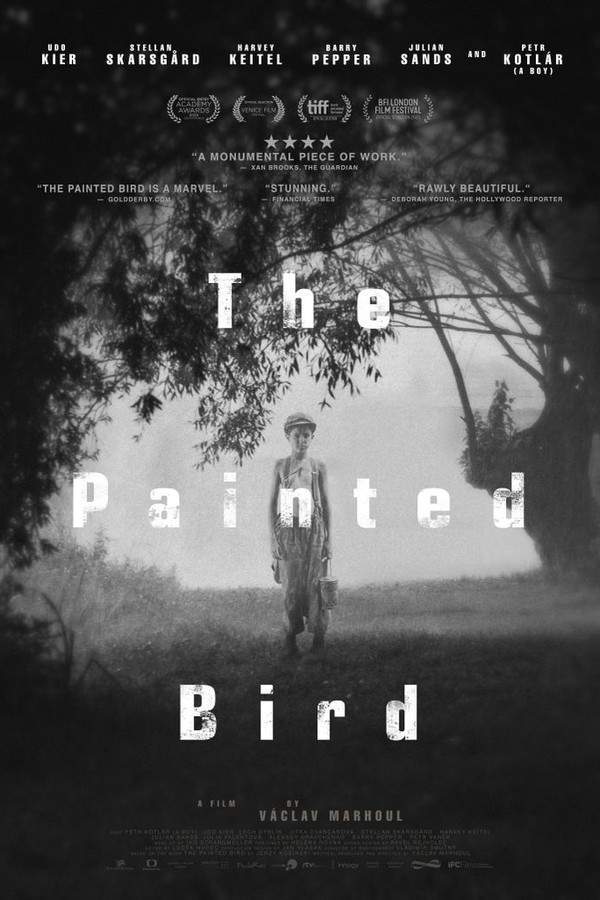
What Is The Painted Bird About?
The premise of The Painted Bird in 236 words, with nothing given away. The full story follows below.
Set against the bleak, blood-soaked backdrop of World War II–era Eastern Europe, The Painted Bird follows a young Jewish boy left to fend for himself after the loss of his parents. Stripped of family and home, he wanders through a vast and unforgiving landscape, drifting from place to place in search of refuge. The world around him is scarred by occupation and conflict, a place where ordinary life has been swallowed by suspicion, fear, and the constant threat of violence.
Each encounter with strangers carries the weight of uncertainty — some may offer a fleeting kindness, others a cold indifference, and many a cruelty the boy cannot yet comprehend. His journey is not one of grand adventure but of survival, shaped by the strangers he meets and the bitter lessons they leave behind. Without a protector or a clear path forward, he must rely on instinct and resilience to navigate a land where childhood has been stolen by the machinery of war.
Told through his eyes, the story captures the profound isolation of a child alone in a fractured world. The narrative moves at the wandering pace of his footsteps, unfolding like a dark odyssey through landscapes both rural and hauntingly indifferent. The film’s stark, unflinching tone is matched by its title’s quiet promise — that even in the deepest darkness, faint traces of light can still be found, however fragile and fleeting they may be.
What Happens in The Painted Bird?
The complete story of The Painted Bird, from the first scene to the last, in 530 words (about 2 minutes). Spoilers throughout.
Spoilers ahead
In a war-torn region of German-occupied Eastern Europe during World War II, a young boy finds himself living with his elderly aunt. Following her sudden death, he is caught off guard and inadvertently ignites a fire in their home, leading him to flee into the unknown. His journey unfolds into a series of harrowing encounters marked by ignorance, exploitation, and brutality.
Upon reaching his first village, the boy is sold to an old healer. Unfortunately, he is soon scapegoated for a series of misfortunes and cast into a river. His next refuge is with a miller and his wife; however, this sanctuary quickly turns dark when the miller commits a heinous act, gouging out the eyes of a younger man who he suspects of being affectionate towards his wife. Terrified, the boy escapes once again.
He later crosses paths with Lekh, a kind-hearted bird breeder who treats him with care. However, this relative peace is shattered when Lekh is involved with a wild woman, leading to her tragic fate at the hands of the angry local women who brutalize her for perceived disloyalty. Overcome by grief and despair, Lekh ultimately takes his own life, prompting the boy to leave yet again.
In search of solace, the boy discovers a tame horse with a broken leg and brings it to the next village, only to witness its brutal murder by a villager. His identity as a Jew exposes him to danger when partisans ask the locals to deliver him to the Germans. However, a German soldier assigned to execute him surprisingly lets him go. Yet, later, he falls into the hands of SS guards who take him to a nearby town. His life is spared once more through the intervention of a priest who offers him shelter, only to later arrange for him to stay with Garbos, a man whose darker inclinations lead to horrific consequences for both of them.
Once Garbos meets his grisly end, the boy is again left to fend for himself. Taken in by Labina, a woman who coerces the boy into performing sexual acts under the threat of violence, he eventually retaliates by killing her goat and fleeing her clutches.
Subsequently, the boy encounters the Red Army, specifically a sniper named Mitka. Mitka, however, is not without his own darkness, forcing the boy to witness the brutal reality of war as he avenges attacks on his comrades. As the Russian troops withdraw, they send the boy to an orphanage, a place where he feels isolated and attempts to escape repeatedly. After enduring a beating from an anti-Semitic shopkeeper, he exacts revenge and kills him.
Just when it seems he might find some semblance of family, a man named Nikodém arrives at the orphanage, tearfully claiming him as his son. However, the boy’s trauma leaves him mute and unresponsive to Nikodém’s attempts to explain his past. While traveling by bus towards the prospect of a new home, the boy catches a glimpse of a number tattooed on his father’s arm. With a flick of his finger, he writes his name, Joska, on the bus window, marking an indelible moment in his harrowing journey through pain and survival.
The Painted Bird Timeline: Every Key Event in Order
15 key events in the order they happen, from “The Boy's Life Changes” to “Journey Home”. 15 events name a place, across 14 locations.
- 1
The Boy's Life Changes
In a war-torn region of German-occupied East Europe during the Second World War, a young boy lives a sheltered life with his elderly aunt. The sudden death of his aunt leaves him startled and alone, prompting him to flee from their home.
When:During World War II Where:East Europe
- 2
House Fire
In the chaos following his aunt's death, the boy accidentally sets their house ablaze. This event marks a turning point, symbolizing the beginning of his horrific journey amidst the war.
Where:Boy's aunt's house
- 3
Captured in the First Village
Upon reaching the first village, the boy is taken in by an old healer who initially offers him shelter. However, he faces cruelty as he is later blamed for a series of misfortunes and is thrown into a river as punishment.
Where:First village
- 4
Life with the Miller
The boy finds refuge with a miller and his wife. Yet, his stay turns violent when the miller gouges out the eyes of a younger man who glances at his wife, causing the boy to flee in horror.
Where:Miller's house
- 5
Encounter with Lekh
The boy meets Lekh, a kind bird breeder who treats him well. However, Lekh's life takes a tragic turn when a wild woman he is intimate with faces horrific violence from local women, leading Lekh to ultimately take his own life.
Where:Lekh's home
- 6
The Tame Horse
In his travels, the boy discovers a tame horse with a broken leg, only for a villager to cruelly kill it soon after he arrives. This event deepens the boy's sense of loss and injustice in the cruel world around him.
Where:Next village
- 7
Identified by Partisans
Partisans in the village identify the boy as a Jew and demand that he be delivered to the Germans. A German soldier tasked with executing him surprisingly releases him, leaving the boy’s fate uncertain.
Where:Village
- 8
Saved from Execution
The boy is captured again by SS guards and brought to a local town for execution. Miraculously, he is saved once more, but remains entangled in a perilous situation, constantly facing the threat of violence.
Where:Local town
- 9
Living with the Priest
A local priest takes the boy in, but their relationship soon deteriorates when the priest arranges for him to stay with a local man named Garbos, who tragically proves to be a pedophile.
Where:Priest's residence
- 10
Garbos' Gruesome Death
In an act of vengeance for Garbos' abuse, the boy accidentally causes him to meet a grisly end. This dark twist signifies the boy's deepening trauma and response to his brutal environment.
Where:Garbos' home
Show the other 5 events of The Painted Bird Hide the last 5 events
- 11
Abuse by Labina
Taken in by Labina, the boy endures further trauma as she coerces him into sexual acts, humiliating him when he fails. In a desperate bid for retaliation, he kills her goat and acts out against her cruelty.
Where:Labina's home
- 12
Contact with the Red Army
The boy finds himself amidst the Red Army where a sniper named Mitka temporarily takes care of him. However, he witnesses atrocities as Mitka retaliates against locals, showing the boy the horrors of war from both sides.
Where:Red Army camp
- 13
Life in the Orphanage
As the Red Army retreats, the boy is sent to an orphanage where he struggles with loneliness and attempts to escape repeatedly. His experiences of violence continue as he kills a local shopkeeper in an act of revenge.
Where:Orphanage
- 14
Nikodém's Arrival
A man named Nikodém arrives at the orphanage, claiming to be the boy's father and emotionlessly acknowledging him as his son. The boy, however, remains silent and angry, unable to comprehend the man’s explanations.
Where:Orphanage
- 15
Journey Home
As they travel by bus towards home, the boy sees a number tattooed on Nikodém's arm and writes his name, 'Joska', on the window with his finger. This moment symbolizes the boy's struggle to reclaim his identity amidst his traumatic experiences.
Where:On the bus
Who Are the Main Characters in The Painted Bird?
4 characters, among them The Boy (Joska), Lekh and Mitka: who each one is and the part they play in the story. 3 of them link to the actor’s page.
- TB
The Boy (Joska)
A young boy forced to survive in a war-torn landscape, he is depicted as innocent yet profoundly affected by the horrors around him. His journey through various encounters shapes his character, as he grapples with trauma and violence at every turn. Despite his suffering, he exhibits resilience and a desperate longing for connection.
- 👶 Youth
- 💪 Resilience
- 🏃♂️ Survival
- L
Lekh
Played by Lech Dyblik
A bird breeder who shows kindness to the boy amidst the suffering of war, Lekh represents a fleeting sense of hope. His tragic demise and the violent treatment of the wild woman he loves highlight the brutal societal norms. Lekh's character showcases the thin line between kindness and despair in a ravaged world.
- 🦜 Kindness
- 💔 Tragedy
- 🌪️ Suffering
-

Mitka
Played by Barry Pepper
A Soviet sniper who temporarily takes care of the boy, Mitka embodies the harsh realities of war, juxtaposed with moments of care. His involvement in violent reprisal raises questions about morality in conflict, reflecting the complexities of human behavior during desperate times. His character symbolizes the duality of protector and aggressor.
- 🔫 War
- 🤔 Morality
- 🪖 Loyalty
- N
Nikodém
Played by Petr Vaněk
The boy's father, whose tearful reunion showcases the fraught emotions surrounding family in a time of crisis. He represents a glimmer of hope for the boy, but their strained relationship highlights the impact of trauma and separation. Nikodém's character evokes themes of memory and the longing for familial bonds.
- 👨👦 Family
- 💞 Hope
- 😢 Reunion
Where and When Is The Painted Bird Set?
The Painted Bird is set in German-occupied East Europe and various villages (World War II). Here is why the time and place matter to the story.
When
World War II
The story unfolds during World War II, a period characterized by widespread conflict and human suffering. This era was marked by the atrocities of war, including the Holocaust, which significantly affected the lives of many, especially those identified as Jews. The tumultuous conditions create a backdrop of fear and despair, driving the urgent and tragic experiences of the young boy.
Where
German-occupied East Europe, various villages
The movie takes place in the war-torn landscapes of German-occupied East Europe during World War II. It highlights the various villages that the young boy encounters, each marked by their own struggles and the horrors of war. These settings reflect the chaos and depravity of the time, where ignorance and violence shape the lives of those living there.
- 🏡 Village
- 🌍 Europe
- 🏴☠️ War Zone
What Are the Themes of The Painted Bird?
3 ideas the story keeps returning to, among them Survival, Loss of Innocence and Violence and Depravity.
-
01
Survival
The central theme of survival permeates the movie as the young boy navigates through a hostile world filled with danger. He faces numerous threats and violent encounters that challenge his will to live. It explores the lengths to which one must go to survive amid atrocities and the constant struggle for safety.
-
02
Loss of Innocence
The narrative captures the tragic loss of innocence as the boy encounters horrific realities at a young age. Each encounter strips away his childhood, forcing him into a brutal world filled with exploitation and betrayal. This theme underscores the devastating impact of war on youth and the cruel transition to adulthood.
-
03
Violence and Depravity
The film illustrates the violence and depravity that permeates society during wartime. Incidents of injustice, abuse, and moral decay reflect the darkest aspects of human nature. Through the boy's eyes, the narrative reveals the horrifying consequences of unchecked hatred and brutality.
What Kind of Film Is The Painted Bird?
Dark in tone, with variable pacing and a complex story, going by the plot summary.
- Tone
- Dark
- Pacing
- Variable
- Story
- Complex
- Intensity
- High
- Ending
- Bleak
An unrelentingly bleak wartime odyssey that follows a young Jewish boy's traumatic journey through a nightmarish landscape of human cruelty, indifference, and exploitation, with no relief from suffering.
- oppressive
- harrowing
- bleak
- haunting
- brutal
- somber
- holocaust
- survival
- child abuse
- war trauma
Content notes: child sexual abuse, pedophilia, graphic violence, eye gouging, rape, animal cruelty.
Quiz
How well do you remember The Painted Bird? Test yourself on the story.