
The Man Who Changed His Mind 1936

Directed by
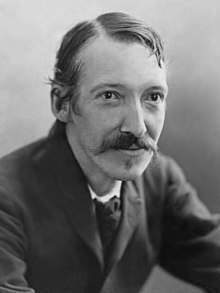
Robert Stevenson
Made by

Gainsborough Pictures
Where to Watch The Man Who Changed His Mind
See current US streaming, rental, and purchase options for The Man Who Changed His Mind (1936) via JustWatch.










The Man Who Changed His Mind Plot Summary
Read the complete plot summary and ending explained for The Man Who Changed His Mind (1936). From turning points to emotional moments, uncover what really happened and why it matters.
Dr. Laurience Boris Karloff, once a respected scientist, isolates himself in a secluded manor and begins to probe the origins of the mind and soul. He is aided by the capable surgeon Dr. Clare Wyatt Anna Lee and a wheelchair-bound confidant named Clayton Donald Calthrop, weaving an atmosphere of meticulous, almost obsessive work. The scientific community rejects his theories, threatening everything he has labored to build, and Laurience presses on, his work framed in whispers about genius and danger, while his own sense of identity tightens around the unusual pronunciation of his name, Lorenz.
To safeguard his research, Laurience turns to brain transference as a vehicle for his own nefarious aims, swapping the mind of generous philanthropist Lord Haslewood Frank Cellier with the volatile personality of Clayton. With Haslewood’s wealth and prestige at his command, the scientist grows bolder, an almost unstoppable force in the pursuit of power rather than truth. The body in charge becomes a tool for conquest, and Laurience revels in the control he wields over fortune and influence, even as he keeps the operation’s ethical vacuum well hidden behind his clinical, almost theatrical manner.
Despite the resources of a powerful patron and a state-of-the-art laboratory, Laurience remains the quintessential absent-minded professor—smoke curling from his fingers, eraser dust on the back of his wrinkled jacket, and a constant, almost comic need for a strong hairbrush. Yet the lure of Clare’s charm pulls him closer, and he Dares to reach beyond the bounds of his experiment by attempting to possess the body of Lord Haslewood’s handsome son, Dick John Loder. In this new frame, he hopes to woo Clare in person, but the disguise cannot hide his strange, unmistakable physicality, nor can it mask the habit he keeps even in the presence of the young Haslewood—cigarette in hand, a habit Dick Haslewood never practiced.
A grim misstep soon follows: before transferring his mind into Dick, Laurience strangled Clayton, who was inhabiting Haslewood’s body, ensuring that Dick—now a prisoner inside Laurience’s own mind—would stand accused of the murder of the man believed to be his father. The web of deception tightens to a fatal knot, and the truth threatens to crush everyone caught in its folds.
Clare, aided by her ally Dr. Gratton Cecil Parker, senses the ruse and fights to restore order. They manage to return Laurience’s mind to its proper body, but the physical shell is not intact: the body has been badly broken in a panicked fall from a high window, a consequence of the chaos introduced by having Dick Haslewood inhabiting Laurience’s frame. Faced with the wreckage of his extraordinary invention and the moral weight of his selfish gambit, Laurience concedes that he should never have meddled with the human soul. The once-celebrated scientist chooses to abandon the dangerous knowledge he helped create, accepting the consequences of his actions and, with a final, sober realization, acknowledges that he has changed his mind for the last time.
The Man Who Changed His Mind Timeline
Follow the complete movie timeline of The Man Who Changed His Mind (1936) with every major event in chronological order. Great for understanding complex plots and story progression.
Isolation fuels groundbreaking research
Dr. Laurience, once a respected scientist, begins radical investigations into the origins of mind and soul in an isolated manor house. He is aided by the wheelchair-bound Clayton and the promising surgeon Clare Wyatt, while the wider scientific community meets his theories with scorn. His obsession risks everything he has built as the investigation advances.
Brain transfer creates a powerful new vessel
Using his emerging brain transfer technique, Laurience replaces Lord Haslewood's mind with Clayton's personality, granting the latter control over Haslewood's wealth and social power. The experiment seems to succeed, and Laurience basks in the new leverage his work provides. The Haslewood estate becomes a stage for his increasingly dangerous ambitions.
Wealth and influence fuel the mad scientist
With Haslewood's status at his command, Laurience leverages resources to push his research further and defend his theories against critics. The living vessel now under Clayton's consciousness allows him to operate with both public influence and private control. His bold experiments grow bolder as wealth shields his endeavors.
Laurience seeks Clare through a dangerous body swap
Seeking to seduce Clare Wyatt, Laurience attempts to transfer his mind into Dick Haslewood's body. He believes occupying the heir's form will put him closer to Clare and secure her cooperation. The plan reveals how deeply his obsession has corrupted the science.
Disguise fails; his true nature shines through
Even in Dick's body, Laurience cannot fully hide his unusual physicality, and Clare quickly suspects something is amiss. The disguise is imperfect, exposing the dangerous flaws in his plan. Laurience's personal stakes become increasingly evident as his scheme unravels.
Clayton is murdered to safeguard the plan
Before he can complete the transfer to Dick, Laurience strangles Clayton, who is inhabiting Lord Haslewood's body. The murder ensures that any later accusation will be pinned on Dick, rather than on the already compromised Haslewood or Laurience. The act marks a brutal turning point in the experiment.
Dick ends up trapped in Laurience's body
Dick Haslewood finds himself imprisoned within Laurience's body, a living prisoner in a grim twist of fate. He becomes the suspect in the murder of the man believed to be his father. The case drags the science into the realm of law and consequence.
Clare and Gratton uncover the truth
Clare Wyatt and Dr. Gratton realize the mind transfer has gone awry and Laurience's consciousness is not in its proper body. They resolve to reverse the transfer to restore order and prevent further harm. The moral balance of the experiment becomes a central concern.
Mind transfer is reversed but at a cost
Clare and Gratton manage to return Laurience's mind to its proper body, but that body has been badly broken in a panicked fall. The life that the experiment ripped apart leaves lasting damage. The scientific dream collapses under the weight of its own consequences.
Laurience confronts the wreck of his invention
Face to face with the ruined results of his work, Laurience admits that he wasted an incredible invention on a selfish and murderous scheme. He recognizes the harm his ambition has caused and the moral cost of playing with human souls. The will to continue fades in the face of reality.
A vow to abandon the dangerous path
Laurience declares he should never have meddled with the human soul and chooses to forsake further pursuit of the method. He resolves to keep his knowledge, if any, buried rather than shared. The obsession that defined his career is put to rest, though at a steep personal price.
The knowledge dies with the man
In the end, Laurience takes the knowledge to the grave, erasing the method from the world. The mind-transference dream dies with him, leaving only the shattered legacy of a scientist who dared too much. Clare and Gratton are left to pick up the pieces of science and ethics he left behind.
The Man Who Changed His Mind Characters
Explore all characters from The Man Who Changed His Mind (1936). Get detailed profiles with their roles, arcs, and key relationships explained.
Dr. Laurience (Boris Karloff)
A once-respectable scientist driven by obsessive curiosity, he pursues mind-transfer to dominate others. He is brilliant but morally compromised, improvising schemes to extend his influence. His hubris leads to dangerous outcomes and a fall from grace.
Dr. Clare Wyatt (Anna Lee)
A promising surgeon and Laurience's ally who seeks to safeguard ethics and humanity. She balances scientific inquiry with compassion, challenging Laurience's reckless methods. Her resolve is pivotal to reversing the experiment and restoring order.
Clayton (Donald Calthrop)
A wheelchair-using confidant who becomes an unwilling host for Laurience's manipulations. His caustic wit and loyalty reveal the cost of ambitious experiments on individuals. His fate underscores the peril of playing with minds.
Lord Haslewood (Frank Cellier)
A philanthropic noble whose body becomes a vessel for Laurience's mind. He embodies wealth and social prestige, making him a powerful instrument in the scientist's plot. His experiences highlight the vulnerability of status when science encroaches on identity.
Dick Haslewood (John Loder)
The handsome Haslewood son targeted by Laurience for a body swap to woo Clare. He becomes a reluctant host after the experiment's fallout and faces severe consequences for the mind-switching scheme.
Dr. Gratton (Cecil Parker)
A physician who partners with Clare to counter Laurience's schemes. He represents scientific reason and loyalty, aiding in the recovery of Laurience's mind to its rightful body. His presence anchors the ethical counterforce to the mad science.
Prof. Holloway (Lyn Harding)
A professor whose expertise underscores the scientific community's perspective on Laurience's work. He embodies the academic world’s ambivalence toward radical experiments and the scrutiny that follows.
The Man Who Changed His Mind Settings
Learn where and when The Man Who Changed His Mind (1936) takes place. Explore the film’s settings, era, and how they shape the narrative.
Time period
1930s
Set in the early 1930s, a period of rapid scientific curiosity and controversial experimentation. The manor houses a cutting-edge lab that mirrors the era's mix of formal manners and technological ambition. The social norms of the time sharpen the stakes for ethical breach, making Laurience's experiments feel audacious and dangerous.
Location
Isolated manor house
The events unfold inside a secluded manor where a state-of-the-art laboratory hums with experimental equipment. The remote setting heightens the sense of danger and secrecy around Laurience's mind-transfer work. The house blends traditional propriety with the feverish energy of early 20th-century science, underscoring the clash between restraint and reckless innovation.
The Man Who Changed His Mind Themes
Discover the main themes in The Man Who Changed His Mind (1936). Analyze the deeper meanings, emotional layers, and social commentary behind the film.
🧠
Identity
The story probes whether a mind can be separated from the body, and what remains of a person when memories and personality are transplanted. Laurience's experiments force Clare and Gratton to confront questions of self, agency, and continuity. The transformed hosts reveal how fragile and fluid identity can be, challenging appearances and loyalties.
⚖️
Ethics
The pursuit of knowledge crosses ethical boundaries as ambition clashes with responsibility. The narrative critiques the cost of scientific progress when wealth and status enable dangerous experiments. Victims' suffering and the scientist's own moral reckoning underscore the human price of invention.
🗝️
Power
Transferring Laurience's mind into Lord Haslewood's body grants him wealth, influence, and control over a prominent family. The science becomes a tool to manipulate status and desire. The story warns about power's corrupting lure and the fragility of autonomy when technology extends one's reach.

Coming soon on iOS and Android
The Plot Explained Mobile App
From blockbusters to hidden gems — dive into movie stories anytime, anywhere. Save your favorites, discover plots faster, and never miss a twist again.
Sign up to be the first to know when we launch. Your email stays private — always.
Explore the mobile appThe Man Who Changed His Mind Spoiler-Free Summary
Discover the spoiler-free summary of The Man Who Changed His Mind (1936). Get a concise overview without any spoilers.
In a remote manor perched on a windswept ridge, a once‑celebrated scholar retreats from the world to chase a question that has haunted humanity for ages: where do mind and soul begin? Dr. Laurence has turned his laboratory into a shrine of humming instruments and shadowed alcoves, each corner echoing with the quiet intensity of a man who refuses to accept conventional limits. The atmosphere is thick with the smell of old books, faint incense, and the ever‑present curl of smoke that seems to follow his every thought, suggesting a blend of brilliant curiosity and looming obsession.
Assisting him is a poised and technically gifted surgeon, Clare Wyatt, whose steady hands and sharp intellect provide both a scientific counterpoint and a subtle emotional compass. Alongside them sits Clayton, a confidant whose wheelchair confines him to the manor’s corridors yet frees his mind to wander through philosophical debates. Their interactions form a delicate dance of collaboration and tension, each character embodying a different facet of the pursuit: rigorous methodology, compassionate pragmatism, and the restless yearning for a breakthrough beyond flesh.
When the broader scientific community dismisses Laurence’s theories as fanciful, the isolation deepens and his resolve hardens. He begins to contemplate using his discoveries not merely as a path to enlightenment, but as a shield against a world unwilling to recognize his vision. This shift hints at a darker edge to his genius, suggesting that the boundaries between curiosity and control are dangerously thin.
The film swirls its audience through a gothic‑tinged realm where polished instruments sit beside cracked mirrors, and the line between brilliance and madness flickers like a candle in the wind. Amidst the relentless ticking of clocks and the whisper of pages turning, Dr. Laurence’s pursuit of the soul becomes a haunting mirror for every viewer, inviting them to wonder how far one might go when the mind itself becomes the ultimate frontier.
Movies with Similar Twists and Themes
Uncover films that echo the narrative beats, emotional arcs, or dramatic twists of the one you're exploring. These recommendations are handpicked based on story depth, thematic resonance, and spoiler-worthy moments — perfect for fans who crave more of the same intrigue.
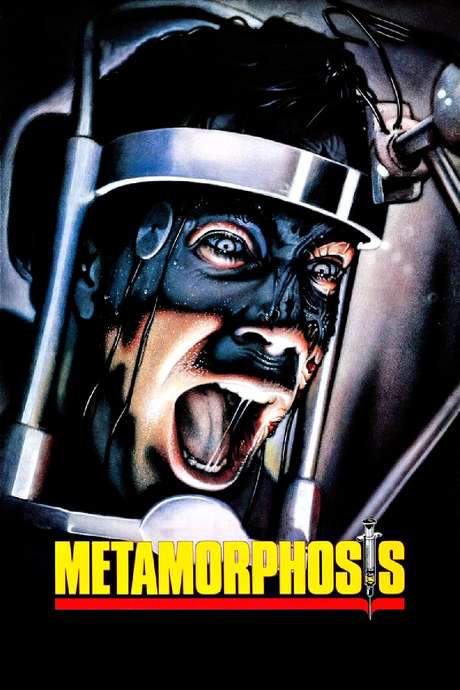

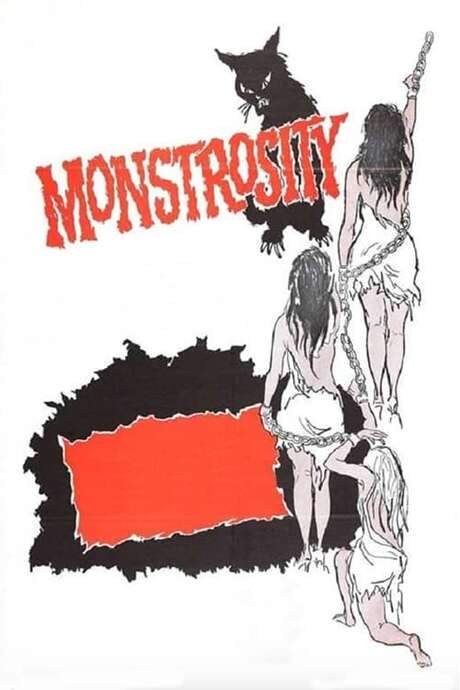


Featured on this page

What's After the Movie?
Not sure whether to stay after the credits? Find out!
Check out our other apps:

SAT Sphere
Build confidence for the Digital SAT.

Mori Atlas
Discover wild places worth protecting.

Luntero
Search smarter for a home in Amsterdam.

Plot Explained
Unravel movie endings and hidden clues.

Pokechamp
Dive into Pokémon data and battle logic.

Driving Theory
Get ready for your European theory test.

Movie Dust
Plan your next cinema trip with ease.

Musemap
Find art and culture as you travel.

Selkobase
Compare credentials before committing.

Local Manual
Turn an unfamiliar country into practical next steps.

Lernavi
Compare school systems before your next move.

GymRoam
Find a workout stop wherever your plans take you.
Explore Our Movie Platform
New Movie Releases (2026)
Famous Movie Actors
Top Film Production Studios
Movie Plot Summaries & Endings
Major Movie Awards & Winners
Best Concert Films & Music Documentaries
Movie Collections and Curated Lists
© 2026 What's After the Movie. All rights reserved.
Privacy Policy