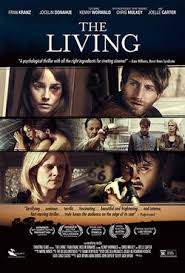
What Is The Living About?
The premise of The Living in 326 words, with nothing given away. The full story follows below.
In the quiet suburbs where ordinary routines mask deeper currents, Teddy awakens after a night of heavy drinking to find his world irrevocably altered. The house feels colder, the silence louder, and the sight of his wife, Molly, bruised and distant hints at a night he cannot fully remember. Their marriage, once familiar and comfortable, now hangs on a thread of unspoken guilt and a desperate yearning for redemption that both pulls them together and threatens to pull them apart.
Surrounding the couple is a tight‑knit family whose loyalties are tested by the fallout. Angela, Molly’s mother, watches with a pragmatic resolve, while Gordon, her brother, carries his own simmering resentment beneath a veneer of concern. Their interactions crackle with tension, each conversation a careful dance between accusation and protection, and the household becomes a pressure cooker of hidden grievances and fragile alliances. The presence of close friends and relatives adds layers of unvoiced secrets, suggesting that the stakes extend far beyond the couple’s private pain.
The film’s tone is a slow‑burning blend of psychological drama and muted thriller, letting dread build through atmosphere rather than overt action. Shadows linger in every hallway, and everyday settings—a kitchen, a grocery store, a modest dinner table—are infused with a sense of unease, as if the characters are constantly aware of a looming threat that could shatter their fragile equilibrium at any moment. This mood of quiet tension invites the audience to feel the weight of each uneasy glance and restrained conversation.
Against this backdrop, Teddy and Molly grapple with the possibility of rebuilding trust while navigating the treacherous terrain of family expectations, hidden motives, and the ever‑present question of how far one will go to protect the ones they love. Their journey is marked by tentative steps toward forgiveness, a lingering sense of danger, and the unsettling realization that the true battle may lie not in external forces but in the unspoken power dynamics that shape their lives.
What Happens in The Living?
The complete story of The Living, from the first scene to the last, in 1,189 words (about 5 minutes). Spoilers throughout.
Spoilers ahead
Teddy wakes to the aftermath of a night that left him reeling: a missing wedding band, a splattered memory, and a truth he fears to face. The house feels too quiet, and the irregular thump of his own pulse seems loud enough to betray him. With a growing sense of urgency, he searches for Molly, only to realize she is not where she should be. His confusion intensifies when he reaches Molly’s mother’s house and finds Angela and Gordon waiting with grim, practical sentences that cut through the fog of his intoxication. They tell him that Molly wants nothing to do with him, that the man who sits before them is still the man who hurt her, and that apology becomes a fragile, almost performative gesture as Teddy struggles to argue he doesn’t remember the attack. The room fills with a heavy, unsettled silence until Molly—the woman at the center of this storm—emerges with a guarded acknowledgment that what’s happening is not a full reconciliation. She makes clear she’s returning to the house, not reigniting anything with Teddy, a distinction that lingers in the air. In the same breath, Angela challenges Gordon to take a firmer stand for his sister, a moment that casts a wary shadow over the entire family’s dynamic.
In a bar, Gordon voices a darker current of feeling he tries to keep tamped down: he wishes Teddy dead. A friend mentions a possible solution in the form of an ex-con, someone who might be willing to do the job for a low price. Gordon is noncommittal, yet the seed has been planted. The moment passes, and the world settles into its routine again—back at work, back among groceries and the ordinary routines of life. When Gordon unexpectedly runs into Teddy and Molly at a supermarket—an accidental collision that underscores the fragile thread connecting their lives—Teddy apologizes for his behavior, signaling a tentative willingness to mend fences. Gordon, though still preoccupied with his own darker thoughts, gives the impression that he could still throw a punch, should the moment demand it, and he reiterates his yearning for Teddy’s end. A friend suggests again that they could reach the ex-con, and Gordon gives a half—almost reluctant—consent to pursue the possibility.
Back home, Molly’s stance hardens a touch more: she asks Teddy to move out, but she agrees to give him a real chance to repair the harm with a planned dinner date. The restaurant becomes a kind of stage where their fragile truce is observed by friends who sense the battered edges of this couple’s life yet choose to pretend nothing severe is happening. They navigate the social space with care, the guests too uncomfortable to comment on Molly’s battered appearance, letting the silence do the heavy lifting. Meanwhile, the ex-con’s number travels southern miles to reach Howard, a man whose temperament and past prove to be a volatile mix. Howard, who lives far away in Mississippi, insists that Gordon meet him in person to seal the agreement, and Gordon, driven by a mix of guilt and fear, agrees to drive almost half a country away to see him.
What unfolds is a disturbing test of nerve and choice. Gordon drives into unfamiliar territory, and once Howard confirms the job, the atmosphere tightens into a claustrophobic certainty. Howard insists on removing all doubt—he requires Gordon to strip naked to prove he isn’t wired in some way—and, once the test is over, he accepts the payment terms with a chilling calm. The pair drive home, and the longer ride is filled with Howard’s cold philosophy about violence: he believes the survivors bear the deepest weight of grief, a belief that lurks in every taunt and threat he levels at Gordon. The moral gravity of the moment grows heavier as the car fills with the unspoken question of what price a life must pay for peace.
Meanwhile, Teddy and Molly’s relationship begins its slow, stubborn thaw. They find a way back toward each other, and Molly allows Teddy to move back into their house. The air between them becomes a measured compromise, a tentative normalcy that hints at healing even as the threat of unseen violence remains just outside the door. Gordon, too, returns to Pennsylvania to join the dinner scene at the house—a gathering that starts with cold politeness and devolves into a combustible clash. Angela’s restraint short-circuits as she accuses Teddy of bringing danger into their family; Molly defends him, and the two women clash in a raw, unfiltered exchange that leaves the room ringing with tension. The collective mood is a volatile mix of anger, fear, and the stubborn desire for some semblance of harmony.
The home becomes a paradox: a place where intimacy can flourish and where danger can ambush at any moment. Teddy and Molly finally choose to re-enter the intimate space of their relationship, sharing a night of renewed closeness that culminates in Molly producing Teddy’s missing wedding band. The moment feels like a small victory, a tangible symbol that life might still hold memory and meaning. Teddy’s next, almost casual question—whether he can have a beer—belongs to a different world, one where normalcy is a fragile veneer. Molly says yes, a small concession that signals trust, and their tentative happiness seems within reach until a knock at the door interrupts the fragile peace.
Howard arrives in a brutal, decisive fashion: he shoots Teddy dead, a stark reminder that the violence looming over this family is not abstract but lethal. Molly rushes to intervene, but Howard warns her off with the same cold certainty as before, and he shoots her as well, ending their hopeful moment with cruel finality. The house has become a crime scene, and grief detonates in its wake as Molly’s body collapses and Teddy’s life slips away.
In the wake of this catastrophe, Gordon travels to Mississippi to confront Howard with a shotgun. He arrives bearing the weight of loss and guilt, a man who insists that murder cannot define him any longer even as the act of taking a life seems to burn itself into his skull. Howard’s warning—that murder will change him—lands with blunt force, a reminder that violence begets consequences that cannot be escaped. Gordon accepts the grim reality: he is already living with the consequences of what he has witnessed and what he has helped to spark. In a final, stark standoff, Gordon does what is necessary in his own perception of justice, pulling the trigger one last time to end Howard’s life.
The film closes on a choked, somber note that lingers in the memory. The cycles of violence have carved deep trenches in each character’s life, leaving behind a legacy of pain that no one quite knows how to mend. What begins as a struggle for control, redemption, and safety becomes a brutal meditation on how much violence is required to protect those we love, and at what cost. The story remains exacting and unflinching in its portrayal of how fear, anger, and guilt intertwine to demand a price that no one seems prepared to pay—and yet cannot avoid paying in the end.
The Living Timeline: Every Key Event in Order
11 key events in the order they happen, from “Teddy wakes up, band missing and Molly's fate uncertain” to “Gordon returns to Mississippi to finish it”. 11 events name a place, across 10 locations.
- 1
Teddy wakes up, band missing and Molly's fate uncertain
Teddy wakes after a night of binge drinking to find his wedding band missing and his fist bloodied. He cannot locate Molly and goes to Molly's mother Angela's house to learn what happened. Angela and Molly's brother Gordon explain that Molly wants nothing to do with him because of the beating, and Teddy apologizes while insisting he does not remember the incident. Molly arrives with him and makes it clear that this is not a reconciliation; she is simply returning to the house, not renewing their relationship.
Where:Molly's mother's house
- 2
Gordon expresses deadly thoughts about Teddy
In a bar, Gordon tells a friend that he wants Teddy dead. The friend suggests a cheap ex-convict who might take the job, but Gordon doesn't commit to anything yet. The conversation plants a seed of external help and reveals Gordon's growing resentment.
Where:Bar
- 3
Supermarket encounter and lingering tension
At a supermarket, Teddy and Molly run into Gordon. Teddy apologizes for his past behavior and offers Gordon a chance to throw a punch if he wants. Gordon declines and reiterates that he wishes Teddy were dead, while his friend’s number is mentioned as a possible option.
Where:Supermarket
- 4
Angela confronts Gordon about assertiveness
Back at their house, Angela berates Gordon for not sticking up for his sister and for issues at work. The family dynamic remains fraught as Teddy's fate hangs in the balance and Molly weighs the possibilities of staying or leaving.
Where:Angela and Gordon's house
- 5
Molly asks Teddy to move out, dinner date offered
Molly insists that Teddy move out, yet agrees to give him a chance to make amends with a dinner date the next day. They go to a local restaurant and encounter friends who are too embarrassed to comment on Molly's battered appearance. The date sets a fragile path toward reconciliation, though Molly remains cautious.
Where:Local restaurant
- 6
Gordon pursues the ex-con; Howard's location revealed
Gordon obtains the ex-con Howard's number and learns Howard lives in Mississippi. Howard insists that Gordon drive to his house in Mississippi to discuss the job, and Gordon reluctantly agrees to travel there.
Where:Howard's house, Mississippi
- 7
Gordon is coerced into the job
When Gordon arrives, Howard forces him to strip naked to prove he is not wired and then accepts the assignment. The coercive and shocking demand foreshadows the violence to come and sets Gordon on a dangerous path.
Where:Howard's house, Mississippi
- 8
Howard murders two people during the drive back
On the way back, Gordon becomes uneasy as Howard murders two people at a roadside diner and declares he will take his money one way or another. He taunts Gordon with threats and defends his philosophy that survivors bear the weight of loss.
Where:Roadside diner
- 9
Teddy and Molly briefly reconnect
Back at home, Teddy and Molly gradually reconcile and she allows him to move back into their house. She even returns his missing wedding band, and he quips about having a beer as she approves, signaling a tenuous peace and renewed intimacy.
Where:Teddy and Molly's home
- 10
A deadly dinner ends in murder
Gordon joins Teddy, Molly, and Angela for dinner, but the gathering turns icy. After a knock at the door, Howard shoots Teddy dead and walks away, and Molly rushes to confront him, only to be killed by a subsequent shot.
When:Evening Where:Teddy, Molly, Angela, and Gordon's home
- 11
Gordon returns to Mississippi to finish it
After attending his sister's funeral, Gordon travels back to Mississippi and confronts Howard with their mother's shotgun. Howard warns that murder will change him, but Gordon insists he already bears the consequences. He shoots and kills Howard in the confrontation.
Where:Howard's location, Mississippi
Who Are the Main Characters in The Living?
5 characters, among them Teddy, Molly and Angela: who each one is and the part they play in the story.
- T
Teddy
A flawed, remorseful figure who wakes up after a night of binge drinking to find his wedding band missing and his wife absent. His denial about the severity of his past violence masks deeper insecurities and a longing for connection. He oscillates between seeking forgiveness and repeating old patterns, often reacting impulsively to protect himself. His journey examines whether apology can translate into lasting change amid a fraught relationship.
- 🥃 Alcohol problems
- 💔 Guilt & denial
- 🤝 Fragile relationships
- M
Molly
Tough, conflicted, and bound by a battered history, Molly slowly allows a controlled path toward reconciliation while drawing clear boundaries. She is torn between leaving for good and giving Teddy another chance, illustrating the complexity of trust after abuse. Her presence anchors the emotional core of the story, even as she becomes a casualty of the violence that surrounds them.
- 💪 Resilience
- ❤️ Love
- 🗝️ Boundaries
- A
Angela
Molly’s mother and a stern matriarch who berates Gordon for not standing up for themselves and for not demanding fair treatment. She embodies a hard, pragmatic mindset that clashes with tenderness and compromise. Her reactions reveal the cost of judgment and the limits of protection within a dysfunctional family system.
- 👩👧 Family conflict
- ⚖️ Boundaries
- 🗣️ Harsh judgment
- G
Gordon
Angela’s son and Molly’s brother, who becomes entangled in a dangerous plot to hire an ex-con. He wavers between loyalty to family and fear of consequences, ultimately facing the moral consequences of his actions. His arc culminates in a decisive act that echoes the play between self-preservation and accountability.
- 💼 Self-interest
- 🗡️ Moral conflict
- 🕊️ Family loyalty
- H
Howard
An ex-convict with a chilling philosophy: violence is a force that haunts the survivors more than the victims. He carries out brutal acts and manipulates others into enabling his crimes. His presence drives the film’s escalation and ultimate tragedy, embodying the darkest consequences of violence for hire.
- 🔪 Violence
- 🧭 Morality distortion
- 🧨 Threat
Where and When Is The Living Set?
The Living is set in Pennsylvania, USA, Mississippi and USA (Contemporary (early 21st century)). Here is why the time and place matter to the story.
When
Contemporary (early 21st century)
The events take place in modern-day America, without a specific historical marker. Everyday environments—bars, diners, supermarkets, and homes—frame the narrative with a sense of immediacy. The film emphasizes present-day social dynamics and the lingering impact of past abuse on current choices.
Where
Pennsylvania, USA, Mississippi, USA
The story unfolds primarily within a Pennsylvania home and its nearby surroundings, including a mother-in-law’s house, a local supermarket, and a restaurant. A cross-state thread leads to Mississippi, where the ex-con Howard resides, highlighting a stark contrast between intimate domestic spaces and a harsher outside world. These settings create claustrophobic tension at home and sudden bursts of danger when violence erupts.
- 🏡 Domestic setting
- 🌆 Small-town atmosphere
What Are the Themes of The Living?
4 ideas the story keeps returning to, among them Domestic Violence, Cycle of Violence and Family Conflict.
-
01
Domestic Violence
The film centers on Teddy’s alcohol-fueled violence and its concrete impact on Molly and their broader circle. Molly’s decision to return to the house under conditions, while clarifying that reconciliation is not guaranteed, highlights the fragile boundaries survivors navigate. Angela and Gordon’s reactions reveal how families can enable or resist abusive dynamics. The narrative treats violence as a persistent force that reshapes relationships and trust.
-
02
Cycle of Violence
A hired killer, violence across states, and retaliatory acts demonstrate how harm propagates through the lives of the characters. Howard’s justification—that the living suffer more than the victims—frames violence as a mechanism that spreads responsibility and guilt. Gordon’s decision to confront Howard and the eventual deaths underscore how attempts to control outcomes often deepen the tragedy. The film suggests that breaking the cycle requires more than intent; it requires accountability.
-
03
Family Conflict
Angela’s sharp judgment and Gordon’s hesitations expose a fractured family negotiating loyalty, respect, and financial need. The dinner scene becomes a tense arena where old wounds resurface and boundaries are tested. Molly and Teddy’s fragile reconciliation is continually tested by kin, implying that familial ties can both sustain and doom individuals. The climax reinforces how unresolved family tensions fuel violence.
-
04
Redemption & Responsibility
Across the film, characters seek repair—Teddy’s attempt to reconcile, Molly’s guarded engagement, and Gordon’s costly clearance of debt—yet the story insists that true restitution is elusive. The ultimate deaths of Teddy and Molly underscore the limits of forgiveness in the face of ongoing harm. Gordon’s final act of killing Howard signals a grim, personal attempt to assume responsibility, even as the cost ricochets back onto him.
What Kind of Film Is The Living?
Dark in tone, with steady pacing and a moderate story, going by the plot summary.
- Tone
- Dark
- Pacing
- Steady
- Story
- Moderate
- Intensity
- High
- Ending
- Bleak
A steadily paced and deeply grim thriller that builds unrelenting tension around a fractured marriage, culminating in a bleak and violent reckoning for all involved.
- tense
- anxious
- claustrophobic
- somber
- unsettling
- grim
- domestic abuse
- redemption
- revenge
- marriage
Content notes: domestic abuse, murder, graphic violence, hiring a hitman.
Quiz
How well do you remember The Living? Test yourself on the story.
Where to Watch The Living
Stream it on Amazon MX Player and Amazon Prime Video, or rent or buy it from Amazon Video and Apple TV Store. US availability and prices from JustWatch.
Stream 9
 Amazon MX Player
  Amazon Prime Video
  Amazon Prime Video Free with Ads
  Amazon Prime Video with Ads
  Fawesome
  Kanopy
  Plex
Plex  Plex Channel
  Tubi TV



Streaming availability in the US, powered by