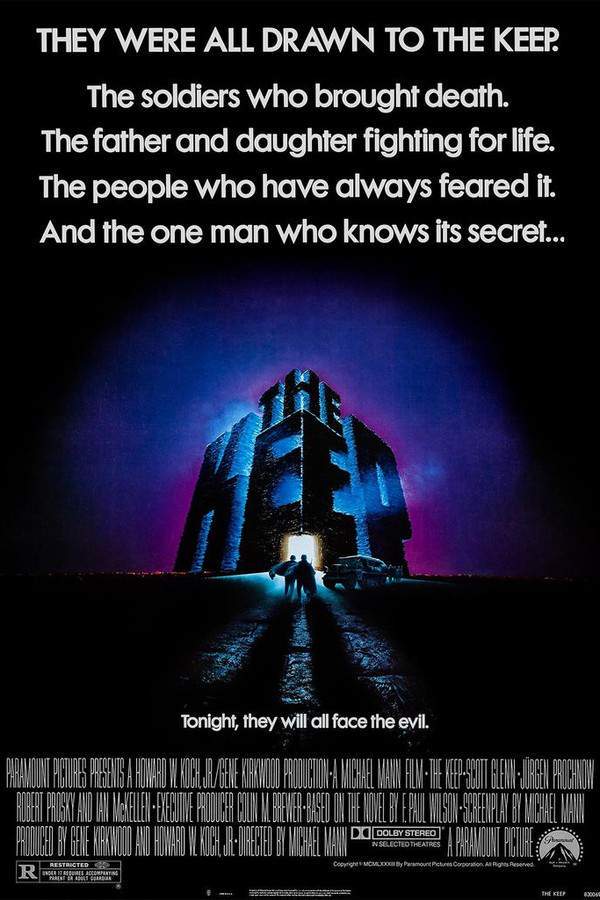
The Keep 1983

Directed by

Michael Mann
Made by

Paramount Pictures
Where to Watch The Keep
See current US streaming, rental, and purchase options for The Keep (1983) via JustWatch.






The Keep Plot Summary
Read the complete plot summary and ending explained for The Keep (1983). From turning points to emotional moments, uncover what really happened and why it matters.
In 1941 Romania sits at the edge of a widening war as Operation Barbarossa unfolds to the east. A motorized Gebirgsjäger unit of the Wehrmacht, commanded by Captain Klaus Woermann, arrives at a remote and seemingly forsaken citadel known as The Keep, intent on seizing control of the strategic Dinu Pass high in the Carpathians. What begins as a routine operation quickly slips into something far more dangerous. Two soldiers, privates Lutz and Anton, dare to loot a gleaming metal icon housed within the keep’s ancient walls, and their act destabilizes the place. They awaken a spectral entity named Radu Molasar, a force that does not stay contained. Over the next days, Molasar stalks the fortress, killing five more soldiers and gradually taking a more tangible form as the fear and awe it inspires spreads through the garrison.
Into this volatile situation the German command sends a harsh response. A detachment of SS Einsatzkommandos, led by the ruthless SD Sturmbannführer Erich Kaempffer, arrives under the pretense of rooting out supposed Soviet partisan activity nearby. Kaempffer’s convoy carries out brutal reprisals, executing three civilians as collective punishment and seizing five more as hostages, despite Woermann’s attempts to restrain such extreme measures. The clash between orders and conscience becomes a stark undercurrent to the unfolding horror.
Meanwhile, a thread of history and myth twists through the keep’s cold stone. Following the urging of a local village priest, Father Mihail Fonescu, the Germans retrieve Theodore Cuza, an aging Jewish historian who has endured captivity in a concentration camp. Cuza works to decipher an enigmatic message carved in Old Slavonic using the Glagolitic alphabet, a clue etched on the citadel’s wall that hints at deeper powers at work. Molasar’s influence reaches even further as he saves Cuza’s daughter Eva from two Einsatzkommandos and heals Cuza’s debilitating scleroderma by touch. This act binds Cuza to Molasar in a troubling debt, for the entity now demands that Cuza remove a talisman from the keep so Molasar can escape its confinements.
From the shadows, a mysterious stranger named Glaeken Trismegestus arrives from Axis-occupied Greece. His presence unsettles Cuza, and he quickly seduces Eva, drawing Cuza’s ire and suspicion. The village around the keep begins to feel the malignant pull of Molasar’s power, bending minds and stirring unrest among the people who live closest to the fortress. A confrontation with Glaeken ends badly for him—the soldiers fire on him and push him into a ravine, though he survives, bloodied but undeterred.
Captain Woermann outwardly condemns Kaempffer’s brutal tactics, arguing that the monster supposedly hunting the Nazis is, in truth, a mirror of their own malevolence. Yet the din of gunfire and the unsettling screams emanating from the courtyard interrupt their debate. Kaempffer returns to the inner yard to find a nightmare: Woermann has been slain by Molasar, and every member of his garrison has fallen to the entity’s unseen force, their military vehicles mysteriously disabled and his own authority met with a catastrophic collapse.
As Cuza moves to remove the talisman, Molasar kills Kaempffer when he detects the danger Cuza poses to his plan. Eva, attempting to intervene, cannot avert Molasar’s command that Cuza kill her; Cuza resists, but Molasar’s power reverses his progress and sends Cuza back into the decline of illness and weakness that the entity first exploited. In the midst of this, Glaeken returns, recovers the talisman, and confronts Molasar in a climactic struggle.
The battle concludes with Molasar being weakened and banished back into the deepest recesses of The Keep. Glaeken, transformed by a surge of light, seals the aperture that had freed Molasar, containing the entity once again within the fortress’s heart. With danger contained for the moment, the villagers offer Eva and Cuza shelter and guidance, guiding them away from the keep’s lingering shadows as they seek safety beyond its walls. The Keep settles into a tense quiet, a reminder of the uneasy intersection of war, ancient power, and the choices that define humanity under pressure.
The Keep Timeline
Follow the complete movie timeline of The Keep (1983) with every major event in chronological order. Great for understanding complex plots and story progression.
Arrival at the Keep
In 1941, after the start of Operation Barbarossa, a motorized Gebirgsjäger unit under Captain Klaus Woermann arrives at the uninhabited citadel known as the Keep to seize control of the Dinu Pass. The fortress sits silent and foreboding, hinting at dangers beyond its walls. This mission sets the stage for a confrontation with a power that lies beyond the ordinary.
Icon Awakens Molasar
Privates Lutz and Anton attempt to loot a metallic icon within the keep and inadvertently awaken a spectral entity. Molasar emerges and immediately begins to kill nearby soldiers, seeding fear among the unit. The disturbing incident marks the first direct threat from the force haunting the fortress.
Molasar's First Kill Spree
Over the following days Molasar claims five more lives and begins to take a more defined corporeal form. The keep and its surrounding areas grow increasingly perilous as fear and madness spread. The supernatural presence becomes central to the soldiers' experience of the siege.
Einsatzkommandos Arrive
A detachment of SS Einsatzkommandos under Sturmbannführer Erich Kaempffer arrives to address suspected partisan activity in a nearby village. Kaempffer orders executions and takes several civilians hostage, escalating brutality despite Woermann's protests. The German command structure grows fractious as the horror outside mirrors the horror inside the fortress.
Cuza Retrieved and Murals Decoded
At the urging of Father Mihail Fonescu, the Germans retrieve the ailing Jewish historian Theodore Cuza from a concentration camp. Cuza deciphers a message written in Old Slavonic using the Glagolitic alphabet carved on the citadel wall. Molasar's influence already touches the villagers as the mystery deepens.
Cuza Becomes Indebted to Molasar
Molasar saves Eva from assault and cures Cuza of his scleroderma by touch, forging a dangerous debt between Cuza and the entity. Molasar demands that Cuza remove a talisman from the keep to free the entity. Cuza's moral compass tightens as he weighs loyalty against his own humanity.
Glaeken Arrives
From Axis-occupied Greece, a mysterious stranger named Glaeken Trismegestus arrives and seduces Eva, drawing Cuza's ire. His presence signals that Molasar's power exceeds the fortress and hints at a larger cosmic conflict. The locals begin to sense a new, otherworldly balance of power at play.
Molasar's Influence Takes Hold
The malignant power begins driving the villagers toward madness, blurring lines between superstition and reality. People react with fear, confusion, and hostility as the entity's aura grows stronger. The entire community becomes a battleground for supernatural manipulation.
Glaeken Attacks; Survives
A group of soldiers fires on Glaeken, forcing him into a ravine, yet he survives the encounter. The attack demonstrates Molasar's reach beyond the fortress walls. Kaempffer's determination to control the threat hardens as the situation deteriorates.
Kaempffer's Fall
Kaempffer shoots Woermann in a fit of rage and discovers his garrison slaughtered by Molasar, with the vehicles inside the courtyard disabled. The discovery exposes the consequences of brutal orders and the true cost of failing to confront the haunting force. The murder marks a turning point in the German command's path.
Cuza Confronts the Talisman
As Cuza approaches the talisman to remove it, Eva tries to intervene, but Cuza initially refuses Molasar's command to kill her. Molasar reverses Cuza's physical improvement, returning him to his diseased state and tightening its hold. The moment tests Cuza's humanity against the entity's coercive pull.
Glaeken Seizes and Battles Molasar
Glaeken arrives, retrieves the talisman, and confronts Molasar in a decisive battle. Molasar is weakened and banished back into the innermost recesses of the keep. Glaeken is transformed in a storm of light and seals the aperture to imprison the entity once more.
Village Relief and Escort
With Molasar contained again, the villagers are freed from its influence and escort Eva and Cuza away from the fortress. The community returns to a fragile normalcy, aware that a dangerous force once lurked nearby. The film closes on a note of cautious relief and lingering mystery.
The Keep Characters
Explore all characters from The Keep (1983). Get detailed profiles with their roles, arcs, and key relationships explained.
Glaeken Trismegestus (Scott Glenn)
An enigmatic traveler who arrives from Axis-occupied Greece and immediately becomes entangled with Eva. He opposes Molasar with otherworldly abilities and ultimately sacrifices himself to seal the keep, transforming in a storm of light. His presence introduces a force of guardianship that contrasts with the cruelty of the human soldiers.
Molasar (Ian McKellen)
A spectral entity imprisoned within the keep who seeks to escape by manipulating people and seizing control of the talisman. He accounts for the deaths and fear that grip the soldiers and villagers, and he demands the talisman be removed to free him. His power wanes only when confronted and banished by Glaeken.
Eva Cuza
Daughter of Theodore Cuza; she becomes a focal point for Molasar’s influence and is seduced by Glaeken, complicating loyalties. Her safety and freedom are tied to the talisman’s fate and the keep’s sealing.
Theodore Cuza
Ailing Jewish historian whom Molasar leverages to decipher the Old Slavonic message inscribed on the citadel walls. His knowledge pulls him into a dangerous debt with the demon, influencing the fate of Eva and the keep.
Erich Kaempffer
A sadistic SD Sturmbannführer commanding the Einsatzkommando, whose brutality underscores the brutality of war and its mirror in Molasar’s violence. His authority collides with Woermann’s dissent until Molasar removes him from the picture.
Captain Klaus Woermann
The Wehrmacht captain leading the German unit at the keep. He clashes with Kaempffer over the treatment of civilians and the ethical implications of their mission, embodying a wartime struggle between duty and morality.
The Keep Settings
Learn where and when The Keep (1983) takes place. Explore the film’s settings, era, and how they shape the narrative.
Time period
1941
The events unfold in 1941 during World War II, in the Romanian Carpathians. A motorized Gebirgsjäger unit arrives to seize the strategic pass and control the keep. As the siege progresses, a spectral power begins to influence both the German soldiers and nearby villagers, blurring the lines between war and magic.
Location
The Keep citadel, Dinu Pass, Carpathian Mountains, Romania
The story centers on an isolated citadel known as The Keep, perched at the Dinu Pass in the Carpathian Mountains of Romania. The fortress is described as uninhabited, with walls bearing ancient Old Slavonic inscriptions. Its remote, craggy setting becomes the battleground where German troops, villagers, and a powerful supernatural force collide.
The Keep Themes
Discover the main themes in The Keep (1983). Analyze the deeper meanings, emotional layers, and social commentary behind the film.
🕯️
Supernatural Threat
The sudden emergence of Molasar marks a force beyond human comprehension entering a wartime setting. The entity grows stronger by feeding on fear and bending reality within the keep. It manipulates Cuza, Eva, and others to free itself, showing how supernatural power can exploit human weaknesses. The clash between Molasar and Glaeken highlights how ancient darkness can outpace contemporary violence.
🪖
War Morality
The story mirrors the brutality of war through Kaempffer’s sadism and the execution of civilians, drawing a parallel to the demon's violence. German command decisions and punitive actions reflect a collapse of ethics under stress. The supernatural threat intensifies the moral ambiguity, forcing characters to confront whether ends justify means in extreme circumstances. The film uses the wartime backdrop to question the nature of evil in both men and monsters.
🔮
Legacy
Glaeken’s arrival and Molasar’s confrontation frame a test of lingering power and ancient guardianship. The battle culminates in a transformation that seals the keep, suggesting a cyclical duty to contain malevolence. The villagers regain their freedom as the power recedes, but the events leave a lingering question about who truly commands the fate of a place haunted by history.

Coming soon on iOS and Android
The Plot Explained Mobile App
From blockbusters to hidden gems — dive into movie stories anytime, anywhere. Save your favorites, discover plots faster, and never miss a twist again.
Sign up to be the first to know when we launch. Your email stays private — always.
Explore the mobile appThe Keep Spoiler-Free Summary
Discover the spoiler-free summary of The Keep (1983). Get a concise overview without any spoilers.
In the bleak winter of 1941, a remote stone keep looms over the Carpathian passes of Romania, its walls steeped in forgotten legend and the sigh of centuries. The landscape is a stark tapestry of snow‑capped peaks, cracked battlements, and a village that clings to the edge of oblivion, all set against the relentless march of a continent at war. The atmosphere is heavy with the crackle of artillery in the distance, yet an older, colder chill seems to rise from the very stone of the fortress itself, hinting that some forces here were never meant for the modern battlefield.
Captain Klaus Woermann commands a weary detachment of German soldiers tasked with securing the strategic pass that threads through the mountains. His men are hardened by combat, but the captain’s resolve is tempered by a quiet fatigue earned from years of conflict. Alongside him, a determined Nazi officer oversees the garrison, their presence a study in discipline and rigid hierarchy. The soldiers’ routine patrols and guarded conversations illuminate a world where duty clashes with the growing sense that the true enemy may not wear a uniform.
Beneath the keep’s crumbling arches sleeps an ancient malevolence, a darkness whispered about in local folklore and etched into the very foundations of the stone. The aura that surrounds the fortress feels alive, as if the walls themselves are breathing a slow, malevolent rhythm that resonates with the lingering grief of the land. This presence is less a monster of flesh and blood and more a primordial echo of terror, one that predates the clash of armies and seems indifferent to the outcomes of human wars.
The film balances the grim realism of World War II with a creeping, atmospheric horror that asks what lies beyond the scope of human cruelty. As Captain Woermann and his troops confront the unfamiliar, they must grapple with doubts that transcend orders and strategy, confronting a threat that challenges the very nature of their beliefs. The story invites viewers into a world where the echo of gunfire is matched by the whisper of something far older and far more unsettling, promising a tension that is as psychological as it is supernatural.
Movies with Similar Twists and Themes
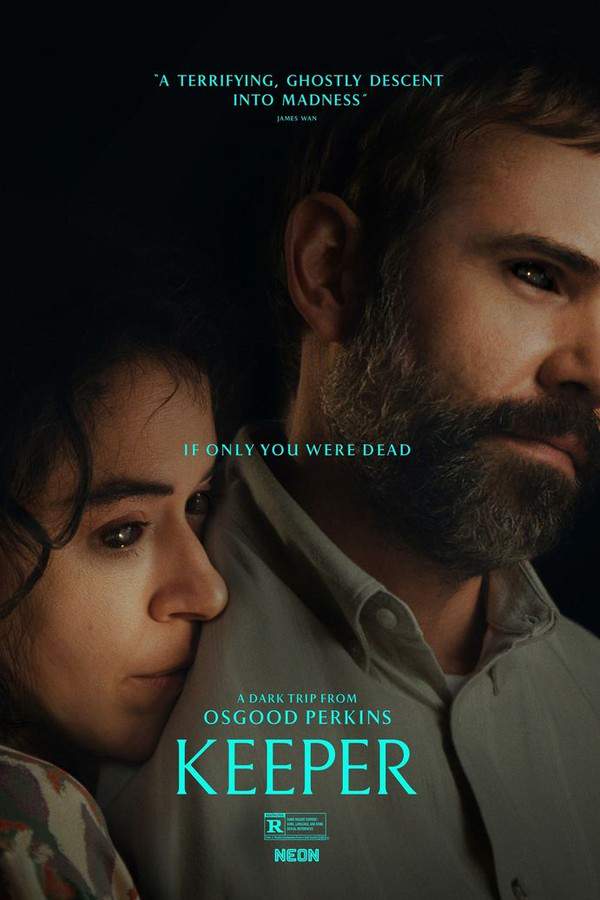
Uncover films that echo the narrative beats, emotional arcs, or dramatic twists of the one you're exploring. These recommendations are handpicked based on story depth, thematic resonance, and spoiler-worthy moments — perfect for fans who crave more of the same intrigue.




Featured on this page

What's After the Movie?
Not sure whether to stay after the credits? Find out!
Check out our other apps:

SAT Sphere
Build confidence for the Digital SAT.

Mori Atlas
Discover wild places worth protecting.

Luntero
Search smarter for a home in Amsterdam.

Plot Explained
Unravel movie endings and hidden clues.

Pokechamp
Dive into Pokémon data and battle logic.

Driving Theory
Get ready for your European theory test.

Movie Dust
Plan your next cinema trip with ease.

Musemap
Find art and culture as you travel.

Selkobase
Compare credentials before committing.

Local Manual
Turn an unfamiliar country into practical next steps.

Lernavi
Compare school systems before your next move.

GymRoam
Find a workout stop wherever your plans take you.
Explore Our Movie Platform
New Movie Releases (2026)
Famous Movie Actors
Top Film Production Studios
Movie Plot Summaries & Endings
Major Movie Awards & Winners
Best Concert Films & Music Documentaries
Movie Collections and Curated Lists
© 2026 What's After the Movie. All rights reserved.
Privacy Policy