
The Jericho Mile 1979

Directed by
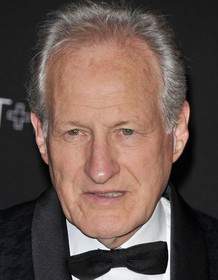
Michael Mann
Made by

ABC Circle Films
The Jericho Mile Plot Summary
Read the complete plot summary and ending explained for The Jericho Mile (1979). From turning points to emotional moments, uncover what really happened and why it matters.
Larry Murphy is a man whose life sentence in Folsom Prison comes after a conviction for first-degree murder. He believes the killing of his father was justified because his father was raping Murphy’s stepsister, a justification that colors every moment of his confinement. In the yard, Murphy becomes known as “Lickety Split,” a nickname assigned by fellow inmates, yet he remains a solitary figure who has only one friend in his world, R.C. Stiles. The story unfurls around Murphy’s singular fixation: speed. He is drawn to the idea of running, to pushing his body to the limit as a form of escape and a possible path to something beyond the cell blocks.
The film introduces the prison’s psychology as a lens on speed. The resident expert, the prison psychologist, is Dr. Bill Jankowski, who arranges a timing test with the prison sports writer to measure how fast Murphy can run. When the warden, Warden Earl Gulliver learns the magnitude of Murphy’s speed, he enlists the help of the state’s track and field coach, Jerry Beliot, to bring in a couple of Murphy’s distance-running prospects to push him in the yard. Murphy defeats them all, confirming that his raw talent could be directed toward something larger than prison games: the Olympic trials. This becomes a catalyst for a larger plan: a proper track must be built to exact specifications inside the yard so that Murphy can post an official time, a prerequisite for Olympic consideration. The Warden calls on the inmate population to volunteer, turning labor into a mission and a symbol of possibility within the harsh confines of the prison.
Behind the scenes, tension grows as R.C. Stiles negotiates with the leadership of the white gang to gain a conjugal visit with his wife several months ahead of schedule. The payoff is to smuggle in drugs, using Stiles’s wife as the conduit. When Stiles’s wife does not appear and a drug mule instead slips through the cracks, Stiles refuses to participate, and the mule is ultimately arrested. The fallout reverberates through the yard, and Murphy learns of Stiles’s predicament, prompting him to intervene. Murphy convinces Stiles to withdraw to isolation, but the situation spirals: Stiles is killed after the inmates are released, an event that intensifies the already volatile dynamics between the prison’s rival factions.
As the track project advances, the social order in the yard buckles. The white gang’s boycott of the track and the surrounding picket line become flashpoints, while other groups—Black and Hispanic inmates—challenge the legitimacy of that line. Through it all, Murphy’s speed becomes a unifying force, and the track rises from plan to concrete reality. When at last Murphy clocks a qualifying time, he has beaten a renowned miler, and the possibility of Olympic participation shifts into view. The moment culminates in Murphy appearing before the U.S. Olympic board, where it becomes clear that the board’s intentions were never to let a convicted murderer compete at the trials. During the confrontation, a board member presses Murphy to reflect on his past actions against his father, testing whether Murphy feels remorse. Murphy answers with a blunt intensity: he would “blow him away” all over again given the same circumstances.
Even as the Olympic dream is derailed, life at Folsom resumes its routine. Murphy learns that Frank Davies, one of the fastest milers in the country, has qualified for the Olympics, and he retrieves the stopwatch given by Dr. Bill Jankowski along with his spikes. He positions himself on the start line, ready to measure how his time would stack up against Davies’s—this is Murphy’s way of resisting the loss of a chance at glory. The yard watches with bated breath as he races, pushing himself to the limit one last time. A final, collective moment unfolds when the stopwatch is finally seized by an inmate who shouts out the result: Murphy has beaten Davies’s time. In a surge of raw emotion and defiance, Murphy hurls the stopwatch against the prison wall, shattering it as the inmates’ gaze lingers on the finish line and the possibilities that moment still holds.
The Jericho Mile Timeline
Follow the complete movie timeline of The Jericho Mile (1979) with every major event in chronological order. Great for understanding complex plots and story progression.
Convicted of first-degree murder
Larry Murphy is convicted of first-degree murder and sentenced to life in Folsom Prison after shooting his father, whom he believes was raping his stepsister. He maintains the act was justified, though the judgment leaves him isolated in the yard. The conviction becomes the bedrock of his life behind bars and his fixation on speed.
The nickname Lickety Split
Inmates nickname him Lickety Split for his uncanny pace, and Murphy remains a loner with only one friend, Stiles. The nickname spreads through the yard, setting him apart from other inmates.
Speed test by the prison staff
The prison psychologist arranges for the sports writer to time Murphy, giving him a tangible measure of his speed. Murphy does not realize how fast he is until the stopwatch reveals it, a moment that reframes his ambitions. The revelation becomes the catalyst for a plan that could change his life inside Folsom.
Warden enlists a track coach
The Warden learns of Murphy's speed and brings in the state track coach to pit him against a few prison distance runners. Murphy defeats the challengers in a display of surprising speed, catching the staff's attention.
Building a proper prison track
To register an official time, a proper track must be built in the yard, so the Warden asks inmates to volunteer. The project becomes a focal point in the prison, outlining a path toward something bigger than ordinary yard work.
Stiles plots a conjugal visit
Stiles negotiates with Dr D to secure an early conjugal visit so he can see his baby, hoping to maneuver within the white gang's control. Instead of Stiles' wife, a drug mule is arranged to smuggle drugs, prompting a confrontation when she is arrested.
Stiles goes into isolation and is killed
Stiles informs Murphy of the mule incident, and Murphy convinces him to go into isolation for safety. When the prisoners are released, Stiles is killed, removing Murphy's only ally and driving tensions higher.
Picket line forms
The white gang withdraws support and forms a picket line around the track project, preventing others from crossing. The strike fractures prison solidarity and escalates the rivalry between white, black, and Hispanic inmates.
Gangs clash in the yard
Blacks and Hispanics challenge the legitimacy of the picket line, and a gang fight erupts as tensions flare in the yard. The conflict threatens the integrity of the track project and tests Murphy's focus.
Murphy clocks a qualifying time
The track is completed and Murphy clocks a qualifying time, beating Frank Davies, one of the fastest milers in the United States. His achievement moves him toward the Olympic trials.
Olympic board confrontation
Murphy is summoned before the U.S. Olympic board, and it becomes clear that the board never intended to let a convicted murderer compete. A board member tests Murphy on remorse, and Murphy bluntly admits that given the same circumstances he would do it again.
Davies qualifies; Murphy prepares privately
Life at Folsom returns to normal, but Murphy hears that Davies has qualified for the Olympics with an exceptional time. He retrieves a stopwatch and his spikes, preparing to imagine how he would have fared against Davies.
A private race to settle the what-if
Murphy sets himself at the start line and races as hard as he can to see how he would have fared against Davies. The inmates watch with anticipation as he pushes through the pain to the finish.
The stopwatch is smashed
As he crosses the imaginary finish line, an inmate declares that Murphy beat Davies' time, and Murphy angrily grabs and hurls the stopwatch against the prison wall, smashing it to pieces. The act underscores his defiance and the limits of what the prison will allow him to claim.
The Jericho Mile Characters
Explore all characters from The Jericho Mile (1979). Get detailed profiles with their roles, arcs, and key relationships explained.
Larry 'Rain' Murphy (Peter Strauss)
Convicted of first-degree murder, Murphy believes his act was justified and remains a loner within the prison. He is obsessed with running, turning the yard into his personal track and treating speed as a form of freedom. Nicknamed 'Lickety Split' by fellow inmates, he relies on a single friendship with Stiles as his anchor. His ambition to compete in Olympic trials drives the plot and culminates in a ritual race against the constraints of prison life.
Stiles (Roger E. Mosley)
A Black inmate and Murphy's only real friend inside the prison, Stiles negotiates with power factions and becomes entangled in a plan to secure a conjugal visit for himself. He attempts to help Murphy while resisting corrupt schemes, and faces fatal consequences after a confrontation with prison authority. His loyalty and downfall highlight the fragility of solidarity within prison politics.
Dr. D (Brian Dennehy)
The head of the white gang, Dr. D exerts coercive influence and negotiates deals that affect the prison's power dynamics. He arranges a convoluted conjugal-visit scheme through Stiles to advance his own interests, demonstrating how manipulation can shape events behind bars. His presence escalates tensions between factions and complicates Murphy's quest for an official track time.
Warden Earl Gulliver (Billy Green Bush)
The prison authority who oversees the yard and defense of institutional rules. He initiates the plan to build a proper track for Murphy, turning inmate labor into a communal project and pressing the prison to pursue legitimate recognition of Murphy's running ability. His decisions set the boundary between punishment and opportunity.
Dr. Bill Jankowski (Geoffrey Lewis)
The prison psychologist who measures Murphy's speed, bringing a sports writer to time him and awakening the outside interest in his capability. He serves as the narrative device that quantifies Murphy's ability and frames the philosophical question of what the run represents within confinement. His involvement helps propel Murphy toward the Olympic-linked arc.
Jerry Beliot (Ed Lauter)
The state track and field coach who is brought in to challenge Murphy by introducing rival runners. He represents external athletic standards and the push to test Murphy against seasoned competitors. His interactions turn Murphy's dream into a measurable, competitive goal.
The Jericho Mile Settings
Learn where and when The Jericho Mile (1979) takes place. Explore the film’s settings, era, and how they shape the narrative.
Location
Folsom Prison
The action unfolds within Folsom Prison, a high-security yard that becomes Larry Murphy's arena. The prison environment shapes every conflict, from gang rivalries to the warden's authority over inmate labor. The track Murphy runs on is built inside the yard, turning confinement into a space for athletic ambition and communal effort.
The Jericho Mile Themes
Discover the main themes in The Jericho Mile (1979). Analyze the deeper meanings, emotional layers, and social commentary behind the film.
🏃♂️
Perseverance
Larry Murphy's relentless drive to run anchors the film. His obsession grows from a personal fixation into a disciplined pursuit that challenges prison life. The yard becomes a proving ground where speed and stamina are used to redefine his identity. Each lap is a statement of will against confinement.
⚖️
Justice
The dream of Olympic inclusion clashes with institutional power and racial tensions within the prison. The warden and outside authorities raise questions about fairness and eligibility for a convicted man. The plot exposes how rules, boards, and rivalries can threaten or remake a prisoner’s path to glory. The tension between ambition and authority drives the moral core of the story.
🥇
Dreams
Murphy's pursuit of a qualifying time and Olympic trials fuels the narrative's momentum. The construction of the track becomes a beacon of hope, even as obstacles mount—from gang politics to an Olympic board's rigid stance. The climax tests whether ambition can withstand scrutiny and consequence. The final act frames the dream as both inspirational and tragic.

Coming soon on iOS and Android
The Plot Explained Mobile App
From blockbusters to hidden gems — dive into movie stories anytime, anywhere. Save your favorites, discover plots faster, and never miss a twist again.
Sign up to be the first to know when we launch. Your email stays private — always.
Explore the mobile appThe Jericho Mile Spoiler-Free Summary
Discover the spoiler-free summary of The Jericho Mile (1979). Get a concise overview without any spoilers.
In the stark, concrete world of Folsom Prison, daily routine is measured in clangs, shouted orders, and the thin line between survival and surrender. The facility hums with an undercurrent of restless energy, where every yard becomes a stage for unspoken contests and the walls seem to echo with the ghosts of bygone ambitions. Within this rigid environment, a slow‑burning tension builds as the institutional machinery brushes against the flicker of individual desire.
Larry Murphy—known among inmates as “Lickety Split”—is a life‑sentence prisoner whose only escape is the relentless pursuit of speed. A naturally gifted runner, he channels his longing for freedom into the pure, almost meditative act of running, turning each sprint into a personal rebellion against the confines of his cell. Although he keeps to himself, his solitary focus draws curiosity and quiet respect, setting him apart in a place where companionship is often earned through fear.
The prison’s staff, from the pragmatic warden to the observant psychologist Dr. Bill Jankowski, begin to notice Murphy’s extraordinary pace. Their interest shifts the yard’s atmosphere from ordinary confinement to a tentative experiment: could a man behind bars ever qualify for something as lofty as the Olympic mile? The notion crackles with both hope and controversy, suggesting that even the most hardened institutions can become unlikely incubators for talent.
Around Murphy, a cast of characters—friends, rivals, and officials—navigate their own survival strategies, their lives intersecting with his singular drive. The tension between the brutal reality of prison life and the fragile promise of an Olympic dream creates a mood that is both gritty and oddly uplifting, inviting viewers to wonder how far a single heartbeat of ambition can carry a man when the world outside the walls seems forever out of reach.
Movies with Similar Twists and Themes
Uncover films that echo the narrative beats, emotional arcs, or dramatic twists of the one you're exploring. These recommendations are handpicked based on story depth, thematic resonance, and spoiler-worthy moments — perfect for fans who crave more of the same intrigue.


Featured on this page

What's After the Movie?
Not sure whether to stay after the credits? Find out!
Check out our other apps:

SAT Sphere
Build confidence for the Digital SAT.

Mori Atlas
Discover wild places worth protecting.

Luntero
Search smarter for a home in Amsterdam.

Plot Explained
Unravel movie endings and hidden clues.

Pokechamp
Dive into Pokémon data and battle logic.

Driving Theory
Get ready for your European theory test.

Movie Dust
Plan your next cinema trip with ease.

Musemap
Find art and culture as you travel.

Selkobase
Compare credentials before committing.

Local Manual
Turn an unfamiliar country into practical next steps.

Lernavi
Compare school systems before your next move.

GymRoam
Find a workout stop wherever your plans take you.
Explore Our Movie Platform
New Movie Releases (2026)
Famous Movie Actors
Top Film Production Studios
Movie Plot Summaries & Endings
Major Movie Awards & Winners
Best Concert Films & Music Documentaries
Movie Collections and Curated Lists
© 2026 What's After the Movie. All rights reserved.
Privacy Policy