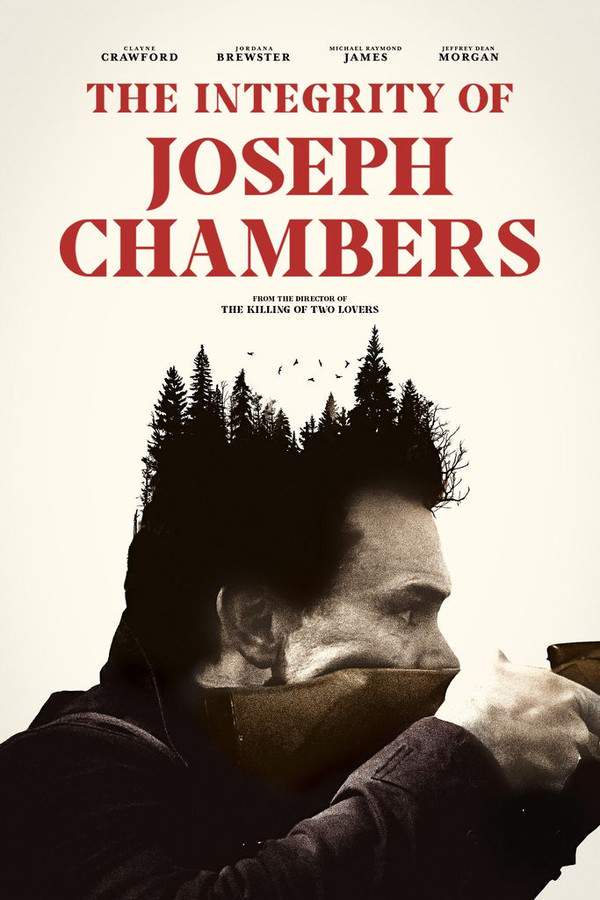
What Is The Integrity of Joseph Chambers About?
The premise of The Integrity of Joseph Chambers in 328 words, with nothing given away. The full story and the ending follow below.
In the quiet suburbs where Joseph Chambers works as an insurance salesman, the rhythm of everyday life feels both comforting and confining. He is a devoted husband and father, yet an undercurrent of doubt about his capacity to protect those he loves begins to surface. When the notion of a solitary deer‑hunting trip surfaces, it becomes more than a weekend pastime; it transforms into a personal trial, a promise to himself that he can step beyond the predictable confines of his job and prove his worth in a raw, unpredictable setting.
The film carries us deep into a sprawling, untamed forest where the only sounds are the rustle of leaves and the distant call of wildlife. The canopy filters sunlight into shifting patterns, creating an atmosphere that is both serene and suddenly oppressive. As Joseph navigates winding trails and dense thickets, the wilderness becomes a mirror for his inner state—a place where the lack of societal expectations forces him to confront the gaps between who he is, who he wishes to be, and the role he feels compelled to fulfill for his family.
Within this isolated backdrop, the narrative adopts a measured, contemplative tone, blending moments of quiet beauty with an undercurrent of unease. The hunt, initially presented as a simple test of skill, gradually hints at deeper questions about responsibility, authenticity, and the fragile nature of masculinity. Joseph finds his confidence challenged not only by the physical demands of the trail but also by the unsettling realization that self‑validation may require far more than a single aim or a well‑aimed shot.
As the story unfolds, the audience is invited to share in Joseph’s uneasy anticipation, feeling the weight of each decision he contemplates. The film promises a tense, introspective journey that blurs the line between external conquest and internal reckoning, leaving viewers to wonder just how far one will go when the wilderness forces a man to confront the true cost of protecting what he holds dear.
What Happens in The Integrity of Joseph Chambers?
The complete story of The Integrity of Joseph Chambers, from the first scene to the last, in 297 words (about 1 minute). Spoilers throughout. Names in the text link to 4 cast member pages.
Spoilers ahead
Clayne Crawford as Joe, an insurance salesman, decides to go into the woods alone to hunt deer. He borrows his friend Doug’s pickup truck and drives to the forest. Once there, he wanders about until he comes across a deer in the distance. He chases the animal, but loses sight of it. A noise startles him and he shoots his rifle, finding that the bullet struck another man (credited as Lone Wolf) in the chest, seemingly killing him.
Horrified, Joe runs back to the pickup truck and sobs. He returns to the spot and digs a grave in which to bury the dead body. Lone Wolf turns out to be alive, and flees in a panic. Joe chases after him, apologizing for shooting him and saying that he must be brought to a hospital. Lone Wolf refuses. Joe and Lone Wolf have a conversation in which Joe explains that he went deer hunting in order to look after his family. Lone Wolf insults Joe’s masculinity, calls Joe a “phony,” and says that there’s “no point” in trying to survive. The narrative continues as Lone Wolf dies, and Joe carries his corpse to the grave and buries it, finding a photograph of what appears to be Lone Wolf’s wife and children in the process.
Joe then walks over to a stream and fantasizes about returning home to his wife and children and pretending that everything is normal. He then digs up Lone Wolf’s corpse, puts it in the back of the pickup truck, drives back into town, and enters a police station, visibly shaken and in stunned silence. The Police Chief, Jeffrey Dean Morgan, after seeing the corpse in the truck, questions Joe about what happened, and Joe considers what to say before the screen cuts to black.
The Integrity of Joseph Chambers Timeline: Every Key Event in Order
12 key events in the order they happen, from “Decides to hunt to prepare for family” to “Confrontation at the police station”. 12 events name a place, across 5 locations.
- 1
Decides to hunt to prepare for family
Joe, a weary insurance salesman, decides to go into the woods alone to hunt deer. He frames the trip as a way to prepare himself to look after his family. This decision marks the beginning of a personal ordeal that will test his will and resolve.
Where:Home
- 2
Borrows truck and heads to the forest
He borrows his friend Doug's pickup truck and drives to the forest. He starts to wander through the trees, searching for a deer and the solitude of the woods. The quiet thrill of the hunt gives way to a tense sense of isolation.
Where:Forest
- 3
Spots deer and pursues it
While in the woods, Joe spots a deer in the distance and gives chase, but he loses sight of it among the trees. The forest grows dense and disorienting as he moves deeper. The pursuit heightens his focus and unease.
Where:Forest
- 4
Accidentally shoots Lone Wolf
A sudden noise startles him and he fires his rifle. The bullet strikes a man, later identified as Lone Wolf, in the chest, and Joe is left staring in shock at what he has done. The moment shatters his sense of control.
Where:Forest
- 5
Belated realization and burial attempt
Horrified, Joe runs back to the pickup and sobs, overwhelmed by the gravity of the situation. He returns to the scene and digs a grave to bury the dead body, trying to create some order out of the chaos.
Where:Forest
- 6
Lone Wolf survives and flees
Lone Wolf, however, is alive and flees in a panic. Joe gives chase, apologizing and insisting that Lone Wolf must be taken to a hospital for help. The pursuit shifts from horror to a misguided attempt at responsibility.
Where:Forest
- 7
Motive revealed in conversation
The two have a tense conversation in which Joe explains that he went deer hunting to be better prepared to protect his family. Lone Wolf refuses medical help and questions the purpose of surviving, hinting at a harsh philosophy of survival.
Where:Forest
- 8
Insults and philosophy of survival
Lone Wolf insults Joe's masculinity, calls him a 'phony,' and claims there is 'no point' in trying to survive. The encounter hardens the dynamic between them and pushes Joe toward desperate actions.
Where:Forest
- 9
Lone Wolf dies and photo found
Lone Wolf dies, and Joe carries his corpse to the grave and buries it again. In the process, Joe finds a photograph of what appears to be Lone Wolf's wife and children, a reminder of the life he could be endangering.
Where:Forest
- 10
Desire to return home surfaces
Joe walks to a stream and fantasizes about returning home and pretending that everything is normal. The moment reveals his deepest longing to restore a sense of ordinary life despite the horror he's endured.
Where:Stream
- 11
Brings corpse back to town
Joe digs up Lone Wolf's corpse, places it in the back of the pickup, and drives back into town. The act underscores the physical and moral weight of the night's events as he moves toward confrontation.
Where:Forest to Town
- 12
Confrontation at the police station
He enters the police station, visibly shaken and in stunned silence. The Police Chief notices the corpse in the truck and questions Joe about what happened, leaving him to decide what to say as the screen cuts to black.
Where:Police station
Who Are the Main Characters in The Integrity of Joseph Chambers?
4 characters, among them Joe (Clayne Crawford), Lone Wolf (Michael Raymond-James) and Doug (Carl Kennedy): who each one is and the part they play in the story. Every profile links to the actor’s page.
-

Joe (Clayne Crawford)
Played by Clayne Crawford
An insurance salesman who turns to hunting as a way to protect his family. He is practical and disciplined, yet increasingly haunted by the consequences of a single, deadly mistake. His initial confidence gives way to guilt, fear, and a desperate wish to maintain a normal life. The story tracks his struggle between violence, responsibility, and the facade of control.
- 💪 Masculinity
- 🛡️ Protector
- 😔 Guilt
- 👪 Family
-

Lone Wolf (Michael Raymond-James)
Played by Michael Raymond-James
A man living in the woods who embodies raw survival and a blunt contempt for Joe’s claimed masculinity. He taunts Joe, insisting there is no real point to survival, and forces Joe to confront the reality of his actions. His presence exposes the brutality and isolation of life on the edge. His fate becomes a catalyst for Joe’s crisis.
- 🪵 Woodsman
- 🗯️ Taunter
- 💀 Fatality
- D(
Doug (Carl Kennedy)
Played by Carl Kennedy
Joe's friend who lends his pickup, acting as the catalyst for Joe's trip into the woods. He represents ordinary support and trust, a link to a normal life that the hunting trip disrupts. His role underscores how a single act can pull others into the consequences.
- 🤝 Friend
- 🚚 Vehicle
- ⚠️ Catalyst
-

Police Chief (Jeffrey Dean Morgan)
Played by Jeffrey Dean Morgan
The town's authority figure who confronts Joe after the discovery of Lone Wolf’s body. He embodies law and order and becomes the moral mirror for Joe’s choices. His inquiry frames the tension between personal guilt and civic responsibility.
- 👮 Authority
- ⚖️ Law
- 🔎 Investigation
Where and When Is The Integrity of Joseph Chambers Set?
The Integrity of Joseph Chambers is set in Forest and Small Town. Here is why the place matters to the story.
Where
Forest, Small Town
The action unfolds in a remote forest where Joe hunts and inadvertently shoots a man, with the nearby town serving as the urban counterpoint to the wilderness. The forest is depicted as expansive and isolating, heightening tension as consequences unfold. A rough grave in the woods and the police station in town anchor the shift from nature to civilization.
- 🌲 Forest
- 🏙️ Small Town
- 🗺️ Rural Setting
What Are the Themes of The Integrity of Joseph Chambers?
3 ideas the story keeps returning to, among them Masculinity, Survival and Guilt & Consequences.
-
01
Masculinity
Joe's drive to project strength and dependability fuels his decisions. Lone Wolf's chal lenge to Joe's manliness exposes the fragility behind a confident facade. The narrative questions what it means to be a protector when violence and fear erode self-image. It explores whether traditional masculine roles can withstand guilt and vulnerability.
-
02
Survival
The woods function as a crucible for physical skill and psychological stamina. Survival is about more than staying alive; it involves restraint, moral choices, and confronting one's limits. Joe's attempt to control the situation reveals that true survival may require facing consequences. The tension arises from balancing risk with responsibility.
-
03
Guilt & Consequences
The burial of Lone Wolf and the looming possibility of disclosure amplify the weight of guilt. Joe grapples with whether to accept responsibility or preserve his image. The photograph of Lone Wolf's family deepens the human cost behind the violence. The film ends in a heavy, contemplative silence that marks the cost to Joe and the community.
How Does The Integrity of Joseph Chambers End?
The last act of The Integrity of Joseph Chambers and what it means, in 227 words. The ending lands as ambiguous. Big spoilers: read the plot summary first if you have not seen it.
The final act, in full
Joe’s moral journey reaches its climax as he makes a choice that defines his character. After accidentally killing a trespasser he thought was merely a threat, Joe initially runs away in panic, overwhelmed by guilt and fear. However, driven by a sense of responsibility and a desire to do what is right, he later decides to admit his mistake. Despite his initial instinct to conceal the body and escape punishment, Joe ultimately drags the dead man out of the grave and drives to the police station. His decision to turn himself in shows how he overcomes his inner conflict—between impulse and morality—and chooses the path of integrity. Throughout the film, Joe’s internal struggle is portrayed as a battle between taking the easy way out or doing what’s morally correct, and in the end, his conscience guides him to the right decision. The film emphasizes that true integrity involves facing the consequences of one’s actions, even when it’s difficult, and that sometimes, the bravest choice is to accept responsibility. Ultimately, Joe’s act of honesty and accountability signifies his moral growth, portraying that even in a world filled with moral grey areas, doing the right thing remains a courageous and redemptive act. The film leaves us with the powerful message that upholding one’s integrity may come with profound personal sacrifice, but it is worth choosing over dishonesty or denial.
What Kind of Film Is The Integrity of Joseph Chambers?
Melancholic in tone, with slow pacing and a straightforward story, going by the plot summary.
- Tone
- Melancholic
- Pacing
- Slow
- Story
- Straightforward
- Intensity
- Medium
- Ending
- Ambiguous
A slow-burning and melancholic character study that immerses the viewer in the tense, isolated atmosphere of a man's disastrous attempt at self-discovery in the wilderness.
- contemplative
- tense
- isolated
- somber
- anxious
- regretful
- masculinity and identity
- rural survival
- accidental violence
- moral dilemma
Content notes: accidental death, gun violence, blood, psychological distress.
Quiz
How well do you remember The Integrity of Joseph Chambers? Test yourself on the story.