
The Emperor Waltz 1948

Directed by
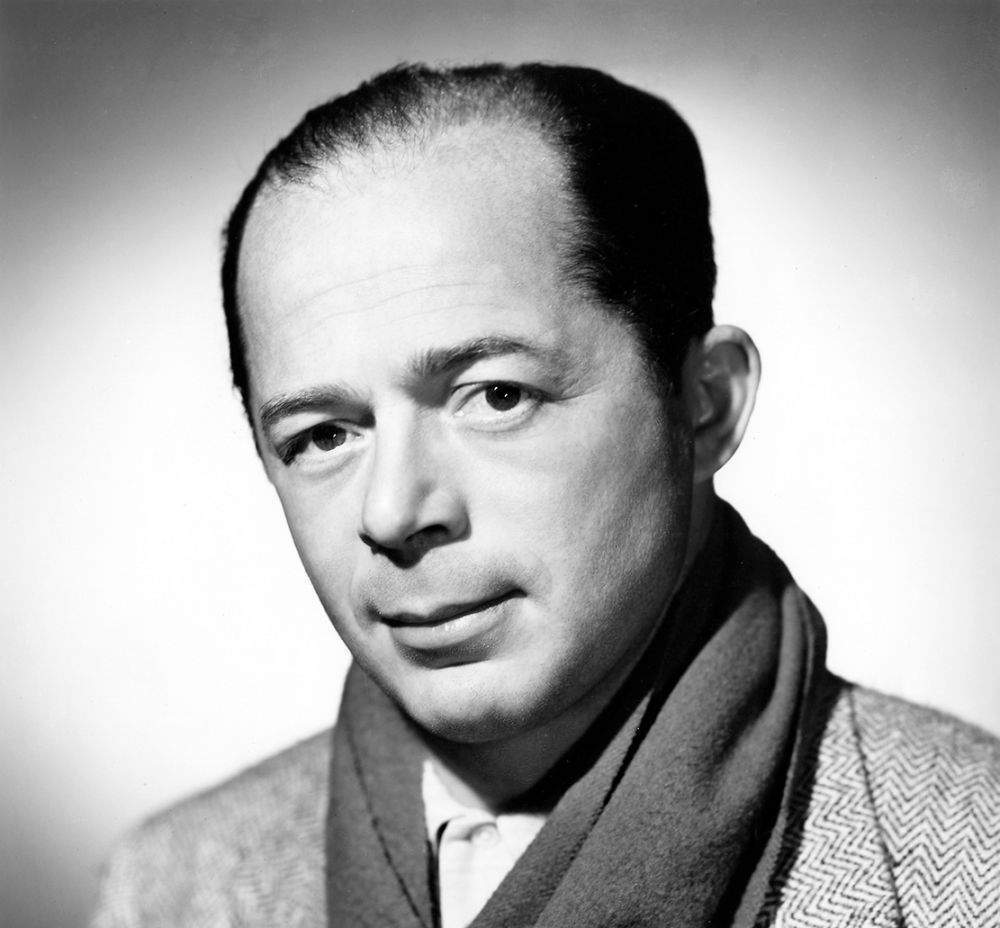
Billy Wilder
Made by

Paramount Pictures
The Emperor Waltz Plot Summary
Read the complete plot summary and ending explained for The Emperor Waltz (1948). From turning points to emotional moments, uncover what really happened and why it matters.
Set at the turn of the twentieth century, this breezy, genteel romance follows Virgil Smith, a traveling salesman who arrives in Vienna hoping to persuade the aging monarchy to buy a gramophone, a gesture that could help launch the American invention across Europe. At the same time, Countess Johanna Augusta Franziska von Stoltzenberg-Stolzenberg and her father, Baron Holenia, celebrate the idea that their poodle Scheherezade might mate with the emperor’s own dog, a mating that would elevate their social standing in a world of rigid class lines. When Virgil and his white fox terrier Buttons collide with Scheherezade, the clash becomes a lighthearted spark that hints at deeper connections between the two couples.
When Scheherezade experiences a nervous breakdown, she is treated by Dr. Zwieback, a veterinarian who practices Freudian psychology, and he advises Johanna to force her dog to confront Buttons to dissipate the fear. This unconventional approach sets off a chain of events: the dogs are briefly reunited, and the two owners begin to spend a great deal of time together, their own growing attraction mirroring the budding affection between the animals. Unbeknownst to them, Scheherezade and Buttons mate, adding a secret undercurrent to the unfolding romance.
Virgil gradually convinces Johanna that true love can bridge even the widest social gaps, and he asks the Emperor for her hand in marriage. This is the pivotal moment of the film, a scene noted for lifting the plot beyond light comedy. The Emperor is cordial and paternal with Virgil, yet he doubts whether Johanna could be happy leaving her world behind for Newark, New Jersey. > “We are not better than you”, explains the Emperor sadly, “I think perhaps you are better than us. But we are like snails: If you take us out of our majestic shells, we die.”
In a tense exchange, the Emperor offers a deal: endorse the gramophone to boost Virgil’s sales only if he ends the romance with Johanna. Virgil declines, feeling insulted, but the Emperor presses one last question: Are you sure you will be enough for her? This question becomes a crucible moment for Virgil, who realizes that sacrificing Johanna’s happiness for a safe future would be a betrayal of the love he has come to feel.
Months pass, and Scheherezade gives birth to a litter of white puppies with black patches—apparently fathered by Buttons, not the Emperor’s poodle. Holenia, fearing the Emperor’s anger, tells him the pups were stillborn and orders them drowned. Virgil, who has slipped back into the palace to speak with Johanna one last time, intervenes to rescue the puppies and confronts the Emperor, who chastises Holenia and asks Virgil to surrender the pups. Yet Virgil remains outspoken about class snobbery, and in the heat of the confrontation, he forgets that Johanna is nearby and blurts out that he never should have let the aristocracy decide her fate. Johanna overhears and forgives him, declaring that she would rather take a chance at a life with him than settle for a life of privilege without love. The Emperor, moved by their commitment, finally gives his blessing, and Virgil and Johanna join in marriage.
The Emperor Waltz Timeline
Follow the complete movie timeline of The Emperor Waltz (1948) with every major event in chronological order. Great for understanding complex plots and story progression.
Virgil travels to Vienna to pitch the gramophone
Traveling salesman Virgil Smith arrives in Vienna with a new gramophone, hoping the Emperor will buy it to spur its popularity among the Austrian people. He seeks an endorsement from the imperial circle to boost sales and legitimacy. The mission marks the start of a cross-cultural, lightly romantic journey.
Johanna and Baron celebrate Scheherezade's mating; meet Virgil and Buttons
Johanna and her father celebrate their poodle Scheherezade being selected to mate with the Emperor's poodle. On the palace grounds they meet Virgil and his dog Buttons, whose scuffle sparks a discussion about class distinctions. The encounter foreshadows the social barriers the lovers will attempt to bridge.
Scheherezade's nervous breakdown and Freudian treatment
Scheherezade experiences a nervous breakdown and is treated by Dr. Zwieback, a veterinarian who practices Freudian psychology. He advises forcing the dog to face Buttons to dissipate her fear, setting in motion the plan to reunite them. The therapy inadvertently strengthens the bond between the animals and hints at the owners' shared vulnerability.
Dogs reunite; mutual attraction grows
When Scheherezade and Buttons are reunited, the dogs display affection, and a spark appears between their owners as well. The pair begin spending more time together, drawn by the dogs' bond. The growing closeness begins to cross social boundaries that once seemed absolute.
Scheherezade and Buttons mate; owners remain unaware
Scheherezade and Buttons mate, and their owners remain oblivious to the event. The mating underscores the idea that affection can emerge across class lines even when not openly acknowledged. The incident deepens the connection between Virgil and Johanna in hidden ways.
Virgil seeks Johanna's hand; asks Emperor for approval
Virgil convinces Johanna that true love can overcome social differences and asks for her hand from the Emperor. The Emperor receives the request with warmth but also caution, aware of the potential costs. The scene crystallizes the central dilemma: love versus social expectations.
Emperor warns of happiness limits and offers gramophone endorsement in exchange for breaking up
The Emperor candidly questions whether Johanna could be happy with a commoner in Newark. He explains that he will not endorse Virgil's gramophone unless the couple separates. He recalls his own failed matches and presents the ultimatum to Virgil, testing the strength of their bond.
Virgil refuses; Emperor issues a final test
Virgil refuses to break up with Johanna, but the Emperor asks him one more question: are you sure you will be enough for her? The question hangs in the air as Virgil grapples with his sense of duty and love. The Emperor's test sets up the film's moral crossroads.
Virgil lies to Johanna; walks away, appearing villain
Convinced he cannot win if seen as a fortune-hunter, Virgil lies to Johanna, claiming he only sought access to the Emperor to sell wares. He breaks off the relationship and leaves for America, appearing uncaring and villainous. Johanna is left to grapple with the consequences of his deception.
Scheherezade gives birth to white puppies with black patches
Scheherezade gives birth to a litter of white puppies with black patches, clearly sired by Buttons rather than the Emperor's poodle. The discovery shakes the social assumptions surrounding the match and complicates the Emperor's blessing. Baron Holenia tries to manage the fallout to protect his status.
Baron orders the puppies drowned; Virgil intervenes
Baron Holenia tells the Emperor the puppies were stillborn and secretly orders them drowned. Virgil, having secretly returned to the palace to see Johanna, sneaks in and rescues the puppies, confronting the Emperor in the process. The rescue escalates the confrontation over loyalty, class, and guilt.
Confrontation and chastisement of Holenia;Virgil to deliver puppies
The Emperor chastises Holenia for his deception and asks Virgil to hand over the puppies. Virgil lambasts the Emperor about class snobbery, risking Johanna overhearing the exchange. The heated moment forces a reckoning for all involved about truth, dignity, and love.
Johanna forgives Virgil; they wed
Johanna overhears the confrontation and learns the truth about Virgil's actions. She forgives him, insisting that a chance at happiness with Virgil is worth more than a safe, loveless life. The Emperor relents, and Virgil and Johanna are allowed to wed, bringing the story to a hopeful close.
The Emperor Waltz Characters
Explore all characters from The Emperor Waltz (1948). Get detailed profiles with their roles, arcs, and key relationships explained.
Virgil Smith (Bing Crosby)
A traveling salesman from Newark who travels to Vienna to sell a gramophone. He is pragmatic and ambitious, using wit and charm to navigate social boundaries. His love for Johanna grows under the pressure of class differences, and he ultimately faces a difficult choice between wealth, ambition, and true happiness.
Johanna Augusta Franziska von Stoltzenberg-Stolzenberg (Joan Fontaine)
A noblewoman whose social standing contrasts with Virgil’s background. She seeks genuine connection rather than performative propriety and must decide whether love can survive the pressures of aristocratic life. Her relationship with Virgil threatens to disrupt the order of high society, yet she pursues a chance at happiness.
l'empereur François-Joseph (Richard Haydn)
The Emperor is cordial and fatherly toward Virgil, yet bound by the conventions of empire and tradition. He has seen marriages for status and survival end badly and tests Virgil’s intentions with a demand that could separate the couple. His long life has taught him to balance mercy with duty, even when personal happiness is at stake.
Baron Holenia (Roland Culver)
Johanna’s father and a baron who embodies aristocratic pride. He orchestrates actions to protect status, including attempting to drown the newborn puppies to avoid scandal. His behavior highlights the cruelty of class arrogance and the fragility of reputations in high society.
Dr. Zwieback (Sig Ruman)
A veterinarian who practices Freudian psychology and treats Scheherezade. He provides a clinical perspective on fear and behavior, advising Johanna to force her dog to confront its anxieties. His scientific approach contrasts with the romantic and social forces at play.
Inn Proprietress (Alma Macrorie)
Owner of an inn where travelers and locals cross paths, reflecting the everyday life of travelers between America and Europe. She represents the practical side of hospitality in a world where cultural exchange is accelerating.
Chamberlain (Harold Vermilyea)
A palace official who embodies the ceremonial, bureaucratic side of imperial life. He observes events with a formal detachment that underscores the rigid etiquette of the court.
Chambermaid (Roberta Jonay)
A service staff figure within the imperial milieu, offering glimpses of everyday life amid the lavish surroundings. She provides a touchpoint to the common people within the aristocratic setting.
Archduchess Stephanie (Julia Dean)
A member of the aristocracy who participates in the social events that frame the lovers’ world. Her presence adds to the machinations and etiquette of high society.
Chauffeur (Bert Prival)
A driver who moves characters between locations, representing the mobility and modernization of the era.
John Goldsworthy
A member of the cast whose role supports the story’s social fabric; details are limited in the summary, but his presence helps move the imperial social world.
The Emperor Waltz Settings
Learn where and when The Emperor Waltz (1948) takes place. Explore the film’s settings, era, and how they shape the narrative.
Time period
Turn of the 20th century
The narrative takes place around the turn of the 20th century, during the reign of Emperor Franz Joseph I. Vienna is depicted as a hub of tradition and quiet modernization, just as new technologies begin to reshape society. The era features a clear class hierarchy, ornate palaces, and a cosmopolitan atmosphere ripe for a romance that challenges social norms. The story also hints at the globalization of culture through the gramophone and international travel.
Location
Vienna, Austria, Newark, New Jersey
The story largely unfolds in Vienna, the imperial capital of Austria, amid a backdrop of aristocratic society and early modern culture. It also follows Virgil’s return to Newark, New Jersey, highlighting the contrast between an American salesman and European nobility. The palace environment and social salons illustrate the rigid class system of the era, which the lovers navigate. The interplay between city life and imperial settings frames the romance and social drama.
The Emperor Waltz Themes
Discover the main themes in The Emperor Waltz (1948). Analyze the deeper meanings, emotional layers, and social commentary behind the film.
💞
Romance Across Class
A romance blossoms between Virgil and Johanna despite their different social worlds. The film uses their relationship to critique rigid class distinctions and to show that love can bridge gaps that power and status attempt to preserve. Their connection challenges the expectations that separate nobility from working people. The climax hinges on choosing love over social advancement.
👑
Class and Privilege
Aristocracy and social snobbery create obstacles that threaten the pairing of Virgil and Johanna. The Emperor’s cautious benevolence masks the constraints of an imperial society that prizes birthright over personal happiness. Baron Holenia’s actions reveal how fear of scandal can drive the defense of privilege. The tension between duty to status and personal happiness runs through the narrative.
🔊
Technology and Modernity
The gramophone represents a modern, disruptive technology that could democratize culture and commerce. Its potential acceptance by the Emperor symbolizes how new inventions can alter social dynamics and consumer behavior. Virgil’s business dreams are tied to the gramophone’s success, linking personal romance to technological progress. The era’s excitement about innovation contrasts with its stubborn social codes.
🤝
Redemption and Choice
Virgil’s moral dilemma pits personal ambition against the happiness of a loved one. His decision to protect Johanna—even at the cost of his own reputation—frames love as a redemptive act. The Emperor’s ultimatum tests character and integrity, ultimately rewarding loyalty over opportunistic gains. The ending reinforces that true happiness may require sacrifice and courageous choices.

Coming soon on iOS and Android
The Plot Explained Mobile App
From blockbusters to hidden gems — dive into movie stories anytime, anywhere. Save your favorites, discover plots faster, and never miss a twist again.
Sign up to be the first to know when we launch. Your email stays private — always.
Explore the mobile appThe Emperor Waltz Spoiler-Free Summary
Discover the spoiler-free summary of The Emperor Waltz (1948). Get a concise overview without any spoilers.
In the elegant twilight of early‑twentieth‑century Vienna, the city hums with the promise of new inventions and lingering aristocratic grandeur. The streets are alive with waltzes that echo through gilded ballrooms, while the faint whirr of a novel contraption hints at a future where music can travel beyond the concert hall. This sumptuous backdrop frames a story that feels both timeless and freshly modern, inviting the audience to sway between nostalgia and the thrill of progress.
_ Virgil Smith_, a charismatic traveling salesman with a warm baritone, arrives from America bearing a gleaming gramophone—a marvel he hopes will capture the attention of the imperial court. His journey is as much about selling a device as it is about bridging continents through song, and his easy‑going charm hints at a deeper curiosity about the world he now navigates. As he wanders the imperial capital, his path crosses the glittering avenues of the Habsburg elite, setting the stage for encounters that feel both inevitable and delicately charged.
_ Johanna_, a bright‑spirited countess, lives under the watchful eye of her father, Baron Holenia, whose ambitions are tied to a seemingly light‑hearted scheme involving the family’s poodle, Scheherezade. The dog’s unexpected connection to the emperor’s own pet, Buttons, becomes a whimsical symbol of the social dance between tradition and change. Alongside veterinary adviser Dr. Zwieback, the aristocratic family navigates the tension between propriety and the desire for something more spontaneous—a tension that quietly mirrors the larger currents at play in Vienna’s high society.
When _ Virgil_ and the countess’s worlds collide, their interactions are underscored by melodic duets and the gentle clatter of paws on polished floors. The film’s tone remains breezy and genteel, yet it carries an undercurrent of longing that suggests possibilities beyond the confines of class and convention. As cultures intertwine and ambitions whisper, the audience is left anticipating whether the rhythm of love and invention might find a harmonious chord amid the empire’s majestic halls.
Movies with Similar Twists and Themes
Uncover films that echo the narrative beats, emotional arcs, or dramatic twists of the one you're exploring. These recommendations are handpicked based on story depth, thematic resonance, and spoiler-worthy moments — perfect for fans who crave more of the same intrigue.


Featured on this page

What's After the Movie?
Not sure whether to stay after the credits? Find out!
Check out our other apps:

SAT Sphere
Build confidence for the Digital SAT.

Mori Atlas
Discover wild places worth protecting.

Luntero
Search smarter for a home in Amsterdam.

Plot Explained
Unravel movie endings and hidden clues.

Pokechamp
Dive into Pokémon data and battle logic.

Driving Theory
Get ready for your European theory test.

Movie Dust
Plan your next cinema trip with ease.

Musemap
Find art and culture as you travel.

Selkobase
Compare credentials before committing.

Local Manual
Turn an unfamiliar country into practical next steps.

Lernavi
Compare school systems before your next move.

GymRoam
Find a workout stop wherever your plans take you.
Explore Our Movie Platform
New Movie Releases (2026)
Famous Movie Actors
Top Film Production Studios
Movie Plot Summaries & Endings
Major Movie Awards & Winners
Best Concert Films & Music Documentaries
Movie Collections and Curated Lists
© 2026 What's After the Movie. All rights reserved.
Privacy Policy