What Is The Doomsday Flight About?
The premise of The Doomsday Flight in 308 words, with nothing given away. The full story follows below.
In the sleek, bustling world of commercial aviation, a transcontinental flight becomes the stage for a high‑altitude dilemma. The aircraft lifts off from Los Angeles, soaring over deserts and mountains while passengers settle into the routine of long‑haul travel. Beneath the metallic hum of engines, the cabin is a micro‑cosm of confidence and complacency, ready to be tested by forces that operate far above the ordinary.
A chilling phone call shatters that calm: an anonymous hijacker warns that a bomb has been hidden on board, its trigger set to activate the moment the plane descends below a critical altitude. The demand is simple but terrifying—a ransom in small denominations, with the very act of landing poised as a potential disaster. This premise transforms the ordinary flight into a ticking‑clock scenario where every decision is weighed against the invisible threat hanging in the sky.
The crew must marshal expertise and resolve under unprecedented pressure. Bob Shea, the seasoned chief pilot, commands the aircraft’s trajectory while Captain Anderson pilots the cockpit with steady hands, both forced to balance procedural rigor with creative problem‑solving. Behind them, Frank Thompson, an FBI special agent, coordinates the negotiations and marshals intelligence, while flight attendants and ground staff become essential links in a fragile chain of communication. Their interactions reveal a blend of professional discipline and personal courage, each character bringing a distinct perspective to a shared crisis.
The film’s tone is a taut mix of procedural realism and suspenseful drama, immersing the audience in the claustrophobic confines of a plane that cannot safely descend. Technical details about altitude‑sensitive mechanisms mingle with human moments of fear and determination, creating a relentless sense of urgency. As the aircraft circles the sky, the tension builds not from action alone, but from the delicate dance of leadership, trust, and the ever‑present danger that could unfold at any moment.
What Happens in The Doomsday Flight?
The complete story of The Doomsday Flight, from the first scene to the last, in 830 words (about 4 minutes). Spoilers throughout. Names in the text link to 4 cast member pages.
Spoilers ahead
At Los Angeles International Airport, a Douglas DC-8 airliner lifts off for New York, and the passengers settle into the routine of long-haul travel. Moments after takeoff, a chilling crisis unfolds as a mysterious caller, Edmond O’Brien as The Man, warns that a bomb has been placed on board and demands a ransom of $100,000 in small denominations. The threat is not a bluff, and the tone makes it clear that the danger is real. The crew is put on high alert as the flight crew, led by the experienced Chief Pilot Bob Shea, quickly pivots into emergency mode. Richard Carlson, the man behind the controls in the role of Bob Shea, decides to act decisively and ensure the safety of everyone on board.
To protect the passengers, Captain Anderson, played by Van Johnson, is instructed to circle around Las Vegas while the team conducts a thorough hunt for the hidden device. The search stretches through the cabin, the cockpit, and even the passengers’ hand luggage, with flight attendants and ground personnel assisting in the meticulous inspection. The crew members work under pressure, knowing that time is a critical factor and that every open suitcase or crevice could conceal the danger. The tension escalates as the aircraft continues its uneasy flight, with the possibility of misjudging a single detail threatening a catastrophic outcome.
Meanwhile, the bomber’s plan hinges on a precise mechanism: an aneroid, altitude-sensitive switch that will detonate the moment the aircraft lands or descends below a certain altitude. This grim detail adds a countdown quality to every decision made at altitude, turning standard procedures into life-or-death calculations. The investigators on the ground pull every thread, including airline security staff, local police, and federal agents, who begin to piece together the bomber’s psychology and the sequence of events that could trigger disaster.
As the flight crew intensifies its search, passengers become increasingly anxious. The idea of a hidden bomb creates a mounting sense of panic, and the airline’s operations room lights up with frantic activity as officials coordinate responses, manage communications, and prepare for possible emergency landings. The threat continues to evolve through a series of tense exchanges between the caller and law enforcement, with the caller providing increasingly specific instructions on how to deliver the ransom, all while the responders work to outmaneuver a strategy built around deception and fear.
The pursuit intensifies when a delivery van is spotted near the airport, and a police tailing maneuver begins. The van is involved in a high-stakes chase that ends with a serious accident and a subsequent fire on a ring road, testing the air security team’s resolve and resourcefulness. In a separate but related thread, the bartender at a nearby bar becomes a crucial witness as the caller seeks shelter and drinks away the mounting pressure. The bartender’s observations eventually become vital to the case, prompting the police to intervene and question him about the caller’s exact words and behavior.
In an important turn of events, the FBI’s Special Agent Frank Thompson, portrayed by Jack Lord, interrogates the bartender to extract a precise transcript of the conversation and to verify what was said. The investigative team discovers a critical operational detail: the bomb will explode if the airliner’s altitude drops below 4,000 feet, a revelation that shapes every subsequent decision about how to bring the aircraft down safely. With this new knowledge, Chief Pilot Shea makes a strategic call: to land the plane at Stapleton International Airport in Denver, Colorado. The higher altitude of Stapleton provides a safer window for the aircraft to touch down without triggering the device, and the flight crew prepares for what could be a life-saving landing.
The landing at Stapleton becomes a tense, carefully choreographed operation. The airplane touches down and is brought to a controlled stop, and the passengers and crew regroup in the airline’s operations center to monitor the situation as the investigation unfolds. The drama shifts to the moment of truth as investigators, pilots, and security personnel comb through every potential hiding place aboard the aircraft—nearly every compartment, every bag, every panel—seeking a clue that could avert a catastrophe.
In a final, almost anticlimactic twist, the bomb is discovered where it was least expected—the pilot’s chart case. This surprising discovery reframes the unfolding drama, turning a race against time into a procedural breakthrough that allows authorities to avert disaster. The sequence underscores themes of vigilance, cooperation, and the fragile trust between those who operate complex machines and the people who rely on them for safety.
Throughout the ordeal, the narrative threads are carried by a cast of characters who act with precision under pressure. The film interweaves the technical details of aircraft operations with human moments of fear, doubt, and courage. As the investigation closes in on the true source of the threat, viewers are reminded that danger can arrive from an unseen place, and that careful analysis, calm leadership, and timely decisions can mean the difference between disaster and salvation.
The Doomsday Flight Timeline: Every Key Event in Order
12 key events in the order they happen, from “Bomb threat received after takeoff” to “Final resolution and status update”. 12 events name a place, across 12 locations.
- 1
Bomb threat received after takeoff
A DC-8 takes off from LAX bound for New York. Shortly after leaving the runway, a caller reports a bomb on board and demands $100,000 in small denominations. The caller identifies himself as a former aviation engineer, setting the premise for a tense crisis in flight.
When:shortly after takeoff Where:Los Angeles International Airport
- 2
Chief pilot orders an in-flight search and holds course over Las Vegas
Chief Pilot Bob Shea warns the flight crew and orders Captain Anderson to circle Las Vegas. The team begins a thorough search for the bomb, routing through baggage, cabin panels, and cockpit compartments. The crew must balance the search with maintaining safe flight and passenger calm.
When:shortly after threat Where:In flight over Las Vegas area
- 3
Initial search finds nothing
Crew members open passenger luggage and inspect several cabin areas, but the bomb remains undiscovered and the search yields no results. Passengers become increasingly anxious as the search drags on. The threat continues to loom over the flight.
When:during in-flight search Where:Onboard DC-8
- 4
Bomb threat escalates with ransom instructions
The caller phones again, detailing how to pay the ransom and promising a delivery man who will collect the money. Police shadow the avenue to intercept the payment, but the delivery van crashes and bursts into flames. The pursuit exposes the high stakes and danger surrounding the hijack attempt.
When:after second threat Where:Outside the airport vicinity; ring road
- 5
Terrorist seeks refuge and dies of a heart attack
The caller, distressed, seeks refuge at a bar where he drinks heavily and talks with the bartender who grows suspicious. The man experiences a heart attack and dies before the authorities can question him. The bartender's report triggers the FBI’s involvement.
When:later during the pursuit Where:A bar near the airport
- 6
FBI interrogation reveals the detonation trigger
The FBI Special Agent questions the bartender, seeking the exact words used by the terrorist. They learn that the bomb would detonate if the airliner descends below 4,000 feet. This critical detail changes the flight's strategic options.
When:after bartender's death; subsequent interrogation Where:Bar; then FBI interrogation
- 7
Flight plan changes to avoid triggering the bomb
With the 4,000-foot rule revealed, the chief pilot orders the aircraft to land at Stapleton International Airport in Denver, a higher-altitude location that would not trigger detonation. The crew prepares for a diversion and coordinates with air traffic control to execute the emergency landing. The tension rises as the plane heads toward a safe alternative.
When:following rule discovery Where:In-flight to Denver
- 8
Diversion succeeds and the plane lands safely
The airliner lands safely at Stapleton International Airport. The flight crew and passengers disembark, and the crew goes to the airline operations room for a debrief. The successful landing marks a temporary resolution to the crisis.
When:after landing Where:Stapleton International Airport, Denver
- 9
Crucial discovery: bomb hidden in pilot's chart case
In a surprising late turn, investigators find the bomb concealed in the pilot's chart case rather than in passenger luggage. The misdirection explains why earlier searches failed. The crew is astonished by the concealed device, which had been in plain sight.
When:end of crisis Where:Cockpit/pilot's chart area
- 10
Investigation confirms the bomber's identity and motive
Authorities piece together the sequence of events, confirming the origin of the threat and how the plan failed. They confirm the bomber was an insider—an ex-engineer who previously worked in aviation. The case wraps as the immediate danger subsides.
When:crisis aftermath Where:Airport security and FBI investigation sites
- 11
Crisis resolved and the mystery clarified
With the threat resolved, investigators verify that the threat originated from within the aviation field. The bomber's insider status explains the familiarity with the aircraft and procedures. The incident closes as the team reflects on how near disaster came to be averted.
When:aftermath Where:Airport and related investigation sites
- 12
Final resolution and status update
The final discovery confirms the misdirection: the bomb was hidden in the pilot's chart case. The crew and authorities review the sequence of events to understand how the crisis unfolded. The case ends with a sense of closure and warnings for future security.
When:post-crisis Where:Cockpit and airline operations room
Who Are the Main Characters in The Doomsday Flight?
6 characters, among them Bob Shea (Chief Pilot) — Richard Carlson, The Man — Edmond O'Brien and Captain Anderson — Van Johnson: who each one is and the part they play in the story. Every profile links to the actor’s page.
- BS
Bob Shea (Chief Pilot) — Richard Carlson
Played by Richard Carlson
Bob Shea is the airline’s chief pilot who takes command during the crisis. He quickly assesses the threat, orders Captain Anderson to circle Las Vegas, and directs the crew to search for the bomb aboard the DC-8. His leadership under pressure drives the decisions that aim to keep passengers safe until a safe landing is possible.
- ✈️ Leadership
- 🧭 Decision-making
- 🧰 Crisis management
-
The Man — Edmond O'Brien
Played by Edmond O'Brien
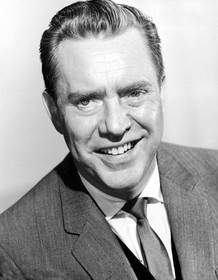
A former aviation engineer who masterminds the bomb threat and manipulates the situation from outside the aircraft. His plan relies on ransom demands and the authorities’ compliance, testing the limits of law enforcement under pressure. His interaction with the bartender and investigators reveals a cool, calculating adversary.
- 🧪 Former engineer
- 🧭 Mastermind
- 🗝️ Deception
- CA
Captain Anderson — Van Johnson
Played by Van Johnson
The flight captain who carries out Bob Shea’s orders and helps steer the crisis from the cockpit. He coordinates with the crew to circle around Las Vegas and maintains calm among passengers during the search for the bomb. His steady leadership supports the crew’s efforts to protect everyone onboard.
- 🎯 Command
- 🛩️ Aviation
- 🧭 Leadership
- FS
FBI Special Agent Frank Thompson — Jack Lord
Played by Jack Lord
An FBI agent who takes charge of the investigation, coordinating with local police and airline officials. He interrogates the bartender to reconstruct the bomber’s exact words and helps establish the terms of the threat. His analytical approach aims to prevent a catastrophe and determine how the device is triggered.
- 🕵️ Investigation
- 🧩 Puzzle
- 🔎 Forensics
- B—
Bartender — Malachi Throne
Played by Malachi Throne
The bartender becomes a crucial witness, suspecting the caller's motives and providing a steady, skeptical perspective. He reports the exact words of the caller after the heart attack disrupts the threat, aiding investigators. His calm demeanor under pressure helps keep the scene from spiraling further.
- 🍸 Bar witness
- 🧠 Suspense
- ⏱️ Quick-thinking
- CF
Chipps, Flight Engineer — Tom Simcox
Played by Tom Simcox
Chipps is part of the flight crew and assists in emergency procedures during the crisis. He helps monitor aircraft systems and supports the captain’s commands to ensure safe troubleshooting and landing. His practical know-how contributes to navigating the threat’s constraints.
- 🛠️ Technician
- 🧰 Flight deck
Where and When Is The Doomsday Flight Set?
The Doomsday Flight is set in Los Angeles International Airport (LAX), Las Vegas (NV) and Stapleton… (1960s). Here is why the time and place matter to the story.
When
1960s
Set in the jet-age of the 1960s, the tale centers on commercial aviation and the vulnerabilities of security in that era. Passengers endure growing anxiety as the flight crew searches the aircraft for a hidden bomb. Authorities pursue the bomber through phone threats and ransom demands, underscoring the period’s tense Cold War climate.
Where
Los Angeles International Airport (LAX), Las Vegas (NV), Stapleton International Airport (Denver)
The action unfolds around Los Angeles International Airport as a DC-8 takes off for New York and a bomb threat disrupts the flight. The story also traverses U.S. airspace toward Las Vegas and culminates with a landing at Stapleton International Airport in Denver. Airports serve as high-stakes hubs where crew coordination, police response, and passenger panic play out in real time.
- ✈️ Airport
- 🏙️ City
- 🗺️ Travel hub
What Are the Themes of The Doomsday Flight?
3 ideas the story keeps returning to, among them Crisis Timing, Investigation and Aviation Security.
-
01
Crisis Timing
Timing drives the tension: the bomb’s detonation is tied to altitude, forcing the crew to locate it and alter the flight’s plan under pressure.
-
02
Investigation
The story builds through interrogations and careful validation of the caller’s words, as agents and police piece together how the threat was conceived and executed.
-
03
Aviation Security
The film highlights 1960s air travel vulnerabilities — from luggage searches to interagency coordination — and shows how airline operations adapt during a crisis.
What Kind of Film Is The Doomsday Flight?
Tense in tone, with fast pacing and a moderate story, going by the plot summary.
- Tone
- Tense
- Pacing
- Fast
- Story
- Moderate
- Intensity
- High
- Ending
- Happy
A relentlessly tense and claustrophobic thriller that traps viewers in a high-stakes race against time as a flight crew and investigators work to find a hidden bomb before an altitude-sensitive trigger detonates it.
- tense
- anxious
- claustrophobic
- urgent
- frantic
- procedural
- hijacking
- bomb threat
- race against time
- survival
Content notes: bomb threat, psychological terrorism, hostage situation, mass casualty threat.
Quiz
How well do you remember The Doomsday Flight? Test yourself on the story.
Where to Watch The Doomsday Flight
Rent or buy it from Amazon Video and Apple TV Store. US availability and prices from JustWatch.





Streaming availability in the US, powered by