What Is The Convert About?
The premise of The Convert in 284 words, with nothing given away. The full story and the ending follow below.
In the mist‑shrouded coastline of 1830s New Zealand, a remote settlement clings to a fragile accord with the land’s original custodians. A storm‑tossed vessel brings a weary lay preacher to this isolated outpost, where the sea’s roar seems to echo the simmering tensions beneath the surface. The settlement’s modest wooden structures sit under the watchful eyes of a Māori tribe, their customs and songs woven into the rhythm of daily life, while the newcomers carry the weight of distant British ideals and an uneasy hope for a new beginning.
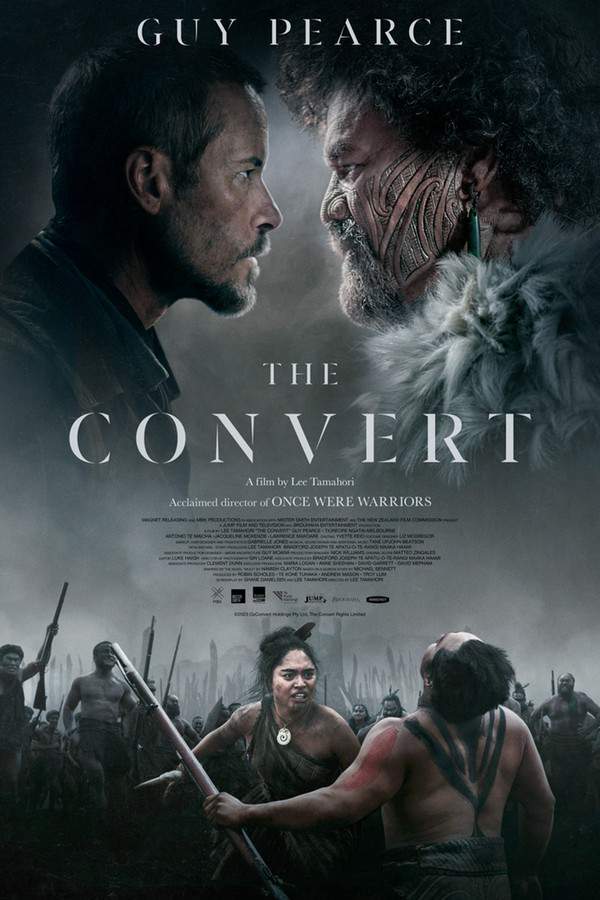
Thomas Munro steps ashore with a past he scarcely mentions, his weather‑worn face hinting at battles long ago and a quest for something beyond redemption. He quickly finds himself intertwined with Rangimai, a young Māori girl whose curiosity about the foreign faith mirrors the community’s cautious openness, and with Maianui, the respected rangatira who balances the responsibilities of leadership with the protection of his people. Across the valley, the rival chief Akatarewa presides over a tribe whose simmering grievances threaten to spill over. Between these figures, cultural exchange flickers—musket lessons shared, language taught, traditions observed—yet an undercurrent of distrust and prejudice lingers, shaping every interaction.
Against this backdrop of lush landscapes and looming conflict, the preacher’s inner turmoil becomes a quiet storm of its own. His sermons speak of forgiveness while his own memories whisper of violence, forcing him to confront the fragile line between belief and doubt. As tensions between the tribes inch toward open hostility, the settlement itself feels the pressure of impending change, and Munro must decide whether his faith can withstand the forces that seek to consume him, or if the path he walks will lead him to an uncertain destiny.
What Happens in The Convert?
The complete story of The Convert, from the first scene to the last, in 388 words (about 2 minutes). Spoilers throughout.
Spoilers ahead
In 1830, Thomas Munro, a lay minister from Britain, arrives in New Zealand on a storm-stricken ship and, during a clash between two Māori tribes, intercedes on behalf of Rangimai, a young daughter of Maianui, the chieftain (rangatira) of the one tribe, to save her from being killed by the warriors of Akatarewa, rangatira of the other tribe, trading his horse with Akatarewa in return for her life. Having been delivered to a British settlement called Epworth, where Munro is to perform missionary work, he becomes Rangimai’s religion tutor in Christianity.
Although the settlers live on the land of Maianui’s tribe under agreement with the tribe, Rangimai and Pahirua, a young Māori warrior left by Maianui with Rangimai for his daughter’s protection and to assist her in religious studies, face discrimination and prejudice from the rest of the settlement. Pahirua is surreptitiously murdered and Munro refuses to report to Maianui the cover story made by the settlers. He advises Maianui however to raise the rent the people of Epworth pay to his tribe, instead of taking any punitive action against the settlers; he then teaches the Māori warriors a faster way of loading a flintlock musket. In the tribe’s wharenui at a gathering of the elders, Munro tells them about his past as a soldier in the British Army, a charge which he led against what was believed to be an enemy stronghold which turned into a massacre of innocent women and children in a school, and about his subsequent spiritual quest for redemption for his actions.
In an attempt to negotiate reconciliation between the two tribes, Munro sails to Akatarewa’s land in the same British ship that brought him to New Zealand. Akatarewa rejects Munro’s peace overtures and his warriors capture the ship, with a consignment of muskets onboard, in order to use the ship’s artillery in a decisive clash with Maianui’s tribe. Munro joins in that final battle on Maianui’s side, whose warriors defeat Akatarewa’s tribe. Maianui executes Akatarewa; in order to achieve lasting peace between their tribes, Rangimai agrees to marry Akatarewa’s son, whose life Maianui has spared.
Four years later, Munro, with a tā moko on his face, acts as a counsellor to the combined Māori tribe in their negotiations with a British delegation seeking to establish a Customs & Excise post at Epworth.
The Convert Timeline: Every Key Event in Order
14 key events in the order they happen, from “Arrival in New Zealand” to “Four Years Later”. 7 events name a place, across 4 locations.
- 1
Arrival in New Zealand
In 1830, Thomas Munro, a lay minister from Britain, arrives in New Zealand on a storm-stricken ship. His journey begins amid the chaos between conflicting Māori tribes on the shores of this new land.
When:1830 Where:New Zealand
- 2
Intervention in Tribal Conflict
During a clash between two Māori tribes, Munro intervenes to save Rangimai, the daughter of Maianui. He trades his horse to Akatarewa, the other tribe's rangatira, ensuring her safety from impending harm.
- 3
Settling in Epworth
After the confrontation, Rangimai is brought to a British settlement called Epworth, where Munro is assigned missionary work. He begins his role as her religious tutor, introducing her to Christianity.
Where:Epworth
- 4
Facing Prejudice
As Munro navigates his duties, he witnesses the discrimination faced by Rangimai and Pahirua, a Māori warrior assigned to protect her. Their struggles highlight the tension between the settlers and the indigenous people.
Where:Epworth
- 5
Murder of Pahirua
Pahirua is secretly murdered, and Munro learns of the settlers' fabricated cover story regarding his death. He grapples with his conscience but chooses to refrain from reporting the truth to Maianui.
- 6
Advice to Maianui
Munro advises Maianui against seeking revenge for Pahirua's murder. Instead, he suggests that Maianui raise the rent the settlers pay as a means to assert tribal authority over their land.
- 7
Teaching the Warriors
In a bid to equip Maianui's warriors, Munro teaches them a faster method of loading their flintlock muskets. This knowledge is pivotal in preparing them for future conflicts.
Where:Wharenui
- 8
Sharing His Past
While at a gathering in the tribe's wharenui, Munro shares the traumatic experience of his past in the British Army. His reflections on a massacre in a school reveal his quest for redemption.
Where:Wharenui
- 9
Attempt at Reconciliation
In an effort to foster peace, Munro visits Akatarewa's land on the British ship that brought him to New Zealand. He seeks to negotiate a reconciliation between the two tribes.
Where:Akatarewa's Land
- 10
Conflict Escalates
Akatarewa rebuffs Munro's peace efforts, resulting in his warriors capturing the ship with muskets onboard. This act sets the stage for an inevitable and violent clash between the tribes.
Show the other 4 events of The Convert Hide the last 4 events
- 11
Final Battle
Munro ultimately joins Maianui's forces in the decisive battle against Akatarewa's tribe. Utilizing their newly acquired musket skills, Maianui’s warriors achieve victory.
- 12
Execution of Akatarewa
In the aftermath of their triumph, Maianui executes Akatarewa. This brutal action marks not only a personal vendetta but also a turning point for future tribal relations.
- 13
Rangimai's Decision
To pave the way for lasting peace, Rangimai agrees to marry Akatarewa's son, a pivotal moment that symbolizes potential reconciliation between the tribes.
- 14
Four Years Later
Four years after the conflict, Munro, now marked with a tā moko, serves as a counselor to the combined Māori tribes. He aids them in negotiations with a British delegation regarding a Customs post.
Where:Epworth
Who Are the Main Characters in The Convert?
4 characters, among them Thomas Munro (Guy Pearce), Rangimai (Tioreore Ngatai-Melbourne) and Pahirua (Duane Evans Jr.): who each one is and the part they play in the story. Every profile links to the actor’s page.
-

Thomas Munro (Guy Pearce)
Played by Guy Pearce
Thomas Munro is a conflicted lay minister who seeks redemption for his past as a soldier. He is portrayed as compassionate yet troubled, attempting to navigate the complex relationships between Māori tribes and British settlers. His character embodies the struggle for moral integrity in a time of conflict.
- 🧑🏫 Missionary
- ⚔️ Former Soldier
- R(
Rangimai (Tioreore Ngatai-Melbourne)
Played by Tioreore Ngatai-Melbourne
Rangimai is a young Māori woman caught between her cultural identity and the encroaching British influence. As the daughter of a chieftain, she represents the hopes and fears of her people, facing discrimination but also embodying resilience and adaptability in her quest for agency.
- 👧 Māori
- 🕊️ Resilience
-

Pahirua (Duane Evans Jr.)
Played by Duane Evans Jr.
Pahirua is a brave young Māori warrior tasked with protecting Rangimai. His character illustrates the clash of loyalties and the tragic impact of violence within the tribes. His fate serves as a catalyst for key events in the narrative, emphasizing the stakes of cultural conflict.
- 🗡️ Warrior
- 💔 Tragic Figure
- A(
Akatarewa (Lawrence Makoare)
Played by Lawrence Makoare
Akatarewa is the rangatira of one of the featured tribes, characterized by his fierce dedication to his warriors and the traditional ways. His opposition to Munro's attempts at peace highlights the ongoing struggle for power and respect between the tribes during the British encroachment.
- 🦁 Tribal Leader
- ⚔️ Antagonist
Where and When Is The Convert Set?
The Convert is set in New Zealand and Epworth (1830). Here is why the time and place matter to the story.
When
1830
Set in 1830, a period characterized by colonial expansion and the early missionary efforts in New Zealand. This era saw the clash between indigenous Māori culture and British settlers, highlighting issues of power dynamics, land rights, and cultural adaptation.
Where
New Zealand, Epworth
The movie primarily takes place in New Zealand, showcasing its rich Māori culture and tribal conflicts. Epworth serves as a British settlement, where settlers coexist with the local tribes under an agreement. This setting provides a backdrop for themes of cultural clash and coexistence.
- 🇳🇿 New Zealand
- 🏙️ Settlement
What Are the Themes of The Convert?
3 ideas the story keeps returning to, among them Redemption, Cultural Conflict and Sacrifice.
-
01
Redemption
The theme of redemption is central to Thomas Munro's character as he seeks to atone for his violent past. His journey represents the struggle between his past actions as a soldier and his role as a missionary seeking peace. This theme resonates through his attempts to reconcile conflicting tribes.
-
02
Cultural Conflict
Cultural conflict is portrayed through the interactions between Māori tribes and British settlers. The movie illustrates the challenges of understanding and acceptance among different cultures, emphasizing the prejudice faced by characters like Rangimai and Pahirua. This conflict drives the narrative and character motivations.
-
03
Sacrifice
Sacrifice plays a vital role, highlighted by the lengths Munro goes to save Rangimai and his internal struggle with his moral choices. The characters face severe consequences for their affiliations and decisions, underscoring the personal costs of war and cultural preservation.
How Does The Convert End?
The last act of The Convert and what it means, in 234 words. The ending lands as bittersweet. Big spoilers: read the plot summary first if you have not seen it.
The final act, in full
In the film’s closing moments, Munro’s transformation reaches its peak. Having lived among the Maori people and experienced their deep sense of kinship, history, and honor, he stands firmly against the colonial forces looking to impose their authority and exploit the land. Munro’s initial purpose as a missionary was to civilize and Christianize, but through his experiences, he has learned that true strength and respect come from understanding and honoring the Maori way of life. His defiance surprises the Europeans, who see him once as a tool of colonialism, but now as an advocate of indigenous rights. When he boldly defends the Maori against the colonial authorities trying to establish a customs post, he embodies the new, more nuanced understanding of faith and justice he has gained.
In a poignant act of self-identity and cultural acknowledgment, Munro finally adopts a sacred Maori tattoo, the Toku whakapapa, on his face. This acceptance of his own roots signifies how he has embraced his true purpose—not as a colonial outsider, but as a protector of the Maori community and their land. His journey from a naive missionary to a compassionate defender redefines his belief system, highlighting that wisdom and righteousness come not from dominance, but from empathy and respect. The film closes with Munro fully integrated into the Maori world, symbolizing a reconciliation between different worlds and a hope for harmony rooted in understanding and mutual respect.
What Kind of Film Is The Convert?
Dark in tone, with steady pacing and a moderate story, going by the plot summary.
- Tone
- Dark
- Pacing
- Steady
- Story
- Moderate
- Intensity
- High
- Ending
- Bittersweet
A heavy and intense historical drama set against a backdrop of colonial tensions and tribal warfare, following a tormented man's struggle for redemption amidst escalating violence and moral compromise.
- grim
- tense
- introspective
- somber
- oppressive
- redemptive
- colonial conflict
- religious faith
- personal redemption
- tribal warfare
Content notes: tribal warfare, murder, execution, massacre of civilians, racial prejudice.
Quiz
How well do you remember The Convert? Test yourself on the story.
Where to Watch The Convert
Stream it on Hoopla and Hulu, or rent or buy it from Amazon Video and Apple TV Store. US availability and prices from JustWatch.
Stream 3
 Hoopla
  Hulu
Hulu  Kanopy





Streaming availability in the US, powered by