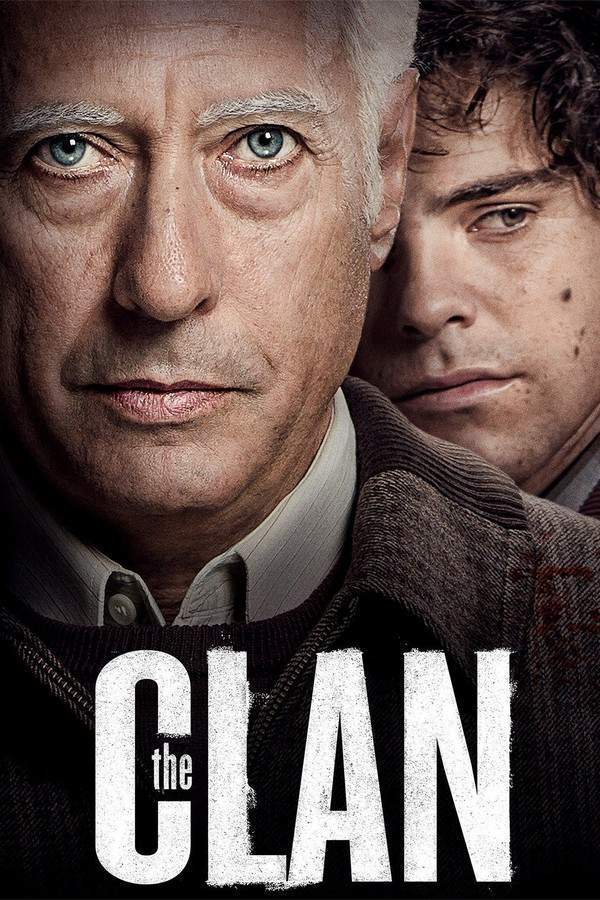
The Clan 2016

Directed by

Pablo Trapero

Where to Watch The Clan
See current US streaming, rental, and purchase options for The Clan (2016) via JustWatch.

Tubi TV
SD
Amazon Video
HD
Apple TV Store
HD
Fandango At Home
HDStreaming availability powered by 
The Clan Plot Summary
Read the complete plot summary and ending explained for The Clan (2016). From turning points to emotional moments, uncover what really happened and why it matters.
In a tense, meticulously observed portrait set in Buenos Aires during the 1980s, the Puccio family drama unfolds around a seemingly ordinary middle‑class household that spirals into crime. At the center of the story is Arquímedes Puccio, the family patriarch, whose past work with state intelligence casts a long shadow over every choice he makes. His wife, Epifanía Puccio, stands beside him as their children grow and witness a household that balances respectability with an increasingly dangerous hunger for stability and status. The couple’s eldest son, Alejandro, is celebrated as a star rugby player, admired by friends and peers, while Daniel “Maguila” Puccio, the middle child, has drifted away from home for years. The daughters, Silvia, a schoolteacher, and Adriana, still in middle school, complete a family that outwardly seems conventional. The youngest son, Guillermo, is still in high school, hovering between innocence and the call of something darker.
When the Falklands War ends in 1982, the household’s routine abruptly shifts. Arquímedes, who had previously worked on covert operations for the state, pivots from earning a legal living to manipulating people for money. He purchases a small deli as a front, and with a growing sense of financial pressure and ambition, he drags the family into a chilling scheme: kidnapping wealthy individuals for ransom. Alejandro becomes his conspirator and partner in crime, leveraging his popularity to help identify potential hostages without drawing suspicion. The plan quickly spirals out of control.
The first victim is Ricardo Manoukian, a friend and teammate of Alejandro. The kidnapping succeeds, but Arquímedes, fearing exposure, shoots Ricardo to silence him. The cold outcome unsettles Alejandro, who experiences a moment of conscience, only to be reassured by his father, who argues that leaving Ricardo alive would only have guaranteed the family’s arrest. This justification cements a troubling pattern: money flows in, the family grows bolder, and the line between crime and family protection becomes hopelessly blurred.
As the loot from early kidnappings piles up, the Puccios move from the deli to a storefront selling sporting equipment, signaling a shift from secrecy to ostentation. Alejandro’s personal life begins to intertwine with this new reality; he meets Mónica, a girl he dates after joining the family business, and their relationship blossoms within the shadow of the crimes. But the thrill of the catch attracts new opportunities and new targets. A longtime associate of Arquímedes, Gustavo Contenpomi, feels betrayed in a separate business deal with entrepreneur Florencio Aulet and suggests a plan that would involve kidnapping Aulet’s own family. Yet the family’s appetite for wealth leads them to a softer target: Aulet’s son, Eduardo. Eduardo is eventually lured into the trap, and although ransom is paid, the teenager’s body is found buried on an empty construction site, marking a brutal escalation that cannot be ignored by anyone involved.
The political climate shifts again in December 1983, when Argentina returns to democracy. Arquímedes seeks legitimacy and guidance from a former military officer, Aníbal Gordon, who had participated with the Puccios in a 1970s kidnapping. Gordon warns Arquímedes to lie low, fearing that the new political environment will expose them and remove the protection they once enjoyed. Arquímedes, however, refuses to change course, confident that his calculated risk will continue paying off.
As the years pass, cracks widen within the family’s dynamic. Alejandro accompanies his youngest brother, Guillermo, to the airport when Guillermo heads abroad for a sports trip. At the gate, Guillermo reveals that he knows what his father and brother have done and swears he will not return if the family’s crimes are found out. He begs Alejandro to abandon the life they’ve chosen. The plea resonates with Alejandro, who resolves not to participate in the next planned kidnapping of another businessman linked to the family, Emilio Naum. The failure to abduct Naum infuriates Arquímedes, who returns home and lashes out at Alejandro, blaming him for the botched operation and accusing him of ingratitude for the lifestyle he has secured for the family.
Seeking reconciliation, Alejandro travels abroad to persuade his other brother, Maguila, to come back to Argentina and rejoin the clan’s operations. The family’s activities continue into 1985, when they abduct a businesswoman, Nélida Bollini de Prado, and imprison her in the basement of their own home. The plan, however, begins to unravel as ransom negotiations falter. The screams from the basement reach Adriana, who realizes the horrifying truth of what their family has become. Around the same time, Arquímedes receives a warning call from former military superiors that his actions have drawn too much public attention, leaving him without their political protection.
In August 1985, the plan to extract money is attempted at a service station, but thePuccio household is raided by police. The kidnapped victim is freed, and the family is arrested, with Adriana remaining untouched by the authorities. The case becomes a national sensation, and the press christens them the “Puccio Clan,” a moniker that cements their infamy.
During the ensuing trial, the prosecutor offers a stark choice: Arquímedes could confess as the mastermind in exchange for his family avoiding indictment as accomplices. Arquímedes refuses, insisting that his military superiors forced him to commit the crimes and that he cannot sacrifice himself for his kin. Within the jail, the strain proves unbearable for Alejandro, who longs for a different life. After a bitter, public confrontation with his father—an argument in which Arquímedes goads him into striking him so he can later claim guards abused him—Alejandro teeters on the edge of despair and attempts to end his life by leaping from the fifth floor of the building as he is transported to testify.
The movie closes by laying out a stark epilogue: a sequence of texts reveals the fates of the Puccio family, leaving viewers with a lingering reflection on how ambition, loyalty, fear, and political upheaval can intertwine to pull a family into an abyss from which there is no easy return.
The Clan Timeline
Follow the complete movie timeline of The Clan (2016) with every major event in chronological order. Great for understanding complex plots and story progression.
Post-Falklands War: Arquímedes pivots to crime
After the Falklands War ends in 1982, Arquímedes Puccio abandons his intelligence-linked work and becomes a deli owner. To maintain rising middle-class status, he decides to start kidnapping for ransom. The rest of the family, including his wife and children, becomes involved in the plan. The family's ordinary life begins to mask a growing criminal enterprise.
Alejandro joins the operation
Alejandro, the eldest son, begins assisting his father by identifying potential hostages using his popularity and networks. He helps lure wealthy targets without arousing suspicion. The clan starts to function as a cohesive unit, planning abductions.
First kidnapping and murder of Ricardo Manoukian
Ricardo Manoukian, a friend and teammate of Alejandro, is kidnapped successfully. Arquímedes murders him to prevent identification, despite Alejandro's initial conscience. Alejandro is pressured by his father to keep the truth secret, arguing that exposure would ruin them all.
Financial windfall and expansion of business
Ransom payments boost the Puccios’ finances, enabling them to replace the deli with a profitable sporting goods store. The family’s affluence grows and their lifestyle becomes more comfortable and conspicuous. The kidnapping operation becomes central to their economic and social ascent.
Alejandro finds love: Mónica
Alejandro meets Mónica at the new sporting store, and a girlfriend emerges from their growing circle. The relationship adds a personal dimension to the clan’s life, even as the crimes continue. He begins to balance crime with romance, all under his father's shadow.
Abduction of Eduardo Aulet
Gustavo Contenpomi turns to the Puccios for revenge, but Arquímedes instead kidnaps Florencio Aulet’s son Eduardo. The ransom is paid, but Eduardo has already been murdered and buried in a shallow grave on an empty construction lot.
December 1983: Gordon's warning
Arquímedes visits the imprisoned military officer Aníbal Gordon to seek advice on continuing in the new political climate. Gordon counsels caution and to lie low since the military's protection is uncertain. Arquímedes ignores the warning and continues the operations.
Guillermo's departure and Naum attempt
Alejandro accompanies Guillermo to the airport as the younger brother leaves for abroad on a sports tour. Guillermo confesses he knows what the family has done and urges Alejandro to quit. Alejandro declines to join the next kidnapping of Emilio Naum, and Naum is murdered when he resists the abduction.
Alejandro recruits Maguila to return
To salvage the operation, Alejandro travels abroad to recruit his other brother, Maguila, to return to Argentina and rejoin the clan. The family resumes planning kidnappings as they try to navigate the changing post-dictatorship landscape. Tensions rise within the family as fear of exposure grows.
Nélida Bollini de Prado kidnapped
In 1985, the Puccios abduct Nélida Bollini de Prado, a businesswoman, and keep her prisoner in their basement. The ransom negotiations fail and panic grows when Adriana overhears the victim's screams. Arquímedes receives warnings from former superiors that their exposure is increasing.
Arrest and media frenzy
In August 1985, police raid the Puccio house during a ransom exchange at a service station, freeing the victim and arresting the family, except Adriana. The media erupts with coverage, dubbing them the Puccio Clan. The investigation intensifies as details of the crimes emerge.
Prosecutor's plea deal and the mastermind’s stance
During the trial, the prosecutor offers a deal: if Arquímedes confesses as mastermind, his family will not be indicted as accomplices. Arquímedes refuses, insisting that his military superiors forced him into the crimes. The family’s fate now hinges on his willingness to sacrifice others.
Alejandro's jail confrontation with Arquímedes
Alejandro confronts his father in their jail cell, accusing him of manipulation. Arquímedes goads him to punch, which the guards could use as a pretext to beat him. The clash underscores the fracture at the heart of the clan as law closes in.
Alejandro's suicide attempt
In a dramatic turn, Alejandro tries to kill himself by jumping from the fifth floor of the Tribunal building while being escorted to testify. He does this after the brutal exchange with Arquímedes in custody. The act foreshadows the collapse of the family’s empire as the system closes in.
Conclusion: fates revealed
The finale presents a sequence of texts detailing what happened to each family member and the victims. It confirms the downfall of the Puccio clan and the consequences of their crimes. The story closes with a stark reminder of the human cost behind the kidnapping scandal.
The Clan Characters
Explore all characters from The Clan (2016). Get detailed profiles with their roles, arcs, and key relationships explained.
Arquímedes Puccio
Patriarch and former intelligence worker who becomes the mastermind behind the kidnappings. He leverages his authority and social standing to direct the operation, showing a ruthless willingness to kill or threaten to preserve the family's lifestyle. His refusal to sacrifice himself or reveal the truth highlights a dangerous combination of pride and control.
Alejandro Puccio
Eldest son and a popular rugby player who initially aids his father by identifying potential hostages. He experiences moral conflict after the first murder and grapples with loyalty to his family versus his conscience. His eventual resistance and attempt to seek a different path illustrate the pull between wealth, status, and ethics.
Daniel 'Maguila' Puccio
Middle son who had left Argentina years earlier and later returns to join the family’s criminal enterprise. He embodies a mix of ambition and pressure to prove himself within the clan, balancing proximity to danger with a desire for belonging.
Epifanía Puccio
Wife of Arquímedes and mother within the Puccio household. While not detailed as a direct participant, she forms part of the family context and the social expectations surrounding the clan. Her role underscores the domestic stability the family is trying to preserve amid turmoil.
Silvia Puccio
Eldest daughter and a schoolteacher who represents the ordinary, educated segment of the family circle. She remains largely outside the criminal scheme, serving as a counterpoint to the more active criminal dynamics within the household.
Guillermo Puccio
Youngest son who is still in high school. He becomes aware of the family crimes, urges his brother to leave the path of crime, and ultimately decides not to return after a sports trip abroad, signaling a moral boundary and a fragile hope for escape.
The Clan Settings
Learn where and when The Clan (2016) takes place. Explore the film’s settings, era, and how they shape the narrative.
Time period
1980s (1982-1985)
The events take place during the early to mid-1980s in Argentina, a period following the Falklands War and during the country’s return to democracy in 1983. This era's social and political shifts provide a backdrop for the Puccio family's criminal enterprise. The narrative culminates with the 1985 police raid and arrests.
Location
Buenos Aires, Argentina, San Isidro
The story unfolds in the affluent suburbs of San Isidro and the broader city of Buenos Aires, Argentina. It centers on a middle-class family living a comfortable life while orchestrating kidnappings in their own home. The setting highlights the tension between a respectable exterior and brutal criminal activity hidden behind a veneer of normalcy.
The Clan Themes
Discover the main themes in The Clan (2016). Analyze the deeper meanings, emotional layers, and social commentary behind the film.
🧬
Family Crime
The film centers on a seemingly ordinary middle-class family that slowly devolves into a kidnapping enterprise. A patriarch uses his authority to recruit and manipulate his children, turning familial bonds into a network for crime. The intergenerational tension reveals how loyalty can be weaponized in pursuit of wealth and status.
⚖️
Justice and Betrayal
As law enforcement closes in, the narrative probes the tension between legal consequences and personal loyalty. The family faces arrests, coerced confessions, and moral compromises that blur lines between victims and perpetrators. The film examines what justice means when a crime is perpetrated by a family unit.
🌆
Political Climate
Set against Argentina’s transition from dictatorship to democracy, the story suggests how political upheaval can create fertile ground for criminal ventures. The era's instability and shifting power dynamics influence the characters' choices and the public's response to the crimes.
🔒
Secrecy and Lies
Secrecy is central to the clan’s operations, from hidden basements to silk-smooth façades of respectability. The family hides brutal acts behind everyday routines, and the pressure to maintain cover drives pivotal decisions and escalating violence.

Coming soon on iOS and Android
The Plot Explained Mobile App
From blockbusters to hidden gems — dive into movie stories anytime, anywhere. Save your favorites, discover plots faster, and never miss a twist again.
Sign up to be the first to know when we launch. Your email stays private — always.
Explore the mobile appThe Clan Spoiler-Free Summary
Discover the spoiler-free summary of The Clan (2016). Get a concise overview without any spoilers.
In the restless streets of 1980s Buenos Aires, a respectable middle‑class home hides a tension that mirrors the city’s own uneasy transition from military rule to democracy. The modest apartment, with its ordinary décor and quiet neighborhood, becomes a stage where personal ambition and the lingering shadows of a turbulent past intersect, creating an atmosphere thick with unease and possibility.
At the center of this world stands Arquímedes Puccio, a former intelligence operative whose disciplined demeanor masks a restless drive for stability. Beside him, Epifanía Puccio maintains the family’s outward normalcy, while their children each embody a different facet of the household’s fragile façade. The eldest, Alejandro, shines on the rugby field and enjoys the admiration of friends; the middle son, Daniel “Maguila” Puccio, drifts away from home, and the younger siblings—Silvia, a devoted teacher; Adriana, still navigating school life; and Guillermo, on the cusp of adulthood—populate the home with hopes and quieter aspirations.
When the patriarch begins to steer the family toward a series of covert, lucrative activities, the respectable veneer begins to crack. Alejandro is drawn into his father’s plans, leveraging his charisma and social connections, while his burgeoning relationship with Mónica adds a tender counterpoint to the growing darkness. As the young man grapples with the allure of wealth and the unsettling reality of his father’s choices, a tension builds between loyalty to family and an emerging, uneasy conscience.
The film unfolds with a muted, almost clinical visual style that reflects the era’s gritty realism, punctuated by moments of intimate family interaction that feel both familiar and disquieting. Beneath the polite conversations and everyday routines lies a relentless undercurrent of secrecy, ambition, and the fear that one misstep could unravel everything the Puccio family has painstakingly constructed.
Movies with Similar Twists and Themes
Uncover films that echo the narrative beats, emotional arcs, or dramatic twists of the one you're exploring. These recommendations are handpicked based on story depth, thematic resonance, and spoiler-worthy moments — perfect for fans who crave more of the same intrigue.





Featured on this page

What's After the Movie?
Not sure whether to stay after the credits? Find out!
Check out our other apps:

SAT Sphere
Build confidence for the Digital SAT.

Mori Atlas
Discover wild places worth protecting.

Luntero
Search smarter for a home in Amsterdam.

Plot Explained
Unravel movie endings and hidden clues.

Pokechamp
Dive into Pokémon data and battle logic.

Driving Theory
Get ready for your European theory test.

Movie Dust
Plan your next cinema trip with ease.

Musemap
Find art and culture as you travel.

Selkobase
Compare credentials before committing.

Local Manual
Turn an unfamiliar country into practical next steps.

Lernavi
Compare school systems before your next move.

GymRoam
Find a workout stop wherever your plans take you.
Explore Our Movie Platform
New Movie Releases (2026)
Famous Movie Actors
Top Film Production Studios
Movie Plot Summaries & Endings
Major Movie Awards & Winners
Best Concert Films & Music Documentaries
Movie Collections and Curated Lists
© 2026 What's After the Movie. All rights reserved.
Privacy Policy